
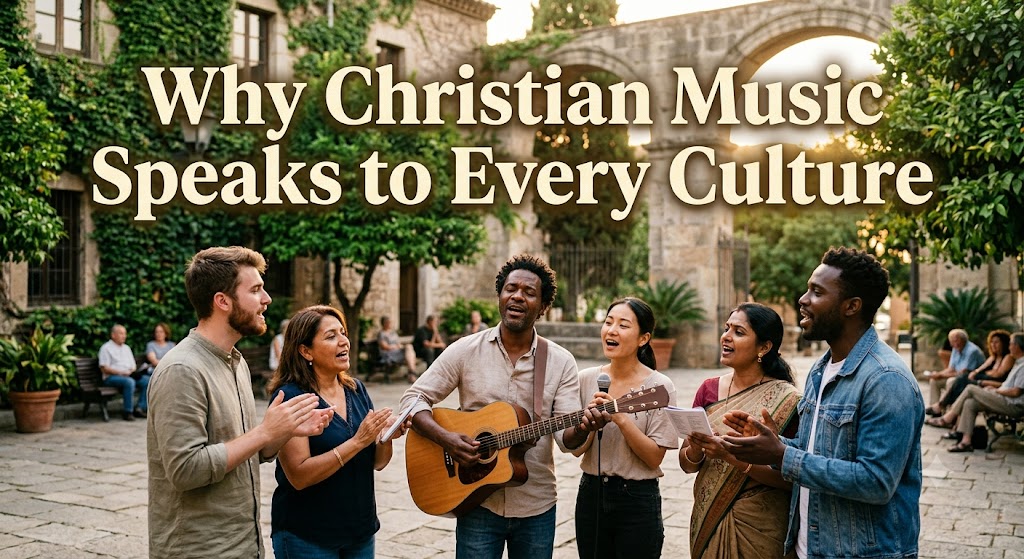
Why Christian Music Speaks to Every Culture
Why Christian Music Speaks to Every Culture is a question worth exploring because Christian music has achieved something remarkably powerful. It has crossed borders, languages, generations, social classes and cultural traditions to become a meaningful form of expression for millions of people around the world. From the traditional hymns sung in European churches to African gospel choirs, American contemporary worship, Latin Christian music and Asian praise songs, Christian music continues to find a home in places with completely different histories and customs. Its ability to connect with people from different backgrounds is not simply about melodies or musical styles. At its deepest level, Christian music communicates messages about hope, love, forgiveness, faith, struggle, redemption and the search for meaning, experiences that are common to humanity regardless of where someone was born.
One of the biggest reasons Christian music speaks to every culture is its ability to address universal human emotions. People everywhere experience happiness, grief, fear, disappointment, loneliness, gratitude, uncertainty and hope. A person living in Lagos may have a completely different daily experience from someone living in London, Nairobi, New York, Seoul or São Paulo, yet both people can understand what it means to experience heartbreak, uncertainty or gratitude. Music provides a language through which those emotions can be expressed, and Christian music adds a message of faith to those experiences. When someone hears a song about trusting God during difficult circumstances, the message can resonate regardless of nationality or cultural background.
Christian music also speaks to people because it deals with questions that human beings have asked for generations. Why are we here? What happens when life becomes painful? Can people change? Is forgiveness possible? Where can hope be found when everything seems to be falling apart? These questions are not restricted to one continent or generation. They are part of the human experience. Christian music often takes these questions and turns them into melodies, prayers, declarations and testimonies. That gives listeners an opportunity to connect with the message emotionally rather than simply receiving it as information.
Another important reason Christian music crosses cultural boundaries is that its central message is adaptable to different musical traditions. Christian music does not have one sound. It can be expressed through gospel, contemporary worship, hymns, choir arrangements, Afro gospel, Christian hip hop, Christian rock, country, folk, classical music, reggae, soul and many other genres. The musical expression can change dramatically while the underlying message remains recognisably Christian. This flexibility allows different cultures to express their faith using instruments, rhythms, languages and musical traditions that are familiar to them.
This is particularly visible in African Christian music. Gospel music across Africa has developed distinctive sounds that combine Christian messages with local rhythms, languages and musical traditions. In Nigeria, for example, Christian music can incorporate elements of indigenous sounds, contemporary Afrobeats, highlife, traditional percussion and modern production. In other African countries, artists may use their own languages and cultural musical identities to communicate Christian themes. The result is not simply an imitation of music from another part of the world. It is Christianity expressed through the cultural voice of the people creating it.
The same principle can be seen in Latin America, where Christian music has developed alongside local musical traditions. Spanish and Portuguese speaking Christian artists have created songs that communicate faith through musical forms familiar to their audiences. In Asia, Christian musicians similarly express worship through local languages and musical styles. This demonstrates an important truth about Christian music. The message does not need to sound identical everywhere to remain meaningful. Different cultures can carry the same message through different musical expressions.
Language is often considered one of the biggest barriers between cultures, but Christian music has repeatedly demonstrated that music can communicate beyond words. Someone may not understand every word in a song performed in another language, yet they can still recognise whether the singer is expressing joy, sorrow, gratitude, desperation or worship. Melody, rhythm, harmony, vocal expression and emotion can communicate feelings before a listener understands the lyrics.
Why Christian Music Speaks to Every Culture
This does not mean lyrics are unimportant. In fact, lyrics are central to Christian music because they often communicate biblical truths, personal testimonies and expressions of faith. However, music gives those words emotional power. A statement about God’s faithfulness can feel completely different when it is sung by someone who sounds as though they have experienced hardship and discovered hope. The listener is not merely processing information. They are experiencing a message.
Christian music also speaks to every culture because testimony is a powerful human language. People are naturally drawn to stories of transformation. Someone who was once broken but found hope, someone who experienced failure but discovered grace, or someone who faced an uncertain future but continued believing can inspire people who have never experienced exactly the same circumstances.
Gospel music has historically been particularly powerful in this area because many songs are rooted in personal and collective experiences. They speak about surviving difficult seasons, trusting God, overcoming fear and holding onto faith. These themes can resonate with people living in completely different environments. A person’s circumstances may differ, but the emotional journey can feel familiar.
There is also something deeply communal about Christian music. In many cultures, music is not simply an individual activity. People sing together during celebrations, ceremonies, gatherings and moments of remembrance. Christian worship naturally fits into this communal tradition. Churches around the world use music to bring people together, creating moments where individuals who may have different personalities, professions, ages and backgrounds participate in the same expression of faith.
When hundreds or thousands of people sing together, music can create a powerful sense of belonging. The individual voice becomes part of something larger. This is one reason worship music can be so meaningful in different cultures. It gives people an opportunity to participate rather than simply observe.
Christian music also connects generations. Older Christians may have grown up singing hymns, while younger Christians may prefer contemporary worship, gospel fusion, Christian hip hop or other modern styles. Although the musical preferences may differ, the themes can overlap. Songs about God’s faithfulness, grace, love, mercy and hope can remain meaningful across generations.
This generational connection is increasingly important in a digital world. Streaming platforms and social media have made it possible for people to discover Christian music created thousands of kilometres away. A listener can encounter an artist from another country through a short video, playlist or recommendation and become interested in music from a culture they know very little about.
Technology has therefore accelerated the international reach of Christian music. In the past, discovering music from another country could require physical records, radio broadcasts or personal connections. Today, a song can travel across continents almost instantly. A Christian artist can release a song in one country and reach listeners in dozens of countries without physically travelling to those places.
Social media has also changed how Christian artists communicate with their audiences. Artists can share worship sessions, testimonies, songwriting processes, live performances and personal stories directly with listeners. This creates a relationship between the artist and audience that extends beyond the music itself.
Another reason Christian music speaks to every culture is that it often communicates hope. Hope is one of the most powerful human needs. People need something to believe in when circumstances become difficult. They need reasons to continue when plans fail and strength when life becomes overwhelming. Christian music frequently points listeners towards hope in God, reminding them that difficult circumstances do not necessarily define the end of their story.
This message can be particularly powerful during periods of social uncertainty, economic hardship, personal loss and global crisis. When people feel powerless, songs that encourage faith can become emotional sources of strength. The music does not necessarily remove the problem, but it can change how the listener approaches the problem.
Christian music also speaks across cultures because forgiveness is a universal human need. Every society experiences conflict, broken relationships, mistakes and regret. Christian songs about forgiveness and grace address something deeply human. They communicate the possibility that failure does not have to become a permanent identity.
The Christian message of redemption is therefore naturally suited to music. Redemption is essentially a story of transformation. It is about moving from one condition to another. Music can capture that journey emotionally through verses, choruses, melodies and changes in intensity. A song can begin with pain and move towards hope, creating an emotional experience that mirrors the message being communicated.
Love is another reason Christian music travels so effectively across cultural boundaries. Although different societies express love differently, the human desire to be loved and accepted is universal. Christian music frequently speaks about God’s love, compassion and mercy. For many listeners, these messages provide comfort during moments when they feel rejected, lonely or misunderstood.
Christian music can also encourage people to look beyond themselves. Many songs speak about serving others, showing compassion, helping the vulnerable and living with purpose. These values can resonate across cultures because communities everywhere depend on people who are willing to care for others.
It is important to understand that Christian music does not erase cultural differences. Instead, it can provide a meeting point where cultural differences can coexist with shared faith. A Nigerian gospel song does not need to sound like an American worship song to be Christian. A Korean worship song does not need to follow an African musical structure. A Brazilian Christian artist can use Brazilian musical influences while communicating Christian truth. Cultural diversity can therefore enrich Christian music rather than weaken it.
This diversity has contributed to the extraordinary variety within modern Christian music. The genre continues to evolve because musicians are constantly experimenting with sounds, technologies and cultural influences. New generations of Christian artists are finding ways to communicate ancient biblical themes through contemporary musical languages.
The rise of Afro gospel is one example of this evolution. African artists and producers have increasingly combined Christian messages with modern African sounds, creating music that appeals to both Christian audiences and listeners who may not traditionally listen to gospel music. This has helped Christian music enter new spaces while maintaining its spiritual identity.
Christian hip hop provides another example. The genre allows artists to discuss faith, identity, struggle, culture and social issues through rap and contemporary production. For young listeners who may not connect with traditional worship formats, Christian hip hop can provide an alternative way to encounter Christian themes.
This adaptability does not mean Christian music should change its message simply to become popular. There is a difference between adapting musical expression and abandoning core beliefs. The strongest Christian music often succeeds because it combines cultural relevance with a clear sense of purpose.
The global reach of Christian music also demonstrates the importance of authenticity. Listeners can often recognise when an artist is simply following a trend and when they are expressing something they genuinely believe. Authenticity gives music credibility. A powerful Christian song is not merely a collection of religious words placed over an attractive melody. It can become a sincere expression of someone’s relationship with God, struggles, gratitude, questions and experiences.
This is why some songs remain meaningful long after their original release. Musical trends change. Production techniques evolve. Popular genres come and go. Yet songs that communicate genuine human experiences can continue to connect with listeners because the emotions behind them remain relevant.
Christian music also has the ability to create memories. A particular worship song may remind someone of a difficult season they survived. Another song may remind someone of a family member, church service, wedding, graduation or personal breakthrough. Music becomes connected to moments in people’s lives, making its emotional impact stronger.
For many Christians, music is also closely connected to prayer. There are moments when people struggle to find words for what they are feeling. A worship song can give language to emotions that are difficult to express independently. Singing or listening can become a form of reflection, gratitude or prayer.
This helps explain why Christian music can reach people even when they are not inside a church building. Someone may listen to a worship song while travelling, working, exercising, studying or sitting alone at home. The music becomes part of everyday life rather than being restricted to a particular religious environment.
Christian music can also introduce people to biblical ideas through memorable repetition. A song may encourage listeners to remember themes about faith, forgiveness, God’s promises, courage and hope. When those ideas are connected to melody, they can become easier to remember and revisit.
Ultimately, Why Christian Music Speaks to Every Culture comes down to the meeting point between universal human experiences and culturally diverse musical expression. People may speak different languages, eat different foods, wear different clothing and follow different traditions, but they still experience love, loss, hope, fear, joy, disappointment and the desire for meaning.
Christian music takes many of these experiences and places them within a message of faith. It tells stories of brokenness and restoration, fear and courage, failure and forgiveness, suffering and hope. Those stories can travel because humanity understands them.
The future of Christian music is likely to become even more culturally diverse. Technology will continue connecting artists and listeners across borders. New genres will emerge. Traditional sounds will be blended with modern production. Artists will continue writing songs in local languages while reaching international audiences. Collaborations between musicians from different countries may become increasingly common.
This could create a Christian music landscape that is more diverse than ever before. Instead of one dominant sound representing Christian music globally, thousands of musical voices may contribute to a larger worldwide conversation about faith.
That diversity should be celebrated because it demonstrates that Christian music does not belong to only one country, race, language or generation. It can be expressed through many voices while communicating themes that reach far beyond cultural boundaries.
Why Christian Music Speaks to Every Culture is ultimately not simply a question about music. It is a question about what human beings share. Christian music succeeds across cultures because it speaks to emotions and questions that do not require a passport. It gives people melodies for their joy, words for their pain, songs for their prayers and hope for their difficult seasons.
From a quiet worship song played in a bedroom to thousands of voices singing together in a stadium, Christian music continues to demonstrate the extraordinary ability of sound and faith to bring people together. Its rhythms may change. Its languages may change. Its instruments may change. Its production may change. But its ability to speak to the human heart remains remarkably powerful.
That is why Christian music continues to cross borders. It does not require every listener to share the same culture before the message can be understood. Instead, it enters different cultures, finds their unique musical expressions and gives those expressions a place within a much larger story of faith.
As Christian music continues to evolve, its greatest strength may remain its simplest one. It gives people something to sing about. It gives people something to hope for. It gives people a way to express what they believe and what they have experienced. And wherever human beings continue to search for hope, meaning, love, forgiveness and God, there will always be a place for a song.

Leave a Reply