
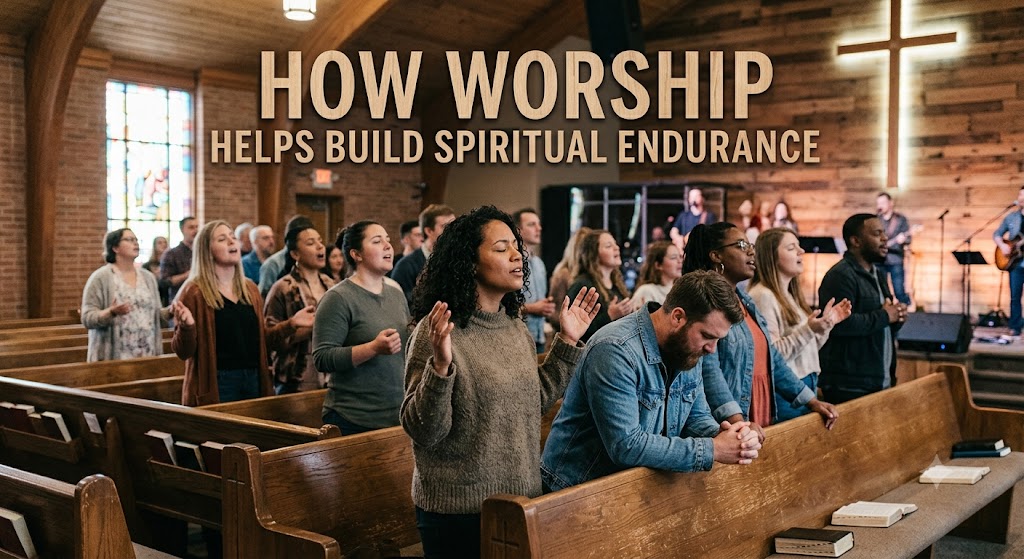
How Worship Helps Build Spiritual Endurance
There are seasons in life when faith feels easy and there are seasons when simply holding on feels like an achievement. There are moments when prayers seem to receive immediate answers, doors open unexpectedly, and everything appears to be moving in the right direction. Then there are other moments when the prayers become longer, the answers seem slower, and the road ahead becomes difficult to understand. It is during those difficult seasons that spiritual endurance becomes extremely important. One of the powerful ways believers can develop this endurance is through worship. Understanding how worship helps build spiritual endurance can completely change the way Christians approach difficult seasons, unanswered prayers, disappointment, waiting, and uncertainty.
Worship is much more than singing beautiful songs in church. It is more than raising your hands during a powerful worship session or listening to a favourite gospel song while driving. Worship is an expression of love, honour, reverence, gratitude, trust, and surrender to God. It is a decision to recognise God’s greatness even when circumstances do not look great. This is one reason worship has such a powerful influence on spiritual endurance. When believers worship consistently, they learn to focus less on the temporary condition around them and more on the unchanging character of God. How Worship Helps Build Spiritual Endurance
Spiritual endurance is the ability to continue trusting God, following Him, and standing firm in faith even when circumstances become difficult. It does not mean that a Christian never becomes tired, discouraged, confused, or emotional. Instead, spiritual endurance means refusing to abandon faith simply because life has become uncomfortable. It is the strength to keep walking when the destination is not yet visible. It is the courage to keep praying when the answer has not arrived. It is the determination to remain faithful when giving up appears easier.
This is where worship becomes powerful. Worship trains the heart to remain connected to God regardless of circumstances. When everything is going well, worship is often easy. Anyone can sing about God’s goodness when their plans are working. The deeper test comes when the song remains in your heart while life is going in the opposite direction. Worship during difficult seasons teaches believers that God’s worth is not determined by their current circumstances.
The Bible contains many examples of people who worshipped God in difficult situations. One of the most remarkable examples is found in the story of Paul and Silas. After being beaten and imprisoned, they did not spend the night complaining about their situation. Instead, they prayed and sang praises to God at midnight. Their circumstances had not changed when they began worshipping. They were still imprisoned. Their bodies were still wounded. Their future was still uncertain. Yet they worshipped.
That story reveals something important about spiritual endurance. Worship does not always begin after the problem disappears. Sometimes worship is what helps you endure until the problem changes. Paul and Silas demonstrated that worship can become an act of faith in the middle of pain. Their praise was not based on comfort. It was based on confidence in God.
When believers understand this, worship stops becoming merely an emotional experience and becomes a spiritual discipline. A Christian who only worships when everything is going well may struggle when life becomes difficult. But someone who has developed the habit of worshipping God in both good and difficult seasons develops a deeper spiritual foundation.
How Worship Helps Build Spiritual Endurance
Worship also helps redirect attention. Difficult circumstances can consume the mind. A person facing financial pressure can spend hours thinking about bills. Someone experiencing disappointment may constantly replay what happened. A person waiting for an important breakthrough may spend every day wondering when things will change. The more attention circumstances receive, the larger they can appear.
Worship provides an opportunity to shift that attention. Instead of spending every moment looking at the size of the problem, worship encourages the believer to remember the greatness of God. This does not mean pretending the problem does not exist. It means refusing to allow the problem to become bigger than God in your mind.
A worship song can sometimes remind a believer of truths they temporarily forgot. God is faithful. God is present. God is sovereign. God is merciful. God has not abandoned His people. God remains worthy even when circumstances are confusing. These truths may sound simple, but remembering them repeatedly can strengthen a tired heart.
This is one reason Christian music can play such an important role in spiritual endurance. Music has a unique ability to stay in the mind. A sermon may be remembered for a few hours, but a powerful worship lyric can remain with someone throughout the day. A person may wake up in the morning with a worship song playing in their thoughts and suddenly remember a truth about God that gives them courage to face the day.
Christian music can therefore become more than entertainment. It can become a reminder system for faith. When carefully chosen worship songs are filled with biblical truth, they can encourage believers during moments when their emotions are struggling to catch up with what they know intellectually.
Worship also teaches surrender. One of the greatest obstacles to spiritual endurance is the desire to control everything. Human beings naturally want certainty. We want to know what will happen, when it will happen, how it will happen, and what the outcome will be. But faith often requires trusting God without having every answer.
Worship creates an environment in which believers can surrender their need for control. When someone says, through worship, that God is still worthy regardless of the outcome, they are practising trust. They are learning to say, in effect, “I may not understand what You are doing, but I still trust who You are.”
That kind of surrender builds spiritual strength.
Endurance does not come from knowing everything. It comes from learning whom to trust when you do not know everything.
Worship can also strengthen believers during seasons of waiting. Waiting is one of the hardest experiences in the Christian journey. People often find it easier to endure a difficult situation when they know it will end tomorrow. The challenge becomes greater when there is no clear timeline.
Waiting for a job, waiting for healing, waiting for restoration, waiting for a relationship to change, waiting for financial stability, waiting for a prayer to be answered, or waiting for a new opportunity can test a person’s faith. During these periods, worship can help believers remain spiritually engaged instead of becoming consumed by frustration.
Rather than allowing waiting to become a period of spiritual inactivity, worship turns it into an opportunity for deeper fellowship with God. The believer begins to understand that God’s presence is valuable even before the desired answer arrives.
There is also something powerful about worshipping when you do not feel like worshipping. Emotional worship is easy when you are excited. Intentional worship is different. Sometimes you may not feel joyful. You may be exhausted. You may have questions. You may even feel disappointed with how things are going. Choosing to worship during those moments can develop a deeper kind of spiritual endurance because the decision is no longer controlled entirely by emotion.
Faith cannot depend entirely on feelings because feelings change constantly. One day you may feel incredibly close to God. Another day you may feel spiritually dry. Worship helps believers develop consistency beyond emotional highs and lows.
This does not mean suppressing genuine emotions. God is not threatened by sadness, frustration, grief, or questions. The Psalms demonstrate that believers can bring honest emotions before God. Worship can therefore include tears, silence, gratitude, questions, celebration, and surrender. The important thing is that the heart continues turning towards God rather than away from Him.
Worship also creates spiritual memory. Every believer needs memories of God’s faithfulness. When difficult seasons arrive, remembering previous moments when God carried you can strengthen your confidence for the present. Worship helps preserve those memories.
Think about the songs that remind you of specific seasons of your life. Perhaps there was a song you listened to when you were struggling financially. Another song may remind you of a season when you were praying for your family. Another may remind you of a breakthrough you experienced. Years later, hearing those songs can bring back memories of what God did.
Those memories can become spiritual fuel.
When another difficult season arrives, you can look back and say, “I have been here before, and God carried me through.” Worship becomes connected to your testimony, and your testimony becomes a source of endurance.
Worship also reminds Christians that their identity is not defined by their circumstances. A person who loses a job may begin to feel worthless. Someone experiencing rejection may believe they are unwanted. Someone going through financial difficulties may feel like a failure. Someone whose plans have collapsed may begin to question their purpose.
Worship redirects identity towards God. Instead of allowing circumstances to define personal worth, worship reminds believers that they belong to God. Their value is not determined by their bank balance, relationship status, career position, popularity, possessions, or achievements.
This is particularly important in a culture that constantly measures people by visible success. Social media can make someone else’s life appear perfect while your own life feels uncertain. Worship provides a different measurement. It reminds the believer that spiritual success is not always visible.
Sometimes endurance looks like simply refusing to quit.
Sometimes faithfulness looks ordinary.
Sometimes the greatest spiritual victory is getting up another morning and choosing to trust God again.
Worship can also strengthen community endurance. Christian worship is not only an individual experience. When believers worship together, they encourage one another. A person who feels weak may find strength when surrounded by people who are also seeking God.
Church worship can remind believers that they are not walking through life alone. Other people have experienced disappointment, loss, waiting, rejection, uncertainty, and hardship and have continued trusting God. Their testimonies can become encouragement for others. How Worship Helps Build Spiritual Endurance
This is one reason congregational worship can be so powerful. When hundreds of voices sing together, the experience communicates something deeper than music. It creates a sense of shared faith. One person’s weak voice joins another person’s strong voice. Someone who came into the room discouraged may leave with renewed courage.
Worship also helps develop gratitude. Gratitude is not the denial of problems. It is the decision to recognise what remains good even when something is going wrong. A grateful heart is harder to destroy with temporary disappointment because it has learned to notice God’s blessings.
When believers consistently worship, they begin to recognise things they previously took for granted. Life itself becomes something to appreciate. Family becomes something to appreciate. Friendship becomes something to appreciate. Another morning becomes something to appreciate. God’s patience, mercy, provision, protection, and presence become reasons for thanksgiving.
Gratitude does not eliminate problems, but it changes the perspective from which problems are faced.
Another important way worship builds spiritual endurance is by strengthening hope. Hope gives people a reason to continue. Without hope, difficulty can feel pointless. But Christian worship repeatedly points the believer towards God’s promises and the future He has prepared.
Songs about God’s faithfulness can remind believers that the present season is not the entire story. A difficult chapter is still only a chapter. A painful moment does not have to become the definition of an entire life.
This perspective is essential for endurance. People who believe that their current situation is permanent may become discouraged quickly. People who understand that seasons change can continue moving forward.
Worship therefore teaches believers to look beyond the immediate moment.
It says, “This is not all there is.”
It reminds the heart that God is still working even when the evidence is not immediately visible.
There is also a connection between worship and spiritual discipline. Strong faith rarely develops accidentally. Just as physical endurance develops through consistent training, spiritual endurance develops through consistent spiritual practices. Prayer, Scripture, fellowship, obedience, worship, and reflection all contribute to spiritual maturity.
Worship should therefore not be reserved for Sunday morning. Christians can develop a lifestyle of worship throughout the week. Worship can happen while preparing for work, travelling, exercising, cooking, studying, cleaning, or sitting quietly at home.
The goal is not to keep music playing every minute of the day. The goal is to develop a heart that continually recognises God’s presence and worth.
Sometimes worship is singing.
Sometimes worship is praying.
Sometimes worship is obeying when obedience is difficult.
Sometimes worship is forgiving when bitterness feels easier.
Sometimes worship is continuing to serve when nobody notices.
Sometimes worship is trusting God when there is no immediate evidence that circumstances will change.
This broader understanding of worship reveals why it can build such powerful spiritual endurance.
A believer who learns to worship through difficulty becomes less dependent on circumstances for spiritual stability. They may still cry. They may still become tired. They may still ask questions. They may still experience moments of weakness. But underneath those emotions is a growing confidence that God remains worthy of trust.
That is the kind of endurance that cannot be built overnight.
It develops one worship moment at a time.
The next time life becomes difficult, do not assume that worship is only appropriate after the breakthrough. Worship in the waiting room. Worship in the uncertainty. Worship when the answer seems delayed. Worship when you are grateful. Worship when you are tired. Worship when you understand. Worship when you do not understand.
Let the songs you sing remind you of the God you serve.
Let the words you declare strengthen your faith.
Let your worship become an anchor when circumstances become unstable.
Because the deeper lesson in understanding how worship helps build spiritual endurance is that worship does not always change the situation immediately. Sometimes it changes the person standing in the situation. It gives the heart strength to keep going, the mind courage to keep trusting, and the spirit determination to remain faithful.
Life will bring difficult seasons. Every believer will encounter moments that test patience, faith, courage, and hope. The goal is not to pretend those seasons do not exist. The goal is to develop enough spiritual strength to walk through them without losing sight of God.
Worship helps make that possible.
When you worship, you remind yourself that God is greater than the problem.
When you worship, you remember that your present struggle is not your entire story.
When you worship, you practise surrender.
When you worship, you strengthen gratitude.
When you worship, you reinforce hope.
When you worship, you train your heart to keep turning towards God.
And when you continue turning towards God, even during the hardest seasons, something begins to develop within you that circumstances cannot easily destroy.
Endurance.
Not the endurance that says life will always be easy, but the endurance that says, “Whatever season I am walking through, I will not stop trusting God.”
That is one of the greatest gifts worship can develop within a believer. It teaches us that faith is not only about celebrating when the victory arrives. Sometimes faith is singing while waiting for the victory. Sometimes faith is lifting your voice through tears. Sometimes faith is worshipping in the middle of unanswered questions. How Worship Helps Build Spiritual Endurance
And sometimes the song you sing during your darkest season becomes the very thing that reminds you to keep walking until you see the light again.

Leave a Reply