
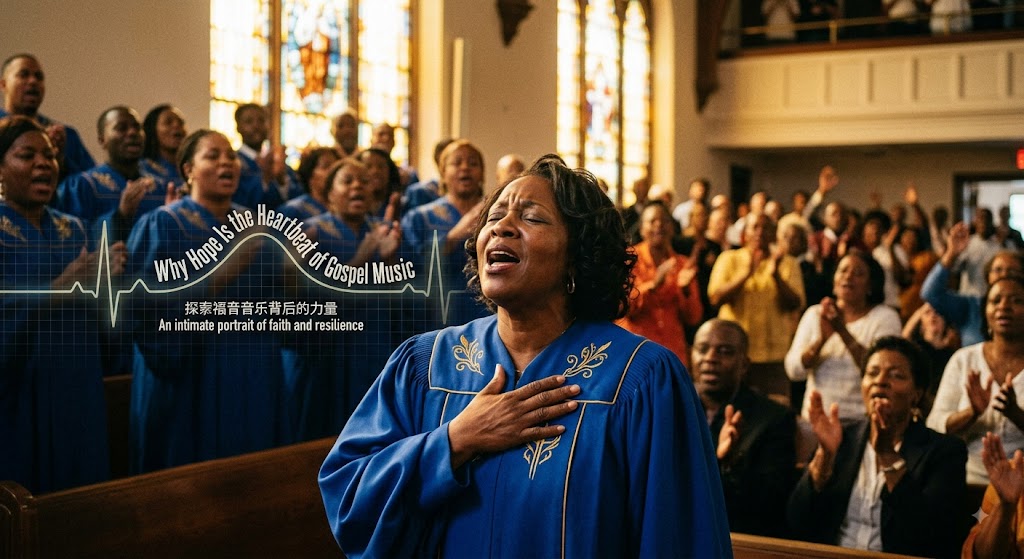
Why Hope Is the Heartbeat of Gospel Music
Why Hope Is the Heartbeat of Gospel Music is more than a powerful phrase. It describes one of the deepest reasons gospel music continues to touch hearts across generations, cultures, churches and communities. Gospel music has always carried a message that reaches beyond entertainment. It speaks to people who are hurting, waiting, struggling, praying, celebrating and searching for something stronger than their present circumstances. At the centre of that message is hope. Hope gives gospel music its emotional strength, spiritual meaning and lasting influence.
When someone listens to a gospel song during a difficult season, they are often looking for more than a beautiful melody. They may be looking for reassurance that their situation is not the end of their story. They may be carrying disappointment, financial pressure, grief, loneliness, rejection, uncertainty or fear about tomorrow. A powerful gospel song can remind them that difficult circumstances do not have the final word. This is one of the clearest reasons why hope is the heartbeat of gospel music.
Gospel music has a unique ability to acknowledge pain without allowing pain to become the conclusion. It does not always pretend that everything is perfect. Instead, it can look directly at suffering while pointing towards faith, restoration, grace and the possibility of a better tomorrow. That balance is incredibly powerful. It allows listeners to feel understood while simultaneously being encouraged to keep moving forward.
Hope is one of the strongest themes found throughout Christian faith, and gospel music gives that hope a voice. Through lyrics, melodies, harmonies and powerful performances, musicians transform spiritual truths into experiences that people can carry with them. A message that might be read in Scripture can become deeply personal when it is sung. A promise that someone has heard many times can suddenly feel different when it is delivered through music at exactly the moment they need encouragement.
This is why gospel music has remained relevant even as musical styles have changed. Sounds evolve. Production techniques change. New instruments appear. Streaming platforms transform how people discover songs. Artists experiment with Afro gospel, contemporary worship, traditional gospel, gospel hip hop, Christian R&B and other styles. Yet beneath these changing sounds, the central message remains remarkably consistent. There is still a reason to believe. There is still a reason to pray. There is still a reason to trust God. There is still hope.
The power of gospel music often becomes most visible during difficult moments. Think about the person sitting alone after receiving disappointing news. Think about someone who has lost a loved one and cannot find the words to express what they feel. Think about the young person who is uncertain about the future. Think about the person who has failed repeatedly and is beginning to question whether anything will ever change. In moments like these, a gospel song can become a companion.
Music cannot magically remove every problem, but it can change the way a person carries that problem. A hopeful gospel song can create a moment of emotional breathing room. It can remind someone to pause, pray and look beyond the immediate crisis. Sometimes that reminder is enough to help a person take the next step.
This is another reason why Why Hope Is the Heartbeat of Gospel Music matters. Hope does not necessarily mean believing that everything will happen exactly as we want. Christian hope is deeper than wishful thinking. It is confidence in God’s faithfulness even when circumstances remain uncertain. Gospel music communicates this kind of hope by encouraging listeners to trust beyond what they can currently see.
Many gospel songs tell stories of struggle followed by testimony. They speak about tears followed by joy, waiting followed by breakthrough, weakness followed by strength and darkness followed by light. These stories resonate because human beings naturally connect with transformation. People want to know that their present circumstances can change. They want to believe that their mistakes do not have to define their entire lives. They want to believe that pain can produce wisdom and that difficult seasons can eventually become testimonies.
This storytelling tradition is one of the reasons gospel music has such emotional power. A song can become a testimony in musical form. The artist may sing about something they personally experienced, but the listener may hear their own story inside those words. Someone else may have written the song, yet the listener feels as though it was written specifically for them.
That personal connection is difficult to manufacture. It comes from authenticity. The most powerful gospel music often feels real because it does not ignore the complexity of life. It recognises that faith does not mean people never struggle. Faith means they continue believing even while struggling.
Hope also gives gospel music its ability to encourage perseverance. There are seasons when people become tired of waiting. They pray and do not immediately see answers. They work hard without seeing results. They believe for restoration while circumstances appear unchanged. In those moments, gospel music can become a reminder that waiting does not necessarily mean abandonment.
Why Hope Is the Heartbeat of Gospel Music
A song can tell someone, in effect, keep going. Do not give up yet. Your story is still being written. Your current chapter is not necessarily your final chapter.
That message is particularly important in a world where people are constantly exposed to images of instant success. Social media can create the impression that everyone else is progressing faster. People see successful businesses, expensive lifestyles, beautiful relationships, career achievements and seemingly perfect lives. They may begin to believe that they are falling behind.
Gospel music offers a different perspective. It reminds listeners that life is not a competition measured entirely by visible achievements. There is value in patience. There is value in faithfulness. There is value in continuing when nobody applauds. There is value in trusting God during seasons when progress cannot easily be measured.
This makes gospel music particularly powerful for people going through transitions. A person starting a new chapter may need encouragement. Someone recovering from failure may need reassurance. Someone waiting for an opportunity may need patience. Someone rebuilding their life may need courage. Hope gives each of these situations a spiritual soundtrack.
Another important aspect of hope in gospel music is its ability to create community. When people sing together in churches, concerts, conferences or gatherings, they are not simply listening to individual voices. They are participating in a collective expression of faith. Hundreds or thousands of people can sing the same words while carrying completely different personal stories.
One person may be celebrating an answered prayer. Another may be waiting for one. Another may be grieving. Another may be recovering from failure. Another may be facing an uncertain future. Yet they can all sing together.
That shared experience can be incredibly powerful. It reminds people that they are not alone. Gospel music creates a space where individual struggles can become part of a larger expression of faith and hope.
The influence of gospel music also extends beyond church buildings. Today, people discover Christian music through streaming platforms, social media, playlists, podcasts, short videos and online communities. A person who has never attended a particular church can encounter a gospel song online and find encouragement through it.
This digital transformation has given gospel artists an opportunity to reach people in places previous generations could not easily reach. A song recorded in one country can inspire someone thousands of kilometres away within minutes. An artist can share a message of faith with a global audience without needing a traditional media organisation behind them.
The rise of African gospel music is particularly significant in this regard. African Christian artists are increasingly blending traditional sounds with contemporary production, creating music that connects local cultural identity with a global Christian audience. Afro gospel, contemporary African worship and other emerging sounds demonstrate that gospel music can evolve without abandoning its spiritual foundation.
At the heart of these developments remains the same human need for hope. Whether the song is accompanied by a choir, acoustic guitar, piano, drums, African percussion or modern electronic production, the listener is still responding to the message.
Hope also explains why gospel music can be deeply personal. People often associate certain songs with specific seasons of their lives. A particular song may remind someone of their childhood church. Another may remind them of a difficult year they survived. Another may have been played during a wedding, graduation, funeral, prayer meeting or moment of personal breakthrough.
Music has the ability to preserve memories. Gospel music adds another dimension because those memories can become connected with faith. Years later, hearing a familiar song can bring back not only the sound but also the emotions and spiritual lessons associated with that period.
This is why some gospel songs become more than songs. They become personal landmarks.
The best gospel music also challenges listeners rather than simply comforting them. Hope does not mean avoiding responsibility. A hopeful song can inspire someone to forgive, start again, serve others, trust God, change destructive habits or take another step towards their purpose. In this sense, gospel music can move people from emotion to action.
A song may begin with tears but end with determination. Someone may listen while discouraged and finish feeling ready to try again. Someone may begin with fear and leave with courage. Someone may feel spiritually exhausted and discover enough strength to pray again.
That transformation is part of the beauty of gospel music.
The relationship between gospel music and hope also explains why Christian artists carry an important responsibility. Talent alone does not determine the impact of a gospel song. The message matters. The intention matters. Authenticity matters. When artists use their voices to communicate faith, encouragement and truth, they can influence people far beyond the boundaries of a stage.
This does not mean every gospel song must sound the same or address the same subject. Christian music can celebrate, mourn, question, praise, reflect, testify and encourage. There is room for different emotions because faith itself exists within the full experience of human life.
Some of the most meaningful gospel songs are born from difficult seasons. Artists sometimes transform personal pain into music that later becomes encouragement for millions of people. What once felt like an isolated struggle can become a message that tells someone else, you are not alone.
That is one of the remarkable things about hope. It can travel.
A person can write a song in a small room, record it with limited resources and release it online. Somewhere else in the world, another person can hear that song during one of the hardest nights of their life and find enough encouragement to continue. The artist may never know exactly how many lives were affected, but the message continues moving.
This is why Why Hope Is the Heartbeat of Gospel Music is not simply an attractive statement for a Christian music blog. It captures the emotional and spiritual force behind a genre that has survived changing generations and musical trends.
Gospel music continues to matter because people continue to need hope.
People still experience heartbreak. They still lose loved ones. They still struggle with uncertainty. They still experience disappointment. They still question the future. They still need reminders that failure is not necessarily final and that difficult seasons do not erase God’s promises.
As long as people need encouragement, gospel music will have a purpose.
As long as people are searching for meaning, gospel music will have something to say.
As long as people face difficult seasons, there will be songs reminding them to keep believing.
Perhaps that is why a powerful gospel song can feel different from ordinary entertainment. It does not simply occupy the ears. It can reach the heart. It can challenge the mind. It can strengthen faith. It can create peace in moments of anxiety and courage in moments of fear.
Ultimately, Why Hope Is the Heartbeat of Gospel Music because hope is the message that refuses to let darkness have the final word. Gospel music acknowledges the reality of pain while directing attention towards God’s faithfulness. It gives people permission to cry without telling them to stay broken. It recognises hardship without surrendering to hopelessness. It celebrates victories while remembering the battles that came before them.
The heartbeat of gospel music is therefore not merely rhythm. It is expectation. It is faith. It is trust. It is the belief that even when today’s circumstances are difficult, tomorrow is still worth approaching with courage.
For someone who is struggling, one gospel song can become a reminder to keep going. For someone who is grieving, it can become a gentle expression of faith. For someone who feels forgotten, it can become reassurance. For someone celebrating a breakthrough, it can become thanksgiving. For someone waiting, it can become strength.
And that is why gospel music will continue to evolve, reach new audiences and speak across generations. The sounds may change, the artists may change, the technology may change and the platforms may change, but the human need for hope will remain.
When gospel music gives that hope a melody, the message becomes unforgettable.
Why Hope Is the Heartbeat of Gospel Music is ultimately a reflection of what makes Christian music so powerful. It does not simply tell people that life will always be easy. It reminds them that difficulty does not mean the absence of God, that waiting does not mean the end of the journey and that today’s pain does not have to become tomorrow’s identity.
Gospel music sings to the person who is still believing.
It sings to the person who is still waiting.
It sings to the person who almost gave up.
It sings to the person who survived what they thought would destroy them.
And above all, it sings to the human heart with one enduring message: there is still a reason to hope.
That is the heartbeat.

Leave a Reply