
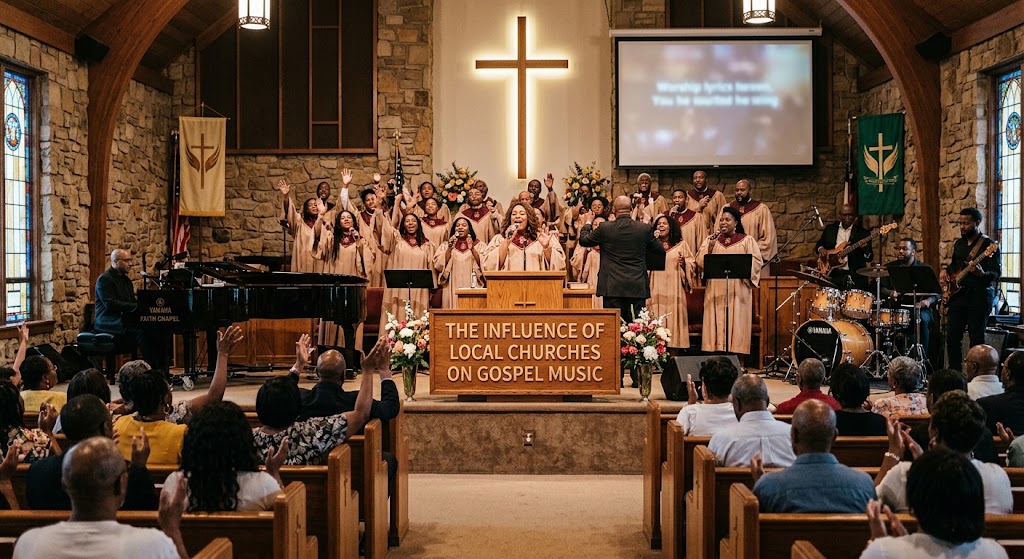
The Influence of Local Churches on Gospel Music
The Influence of Local Churches on Gospel Music is one of the most important stories in the development, preservation and continued growth of Christian music around the world. While major gospel artists, record labels, streaming platforms and international music ministries often receive much of the attention, the local church remains one of the most powerful environments where gospel music is created, developed, performed and passed from one generation to another. Long before a worship singer appears on a large stage or a gospel song reaches millions of listeners online, there is often a local congregation where the singer discovered a love for music, learned to lead worship, joined a choir, played an instrument or found the confidence to use their gift for God.
The Influence of Local Churches on Gospel Music can be seen in almost every part of the gospel music ecosystem. Local churches provide platforms for emerging musicians, create opportunities for worship teams, encourage songwriting, preserve traditional sounds and introduce new generations to Christian music. They also create communities where music is connected to faith rather than simply entertainment. In many cases, the local church is where a gospel musician learns that music can communicate a message of hope, salvation, gratitude, repentance, encouragement and trust in God.
For centuries, Christian congregations have used music as an essential part of worship. Singing has helped believers express emotions that can sometimes be difficult to communicate through ordinary conversation. A congregation can sing about God’s faithfulness during times of celebration and sing about hope during times of suffering. This connection between music and everyday spiritual life is one reason gospel music has remained relevant across generations.
The Influence of Local Churches on Gospel Music is particularly noticeable in the way churches create musical communities. A person does not necessarily need to be a professional musician to participate in church music. Someone with a strong voice may join the choir. Another person may learn to play the keyboard. Someone else may become a drummer, guitarist or backing vocalist. Young people can learn from older musicians, while experienced worship leaders can mentor beginners. Over time, these relationships create an environment where musical skills are developed naturally.
Many gospel musicians began their journeys in environments where nobody expected them to become famous. They were simply serving their local congregation. They sang during Sunday services, participated in choir rehearsals, performed during special programmes and helped with church events. Their first audience may have been a small congregation rather than thousands of people. Yet those experiences can provide something that professional platforms cannot easily reproduce: consistent practice in front of real people and a deep understanding of the purpose behind Christian music.
Local churches also play an important role in discovering musical talent. There are talented singers who may never audition for a major record label or participate in a television competition. They may be shy, financially limited or simply unaware of opportunities outside their communities. The local church can become the first place where their gifts are recognised. A choir director may hear an exceptional voice. A pastor may encourage a young songwriter. A worship leader may invite a new musician to join the team. These small opportunities can eventually become life changing.
Another major aspect of The Influence of Local Churches on Gospel Music is songwriting. Many gospel songs begin with personal experiences that happen within or around the church community. A songwriter may write about a difficult season, answered prayer, spiritual growth, family struggles, gratitude or a renewed understanding of God’s Word. Because local churches bring people together during both joyful and difficult moments, they provide a rich environment for musical inspiration.
Church services also expose songwriters to the real needs of listeners. A song written for a congregation may need to be simple enough for people to sing together. It may need memorable lyrics and a message that people can understand immediately. This practical experience can influence the way gospel musicians approach songwriting. Instead of creating music solely for personal expression, they learn to consider how their songs can serve other people.
The local church has also been instrumental in preserving traditional gospel music. In many communities, older hymns, spiritual songs, choir arrangements and indigenous Christian sounds have survived because churches continue to sing them. Without these congregational traditions, some musical styles could gradually disappear. Churches often become living archives where songs are taught repeatedly and passed from parents to children.
This preservation is especially significant in African gospel music. Across many African communities, local churches have helped gospel music develop distinctive sounds by combining Christian messages with local languages, rhythms, instruments and cultural expressions. Nigerian gospel music, for example, has developed through the interaction between church worship, traditional musical influences, contemporary production and the creativity of individual artists. Local congregations have provided the foundation on which many of these musical expressions have grown.
The Influence of Local Churches on Gospel Music is not limited to traditional worship styles. Churches have also helped create space for contemporary Christian music. Modern worship bands may use keyboards, electric guitars, drums, bass guitars, electronic sounds and sophisticated production techniques. Younger worshippers may connect with musical styles that sound very different from the hymns their grandparents sang. Local churches that understand this changing musical environment can create opportunities for younger musicians while still preserving the spiritual purpose of worship.
This balance between tradition and innovation is important. Gospel music does not have to remain frozen in one musical style to remain faithful to its Christian message. At the same time, innovation should not completely eliminate the traditions that helped shape Christian music. Local churches can provide a place where both generations meet. Older members can share wisdom and musical heritage, while younger musicians can introduce new sounds, technologies and creative approaches.
Church choirs are another major example of The Influence of Local Churches on Gospel Music. Choirs have introduced millions of people to harmonies, vocal arrangements and collective singing. A choir teaches members that music is not always about individual attention. Each singer contributes to a larger sound. This lesson can influence how musicians approach collaboration later in their careers.
Choirs can also provide a strong foundation for discipline. Rehearsals require commitment. Members need to arrive on time, learn lyrics, understand musical arrangements and listen to other singers. These habits can help young musicians develop the professionalism required for larger musical opportunities. Someone who learns discipline in a small church choir may eventually carry those habits into studio recording, touring and professional ministry.
Worship teams provide another important training ground. Modern worship often involves multiple musicians working together under the direction of a worship leader. The experience teaches musicians how to communicate, follow arrangements, respond to a congregation and sometimes adapt spontaneously. These are valuable skills that can take years to develop.
The local church also influences gospel music through mentorship. Experienced musicians can teach younger people lessons that cannot always be learned from watching online tutorials. They can explain how to control vocals, understand harmony, choose songs, work with musicians and prepare for worship. More importantly, they can teach younger musicians about character, humility, responsibility and service.
This connection between character and music is particularly important in Christian ministry. Gospel music is not simply about having a beautiful voice. A singer may possess extraordinary talent but struggle with discipline or integrity. Local churches can provide accountability and spiritual guidance that help musicians understand that their gifts should be accompanied by responsible character.
The Influence of Local Churches on Gospel Music is also evident in the way churches create audiences for emerging artists. Before an artist has thousands of followers on social media, a local congregation may provide the first people willing to listen to an original song. Church members may share recordings, recommend an artist to others, attend local concerts and encourage the musician during difficult periods.
In the digital era, this support can extend far beyond the church building. A song performed during a local service can be recorded and uploaded online. A worship session can become a video that reaches people in other countries. A choir performance can be shared across social media. A young gospel singer who once performed before a small congregation can suddenly find listeners around the world.
The Influence of Local Churches on Gospel Music
This development has changed the relationship between local churches and the wider gospel music industry. Churches are no longer limited to physical audiences. Through smartphones, social media and streaming services, local musical expressions can travel internationally. A worship song created by a small church can eventually become popular among Christians thousands of kilometres away.
However, the digital environment also creates new challenges. The popularity of a song can sometimes become more important than its message. Musicians may feel pressure to create music that will perform well on social media rather than music that genuinely serves their faith communities. Local churches can help provide a counterbalance by reminding musicians that Christian music is ultimately connected to worship, ministry and spiritual encouragement.
Another important contribution of local churches is their ability to create music for specific moments. Weddings, funerals, baptisms, Christmas services, Easter celebrations, youth programmes, prayer meetings and evangelistic events all require different musical expressions. These occasions provide musicians with opportunities to develop songs that respond to real human experiences.
A gospel song performed during a funeral, for example, can provide comfort to grieving families. A song performed during a baptism can celebrate a person’s new beginning in faith. Music during a wedding can celebrate love and commitment. Songs performed during difficult community circumstances can remind people that hope remains possible. In these situations, music becomes more than background sound. It becomes part of people’s memories.
Local churches also influence gospel music through community outreach. Many churches organise concerts, worship nights, youth programmes and evangelistic events where musicians can perform outside regular services. These events can introduce gospel music to people who may not normally attend church. Music becomes a bridge between the church and the wider community.
The Influence of Local Churches on Gospel Music can therefore be understood as both cultural and spiritual. Churches influence what people sing, how they sing, who gets opportunities to perform and what messages are communicated through Christian music. They help determine which songs survive, which musical traditions continue and which new sounds emerge.
Another important contribution is financial and practical support. Not every gospel musician has the resources to purchase instruments, record music or organise events. Local churches sometimes provide instruments, rehearsal spaces, recording opportunities, transportation or financial assistance. Even when the support is modest, it can make a meaningful difference to an emerging musician.
Churches can also create opportunities for musicians to earn income through legitimate work. Musicians may receive payment for performances, teaching, musical arrangements or event participation. While Christian music should not be reduced to financial gain, musicians also need sustainable ways to develop their craft and support themselves.
The relationship between local churches and gospel musicians should therefore be based on mutual respect. Churches benefit from talented musicians who contribute to worship, while musicians benefit from communities that provide encouragement, opportunities and spiritual grounding. When this relationship is healthy, both the church and the musician can grow.
One of the greatest strengths of local churches is their ability to connect generations. A young singer may learn an old hymn from an elderly church member. A young keyboardist may introduce a new musical arrangement to an older congregation. A choir director may combine traditional harmonies with contemporary sounds. These exchanges keep gospel music alive while allowing it to evolve.
The future of gospel music will likely depend heavily on how local churches respond to technological and cultural changes. Churches that encourage creativity while maintaining strong biblical foundations can become powerful development centres for the next generation of gospel musicians. They can teach young people that technology is a tool rather than the purpose of music.
Social media, home recording technology and artificial intelligence are already changing the way music is produced and distributed. A musician can now create a professional sounding recording from a small home studio and reach an international audience without signing a traditional record deal. Local churches can help musicians navigate these opportunities responsibly by providing mentorship and encouraging excellence.
There is also a growing opportunity for churches to document their own musical histories. Many congregations have songs, choirs and musicians whose stories are unknown outside their immediate communities. Recording these songs and stories can preserve valuable cultural and spiritual heritage for future generations.
The Influence of Local Churches on Gospel Music is ultimately about people. It is about the child who discovers a voice during choir practice. It is about the teenager who learns the keyboard because the church needs a musician. It is about the songwriter who turns a difficult experience into a song of hope. It is about the worship leader who spends hours preparing so that others can worship. It is about the congregation that sings together even when life is difficult.
Major gospel artists may receive the headlines, but many of their journeys begin quietly. Before the recording studio, there may have been a church hall. Before the international concert, there may have been a Sunday service. Before the streaming numbers, there may have been a small congregation singing along. Before the professional music career, there may have been a choir director who simply said, “You have a gift. Keep using it.”
This is why the influence of local churches should never be underestimated. They are not merely places where gospel music is performed. They are places where gospel music is taught, tested, developed, preserved and experienced. They create communities where musicians can discover their gifts and learn how to use those gifts in service to others.
As gospel music continues to expand across borders and platforms, the local church will remain an important part of its foundation. The sound may change. The instruments may change. The recording technology may change. The way people discover music may change. Yet the need for communities where musicians can learn, serve, collaborate and grow will remain.
The Influence of Local Churches on Gospel Music is therefore much deeper than the number of songs performed during a Sunday service. It is found in the generations of musicians shaped by church communities, the songs preserved through congregational singing, the new artists discovered through worship teams, the songwriting inspired by faith experiences and the countless people encouraged by music during some of the most important moments of their lives.
Gospel music has travelled from small churches to massive stages, radio stations, streaming platforms and international festivals, but its roots remain deeply connected to local communities. Every successful gospel artist has a story, and behind many of those stories is a church that provided a first opportunity, a first audience, a first mentor or a first place to sing.
As churches continue to invest in young musicians, encourage songwriting, preserve Christian musical traditions and embrace responsible innovation, they will continue shaping the future of gospel music. The next generation of influential gospel artists may already be sitting in a small church choir somewhere, waiting for someone to recognise their gift.
That is perhaps the most powerful lesson about The Influence of Local Churches on Gospel Music. The future of gospel music is not created only in recording studios or on international stages. It is also being created every week in ordinary churches, during ordinary rehearsals, through ordinary people who choose to use extraordinary gifts to communicate faith, hope and worship through music.

Leave a Reply