
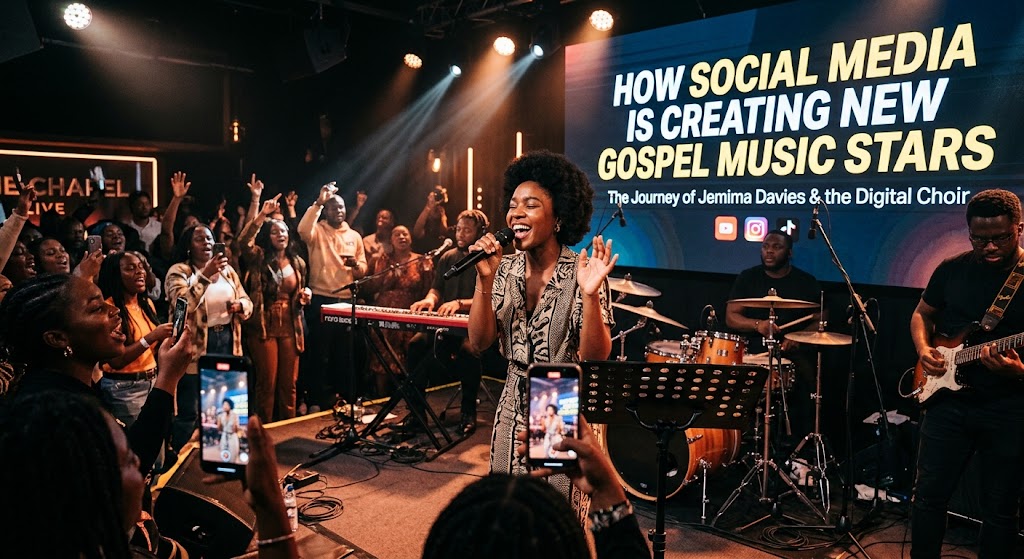
How Social Media Is Creating New Gospel Music Stars
The gospel music industry is changing faster than many people realise. Not too long ago, becoming a recognised gospel music artist often required years of singing in churches, performing at major events, building relationships with established musicians, securing a record deal, getting radio airplay and waiting for industry gatekeepers to notice your talent. Today, a talented gospel singer can record a song in a modest studio, upload a short performance to social media and reach thousands or even millions of people without first receiving permission from a record label or major media organisation. This is one of the biggest reasons why how social media is creating new gospel music stars has become such an important conversation in contemporary Christian music.
Social media has fundamentally changed how music is discovered. Platforms such as YouTube, Facebook, Instagram, TikTok and other digital communities have created opportunities for artists who might otherwise remain unknown. A singer no longer has to wait for a television producer to invite them onto a programme or for a radio presenter to discover their music. They can take their message directly to an audience and allow listeners to decide whether the music deserves attention.
This transformation is particularly significant for gospel music because the genre has always depended heavily on community. Gospel music is not simply about entertainment. It is often connected to testimony, worship, encouragement, personal struggles, faith and the Christian experience. Social media provides an environment where those stories can be shared alongside the music, allowing audiences to connect with artists on a much deeper level.
One of the most powerful ways social media is creating new gospel music stars is through short form video. A singer can post a thirty second vocal performance, a worship moment, an original chorus or a powerful interpretation of a familiar Christian song. If people connect with the performance, they can share it with their friends, repost it, comment on it and create their own content around it. A performance that begins in one person’s bedroom can suddenly reach audiences far beyond the artist’s immediate church or community.
This has changed the traditional definition of exposure. In the past, exposure was often something an artist had to receive from an established institution. Today, exposure can be created by the audience itself. One person shares a video, another person discovers the singer, another person uses the song in a video and someone else searches for the full recording. Before long, an unknown gospel artist can become a name people recognise.
The interesting thing is that social media does not always reward the artist with the biggest budget. Sometimes it rewards authenticity. A professionally produced music video can be impressive, but a simple video of a singer sitting in a room and singing from the heart can sometimes generate a stronger emotional response. People are attracted to moments that feel real. They want to see the person behind the voice, not just the polished image.
This is particularly important for gospel musicians because audiences often want to understand the testimony behind the song. A singer who explains what inspired a song about God’s faithfulness can create an emotional connection before the listener even hears the complete recording. When people understand the pain, experience or spiritual journey behind a song, they may listen differently.
Social media also gives gospel artists the opportunity to build personal brands. An artist is no longer limited to releasing a song every few months and disappearing until the next release. They can communicate with their audience every day. They can share worship sessions, behind the scenes footage, songwriting experiences, devotional thoughts, rehearsal clips, live performances and personal reflections.
This constant communication can transform casual listeners into loyal supporters. Someone may discover an artist because of one viral song but remain connected because of the artist’s personality, message and consistency. That relationship can become extremely valuable because the audience begins to feel that they are part of the artist’s journey.
Another major factor is accessibility. Social media has removed geographical barriers that once restricted gospel musicians. A singer in Nigeria can be discovered by someone in Ghana, Kenya, the United Kingdom, the United States or another part of the world without physically travelling to those places. A gospel artist can record music in one country while building a following across several continents.
How Social Media Is Creating New Gospel Music Stars
This is particularly exciting for African gospel music. African Christian music has increasingly found audiences beyond the continent, and social media has helped accelerate that movement. Artists who combine powerful Christian messages with African musical influences can introduce their sound to listeners who may never have encountered it through traditional media.
The rise of social media has also changed the way gospel songs become popular. A song does not necessarily need to be released through a major record label before people hear it. Sometimes the chorus becomes popular first. Someone records a worship session, people begin sharing the clip, and listeners start asking for the complete song. The demand can develop before the official release even arrives.
This creates an entirely different pathway to success. Instead of releasing a song and hoping people discover it, artists can build anticipation by sharing portions of the creative process. They can introduce a chorus, ask followers what they think, share a rehearsal and eventually release the complete recording when interest is already growing.
Another important advantage is direct feedback. Traditional media could tell an artist that a song was receiving attention, but social media can show exactly how people are responding. Comments, shares, saves, views and conversations provide immediate signals. Artists can learn which songs connect with their audiences and which messages generate the strongest reactions.
This does not mean artists should simply create music based on whatever receives the most views. Gospel music has a message that should not be reduced entirely to algorithms. However, understanding audience behaviour can help musicians communicate their message more effectively without compromising their identity.
Social media has also made collaboration easier. A gospel artist can discover another singer online, admire their work and eventually collaborate with them. Musicians who might never have met through traditional industry networks can now connect through digital platforms. A worship leader can discover a songwriter. A producer can find a vocalist. A choir can connect with another choir. A Nigerian gospel artist can collaborate with a Christian musician from another country.
These collaborations can introduce each artist to a completely new audience. A singer with ten thousand followers can collaborate with someone who has one hundred thousand followers, creating an opportunity for both communities to discover new music.
Another reason social media is creating new gospel music stars is that it has lowered the cost of promotion. Marketing music has traditionally required significant financial resources. Radio promotion, television appearances, physical distribution, posters and large promotional campaigns could become expensive very quickly.
Today, an artist can create promotional content with a smartphone. They can announce a new song, share a performance, communicate with listeners and promote an upcoming event without needing a massive marketing budget. This does not make success automatic, but it gives independent musicians an opportunity to compete for attention.
However, there is a major difference between having access to social media and knowing how to use it effectively. Thousands of gospel artists are posting content every day. Talent alone may not be enough to stand out. Artists must understand consistency, storytelling, audience engagement and presentation.
An artist might have an extraordinary voice but remain relatively unknown because nobody sees their content. Another artist with a good voice and a strong understanding of digital communication may grow much faster. This does not necessarily mean the second artist is more talented. It means they have learned how to bring their talent to where the audience is.
Consistency is especially important. One viral video can introduce an artist to the world, but maintaining attention requires continued effort. People who discover an artist through one video need something else to watch. They need another song, another performance, another story or another reason to remain connected.
This is where many aspiring gospel artists struggle. They post when they feel inspired, disappear for weeks and then return with another song expecting the audience to remain interested. Social media rewards consistent participation. An artist does not necessarily need to post every hour, but they need to establish a rhythm that allows people to remember them.
There is also a growing relationship between social media and streaming platforms. Social media can create discovery while streaming platforms provide a destination for people who want to hear more. Someone might discover a song through a short video and then search for it on a music streaming service. If the song connects with them, they may add it to a playlist, share it with friends and return to listen again.
This means gospel artists increasingly need to think beyond simply recording good music. They need to understand the entire journey from discovery to listening to sharing. A short social media clip can be the beginning of that journey.
The power of storytelling should not be underestimated either. People remember stories. A gospel artist who tells the story of how a song was written can make the song more memorable. A singer who explains the experience that inspired a particular lyric can make listeners feel connected to the message. Social media provides the perfect environment for these stories because communication is often informal and personal.
This is one reason why some new gospel stars appear to grow very quickly. Their audiences are not simply listening to songs. They are following a story. They watch the artist grow, overcome obstacles, release music, perform at events and interact with supporters. The audience becomes emotionally invested in the journey.
Social media can also give young gospel musicians confidence. A teenager who has never performed on a major stage may discover that people appreciate their voice after posting a simple worship video. Positive feedback can encourage them to develop their talent further. They may begin learning instruments, writing songs, studying music production and taking their gift more seriously.
At the same time, there are dangers. Going viral can create pressure. An artist may become obsessed with numbers and begin measuring their spiritual value through views, likes and followers. Gospel musicians must remember that popularity is not the same thing as impact.
A video receiving millions of views does not automatically mean it has transformed millions of lives. Likewise, a song with modest streaming numbers can deeply encourage someone going through a difficult season. The Christian music industry must therefore be careful not to confuse digital popularity with spiritual effectiveness.
There is also the temptation to chase trends at the expense of identity. Social media trends change rapidly. What is popular today may disappear tomorrow. Gospel artists who constantly imitate whatever is trending can eventually lose their unique sound. The strongest artists are often those who understand how to use current platforms without allowing the platforms to determine who they are.
Another challenge is criticism. The larger an artist’s audience becomes, the more opinions they will encounter. Some people will love the music. Others will dislike it. Some will question the artist’s theology. Others will criticise their appearance, production quality or personal choices. New gospel stars need emotional maturity because social media can be unforgiving.
Despite these challenges, the opportunities are enormous. Social media has opened doors that previous generations of gospel musicians could only imagine. A person with a powerful voice, a meaningful message, a smartphone and internet access can begin building an audience from almost anywhere.
This does not mean traditional music structures are becoming completely irrelevant. Record labels, radio stations, churches, promoters, producers and live events still play important roles. What has changed is that artists no longer have to wait for those structures before beginning their journey.
Perhaps the biggest change is that the audience has become part of the discovery process. Fans are no longer passive consumers waiting for radio stations to tell them what to listen to. They are active participants. They share songs, recommend artists, create videos, comment on performances and introduce their communities to new voices.
That is why understanding how social media is creating new gospel music stars is important for anyone interested in the future of Christian music. The next major gospel artist may not emerge through the traditional route. They may emerge from a small church, a university campus, a bedroom studio or a simple smartphone recording.
The artist may already be posting videos somewhere today without realising that thousands of people are waiting to discover them. Their breakthrough may come from one chorus, one testimony, one worship session or one unexpected share.
For aspiring gospel musicians, the lesson is simple. Do not wait until everything is perfect before sharing your gift. Develop your craft, protect your message, remain authentic and learn how to communicate with the audience God has given you. Social media is not a replacement for talent, discipline, spiritual depth or excellent music, but it can provide the bridge between an unknown artist and an audience that is ready to listen.
For gospel music fans, this new era is equally exciting. There are voices waiting to be discovered. There are songwriters creating powerful messages outside the traditional spotlight. There are independent musicians producing music that deserves attention. There are worship leaders building communities one video at a time.
The future of gospel music will not be shaped only by the biggest record labels or the artists already on major stages. It will also be shaped by creators who understand how to use digital platforms to share their faith, their music and their stories with the world.
How social media is creating new gospel music stars is therefore more than a technology story. It is a story about access, creativity, community and opportunity. It is about what happens when talented people are given the ability to reach audiences without waiting for someone else to open the door.
The smartphone has become more than a communication device for many aspiring gospel artists. It can be a recording studio, promotional platform, broadcasting station, networking tool and global stage all at once. The person holding that phone may be unknown today, but with consistency, quality, authenticity and the right opportunity, they could become one of tomorrow’s most influential voices in gospel music.
The next gospel music star may not be discovered by a record executive sitting in an office. They may be discovered by an ordinary person scrolling through their phone late at night, hearing a voice they have never encountered before and deciding to press the share button. And sometimes, that single share can be the beginning of an entirely new story.

Leave a Reply