
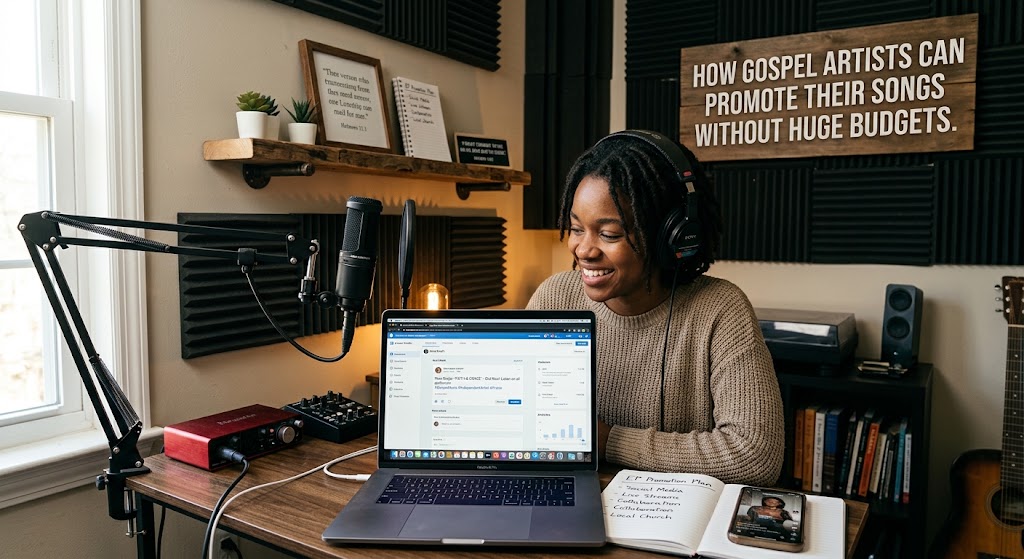
How Gospel Artists Can Promote Their Songs Without Huge Budgets
How Gospel Artists Can Promote Their Songs Without Huge Budgets is a question many independent Christian musicians ask when they are trying to reach more listeners without spending money they do not have. The good news is that promoting gospel music today does not always require a huge advertising budget, an expensive publicist, or a major record label. With the right strategy, consistency, creativity, and a genuine understanding of your audience, an upcoming gospel artist can put a song in front of thousands or even millions of potential listeners without spending a fortune.
The biggest mistake many gospel artists make is believing that promotion starts after a song has been released. In reality, effective music promotion should begin before the release date. People need to hear about the song, become curious about it, and have a reason to look forward to it. If an artist waits until the song is already available before telling anyone about it, they may miss one of the most important opportunities to create anticipation.
One of the simplest ways to promote a gospel song on a limited budget is to use social media strategically. Platforms such as Facebook, Instagram, TikTok, YouTube, and X can provide opportunities to reach people organically without paying for every impression. However, simply posting a link to a song and writing “Please stream my new song” is rarely enough. People are more likely to respond to a story, emotion, message, or experience than to a plain promotional announcement.
Before releasing a song, an artist can start sharing the story behind it. Explain what inspired the song. Talk about the season of life that produced the lyrics. Share a short testimony about the experience behind the music. If the song was written during a difficult period, explain what happened. If it was inspired by a Bible passage, discuss why that particular Scripture became meaningful to you. These stories give listeners something to connect with before they even hear the complete song.
Another powerful strategy is to create short videos from the song. Gospel artists do not need expensive cameras or elaborate studios to produce useful promotional content. A smartphone, reasonable lighting, clean audio, and a simple background can be enough to create engaging videos. An artist can sing a short portion of the chorus, perform an acoustic version, explain one line from the song, share the meaning behind a lyric, or record a simple worship moment.
Short form video is particularly valuable because people consume enormous amounts of short content every day. Instead of asking someone to listen to an entire song immediately, give them a reason to become curious about it. A powerful 15 second or 30 second section of a song can introduce the music to someone who would otherwise never have discovered the artist.
The chorus is often one of the strongest promotional tools available to a gospel artist. If the chorus contains a memorable line, meaningful message, or emotionally powerful phrase, build several pieces of content around it. Sing it from different locations. Perform it acoustically. Ask your audience what the lyrics mean to them. Explain the Scripture that inspired it. Invite other singers to perform it. The goal is not simply to advertise the song but to make the song part of a conversation.
Gospel artists should also understand the importance of storytelling. A song is more than an audio file. It can represent a testimony, a prayer, a struggle, a victory, a season of waiting, or a declaration of faith. When artists communicate the story behind their music, listeners are more likely to remember it.
How Gospel Artists Can Promote Their Songs Without Huge Budgets
For example, instead of saying, “My new song is out now, stream it everywhere,” an artist could say, “I wrote this song during a season when I had no idea how things would work out. I kept asking God for an answer, but the answer did not come immediately. Eventually I realised that faith is not only trusting God when the door opens. Sometimes faith means trusting Him while the door remains closed. That experience became the inspiration for this song.”
That type of message creates curiosity. Someone who has experienced uncertainty may want to hear the song because they identify with the story.
Another low cost promotional strategy is building relationships with gospel bloggers, Christian music websites, online radio platforms, podcasts, church media platforms, and independent music curators. Many smaller platforms are actively searching for new music and new stories to share with their audiences. An artist should not assume that only the biggest music blogs matter. A collection of smaller platforms can sometimes produce better results because their audiences may be highly engaged and specifically interested in gospel music.
When contacting bloggers or music platforms, professionalism matters. Do not send the same careless message to hundreds of people. Prepare a simple electronic press kit containing the artist’s biography, professional photographs, song title, release date, streaming links, social media handles, contact information, and a short explanation of the song. Make it easy for a blogger, presenter, or curator to understand who you are and why your music may be relevant to their audience.
Artists should also take advantage of music communities. Facebook groups, WhatsApp communities, Telegram channels, Christian forums, church communities, worship groups, and other online spaces can provide opportunities to introduce music naturally. However, constantly dropping promotional links into unrelated communities can quickly become annoying. The better approach is to participate in the community first, provide value, contribute to conversations, and share your music when it genuinely fits the discussion.
Another important method for promoting gospel music without a huge budget is collaboration. Collaboration does not always mean recording an expensive music video with a famous artist. It could mean creating a simple live performance with another singer, doing a joint acoustic session, appearing on another artist’s livestream, participating in a podcast interview, or creating a short social media video together.
The benefit of collaboration is that two audiences can meet. If you collaborate with an artist who has 5,000 followers and you have 3,000 followers, the potential value is not simply the number 8,000. The real value is the opportunity to introduce each artist to people who may never have encountered their music otherwise.
Churches can also become powerful partners for gospel artists. Many independent musicians overlook local churches while chasing online audiences. Yet churches have worship teams, youth groups, media departments, choirs, events, conferences, Bible study communities, and social media pages. An artist can approach churches professionally and offer to perform, minister, speak about the story behind a song, or participate in a worship event.
The important thing is to avoid approaching every church with the attitude of “Give me a platform.” Think about what you can contribute. If your music can encourage young people, support a worship event, strengthen a church programme, or complement a particular ministry activity, explain that clearly.
YouTube is another important platform for gospel artists operating on a limited budget. A musician does not need to release an expensive cinematic music video every time. Lyric videos, live sessions, acoustic performances, rehearsal footage, behind the scenes clips, testimony videos, worship sessions, and simple visualisers can all give a song additional life.
One song can generate many pieces of content. The full song can become one video. The chorus can become another video. The story behind the song can become another. A live performance can become another. A lyric explanation can become another. A short devotional based on the song can become another. A behind the scenes clip can become another.
This is one of the most important principles for artists with limited resources. Do not think of a song as one piece of content. Think of it as a content library.
Search engine optimisation can also help gospel artists discover listeners long after the initial release. Use clear titles and descriptions on YouTube and other platforms. If your song is about God’s faithfulness, for example, your content can naturally target phrases related to gospel songs about God’s faithfulness, worship songs about trusting God, Christian songs for difficult seasons, or inspirational gospel music.
The artist’s name should also be used consistently across platforms. If your stage name appears differently on YouTube, Instagram, Facebook, streaming platforms, and music blogs, it can make it harder for people to find you. A consistent identity makes discovery easier.
Email marketing is another low cost strategy that many musicians ignore. An artist does not need thousands of subscribers before starting an email list. Even a small group of genuinely interested listeners can be valuable. When a new song is released, the artist can notify these listeners directly instead of depending entirely on social media algorithms.
Artists should also encourage existing listeners to become promoters. If someone genuinely loves your song, ask them to share it with one person who needs the message. Encourage them to add the song to a playlist, post it on their status, send it to a friend, or use a particular section in a short video. People are more likely to participate when the request is simple.
WhatsApp can be especially useful for independent gospel artists in markets where the platform is widely used. A song can be introduced through WhatsApp Status, personal messages, broadcast lists, church communities, and music communities. The key is to avoid becoming spammy. Personal recommendations often work better than repeatedly sending the same link to everyone.
Another powerful strategy is to connect the song to a specific need. Instead of promoting every song as simply “my latest release,” identify the people who may need it. Is the song for someone grieving? Someone waiting for an answer? Someone who feels discouraged? Someone celebrating a breakthrough? Someone beginning a new chapter? Someone struggling to trust God?
When you identify the emotional need behind the song, your promotional message becomes much stronger.
For example, a gospel artist with a song about perseverance could create content around the question, “What do you do when you have prayed for months and nothing seems to change?” The song can then become part of the answer. This approach makes the promotion feel less like advertising and more like ministry.
Artists should also consider submitting their music to independent playlists. Not every playlist requires payment. Some curators accept submissions based on relevance, quality, and audience fit. Artists should research playlists that genuinely match their sound instead of submitting randomly to every playlist they can find.
It is also important to build relationships with radio presenters and online broadcasters. A short interview, acoustic performance, or song discussion can introduce an artist to a completely new audience. Community radio stations and online gospel programmes may be particularly accessible to independent musicians.
Another way to increase exposure is through live performances. Concerts, church programmes, youth events, gospel gatherings, community events, and worship nights can provide opportunities to introduce songs directly to people. When people experience a song live, they may become more emotionally connected to it.
Artists should not underestimate the power of consistency. One post rarely changes a career. One video rarely creates a sustainable audience. One song rarely transforms an unknown artist into a major star overnight. Promotion works through repetition, experimentation, relationship building, and persistence.
This does not mean posting the same advertisement every day. It means presenting the same song from different angles. Today you might share the story behind the song. Tomorrow you might perform the chorus. The next day you might explain one lyric. Later you might share a listener’s testimony. Another day you might post a live version.
The same song can remain relevant for weeks or months when it is continually connected to meaningful content.
Gospel artists should also learn to study their results. Look at which videos receive the most views, comments, shares, saves, and watch time. Pay attention to which lyrics people quote. Notice which topics generate conversations. If a particular type of content consistently performs well, create more content around that format.
The goal is not to chase every trend blindly. The goal is to understand what your audience responds to while remaining authentic to your message.
Artists should also be careful with spending money on services that promise guaranteed streams, followers, or overnight fame. Numbers can look impressive while providing little genuine value. A song with thousands of artificial plays but no real listeners, conversations, followers, or opportunities may not help build a sustainable music career.
A smaller audience that genuinely connects with your music can be far more valuable than a large audience that does not care about what you create.
The same principle applies to advertising. Paid promotion can be useful when an artist has a clear objective and knows what audience they are trying to reach. However, paid advertising should not become a substitute for building an authentic audience. If the song, profile, content, or message does not give people a reason to stay, increasing the number of people who see it will not solve the underlying problem.
The strongest answer to the question of how gospel artists can promote their songs without huge budgets is therefore not one particular platform or trick. It is the ability to turn limited resources into consistent opportunities. Your phone can become a recording device. Your story can become content. Your church can become a platform. Your listeners can become ambassadors. Your song can become dozens of pieces of content. Your relationships can become opportunities. Your testimony can become your marketing message.
Gospel music has something many other forms of music do not have: a message that can meet people during some of the most important moments of their lives. Someone may discover a song while going through heartbreak, financial difficulty, grief, uncertainty, loneliness, disappointment, or spiritual confusion. If the song speaks directly to that moment, the listener may remember the artist for years.
That is why independent gospel artists should stop believing that a small promotional budget automatically means a small future. Money can increase reach, but money alone cannot create authenticity, connection, consistency, or a meaningful message.
If you are an upcoming gospel artist, start with what you already have. Tell your story. Create useful content. Perform your music. Collaborate with other artists. Build relationships with churches and Christian media platforms. Engage your audience. Use social media intelligently. Submit your songs to relevant playlists. Make your music easy to discover. Keep creating. Keep improving. Keep showing up.
You do not need to look like a major record label to begin building a serious music career. You need a good song, a clear message, a recognisable identity, a strategy you can sustain, and the discipline to keep promoting long after the excitement of release day has disappeared.
The internet has made it possible for an independent gospel artist with a smartphone and determination to reach people far beyond their immediate environment. The opportunity is there, but opportunity only becomes results when it is followed by action.
How Gospel Artists Can Promote Their Songs Without Huge Budgets is ultimately a question about resourcefulness. The artist who learns how to maximise relationships, storytelling, social media, content creation, live performances, church communities, digital platforms, and genuine audience engagement can create significant momentum without spending enormous amounts of money.
The next big gospel song may not come from the artist with the biggest marketing budget. It may come from the artist with the most powerful message, the most persistent spirit, and the creativity to make that message impossible to ignore.

Leave a Reply