
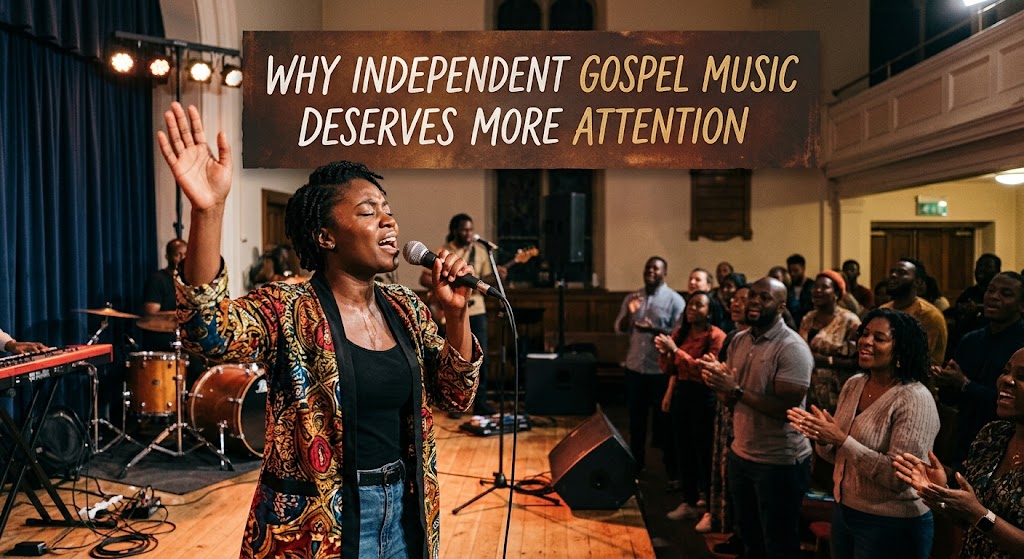
Why Independent Gospel Music Deserves More Attention
Why Independent Gospel Music Deserves More Attention
Why independent gospel music deserves more attention is a question worth asking at a time when the music industry is changing faster than ever. For decades, listeners often discovered gospel music through established record labels, major radio stations, popular television programmes, large churches and well known gospel artists. Today, however, technology has changed the way music is created, distributed and discovered. An artist with a laptop, a microphone, a smartphone and a strong message can reach listeners across the world without waiting for a major record label to approve their sound.
Independent gospel music is growing quietly in many parts of the world. From talented singers recording in modest home studios to worship leaders releasing songs directly to digital platforms, countless Christian musicians are creating music that deserves to be heard. Some may not have millions of followers, expensive music videos or powerful industry connections, but their songs can carry something incredibly valuable: authenticity.
This is one of the biggest reasons why independent gospel music deserves more attention. Independent artists often create from personal experiences rather than market calculations. Their songs may come from seasons of prayer, pain, disappointment, gratitude, restoration, spiritual growth or personal encounters with God. When listeners hear those experiences expressed through music, they may recognise parts of their own stories.
A song does not become powerful simply because it has a large production budget. Sometimes a simple recording can communicate a message more deeply than a heavily produced song. A beautiful voice is wonderful, but what keeps people returning to a song is often the message behind it. Independent gospel musicians frequently have the freedom to explore those messages without being forced to follow every commercial trend.
Another reason independent gospel music deserves more attention is the diversity it brings to Christian music. The gospel music industry is no longer limited to one particular sound. Artists from different countries, cultures, denominations and musical backgrounds are introducing fresh expressions of Christian faith. African gospel music, for example, continues to demonstrate how traditional rhythms, contemporary production and Christian messages can come together in powerful ways.
An independent gospel artist may combine local musical traditions with modern sounds in ways that a large commercial production team might never consider. This creativity creates opportunities for listeners to discover something new while still connecting with familiar themes of faith, hope, love, grace and worship.
The rise of independent gospel music also gives listeners access to voices that might otherwise remain unheard. Talent exists everywhere, but opportunity does not. There are gifted Christian musicians living in communities where access to major labels, influential producers, professional managers and large promotional budgets is limited. Digital technology has given many of these musicians an opportunity to bypass some of those traditional barriers.
A talented gospel singer in Lagos can release a song and potentially reach someone in London, Nairobi, Atlanta, Johannesburg or Toronto. A worship leader in a small community can share a song online and discover that people thousands of kilometres away are listening. This is one of the most exciting developments in modern Christian music.
However, visibility remains a major challenge. There are thousands of independent gospel artists competing for attention in an environment where listeners are already overwhelmed by new content. Every day, new songs appear on streaming services and social media platforms. Because attention is limited, talented artists can easily become invisible even when their music is excellent.
This is why listeners, Christian music blogs, churches, playlists, influencers and gospel music communities have an important role to play. Discovering independent gospel music should not be left entirely to algorithms. People can deliberately search for emerging artists, listen to their releases, share their songs and recommend them to others.
Supporting an independent gospel artist does not necessarily mean spending money. Listening to a song can help. Sharing it can help even more. Adding it to a playlist can introduce it to new listeners. Leaving a genuine comment can encourage the artist. Following the artist’s page can create a stronger audience base. Recommending the artist to a friend can open another door.
Sometimes one person sharing an unknown gospel song can become the beginning of something much bigger.
There is also something special about discovering an artist before everyone else knows their name. Music lovers understand this feeling. Finding a relatively unknown musician whose song speaks directly to your situation creates a personal connection. You become more than a casual listener. You become part of the artist’s journey.
Independent gospel music deserves attention because many of these artists are not simply trying to build entertainment careers. Some are using their musical gifts as expressions of their faith. Their songs may be personal testimonies turned into melodies. A song about God’s faithfulness may have been written after the artist survived a difficult season. A song about hope may have emerged from a period of uncertainty. A worship song may have been written after months of prayer.
That context matters.
When you know the story behind a song, you often hear the lyrics differently. Words that initially sound simple can suddenly become deeply meaningful. You realise that the artist is not merely singing about faith. They may be singing about what they have personally experienced.
This does not mean every independent gospel song is automatically better than music released by major artists. That would be unfair and unrealistic. Independent musicians can produce weak songs, just as established artists can produce exceptional ones. The point is that independent status should not be treated as a measure of quality.
A song should be judged by its message, creativity, musical quality, emotional connection and ability to communicate effectively, rather than simply by the size of the artist’s audience.
Another important reason why independent gospel music deserves more attention is experimentation. Established artists often have expectations surrounding their sound. Once an artist becomes successful with a particular style, changing direction can become risky. Fans may complain. Labels may hesitate. Marketing teams may worry about audience reactions.
Independent artists can sometimes take greater creative risks.
They can experiment with different sounds, songwriting techniques, languages, rhythms and arrangements. They can release a worship song today and an Afro gospel track next month. They can collaborate with musicians from different backgrounds. They can create songs specifically for their local communities while still making them accessible to international audiences.
This freedom can produce some of the most interesting music.
Independent gospel music is also important because it can reflect the realities of ordinary Christian life. Not every believer is standing on a massive stage with thousands of people singing along. Most Christians experience faith in ordinary environments. They deal with bills, relationships, family responsibilities, disappointment, uncertainty, temptation, career struggles, unanswered questions and personal victories.
Independent musicians often draw from these everyday experiences.
Their songs can sound like conversations between people who understand what it means to struggle and still believe. They can speak about waiting for an answer, trusting God during uncertainty, rebuilding after failure and finding strength when circumstances are difficult.
That kind of honesty can make gospel music feel more relatable.
There is also an important economic dimension to supporting independent gospel musicians. Music is not free to produce. Recording equipment costs money. Producers need to be paid. Mixing and mastering require expertise. Music videos require resources. Distribution platforms may charge fees. Promotion requires time and money. Even a seemingly simple song can involve numerous people and expenses.
When listeners support independent artists, they contribute to a creative ecosystem that allows those artists to continue producing music.
This does not mean artists should be supported blindly. Christian listeners can support musicians while still expecting professionalism, integrity and quality. Independent artists should also understand that having a powerful testimony does not eliminate the need to improve their craft.
Talent should be developed.
A singer can have a beautiful testimony and still need vocal training. A songwriter can have a powerful message and still need to learn songwriting structure. A producer can have great ideas and still need to improve technical skills. An artist can have spiritual passion and still need to understand branding, distribution and audience development.
Faith and excellence do not have to compete with each other.
Independent gospel artists should therefore see the growing digital music environment as both an opportunity and a responsibility. Having access to global audiences is exciting, but attention must be earned. Listeners have countless alternatives, so artists must give them reasons to stay.
That begins with authenticity.
People can often recognise when an artist is trying too hard to imitate someone else. The most memorable independent musicians are frequently those who discover their own identity. They understand their story, their sound, their audience and the message they want to communicate.
Christian music does not need thousands of identical voices.
It needs diverse voices pointing listeners towards meaningful expressions of faith.
Independent gospel music also has the potential to introduce new songwriting perspectives. The Christian faith contains an enormous range of experiences, and different writers naturally interpret those experiences differently. One songwriter may write about God’s protection. Another may focus on forgiveness. Someone else may explore doubt, waiting, gratitude or restoration.
These different perspectives enrich the wider gospel music landscape.
Churches can also play a major role in giving independent gospel musicians more attention. Instead of repeatedly relying only on familiar names, churches and Christian organisations can create opportunities for emerging artists. Local gospel music events can feature independent musicians. Youth programmes can provide platforms for young Christian songwriters. Worship communities can create opportunities for musicians who are still developing their careers.
Some of today’s most influential gospel musicians may currently be unknown.
They may be recording in bedrooms, small studios, churches or rented spaces. They may have only a few hundred followers. They may be uploading songs that receive modest attention. Yet behind those small numbers could be extraordinary potential.
This is why numbers should not always determine who deserves to be heard.
A song with 500 streams can still change one person’s life.
An artist with 1,000 followers can still encourage someone who desperately needs hope.
A musician without a record label can still create music that deserves international recognition.
The modern music industry has made discovery more democratic, but it has not made discovery automatic. Independent gospel artists still need people willing to look beyond the biggest names.
Music blogs have a particularly important role here. A Christian music blog can introduce emerging artists to readers who would never have discovered them otherwise. Reviews, interviews, artist profiles, new music features and playlist recommendations can help independent musicians gain visibility.
This is where music journalism can become more than entertainment reporting. It can become a bridge between creators and listeners.
When a blog publishes an article about an independent gospel artist, it gives readers an opportunity to discover a new voice. When readers share that article, the artist’s reach grows. When the artist gains new listeners, the cycle continues.
The result is a healthier Christian music ecosystem.
Listeners should also become more intentional about their music consumption. Instead of repeatedly listening to the same established artists, they can occasionally search for emerging gospel musicians. Explore new Christian playlists. Check music blogs. Follow independent artists. Listen to songs from different countries. Give unfamiliar sounds a chance.
You might discover your next favourite artist.
More importantly, you might discover a song that speaks to you at exactly the moment you need it.
The beauty of music is that you never know where the right song will come from.
It may come from a famous artist with millions of listeners. It may also come from someone recording their first serious project in a small studio.
That is why independent gospel music deserves more attention.
It deserves attention because talent is not exclusive to famous names. It deserves attention because meaningful Christian music can come from unexpected places. It deserves attention because emerging artists bring fresh perspectives, cultural diversity and personal stories into the gospel music conversation.
Most importantly, independent gospel music deserves attention because the value of a song cannot always be measured by its popularity.
Some songs are popular because they are heavily promoted.
Others become popular because people genuinely connect with them.
And somewhere among the thousands of independent gospel releases appearing every year are songs that have not yet found the audience they deserve.
Perhaps the next great gospel voice is not waiting for a record label.
Perhaps the next powerful worship song is already online.
Perhaps the artist who will encourage thousands of people has already released a song that only a few people have heard.
The question is whether we are willing to listen.
If Christian music is truly about communicating faith, encouraging people and pointing hearts towards God, then the Christian music community should make room for both established voices and emerging ones. There should be space for the superstar and the newcomer, the professional studio production and the humble recording, the internationally recognised artist and the independent musician still building an audience.
Independent gospel music does not need attention merely because independent artists need promotion. It deserves attention because the wider Christian music community benefits when more authentic voices are given an opportunity to be heard.
The next time you are searching for something new to listen to, do not only search for the biggest gospel artists. Search for the names you have never heard before. Click on that unfamiliar song. Give that emerging musician a chance. Listen beyond the follower count.
You may discover something remarkable.
And you may realise that some of the most powerful gospel music is not necessarily coming from the biggest stages.
Sometimes it is coming from somewhere much quieter, from an independent artist with a story, a gift, a microphone and a message they simply cannot keep to themselves.
That is exactly why independent gospel music deserves more attention.

Leave a Reply