
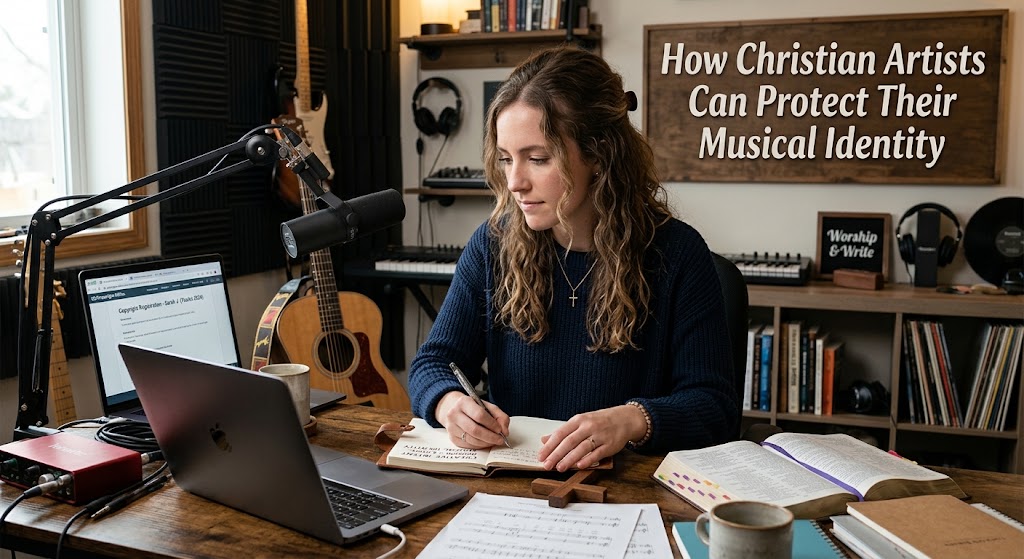
How Christian Artists Can Protect Their Musical Identity
How Christian Artists Can Protect Their Musical Identity
How Christian Artists Can Protect Their Musical Identity is an important question in an industry where musical trends change almost every day. Christian music continues to evolve, and artists now have access to more opportunities than ever before. A talented singer can record a song from a bedroom, distribute it globally, build an audience on social media, collaborate with musicians from different countries and potentially reach millions of listeners without signing with a traditional record label. Yet, with all these opportunities comes a serious challenge: maintaining a unique musical identity.
A Christian artist is not simply trying to create music that sounds good. There is often a deeper purpose behind the music. For many artists, their songs are connected to their faith, personal experiences, biblical convictions, ministry, culture and understanding of God. When an artist loses that identity while chasing whatever is currently popular, the music can become difficult to distinguish from everything else.
Musical identity is what makes an artist recognisable. It is the combination of sound, voice, songwriting style, lyrical themes, personality, values, cultural influences and artistic choices that makes the artist different from everyone else. It does not mean refusing to grow or experiment. Instead, it means knowing what makes your music yours and refusing to abandon it simply because another sound is getting more streams.
One of the most important ways Christian artists can protect their musical identity is by understanding who they are before trying to determine what the market wants. This sounds simple, but it can be surprisingly difficult. Social media constantly exposes musicians to successful artists, viral songs, trending production styles and popular visual aesthetics. An upcoming gospel artist can easily wake up one morning convinced that the only way to succeed is to sound exactly like the artist currently dominating the charts.
The problem is that imitation may produce attention, but it rarely produces a lasting identity. An artist may gain a few views by copying a trend, but listeners eventually need a reason to remember that artist. If the music could easily have been released by ten different musicians, there may be very little that makes the artist memorable.
Christian artists therefore need to ask difficult questions about themselves. What kind of message do I want my music to communicate? What experiences have shaped my songwriting? What musical traditions influenced me? What makes my voice different? What subjects naturally appear in my songs? What kind of emotions do I want listeners to experience? What do I want people to remember when they hear my music?
These questions can help an artist discover a musical identity rather than manufacture one.
Another important step is understanding the difference between inspiration and imitation. Every musician is influenced by someone. There is nothing wrong with admiring another Christian artist, studying their songwriting or learning from their production techniques. In fact, studying great musicians can help an artist develop considerably. The danger begins when admiration becomes dependence.
An artist should be able to learn from others without becoming a copy of them. You can study how another singer approaches harmony without reproducing their entire vocal identity. You can appreciate another songwriter’s storytelling without copying their lyrical patterns. You can enjoy a particular production style without allowing it to completely replace your own artistic instincts.
Christian artists should also protect their identity by developing a strong understanding of their message. A musical identity without a meaningful message can become little more than branding. For Christian musicians, this becomes even more important because their faith is often central to why they create music in the first place.
This does not mean every Christian song must sound like a sermon. Christian artists can write about relationships, disappointment, family, ambition, loneliness, gratitude, personal growth, cultural experiences and everyday life. However, their worldview can still influence how they approach those subjects. The artist’s faith can be present in the perspective, honesty and hope within the music.
When an artist knows what they believe and why they create, it becomes easier to make artistic decisions. They are less likely to change their message simply because someone says a particular topic will attract more attention.
Another powerful way Christian artists can protect their musical identity is by embracing their cultural background. This is particularly important in today’s global Christian music scene. Gospel music is no longer limited to one geographical sound. African gospel, contemporary worship, traditional gospel, Christian hip hop, Christian R&B, gospel soul and numerous other expressions continue to develop and influence audiences around the world.
An artist does not necessarily have to remove their cultural identity to become internationally relevant. In many cases, their culture may be exactly what makes their music interesting to an international audience.
A Nigerian Christian artist, for example, may draw inspiration from African rhythms, indigenous languages, local musical traditions and personal experiences. Rather than seeing these elements as limitations, the artist can treat them as valuable parts of their musical identity. Global audiences are often attracted to authenticity because it gives them an opportunity to experience something they cannot find everywhere else.
Christian artists should therefore avoid the temptation to become artificially international by removing everything that makes their music culturally distinctive. Global appeal does not require cultural erasure.
Songwriting is another major part of protecting musical identity. An artist’s voice is important, but their songwriting can become an even stronger signature. Certain artists are known for powerful storytelling. Others are known for simple worship lyrics. Some write deeply personal songs, while others specialise in songs built around memorable declarations of faith.
Artists should pay attention to the subjects, phrases, storytelling approaches and emotional perspectives that naturally appear in their writing. Over time, patterns will emerge. Those patterns can become part of their identity.
At the same time, Christian songwriters should avoid becoming predictable. Protecting your identity does not mean writing the same song repeatedly. Growth is necessary. An artist can maintain a recognisable identity while exploring new sounds, themes and songwriting techniques.
Think of musical identity as a foundation rather than a prison. Your foundation should remain strong enough to support experimentation.
Production also matters. A songwriter may have a unique voice and powerful message, but the wrong production choices can make the music sound generic. Christian artists should therefore work with producers who understand their vision rather than simply choosing producers because they are currently popular.
A good producer should help reveal what is already distinctive about an artist. The producer should not force every artist into the same sonic template.
Artists should be willing to communicate clearly with producers. They should be able to explain the atmosphere they want, the emotions they want listeners to feel, the instruments they like, the sounds they dislike and the kind of musical world they want their songs to inhabit. The more clearly an artist understands their identity, the easier it becomes to communicate that identity to collaborators.
Christian artists should also be careful about allowing commercial pressure to control every creative decision. The desire for streams, followers and recognition is understandable. Music is an industry, and artists need audiences. However, constantly chasing numbers can eventually create creative exhaustion.
Imagine releasing one style of song because it is trending, then changing your sound again because another style becomes popular, then changing your lyrical approach because a particular type of content performs better on social media. Eventually, listeners may no longer know what the artist represents.
Trends can be useful tools, but they should remain tools. They should not become the artist’s identity.
An artist can use a trending sound while still maintaining their own vocal style, songwriting perspective and message. They can participate in cultural conversations without abandoning their musical personality. The goal is not to ignore the market but to avoid becoming controlled by it.
Christian artists also need to build a team that respects their identity. Managers, producers, publicists, graphic designers, videographers and other collaborators can have a significant influence on how an artist is perceived. A talented artist surrounded by people who constantly push them to imitate others may eventually lose confidence in their own creative direction.
The right team should challenge an artist without erasing them. Good collaborators can say, “This could be stronger,” while still respecting the artist’s voice. They should understand the difference between improving a song and turning it into something completely different.
Artists should also create clear boundaries around their brand. This includes decisions about visual identity, social media communication, public appearances, collaborations and the kind of music they release. When everything is connected to a clear artistic vision, audiences begin to recognise the artist beyond individual songs.
Consistency is particularly important. Musical identity is not built from one song. It develops through repeated exposure. If listeners repeatedly encounter similar qualities in an artist’s music, voice, message and presentation, they begin to associate those qualities with that artist.
This does not mean every song should sound identical. It means there should be a recognisable thread connecting the work.
Christian artists should also learn to accept that not everyone will like their sound. This may be one of the hardest lessons in music. When an artist sees another musician gaining millions of views, it is tempting to assume that something is wrong with their own music.
But different audiences respond to different sounds.
Trying to appeal to everyone can make an artist less appealing to anyone. Sometimes a musician becomes successful precisely because they serve a particular audience exceptionally well. Instead of asking, “How can everyone like my music?” an artist may benefit more from asking, “Who is this music for, and how can I serve that audience better?”
Feedback is valuable, but not every opinion should become an instruction. Artists need enough humility to listen and enough confidence to filter. A listener may identify a genuine weakness in a song, but another person’s preference does not automatically mean the artist should abandon their style.
Christian artists should especially guard against criticism that tells them their music is only valuable if it sounds like somebody else’s. There is room in Christian music for different voices, cultures, genres and approaches.
Another important consideration is spiritual identity. For Christian artists, musical identity should not become separated from personal faith. It is possible for an artist to become so focused on branding, numbers and career growth that the spiritual foundation behind the music becomes neglected.
An artist may have thousands of followers and still need time away from the public to pray, reflect, study Scripture and grow personally. The depth of the artist’s personal life can eventually influence the depth of their music.
This is particularly important when writing songs about experiences the artist has not personally lived. Authenticity is difficult to manufacture. Listeners can often sense when a song comes from genuine experience and when it was written simply because a particular Christian theme is commercially attractive.
Artists do not have to have perfect lives before they can create meaningful Christian music. In fact, honesty about weakness, doubt, disappointment and restoration can make music more relatable. The important thing is that the artist does not pretend to be someone they are not.
Protecting musical identity also requires patience. Many artists want to discover their sound immediately. They want their first releases to establish everything about them. But identity often develops through experimentation.
An artist may record songs that later feel completely different from their current style. That does not necessarily mean those songs were failures. They may have been part of the process that helped the artist discover what they actually wanted to become.
The key is to keep learning. Study music. Listen widely. Write constantly. Experiment with production. Perform live. Collaborate. Pay attention to audience reactions. Review your own catalogue. Notice what feels authentic and what feels forced.
Over time, an artist begins to recognise their own creative voice.
Christian artists should also remember that musical identity is not something they have to defend by refusing every suggestion. There is a difference between protecting your identity and protecting your ego. An artist who refuses all criticism may remain creatively stagnant. An artist who accepts every criticism may lose their identity.
The healthier approach is discernment.
Listen. Consider. Test. Improve what genuinely needs improvement. Reject what compromises the core of who you are.
Ultimately, how Christian artists can protect their musical identity comes down to knowing who they are, knowing why they create and knowing what they refuse to sacrifice for attention. Trends will change. Algorithms will change. Platforms will change. Musical fashions will change. What is popular today may be forgotten tomorrow.
An artist who builds everything around a trend may disappear when the trend disappears. But an artist who builds around authenticity, musical excellence, meaningful songwriting, cultural identity, personal conviction and genuine faith has something much stronger to build upon.
Christian music does not need every artist to sound the same. It needs artists who are willing to bring their own voices to the table. It needs musicians who can learn from others without becoming copies. It needs songwriters who can communicate faith without sacrificing creativity. It needs artists who understand that excellence and authenticity can exist together.
The strongest musical identity is not necessarily the loudest one. It is the one listeners can recognise because it feels genuine. It is the sound that makes someone hear a song and immediately think of the artist behind it. It is the message that remains meaningful even after the trend has disappeared.
For Christian artists, protecting that identity may sometimes mean saying no to opportunities that do not fit their direction. It may mean taking longer to release a song because the music does not yet feel right. It may mean refusing to copy a successful artist. It may mean keeping cultural elements that others consider outdated. It may mean choosing substance over temporary popularity.
Those decisions may not always produce instant results, but they can create something much more valuable: trust.
When listeners trust an artist’s voice, they are more likely to follow them through different seasons. They will accept experimentation because they understand the foundation. They will recognise growth without confusing it with imitation. Most importantly, they will know that the person behind the music is not simply chasing whatever happens to be popular.
Christian artists do not have to choose between staying relevant and remaining authentic. They can evolve without disappearing into the crowd. They can embrace modern production while retaining their unique sound. They can use social media without allowing algorithms to dictate their message. They can learn from successful musicians without becoming copies of them.
The challenge is knowing where adaptation ends and identity begins.
That is why every Christian artist should periodically step back and ask a simple question: If all the trends disappeared tomorrow, what would still make my music mine?
The answer to that question may reveal the very identity worth protecting.
For artists building a long term career in Christian music, the goal should not simply be to create one successful song. The goal should be to build a body of work that carries a recognisable voice, communicates something meaningful and remains connected to the values that inspired the artist to begin creating music in the first place.
Musical identity is not built overnight. It is discovered, developed, tested and strengthened over time. Christian artists who protect that identity while continuing to grow give themselves the opportunity to create music that does more than follow a moment. They create music that can become part of people’s stories, memories, worship and journeys of faith.
And perhaps that is the greatest measure of musical identity: not how closely an artist sounds like what is popular today, but how unmistakably they sound like themselves.

Leave a Reply