
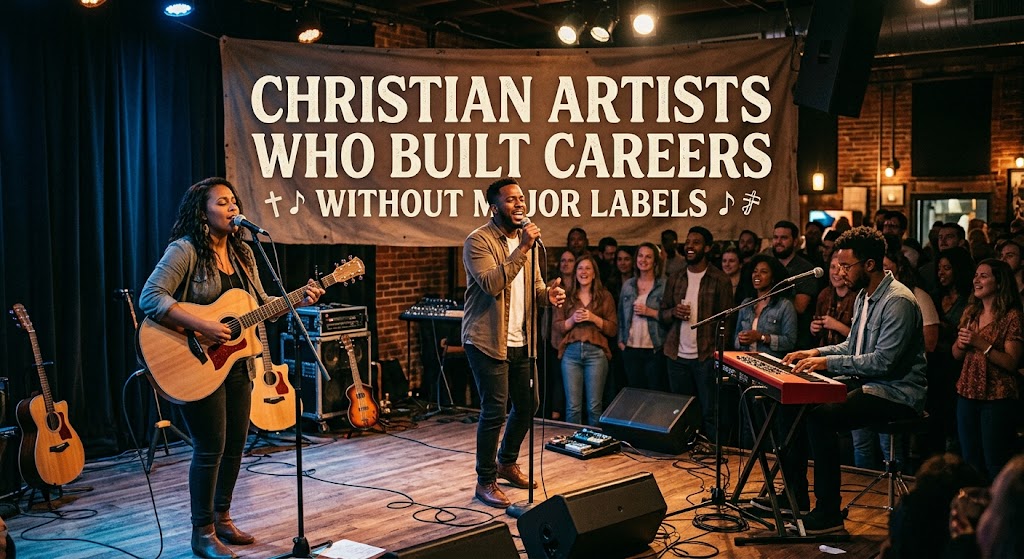
Christian Artists Who Built Careers Without Major Labels
Christian Artists Who Built Careers Without Major Labels
The music industry has changed dramatically over the past two decades, and Christian music has not been left behind. There was a time when becoming a successful Christian artist seemed almost impossible without signing a contract with a major record label. Artists needed financial backing, professional studios, distribution networks, radio connections, marketing teams and industry relationships to have a realistic chance of reaching a large audience. Today, the story is very different. Christian artists can record music independently, distribute it around the world, promote it through social media and build loyal audiences without depending entirely on traditional record companies. This has created a new generation of Christian artists who built careers without major labels.
The rise of digital music platforms has played a major role in this transformation. Platforms such as YouTube, Spotify, Apple Music and other streaming services have made it possible for independent musicians to release music directly to listeners. Social media has also changed the relationship between artists and their audiences. Instead of waiting for a record executive to discover them, musicians can introduce their music directly to millions of potential listeners. For Christian artists, this development has been particularly significant because it allows them to share songs inspired by their faith without necessarily waiting for approval from a major music company.
Christian artists who built careers without major labels demonstrate that there is more than one path to success in the modern music industry. Their journeys also challenge the idea that an artist must have a huge financial investment behind them before they can make an impact. While building an independent music career is certainly not easy, technology has reduced many of the barriers that once stood between talented Christian musicians and their audiences.
One of the most interesting examples is Chance the Rapper. Although he is not exclusively a Christian artist, faith and Christianity have been significant themes throughout portions of his music and public life. His career became one of the most widely discussed examples of an artist achieving major success without signing to a traditional major label. His independent approach demonstrated that an artist could use digital distribution, mixtapes, social media and direct fan engagement to reach an enormous audience.
Another important example is Forrest Frank, whose rise has shown how powerful independent Christian music can become when combined with modern digital strategies. Frank has become one of the most recognisable names in contemporary Christian music, particularly among younger listeners, while maintaining an approach strongly connected to digital platforms and direct audience engagement. His success demonstrates how Christian music can cross traditional boundaries and reach listeners through streaming and social media rather than relying exclusively on conventional industry structures.
Kirk Franklin also provides an important lesson in artistic independence and ownership. While Franklin has worked with major music companies and has had extensive industry partnerships, his career has been strongly shaped by his own creative vision and leadership. His story demonstrates that independence does not always mean avoiding every major company. It can also mean maintaining significant control over one’s artistic direction, ministry and brand while using established industry infrastructure when it makes strategic sense.
Jonathan McReynolds is another artist whose career illustrates the changing Christian music landscape. Known for combining gospel, contemporary sounds and deeply personal messages, McReynolds has built a respected identity around authenticity and musicianship. His journey shows that Christian artists do not necessarily have to imitate mainstream music trends to establish a meaningful audience. Strong songwriting, a distinctive identity and consistent communication with listeners can create long term value.
Tasha Cobbs Leonard also represents the power of building a strong identity around worship music. Her career has grown through powerful songs, live worship experiences, collaborations and a strong connection with Christian audiences. Her journey highlights something many aspiring artists sometimes overlook. A successful music career is not built solely through record contracts. It is built through relationships, songs, performances, consistency and the ability to connect emotionally with listeners.
The story of Christian artists who built careers without major labels is particularly relevant to emerging musicians in Africa. Gospel music has a massive audience across countries such as Nigeria, Ghana, Kenya and South Africa, and African Christian artists are increasingly using digital platforms to reach listeners outside their home countries. An artist in Lagos can release a song today and potentially attract listeners in London, Atlanta, Johannesburg, Toronto or Accra without first securing an international record deal.
This is one reason Afro Gospel has become increasingly influential. Artists can blend African rhythms with contemporary worship, hip hop, R&B, pop and other genres while distributing their work globally. The internet has made geographical boundaries less important. An independent Christian artist with a compelling song can potentially reach an audience that would have been impossible to access through traditional music distribution alone.
However, building a successful independent career does not mean simply recording a song and uploading it online. Thousands of songs are released every day, and most receive very little attention. Independent Christian artists therefore need to understand that independence comes with responsibility. When there is no major label handling marketing, an artist must think about branding, content creation, audience development, distribution, promotion and long term strategy.
One of the biggest advantages of remaining independent is creative freedom. Artists who work without major labels may have greater flexibility when deciding what songs to release, how those songs should sound and what message they want to communicate. They can experiment with different styles without necessarily needing approval from executives whose primary concern may be commercial performance.
For Christian musicians, creative freedom can be particularly important because music is often connected to personal faith and testimony. A song may come from a deeply personal experience, a difficult season, a Bible passage or a desire to encourage people going through challenges. Independent artists can sometimes communicate these experiences more freely because they have greater control over their creative decisions.
Another advantage is the potential for stronger relationships with fans. Social media has transformed artists from distant celebrities into accessible personalities. A Christian artist can post behind the scenes content, share the story behind a song, respond to comments, livestream worship sessions and communicate directly with listeners. These interactions can create a community rather than simply a customer base.
Independent Christian artists also have access to affordable recording technology that was unimaginable for previous generations. A talented musician can record high quality vocals using relatively affordable equipment and software. Professional production is still valuable, but artists no longer need access to a huge commercial studio before they can create music.
Digital distribution has also removed another major barrier. Independent musicians can use music distribution services to place their songs on major streaming platforms. This means that a new Christian artist does not necessarily need a physical distribution network to reach listeners. Music can move from a computer or studio to audiences around the world through digital channels.
YouTube has become another powerful tool for Christian musicians. An artist can upload worship sessions, lyric videos, acoustic performances, music videos, live performances and short form content. Sometimes a simple performance recorded with genuine emotion can connect with viewers more effectively than an expensive production.
TikTok and other short form platforms have also changed how songs are discovered. A Christian song can gain attention because of a particular lyric, worship moment or testimony. Once listeners discover the song through short form content, they may search for the complete version on streaming platforms.
This creates an important lesson for Christian musicians. The song itself remains important, but the way people discover the song has changed. Artists must think beyond traditional music promotion. A thirty second video, a personal testimony or a behind the scenes story can sometimes introduce an artist to more people than a conventional advertisement.
There is also a financial argument for independence. Major record contracts can provide funding and infrastructure, but they can also involve contractual obligations and revenue sharing. Independent artists who successfully manage their careers may retain greater control over their income streams and intellectual property. This does not mean every independent artist will make more money than an artist signed to a major label. It simply means that ownership and control can become significant advantages when an artist builds a sustainable audience.
Nevertheless, independence has serious challenges. An artist without major label support may have to pay for recording, mixing, mastering, artwork, marketing, music videos, distribution and promotion. They may also need to handle business administration and communication with multiple partners. The freedom that comes with independence therefore requires discipline.
Another challenge is discoverability. Having complete creative freedom means little if nobody hears the music. This is why independent Christian artists need a consistent promotional strategy. They need to understand their audience, create compelling content and release music strategically rather than simply uploading songs whenever they feel like it.
Consistency is one of the most important characteristics shared by successful independent artists. Audiences need repeated reasons to pay attention. This does not necessarily mean releasing a new song every week. It means remaining active through music, videos, stories, performances and meaningful communication.
Christian artists also need to remember that building a ministry through music is different from simply chasing numbers. Streaming figures, followers and views can be useful indicators, but they do not tell the entire story. One song that encourages someone during a difficult period can have a deeper impact than a million passive views.
This is where Christian artists have an opportunity that extends beyond conventional entertainment. Gospel music has always been connected to testimony, encouragement, worship and faith. An independent Christian artist can use modern technology to continue that tradition while reaching audiences in ways previous generations could not imagine.
The success of Christian artists who built careers without major labels also raises an important question. Do aspiring Christian musicians still need record labels?
The answer depends on the individual artist. A major label can provide resources, professional teams, marketing power, industry relationships and international infrastructure. For some artists, those advantages can accelerate growth considerably. For others, remaining independent may provide the freedom and flexibility they need.
The real goal should not necessarily be avoiding record labels at all costs. The goal should be building a sustainable career and understanding what an artist is giving up or gaining through every business decision. An independent artist who understands contracts, publishing, royalties, licensing, branding and digital distribution can make much stronger decisions than an artist who simply signs the first contract offered to them.
The modern Christian music industry therefore provides more opportunities than ever before. An artist no longer has to wait in an office hoping that an executive will discover their talent. They can build an audience first. They can release music independently. They can develop a brand. They can demonstrate their ability to connect with listeners. Then, if a record company becomes interested, they can negotiate from a much stronger position.
This shift is especially encouraging for young Christian musicians. Someone who has been writing songs in their bedroom, leading worship at a local church or creating gospel content online may have more opportunities today than they realise. The challenge is turning talent into a consistent and sustainable system.
The stories of Christian artists who built careers without major labels ultimately prove that the music industry is no longer controlled by a single pathway. There are multiple routes to reaching an audience, building a reputation and creating a meaningful career. Some artists will choose major labels. Others will work with independent labels. Some will remain completely independent. Others will build hybrid careers by partnering with companies for specific projects while retaining control over important parts of their business.
What matters most is understanding the changing environment. Talent remains important, but talent alone is rarely enough. Successful independent Christian artists combine musical ability with consistency, discipline, business knowledge, digital communication and a clear understanding of their audience.
For listeners, this development is equally exciting. It means there are more Christian voices to discover than ever before. Independent artists are experimenting with new sounds, sharing personal testimonies and introducing fresh perspectives into Christian music. Some will become household names, while others may remain relatively unknown but continue to make a profound difference in the lives of the people who hear them.
The future of Christian music may therefore belong to artists who understand both ministry and modern media. The ability to write a powerful worship song is valuable, but so is the ability to tell the story behind that song. The ability to sing beautifully is important, but so is the ability to build a community around the music. The ability to record professionally matters, but so does consistency in connecting with listeners.
Christian artists who built careers without major labels have shown that the traditional gatekeepers no longer control every door. The internet has created new opportunities, streaming has transformed distribution, and social media has changed artist and fan relationships. None of this guarantees success, but it gives determined musicians more ways to pursue their calling.
Perhaps the biggest lesson is that an artist does not have to wait for permission before starting. A major record deal can be useful, but it is not the definition of success. A Christian musician can begin with a song, a message, a small audience and a willingness to keep improving. Over time, that small audience can become a community, that community can become a movement, and that movement can create a career.
The rise of independent Christian music is therefore more than an industry story. It is a story about access, creativity, technology and faith. It is evidence that musicians can build something meaningful without necessarily following the traditional route. As more Christian artists embrace digital platforms and direct relationships with their audiences, the music landscape will continue to evolve.
For aspiring gospel musicians, the message is simple. Do not underestimate the power of starting small. You may not have a major label behind you today, but you have access to tools that previous generations of musicians could only dream about. Learn your craft, understand your audience, protect your work, remain consistent and use technology wisely.
The next major Christian music voice may not be discovered by a traditional record executive. That artist may already be recording songs in a bedroom, leading worship in a small church, uploading performances online or building a community through social media. The industry has changed, and the possibilities are bigger than ever.
That is why the stories of Christian artists who built careers without major labels matter. They remind aspiring musicians that there is no single formula for success. A major label can open doors, but determination, authenticity, consistency, strong music and genuine connection with an audience can build doors of their own.

Leave a Reply