
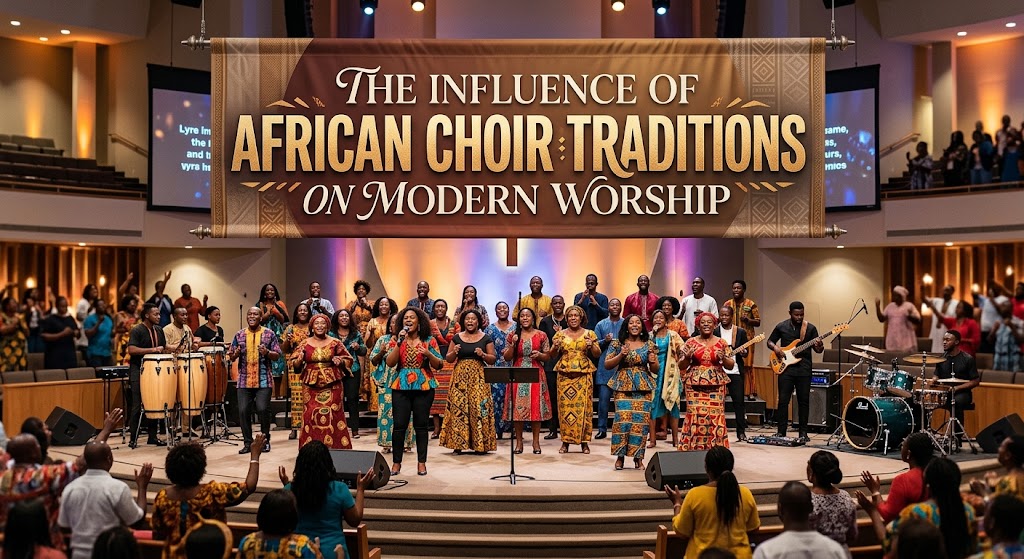
The Influence of African Choir Traditions on Modern Worship
The Influence of African Choir Traditions on Modern Worship
African choir traditions have had a remarkable influence on the sound, structure, energy and emotional character of modern worship. From powerful harmonies and call and response patterns to rhythmic arrangements, spontaneous singing and communal participation, many elements associated with African choral music have found their way into churches and worship spaces around the world. The influence of African choir traditions on modern worship is not simply about adding African sounds to Christian music. It represents a deeper connection between culture, community, spirituality and the way believers express their faith through music.
Across Africa, singing has traditionally been much more than entertainment. Music can be woven into celebrations, ceremonies, community gatherings, storytelling, mourning, thanksgiving and spiritual expression. In many communities, people do not simply listen to music. They participate in it. This participatory culture has helped shape the way African choirs approach worship, creating an environment where singers and congregations often become part of the same musical experience.
The influence of African choir traditions on modern worship can be heard clearly in the increasing popularity of large vocal arrangements, layered harmonies and energetic congregational singing. Modern worship teams in different parts of the world have adopted techniques that have existed in African musical traditions for generations. A worship leader may sing a phrase and the congregation responds. A choir may repeat a simple line while different vocal sections create harmonies around it. The music can gradually build in intensity until the entire congregation is singing together.
One of the most recognisable African musical traditions influencing modern worship is call and response. In this structure, one singer or group introduces a phrase while another singer, choir or congregation responds. Although call and response can be found in many musical cultures, it has a particularly strong presence across numerous African traditions. Its effectiveness in worship comes from its ability to transform listeners into participants.
Instead of placing all responsibility on the worship leader, call and response creates musical conversation. The worship leader might sing a declaration of faith, and the congregation responds with another phrase. This can make worship feel more communal and spontaneous. Modern Christian musicians have increasingly embraced this approach because it can create an atmosphere where people feel directly involved rather than simply watching a performance.
Another major contribution is the emphasis on vocal harmony. African choirs are often known for rich harmonies created by multiple vocal parts working together. Instead of depending entirely on a single lead vocalist, the choir can create a full musical sound through the interaction of different voices. This approach has influenced modern worship arrangements, particularly in churches where worship teams increasingly use multiple singers to create depth and emotional movement.
Harmony can also communicate unity. Different voices may sing different notes while contributing to the same musical message. This makes the choir a powerful representation of collective expression. In Christian worship, that idea carries particular significance because worship is often understood as a communal act rather than merely an individual experience.
The influence of African choir traditions on modern worship is also visible in the use of repetition. Many African musical traditions use repeated phrases, rhythms and vocal patterns to create momentum and participation. In worship, repetition can give people an opportunity to internalise a message. A simple line repeated several times can become more than a lyric. It can become a declaration that worshippers sing, remember and carry with them.
This approach can be especially powerful when the repeated words are based on biblical themes such as faith, hope, gratitude, salvation, God’s faithfulness and praise. Rather than presenting a song with numerous complicated verses, a worship arrangement may focus on a central message and allow the congregation to repeat it until everyone becomes familiar with it.
Rhythm is another important area where African choir traditions have influenced modern worship. African music is extraordinarily diverse, so it would be inaccurate to describe all African music as having one particular rhythm. However, many African musical traditions place strong emphasis on rhythm, movement and interaction between different musical parts. These characteristics have increasingly appeared in contemporary gospel and worship music.
Drums, percussion, hand claps and rhythmic vocal patterns can transform the atmosphere of a worship gathering. A song that begins quietly may gradually become more energetic as percussion and additional voices enter. The result can encourage physical participation through clapping, dancing, movement and enthusiastic singing.
This rhythmic approach has contributed significantly to the international growth of African gospel music. Artists and choirs from countries such as Nigeria, Ghana, South Africa, Kenya and other parts of the continent have introduced audiences around the world to distinctive approaches to Christian music. African gospel has demonstrated that worship music can remain deeply rooted in Christian theology while also reflecting local culture, language, rhythm and musical identity.
Nigeria, in particular, has become an important centre of contemporary African gospel music. Nigerian gospel artists, church choirs and worship teams have produced music that combines indigenous musical influences with contemporary production. The result is a sound that can feel familiar to international Christian audiences while still retaining strong African characteristics.
The influence of African choir traditions on modern worship is not limited to sound. It also involves the philosophy of participation. In many African worship environments, the boundary between choir and congregation can become less rigid. The choir may lead, but the congregation is expected to respond, sing, clap and participate. This creates an atmosphere where worship is experienced collectively.
That collective approach is increasingly attractive to churches around the world. Modern worship leaders are constantly searching for ways to make congregational worship more engaging without turning it into a concert. African choral traditions offer a powerful example of how musical energy can encourage participation while keeping the congregation at the centre of the experience.
Another significant influence is spontaneity. African gospel worship can often involve extended musical sections where singers improvise, repeat phrases, introduce new vocal lines or respond to the atmosphere of the congregation. This flexibility allows worship leaders to move beyond a strict beginning and ending structure.
Modern worship has increasingly adopted similar practices. A worship song may finish, but the musicians continue playing while the worship leader repeats a particular phrase. The choir may introduce harmonies. The congregation may respond. The band may gradually change the rhythm. This creates a sense that the worship experience is developing naturally rather than simply following a predetermined script.
This does not mean every spontaneous worship moment is directly borrowed from Africa. Improvisation exists in many musical cultures. However, African musical traditions provide a strong example of how repetition, rhythm, vocal interaction and improvisation can work together to create a dynamic communal experience.
Language is another important part of this influence. African choirs have demonstrated that Christian worship does not need to be restricted to one dominant language. Worship can be expressed in indigenous languages while communicating universal Christian themes. This has encouraged greater appreciation for multilingual worship and culturally diverse Christian music.
When worshippers hear biblical messages expressed in their own language and musical tradition, the experience can feel deeply personal. African gospel artists have increasingly released songs that move between English and indigenous languages, allowing different audiences to connect with the music at multiple levels.
This cultural confidence has also encouraged Christian musicians in other parts of the world to embrace their own musical identities. Instead of trying to make every worship song sound Western, churches and artists are increasingly incorporating local instruments, rhythms, languages and vocal styles into Christian music.
The influence of African choir traditions on modern worship is therefore part of a larger movement toward global Christianity being reflected in global Christian music. The modern worship landscape is no longer dominated by one musical sound. Worship songs can now emerge from Africa, Asia, Latin America, Europe, North America and other regions before spreading internationally through streaming platforms and social media.
Technology has accelerated this process dramatically. A choir recording from Lagos can reach worshippers in London, Johannesburg, Atlanta or Sydney within minutes. A gospel song recorded in Accra can become popular among listeners who may not understand every word but connect with its rhythm, harmonies and spiritual message.
Streaming platforms have made African worship music more accessible than ever. Social media has also allowed churches and independent artists to showcase live worship sessions, choir performances and music videos to global audiences. This has helped expose listeners to musical traditions they might never have encountered through traditional Christian radio.
The visual side of African choir performances has also contributed to their appeal. Coordinated singing, expressive movement, colourful cultural elements and energetic congregational participation can create powerful visual experiences. In the age of short form video, these moments can spread rapidly online.
However, the growing global popularity of African influenced worship also raises an important question about cultural appreciation and authenticity. There is a difference between genuinely appreciating African musical traditions and simply borrowing African sounding elements because they are fashionable.
The influence of African choir traditions on modern worship is most meaningful when artists understand and respect the musical traditions they are incorporating. African music is not one single genre. The continent contains thousands of cultures, languages and musical practices. Nigerian choral traditions are not identical to South African choral traditions, just as Ghanaian gospel music is not identical to Kenyan worship music.
Recognising this diversity prevents African music from being reduced to a collection of stereotypical sounds. Authentic influence involves understanding the cultural context behind the music and giving appropriate recognition to the communities and musicians who developed these traditions.
African choirs have also demonstrated the importance of discipline. Powerful choral performances may sound spontaneous and effortless, but strong choir singing often requires significant preparation. Vocal sections must understand their parts. Singers need to listen to one another. Timing must be controlled. Harmonies must remain balanced. The choir must know when to support the lead vocalist and when to step forward.
Modern worship teams can learn valuable lessons from this discipline. Musical freedom does not eliminate the need for preparation. In fact, preparation can create greater freedom because musicians who understand their material are more capable of responding naturally during worship.
Another lesson is the importance of unity. A choir cannot create a powerful sound when every singer is trying to become the star. The strongest performances usually occur when individual voices contribute to the larger musical picture. This principle applies directly to worship teams, where the goal should be collective worship rather than individual recognition.
The influence can also be seen in the increasing popularity of large worship collectives. Groups of singers can create a sense of scale and community that a single vocalist cannot always achieve. Multiple voices singing together can communicate celebration, strength and unity.
African choir traditions have also helped challenge the idea that worship music must always be quiet or solemn. Worship can involve reflection and stillness, but it can also involve celebration, movement, joy and energetic singing. African gospel music has demonstrated the power of joyful worship expressed through the whole body.
Clapping, dancing and physical movement can be natural parts of worship in many African Christian communities. This approach has influenced churches internationally, particularly among younger worshippers who are comfortable expressing faith through energetic contemporary music.
At the same time, African musical influence has not eliminated traditional Christian music. Instead, it has contributed to a broader musical vocabulary. Modern worship can contain elements of hymns, contemporary pop, gospel, African rhythms, electronic production, rock, soul and other genres.
This blending has created new possibilities for Christian musicians. A worship song can have modern studio production while featuring African choral harmonies. A traditional hymn can receive a contemporary African arrangement. A gospel choir can collaborate with musicians from another continent. These combinations demonstrate how Christian music continues to evolve.
The influence of African choir traditions on modern worship is ultimately about much more than musical style. It is about community, participation, identity and the freedom to express Christian faith through culturally meaningful forms of music. African choirs have shown that worship can be technically excellent while remaining communal. It can be professionally produced while retaining authenticity. It can be energetic without losing spiritual depth.
Perhaps the greatest lesson is that music becomes powerful when people believe what they are singing. A choir can have perfect harmonies and excellent musicianship, but genuine worship requires more than technical ability. The emotional and spiritual connection between the singers, the congregation and the message is what gives worship its lasting impact.
As Christian music continues to become more global, the contribution of African musicians and choirs will likely become even more significant. New generations of worship leaders are discovering African gospel music through streaming platforms, church conferences, social media and international collaborations. They are learning from its rhythms, harmonies, vocal arrangements, participatory structures and celebration of community.
The future of modern worship may therefore sound increasingly multicultural. Rather than one musical tradition replacing another, different traditions can influence one another and create something new. African choir traditions have already demonstrated how powerful that exchange can be.
The influence of African choir traditions on modern worship can be heard whenever a congregation responds passionately to a worship leader, whenever several voices combine to create rich harmonies, whenever drums and clapping transform a worship atmosphere, whenever a simple biblical phrase is repeated until everyone is singing, and whenever a church embraces its cultural identity instead of hiding it.
African choirs have reminded the global Christian music community that worship is not merely something performed on a stage. It is something experienced together. It is a conversation between voices, a celebration of faith, a reflection of culture and, for millions of believers, an expression of their relationship with God.
As modern worship continues to evolve, the African contribution will remain impossible to ignore. Its rhythms have travelled across borders, its harmonies have influenced vocal arrangements, its participatory approach has reshaped congregational experiences and its celebration of cultural identity has encouraged Christian musicians around the world to find their own voices. The influence of African choir traditions on modern worship is therefore not simply a chapter in the history of Christian music. It is an ongoing story that continues to shape what worship sounds like today and what it may sound like tomorrow.

Leave a Reply