
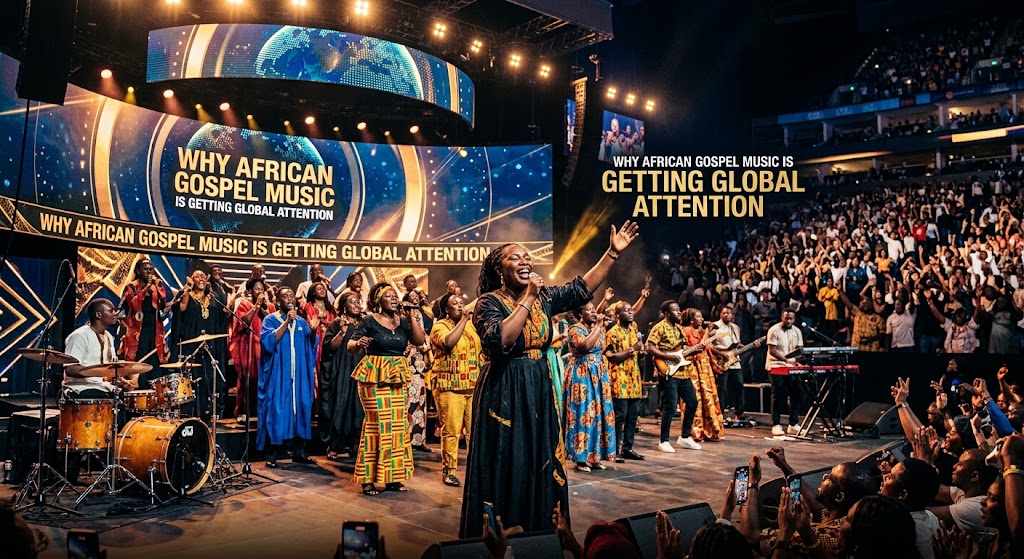
Why African Gospel Music Is Getting Global Attention
Why African Gospel Music Is Getting Global Attention
Why African Gospel Music Is Getting Global Attention is a question that has become increasingly difficult to ignore as African gospel sounds continue to travel far beyond the continent. What was once largely associated with local churches, gospel radio stations, religious gatherings and regional music audiences is now finding listeners across different parts of the world. African gospel music is becoming more visible on streaming platforms, social media, international stages and digital communities, and its growing influence is introducing millions of listeners to a unique combination of faith, culture, rhythm and storytelling.
The global rise of African gospel music did not happen overnight. For decades, gospel musicians across Africa have been creating powerful songs that speak about faith, hardship, hope, gratitude, salvation, perseverance and the goodness of God. What has changed is the ability of modern technology to take those songs beyond geographical boundaries. A song recorded in Lagos, Accra, Nairobi, Johannesburg, Kampala or another African city can now reach listeners in London, New York, Toronto, Dubai, Sydney and countless other locations within hours.
One major reason why African gospel music is getting global attention is its distinctive sound. African gospel does not simply copy traditional Western gospel music. It often combines Christian messages with indigenous rhythms, African percussion, contemporary production, traditional melodies and local languages. This creates a sound that feels both familiar and different to international listeners. The message may be Christian and universal, but the musical expression carries the identity of the people who created it.
Music has always been one of Africa’s strongest forms of cultural expression, and gospel music has benefited enormously from that tradition. African musicians have learned how to turn rhythm into an emotional experience. A gospel song can be deeply spiritual while still being energetic enough to make people dance. It can communicate a serious message about faith while maintaining a joyful atmosphere. That combination has helped African gospel music appeal to listeners who may not necessarily belong to African churches or even understand every word being sung.
Another important factor is the emotional honesty found in many African gospel songs. A significant amount of African gospel music comes from real life experiences. Artists sing about surviving difficult circumstances, trusting God during hardship, overcoming rejection, celebrating answered prayers and remaining hopeful when life becomes uncertain. These experiences are not limited to Africa. People everywhere experience pain, disappointment, financial pressure, family struggles, loneliness and uncertainty. When listeners hear an artist singing about overcoming adversity through faith, they can connect with the emotion even when the artist comes from a completely different country.
This emotional connection is one of the reasons African gospel music can cross language and cultural barriers. You may not understand every word in a song and still understand the feeling behind it. A powerful vocal performance, memorable melody, expressive rhythm and passionate delivery can communicate something before the listener even translates the lyrics. In this sense, African gospel music demonstrates one of the most powerful qualities of music itself. Music can communicate across boundaries that ordinary conversation sometimes cannot.
The growth of streaming platforms has also transformed the African gospel music landscape. In the past, an African gospel artist depended heavily on physical albums, church distribution, local radio and television exposure. Today, artists can release music digitally and make it available to listeners around the world. Platforms such as Spotify, Apple Music, YouTube and other digital services have reduced some of the geographical barriers that once prevented African musicians from reaching international audiences.
Social media has accelerated that process even further. A gospel song does not necessarily need a major record label or international marketing campaign to become known outside Africa. A short video featuring a worship song can attract thousands or millions of views. A memorable chorus can become popular through user generated content. A church performance can be shared across different countries. A live worship moment can become a social media phenomenon. This means African gospel artists now have opportunities to reach global audiences directly.
YouTube has played a particularly important role in the international discovery of African gospel music. Listeners searching for worship songs, prayer music, gospel playlists and Christian performances can easily encounter African artists. Music videos, live performances, lyric videos and worship sessions can continue attracting viewers long after they are uploaded. An artist may therefore build an international audience without necessarily having traditional mainstream media exposure.
The increasing popularity of African gospel music is also connected to the growing influence of African culture around the world. African fashion, food, dance, entertainment and music have experienced increasing international visibility. Afrobeats, Amapiano and other African influenced sounds have introduced global audiences to musical styles from the continent. As international listeners become more interested in African sounds generally, they are also becoming more receptive to African gospel music.
There is an interesting relationship between secular African music and African gospel music in this regard. While their messages and purposes may be different, both demonstrate the creativity and musical diversity coming from the continent. The success of African popular music has helped prove that African sounds can compete for international attention. Gospel artists are increasingly benefiting from the same digital ecosystem.
Another reason why African gospel music is getting global attention is the quality of modern production. African gospel music has evolved significantly in terms of songwriting, vocal arrangements, instrumentation, mixing, mastering and music video production. Many contemporary gospel artists are working with talented producers who understand both African musical traditions and international production standards. The result is music that maintains its African identity while sounding competitive on global platforms.
Collaboration has also become an important part of this growth. African gospel artists are increasingly connecting with musicians, worship leaders, producers and Christian communities from other parts of the world. Collaborations introduce artists to new audiences and allow different musical traditions to interact. When two artists from different backgrounds release a song together, both fan bases have an opportunity to discover something new.
Language diversity is another strength rather than a weakness. African gospel music can be performed in English, French, Portuguese, Swahili, Yoruba, Igbo, Hausa, Twi, Zulu and many other African languages. Instead of removing African languages to appeal to international audiences, many artists are embracing them. This gives their music authenticity and helps preserve cultural identity.
Interestingly, international listeners do not always need to understand the language of a song before enjoying it. A listener may discover a gospel song because of its rhythm, vocal performance or melody and then become interested in its meaning. Some listeners eventually search for translations, learn parts of the lyrics or share the song with friends. In this way, music becomes a gateway to cultural discovery.
The Christian message itself also contributes to the global appeal of African gospel music. Themes such as hope, faith, forgiveness, worship, gratitude, salvation, perseverance and God’s faithfulness are understood across Christian communities worldwide. An African gospel artist may tell a story rooted in a particular African experience, but the spiritual lesson can still resonate with someone thousands of kilometres away.
African gospel music also has a strong connection with congregational worship. Many songs are not created simply to be listened to. They are designed to be sung, danced to, prayed with and experienced collectively. That communal quality gives African gospel music a special energy. Live performances can become powerful experiences because the audience is actively participating rather than simply watching.
The influence of African churches should also not be underestimated. Christianity has a large and diverse presence across many African countries, and churches have created communities where music plays an important role. Worship teams, choirs, musicians and gospel artists have developed through these environments. Churches have therefore served as important spaces for discovering and nurturing musical talent.
Young African Christians are also helping to shape the future of gospel music. Many younger artists are comfortable using social media, digital distribution, home recording technology and modern music production tools. They are not necessarily choosing between traditional gospel and contemporary music. Instead, they are experimenting with different sounds and creating something that reflects their generation.
This generational shift is important because younger listeners consume music differently. They discover songs through playlists, short videos, recommendations, live streams and social media rather than relying exclusively on radio or physical albums. African gospel artists who understand this environment can connect with audiences far beyond their local communities.
Another reason African gospel music is attracting attention is its ability to combine celebration with spirituality. Some forms of Christian music are strongly associated with quiet reflection, while African gospel often embraces movement, rhythm and celebration. The result can be music that encourages listeners to worship while also creating an atmosphere of joy.
This does not mean every African gospel song follows the same formula. The continent is incredibly diverse, and African gospel music contains many different styles. There are traditional choirs, contemporary worship songs, praise music, Afro gospel, gospel hip hop, gospel soul, gospel reggae, Christian R&B and many other expressions. That diversity gives listeners a huge range of sounds to explore.
The rise of Afro gospel is particularly interesting because it demonstrates how Christian music can interact with contemporary African popular music without completely losing its identity. Younger artists are experimenting with beats, melodies and production styles that appeal to modern audiences while maintaining Christian themes. This has helped gospel music enter spaces where traditional gospel formats may not have reached as easily.
African gospel music is also benefiting from the growing number of African artists who are thinking globally. Instead of seeing their local audience as the final destination, many musicians now understand that digital music can travel. An artist can build a following at home while simultaneously attracting listeners in other countries. This global mindset is changing how music is recorded, promoted and distributed.
However, the international rise of African gospel music also comes with challenges. Global attention can create pressure for artists to change their sound simply to satisfy international expectations. There is always a danger that musicians may believe they need to remove their cultural identity before their music can become globally successful. But one of the greatest strengths of African gospel music is precisely its authenticity.
The future may therefore belong to artists who can maintain their identity while embracing innovation. Global audiences do not necessarily want African gospel music to sound exactly like music from somewhere else. They are often attracted because it sounds different. The rhythm, language, vocal style, cultural references and musical arrangements are part of what makes the experience interesting.
There is also a growing opportunity for African gospel artists to tell more diverse stories. African gospel music has enormous potential to address subjects such as family, community, purpose, identity, perseverance, social responsibility, personal transformation and everyday faith. When artists combine strong songwriting with authentic experiences, they create music that can connect with people beyond traditional church audiences.
The global attention surrounding African gospel music also represents something bigger than the success of individual songs. It demonstrates that African Christian creativity deserves a place in the international music conversation. For many years, global music conversations sometimes focused heavily on African popular music while paying less attention to the depth and diversity of African gospel. That is gradually changing.
Today, an African gospel song can become part of someone’s morning routine in another country. It can appear on a worship playlist thousands of kilometres from where it was recorded. It can become the soundtrack to someone’s prayer time. It can be played at a church service in another continent. It can inspire a Christian who has never visited Africa and knows little about its cultures. That is the extraordinary power of digital music.
Why African Gospel Music Is Getting Global Attention is therefore not simply a question about music trends. It is a story about technology, culture, faith, creativity and human connection. African gospel music is travelling because it carries something powerful. It combines the universal language of Christian faith with the distinctive musical identity of Africa.
The continent’s artists are proving that global music does not have to mean abandoning local identity. In fact, authenticity can become the very thing that attracts international audiences. African gospel musicians are showing that a song can be deeply rooted in its culture and still speak to someone on the other side of the world.
As streaming continues to expand, social media continues to influence music discovery and African artists continue experimenting with new sounds, the international presence of African gospel music is likely to become even stronger. More collaborations will emerge. More artists will find international audiences. More African languages will appear in global Christian playlists. More listeners will discover the richness of African worship and gospel traditions.
The most exciting part is that this movement is still developing. African gospel music has not reached its ceiling. There are new artists yet to be discovered, new sounds waiting to emerge and new audiences waiting to listen. The next major African gospel breakthrough could come from an established artist, an independent musician recording from a small studio or a young worship leader whose song unexpectedly goes viral online.
Why African Gospel Music Is Getting Global Attention ultimately comes down to a simple truth. People respond to music that feels genuine. They respond to powerful stories, unforgettable melodies, passionate voices and messages that speak to the human experience. African gospel music has all of these qualities, and technology has finally provided the infrastructure for those qualities to travel much further.
From churches and local communities to international streaming platforms and social media feeds, African gospel music is crossing borders in ways that would have been difficult to imagine a generation ago. Its rise is not merely a passing trend. It reflects the growing ability of African Christian artists to combine faith, culture, creativity and technology in ways that connect with audiences around the world.
African gospel music is getting global attention because it has something worth hearing. It carries the sound of a continent, the stories of its people and the message of faith that millions of listeners understand. As the world continues to listen, African gospel music is proving that the next global sound of worship may come from places the world has not always been listening closely enough to hear.

Leave a Reply