
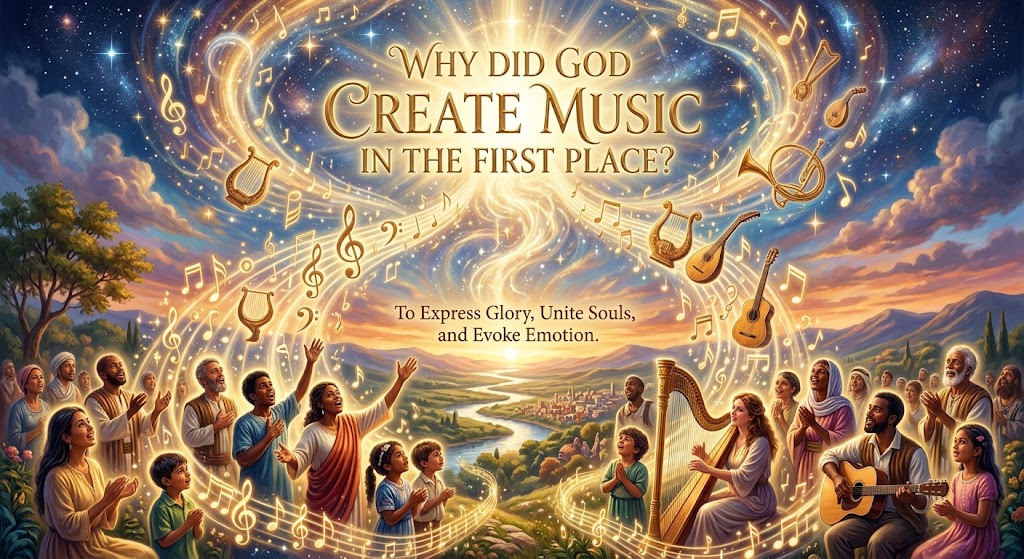
Why Did God Create Music in the First Place?
Why Did God Create Music in the First Place?
Music is one of the few things that every human culture on earth shares. Long before modern technology, recording studios, streaming platforms, and concert arenas existed, people were singing, clapping, chanting, and creating melodies. Music has accompanied celebrations, weddings, victories, funerals, worship services, and even times of war. It can make people laugh, cry, reflect, dance, and remember moments from years ago. Because music is so deeply woven into human existence, many Christians have asked an important question: Why Did God Create Music in the First Place?
The answer is fascinating because the Bible reveals that music was never merely a human invention designed for entertainment. Instead, music appears to be part of God’s creative design from the very beginning. Scripture points to a universe filled with rhythm, harmony, praise, and sound. The existence of music is not an accident. It is a gift from God that serves purposes far greater than many people realise.
When exploring Why Did God Create Music in the First Place?, it is important to recognise that music existed before human beings began composing songs. In the book of Job, God describes the creation of the world and speaks of a moment when “the morning stars sang together and all the angels shouted for joy.” This imagery suggests that music was present in heaven before humanity appeared on earth. Music was not invented by mankind. Rather, mankind discovered and participated in something God had already established.
This understanding changes the way we think about music. Instead of viewing it simply as a form of amusement, we begin to see it as a reflection of God’s character and creativity. God is the ultimate Creator. He designed the universe with order, beauty, balance, and harmony. Music reflects those same qualities. Notes work together in relationships. Rhythms follow patterns. Harmonies create unity from different sounds. In many ways, music mirrors the order that God built into creation itself.
One reason God created music was to reveal beauty. The world is full of practical things necessary for survival. Human beings need food, water, shelter, and air. Yet God created far more than mere necessities. He filled the earth with sunsets, mountains, oceans, flowers, and countless expressions of beauty. Music belongs in this category. It demonstrates that God is not only concerned with function but also with wonder. Music enriches life. It moves beyond survival and allows people to experience beauty in a profound way.
Another reason God created music was to help humanity express emotions. Human beings experience joy, sorrow, gratitude, hope, fear, excitement, and love. Often words alone are insufficient to communicate these feelings. Music provides another language through which the human heart can speak. Throughout Scripture, God’s people used songs to express their deepest emotions. David wrote psalms during seasons of celebration and seasons of despair. Moses sang after God’s deliverance. The people of Israel sang during victories and worship. Music became a vessel through which people could pour out their hearts before God.
This emotional power is not accidental. God designed music to reach places within us that ordinary speech often cannot reach. A melody can stir memories. A song can comfort a grieving person. A hymn can strengthen faith during difficult times. Music has the ability to communicate truth while simultaneously engaging the heart. This unique combination helps explain why music has remained important throughout human history.
When considering Why Did God Create Music in the First Place?, perhaps the most significant answer is worship. The Bible repeatedly connects music with praise. From Genesis to Revelation, worshippers sing before God. Angels worship God with songs. The redeemed worship God with songs. The Psalms contain numerous commands to sing, praise, and make music unto the Lord. Singing is not a minor aspect of biblical worship. It is one of its central expressions.
God created music because worship involves more than intellectual agreement. Worship engages the whole person. It involves the mind, heart, soul, and body. Music helps unite these dimensions. A believer may understand a truth intellectually, but singing that truth often allows it to penetrate more deeply. This is one reason why many Christians remember songs long after they have forgotten sermons. Music helps truth settle into the heart.
Music also helps create unity among people. Individuals from different backgrounds can join together in song and become one voice. Throughout history, communal singing has strengthened churches, families, and communities. When believers gather to worship, music allows them to declare shared truths together. This unity reflects God’s desire for His people to live in harmony.
Another fascinating aspect of music is its connection to creation itself. The Bible frequently describes nature as praising God. Mountains, rivers, trees, stars, and all living creatures are portrayed as declaring God’s glory. While these descriptions are often poetic, they communicate an important truth: all creation exists to glorify its Creator. Music provides humanity with a unique way to participate consciously in that praise.
Some theologians have even suggested that music reflects the rhythms embedded within creation. The seasons follow patterns. The tides move in cycles. Days and nights alternate. The planets move according to order. Human hearts beat rhythmically. Breathing follows patterns. In many ways, creation itself seems to possess a musical quality. Music resonates with us because we live within a world shaped by order and rhythm.
God also created music as a means of communication. Throughout history, songs have been used to tell stories, preserve traditions, teach lessons, and pass truth from one generation to another. Before widespread literacy, songs helped communities remember important events and beliefs. Even today, people often learn and retain information more effectively when it is set to music. Music engages memory in remarkable ways.
This educational role can be seen throughout Scripture. Many biblical songs recount God’s faithfulness, mighty acts, and promises. They remind listeners of important truths. Through music, theological concepts become memorable and accessible. Songs help people carry truth with them long after a service or gathering has ended.
Another reason God created music was to inspire hope. Life is filled with challenges. People face loss, disappointment, uncertainty, and suffering. Music often becomes a source of encouragement during such seasons. A song can remind believers of God’s faithfulness when circumstances seem overwhelming. It can provide strength when words fail. It can renew courage when fear threatens to take over.
The Apostle Paul encouraged believers to speak to one another through psalms, hymns, and spiritual songs. This instruction reveals that music is not only directed toward God but also serves fellow believers. Songs encourage, strengthen, teach, and uplift others. Music becomes a ministry that extends beyond personal enjoyment.
The question Why Did God Create Music in the First Place? also leads us to consider creativity. Human beings are made in the image of God. One characteristic of that image is creativity. God creates, and humans create. Music provides an avenue through which people can reflect their Creator. Composers, songwriters, singers, musicians, and worship leaders participate in a creative process that echoes God’s own creativity. While human creativity is limited, it reflects something of the Creator’s nature.
However, music was never intended merely to glorify human talent. One of the dangers surrounding music is the temptation to focus more on performers than on God. Throughout history, music has been used for both good and harmful purposes. Because music is powerful, it can influence people positively or negatively. The existence of misuse does not diminish the goodness of music itself. Rather, it reminds us that every gift from God carries responsibility.
The Christian understanding of music acknowledges that while music was created good, human sin has affected how it is used. Yet even in a fallen world, music remains a powerful instrument for redemption, healing, encouragement, and worship. God continues to use music to draw people closer to Himself and to one another.
Perhaps one of the most beautiful aspects of music is its ability to point beyond itself. A great song often creates a sense of longing for something greater. It reminds listeners that there is more to life than what they currently see. Many Christians believe this longing reflects humanity’s desire for God. Music can awaken spiritual awareness and create space for reflection on eternal realities.
The Bible concludes with visions of worship in heaven. In Revelation, multitudes sing before God’s throne. Songs of redemption, praise, and victory fill heaven. The fact that singing appears at both the beginning and the end of the biblical story suggests that music occupies a special place within God’s purposes. Music is not merely an earthly activity. It is part of the eternal worship of God.
So, Why Did God Create Music in the First Place? He created music to reveal beauty, express emotion, encourage creativity, communicate truth, inspire hope, build unity, reflect the order of creation, and most importantly, glorify Himself. Music is one of God’s remarkable gifts to humanity. It has the power to move hearts, strengthen faith, preserve truth, and draw people into worship.
Every melody, harmony, and rhythm ultimately points back to the Creator who designed a universe capable of producing music. Whether through a simple hymn sung in a small church, a choir lifting voices in praise, or a believer quietly singing during personal prayer, music fulfils one of its highest purposes when it directs attention toward God. In a world filled with noise, music remains a reminder that creation itself was designed to declare the glory of its Maker.
The next time you hear a beautiful song, consider that it is more than sound. It is a gift rooted in God’s creativity, woven into the fabric of creation, and entrusted to humanity for worship, encouragement, and joy. Understanding Why Did God Create Music in the First Place? helps us appreciate not only the gift of music itself but also the God who lovingly gave it.

Leave a Reply