
The Psychology Behind Spirit-Lifting Gospel Songs
The Psychology Behind Spirit-Lifting Gospel Songs
The Psychology Behind Spirit-Lifting Gospel Songs is a fascinating subject that sits at the intersection of faith, music, emotion, spirituality, and human behaviour. Across generations and cultures, gospel songs have held a unique place in the hearts of millions of believers. Whether heard during a church service, a personal devotion, a difficult season of life, or a moment of celebration, gospel music has an extraordinary ability to lift the human spirit, inspire hope, calm anxiety, and create a sense of connection with something greater than oneself. While many Christians attribute this impact to the presence of God and the power of the Holy Spirit, psychology also offers valuable insights into why certain gospel songs have such a profound effect on the mind and emotions.
Music has always played a central role in human experience. Long before modern science began studying its effects, people instinctively understood that melodies, rhythms, and lyrics could influence mood and behaviour. Today, psychologists recognise music as one of the most powerful emotional stimuli available to human beings. Unlike ordinary speech, music engages multiple regions of the brain simultaneously. It activates areas associated with memory, emotion, attention, reward, and social connection. This explains why a single song can instantly transport a person back to a specific moment in life or trigger emotions that seemed buried for years.
The Psychology Behind Spirit-Lifting Gospel Songs begins with understanding how the brain processes sound. When a gospel song enters the ears, the brain immediately starts analysing rhythm, melody, harmony, and lyrical content. These elements work together to create emotional responses. Uplifting melodies often stimulate positive emotions while slower, reflective passages encourage contemplation and peace. The combination of musical structure and spiritual messaging creates a unique psychological environment where listeners become more receptive to hope, encouragement, and inspiration. Research into music psychology suggests that music can help regulate emotional states, allowing individuals to move from sadness to comfort, from fear to courage, and from confusion to clarity.
One of the most powerful psychological mechanisms behind gospel music is emotional regulation. Human beings constantly experience emotional fluctuations due to life circumstances, relationships, financial pressures, health concerns, and personal struggles. Gospel songs often provide a framework for processing these emotions in healthy ways. Rather than denying pain, many gospel songs acknowledge hardship while simultaneously pointing listeners toward faith, hope, and divine intervention. This dual approach helps people confront difficult emotions without becoming overwhelmed by them. Instead of remaining trapped in despair, listeners are encouraged to view their situations through a lens of possibility and spiritual assurance.
Another important aspect of The Psychology Behind Spirit-Lifting Gospel Songs is the role of expectation and belief. Psychology has long recognised that belief systems strongly influence emotional experiences. When people listen to gospel songs, they are not merely hearing music. They are engaging with messages that reinforce deeply held spiritual convictions. Lyrics about God’s faithfulness, love, protection, mercy, and power often resonate because they align with the listener’s worldview. This alignment creates a sense of certainty and stability that can reduce stress and anxiety. Individuals who believe that God is in control of their circumstances often experience greater resilience during difficult times, and gospel music serves as a powerful reminder of those beliefs.
Memory also plays a significant role in the emotional impact of gospel music. Certain songs become associated with important life events such as baptisms, weddings, funerals, revivals, testimonies, and personal breakthroughs. When these songs are heard again, they reactivate memories and emotions connected to those experiences. A worship song that accompanied a season of healing may continue to evoke feelings of comfort years later. Similarly, a song that played during a powerful spiritual encounter can trigger renewed feelings of faith and inspiration. Psychologists refer to this process as associative memory, where specific stimuli become linked to emotional experiences stored within the brain.
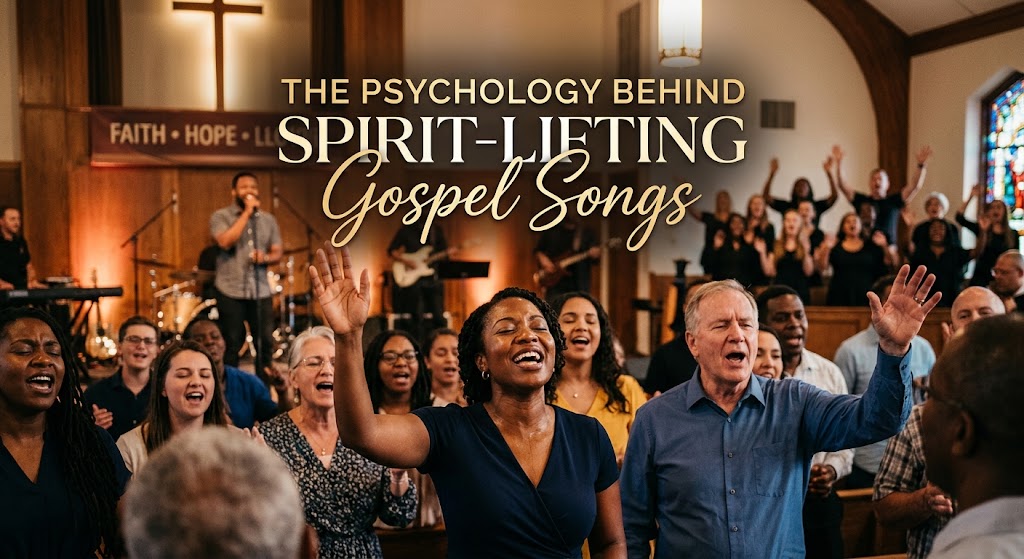
The Psychology Behind Spirit-Lifting Gospel Songs also involves social bonding. Humans are inherently social beings who seek connection and belonging. Singing together has been shown to strengthen group identity and foster feelings of unity. In church settings, congregational singing creates a shared emotional experience that connects individuals with one another. When hundreds of people sing the same words, clap to the same rhythm, and focus on the same spiritual message, a powerful sense of community emerges. Studies have found that group singing promotes social bonding, emotional wellbeing, and feelings of togetherness. This helps explain why worship services often leave participants feeling encouraged and spiritually refreshed.
Lyrics are another crucial factor. Unlike instrumental music, gospel songs communicate specific messages through words. The themes commonly found in gospel music include hope, redemption, forgiveness, perseverance, gratitude, victory, healing, and eternal life. These themes directly address many of humanity’s deepest emotional needs. People want reassurance that their suffering has meaning. They want confidence that difficult seasons will not last forever. They want to believe that mistakes can be forgiven and that better days are ahead. Gospel lyrics provide these assurances, creating a psychological environment that promotes optimism and resilience.
The concept of self-enhancement is also relevant to understanding The Psychology Behind Spirit-Lifting Gospel Songs. Psychological research suggests that music can influence self-perception and boost self-esteem. Songs that remind listeners of their value, purpose, and identity can help counter feelings of inadequacy and hopelessness. Gospel music frequently emphasises themes such as being loved by God, being created with purpose, and being capable of overcoming challenges through faith. These messages reinforce positive self-beliefs and encourage listeners to view themselves in more hopeful and empowering ways.
Rhythm is another element that deserves attention. Rhythmic patterns influence physiological responses such as heart rate, breathing, and movement. Fast-paced praise songs often generate energy and excitement, encouraging physical participation through clapping, dancing, or movement. Slower worship songs tend to promote relaxation and reflection. This ability to influence bodily states contributes significantly to the emotional power of gospel music. When rhythm aligns with meaningful lyrics and spiritual themes, the result is often a deeply immersive experience that engages both mind and body.
One reason gospel music remains effective across generations is its ability to create meaning. Psychology suggests that people are constantly searching for meaning and purpose in their lives. During periods of uncertainty, individuals often struggle with questions about suffering, identity, destiny, and hope. Gospel songs frequently address these questions directly. They remind listeners that their lives have significance, that challenges can produce growth, and that there is a larger spiritual narrative beyond present circumstances. This sense of meaning contributes greatly to psychological wellbeing and emotional stability.
The Psychology Behind Spirit-Lifting Gospel Songs is particularly evident during times of stress. Many people turn to gospel music when facing illness, grief, financial hardship, or emotional pain. Research has shown that religious and spiritual songs can help individuals cope with stressful life events by providing comfort, encouragement, and a sense of connection with God. The combination of uplifting messages and emotionally resonant music creates a therapeutic effect that helps listeners process difficult experiences more constructively.
Another fascinating dimension involves the release of neurotransmitters within the brain. Listening to enjoyable music can stimulate the brain’s reward system, leading to the release of chemicals associated with pleasure and positive emotions. This biological response helps explain why people often report feeling happier, calmer, or more motivated after listening to their favourite gospel songs. While the spiritual significance of gospel music cannot be reduced to neuroscience alone, understanding these biological mechanisms provides additional insight into why music can have such a powerful impact on emotional wellbeing.
Cultural identity also contributes to the effectiveness of gospel music. In many communities, gospel songs serve as carriers of shared history, values, and experiences. They connect listeners to their heritage and remind them of the faith journeys of previous generations. This cultural dimension strengthens emotional engagement and reinforces a sense of belonging. For many people, gospel music represents not only personal faith but also family traditions, community values, and collective resilience. Studies examining gospel music in Nigeria and other African contexts highlight how gospel music contributes to everyday meaning-making and wellbeing amidst social and economic challenges.
Repetition is another psychological feature commonly found in spirit-lifting gospel songs. Choruses are often repeated multiple times, allowing key messages to become deeply embedded in the listener’s mind. Repetition increases familiarity, and familiarity tends to enhance emotional attachment. When worshippers repeatedly sing phrases about God’s goodness, faithfulness, or power, those messages become internalised. Over time, they can shape thought patterns and influence how individuals interpret life’s challenges.
The role of anticipation should not be overlooked. Many gospel songs are carefully structured to build emotional intensity. They may begin softly, gradually increase in energy, and culminate in powerful declarations of faith. This progression creates anticipation within the listener, enhancing emotional engagement and creating memorable experiences. Psychologically, anticipation heightens attention and increases the emotional impact of a musical climax.
The Psychology Behind Spirit-Lifting Gospel Songs ultimately reveals that their effectiveness is not accidental. These songs engage the mind, emotions, body, memory, and spirit in remarkably integrated ways. They help regulate emotions, reinforce beliefs, strengthen social connections, create meaning, inspire hope, and encourage resilience. Their power lies not only in musical excellence but also in their ability to address fundamental human needs for purpose, belonging, comfort, and transcendence.
As science continues to explore the relationship between music, psychology, and spirituality, one truth remains evident. Gospel music possesses a unique capacity to reach people in ways that ordinary communication often cannot. It speaks to the heart while engaging the mind. It comforts the weary while energising the hopeful. It transforms moments of despair into opportunities for faith and turns ordinary gatherings into profound shared experiences. The Psychology Behind Spirit-Lifting Gospel Songs demonstrates that the impact of gospel music extends far beyond entertainment. It serves as a powerful tool for emotional healing, spiritual encouragement, personal transformation, and collective wellbeing.
In a world increasingly filled with uncertainty, stress, and emotional challenges, spirit-lifting gospel songs continue to provide something many people desperately need: hope. Through the combination of meaningful lyrics, inspiring melodies, communal participation, and deeply held spiritual beliefs, these songs create experiences that nurture the human soul while positively influencing psychological health. This enduring ability to uplift, encourage, and inspire explains why gospel music remains one of the most powerful and beloved forms of musical expression across the world today.

Leave a Reply