
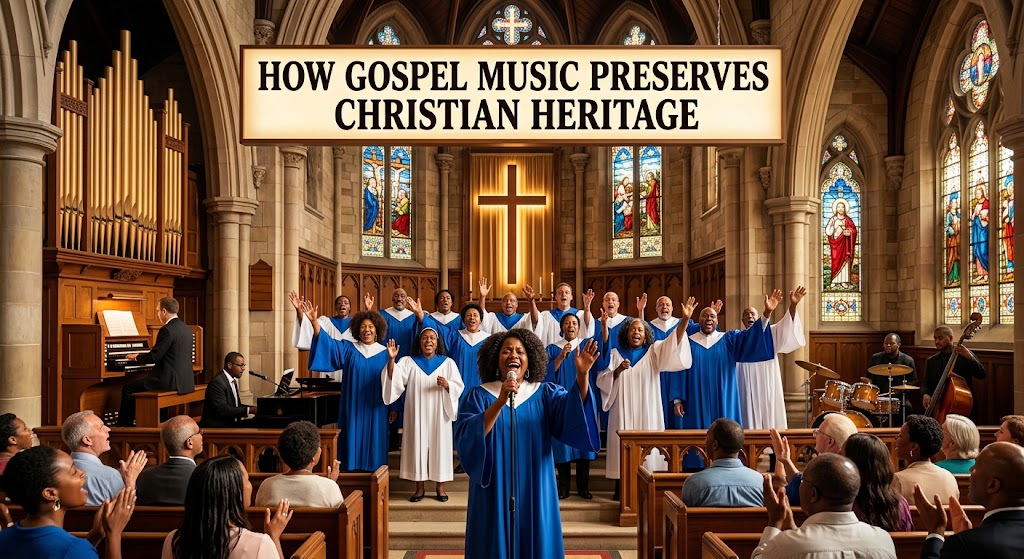
How Gospel Music Preserves Christian Heritage
How Gospel Music Preserves Christian Heritage
How Gospel Music Preserves Christian Heritage is a topic that reveals the powerful connection between faith, history, culture, and worship. Throughout the centuries, gospel music has served as much more than a collection of songs sung in churches or played on Christian radio stations. It has become a living archive of Christian beliefs, biblical teachings, testimonies, cultural identity, and spiritual experiences. In a rapidly changing world where traditions can easily be forgotten, gospel music continues to preserve Christian heritage by passing the message of Christ from one generation to another through melodies, lyrics, and shared worship experiences.
Christian heritage encompasses the beliefs, values, practices, traditions, stories, and historical experiences that have shaped Christianity throughout history. While books, sermons, and theological writings have played a significant role in preserving this heritage, music has often reached people in ways that written words cannot. A song can remain in a person’s memory for decades. A hymn learned during childhood can still be remembered in old age. A worship chorus sung by a congregation can unite people from different backgrounds around a common faith. Through this unique ability to connect with the human heart, gospel music has become one of Christianity’s most effective tools for preserving its heritage.
One of the most important ways gospel music preserves Christian heritage is by keeping biblical truths alive in everyday life. Many gospel songs are rooted directly in Scripture, transforming biblical passages into memorable lyrics that people can easily learn and remember. Through songs, believers encounter stories of God’s faithfulness, Jesus Christ’s sacrifice, redemption, salvation, grace, hope, and eternal life. These truths are repeated in worship services, family gatherings, personal devotions, and Christian events, ensuring that core Christian teachings remain embedded in the lives of believers. Studies of gospel music traditions highlight how gospel songs communicate theological scholarship, historical understanding, and faith formation through sound, making them powerful educational tools within Christian communities.
Another way How Gospel Music Preserves Christian Heritage becomes evident is through the transmission of testimonies. Christianity has always valued personal accounts of God’s intervention in human lives. Gospel music captures these testimonies and transforms them into songs that can inspire countless others. Whether it is a song about overcoming hardship, receiving healing, experiencing forgiveness, or finding hope during difficult times, these musical testimonies become part of a collective Christian memory. Future generations hear these stories and gain insight into how previous believers experienced God’s presence and faithfulness.
Gospel music also preserves Christian heritage by maintaining historical continuity. Every generation of Christians creates new songs while still honouring the songs of those who came before. Traditional hymns, spiritual songs, choir anthems, and contemporary worship music all contribute to a rich musical heritage that spans centuries. When churches continue singing older hymns alongside newer compositions, they create a bridge between past and present. This continuity reminds believers that they belong to a faith community that extends far beyond their own lifetime.
The role of gospel music in preserving cultural expressions of Christianity cannot be overlooked. Around the world, Christian communities have adapted the gospel message into their local languages, musical styles, and cultural traditions. In Nigeria, for example, gospel music often combines biblical themes with indigenous musical instruments, local rhythms, and native languages. Researchers have noted that Nigerian gospel music emerged as a distinctive form that blended Christian concepts with traditional cultural expressions, helping communities preserve both their faith and cultural identity.
This cultural adaptation demonstrates that Christian heritage is not preserved through uniformity but through faithful expression within diverse cultures. Gospel music allows Christians to celebrate their local identity while remaining connected to the universal message of Christianity. As a result, believers can pass down both their spiritual heritage and cultural traditions simultaneously.
How Gospel Music Preserves Christian Heritage is also evident in its role as a teaching tool. Long before widespread literacy became common, Christian communities relied heavily on songs to teach doctrine and biblical principles. Music helped believers memorise important truths about God, salvation, prayer, worship, and Christian living. Even today, many people can recall song lyrics more easily than sermon outlines. Gospel music therefore functions as a form of theological education that reaches people of all ages and educational backgrounds.
Many gospel songs address key Christian doctrines in accessible language. They teach about God’s sovereignty, the resurrection of Jesus Christ, the work of the Holy Spirit, repentance, grace, forgiveness, and eternal life. These teachings become part of a believer’s spiritual formation through repeated exposure. Contemporary research on Nigerian gospel music similarly points to its role in communicating theological truths and religious instruction through popular musical forms.
The preservation of Christian heritage through gospel music is particularly visible during times of social upheaval and hardship. Throughout history, believers have used songs to sustain hope during persecution, economic challenges, wars, pandemics, and personal suffering. Gospel music provides a means of expressing faith even when circumstances are difficult. Songs of hope, deliverance, perseverance, and trust in God remind believers of the experiences of earlier generations who also faced trials yet remained faithful. According to scholars of gospel music traditions, themes such as survival, deliverance, perseverance, lament, and hope have remained central to gospel music across generations.
Church choirs have also played a vital role in preserving Christian heritage. Choirs often become custodians of sacred music traditions, maintaining repertoires that might otherwise disappear. Through rehearsals, performances, recordings, and worship services, choirs pass songs from older members to younger participants. This intergenerational transfer helps ensure that valuable musical traditions remain alive. In many churches, choir members serve not only as singers but also as guardians of musical heritage and spiritual memory.
The growth of recording technology has expanded the ability of gospel music to preserve Christian heritage. Songs that were once limited to local congregations can now be recorded, archived, and shared worldwide. Archives, libraries, universities, and heritage organisations increasingly recognise the importance of preserving gospel music collections for future generations. Significant efforts have emerged to document recordings, manuscripts, performance traditions, and oral histories associated with gospel music. These preservation initiatives demonstrate the growing recognition that gospel music represents an important part of both Christian and cultural heritage.
Digital technology has further strengthened these preservation efforts. Gospel music can now be stored in digital archives, streamed online, and accessed by people across continents. Researchers studying Nigerian gospel repertoires have highlighted the importance of digital preservation in protecting songs, recordings, performance practices, and historical context from being lost over time. Digital repositories help ensure that future generations can access valuable musical resources that might otherwise disappear.
Another significant aspect of How Gospel Music Preserves Christian Heritage lies in its ability to strengthen community identity. Music brings people together in ways that few other forms of communication can. Congregational singing creates shared experiences that reinforce collective beliefs and values. Through worship, Christians develop a sense of belonging to a larger faith community. The songs they sing become part of their communal identity and shared memory.
Many Christian communities have songs that are closely associated with specific events, celebrations, and spiritual milestones. Christmas carols, Easter hymns, revival songs, harvest songs, and songs of thanksgiving all contribute to the rhythm of Christian life. These musical traditions help believers mark important moments in the Christian calendar while preserving the practices and meanings associated with those events.
The Nigerian experience provides a powerful example of how gospel music preserves Christian heritage. Historical accounts show that churches such as the Christ Apostolic Church placed strong emphasis on choir culture, indigenous compositions, and spiritually rich musical expressions. Songs developed within these communities became deeply embedded in Christian life and continue to be sung decades after their creation. Some songs have transcended denominational boundaries and become part of the broader Christian heritage of the nation.
Gospel music also preserves Christian heritage by encouraging evangelism. Throughout history, Christian songs have often served as vehicles for spreading the gospel message. People who may never attend a theological lecture or read a religious text can still encounter Christian teachings through music. Gospel songs communicate messages of salvation, hope, redemption, and faith in ways that are emotionally engaging and widely accessible. Studies examining gospel music within Nigerian churches emphasise its continuing importance as a medium for evangelism and spiritual edification.
The preservation of language is another important contribution of gospel music. Many Christian communities compose and perform songs in indigenous languages, helping preserve linguistic heritage alongside religious traditions. As languages face increasing pressure from globalisation, gospel music provides a platform for maintaining local vocabulary, expressions, idioms, and cultural references. This contributes to the survival of cultural diversity within the global Christian community.
How Gospel Music Preserves Christian Heritage is ultimately reflected in its ability to connect generations. Grandparents, parents, and children often share the same songs even though they live in different eras. Through these shared musical experiences, faith traditions are transmitted naturally within families and churches. Songs become carriers of memory, linking present believers with those who worshipped before them.
The enduring power of gospel music lies in its ability to combine faith, emotion, culture, memory, and community into a single form of expression. It teaches doctrine, preserves history, strengthens identity, promotes evangelism, encourages worship, and records testimonies. Whether through ancient hymns, traditional choir pieces, contemporary worship songs, or indigenous gospel compositions, Christian heritage continues to be preserved and transmitted through music.
As society becomes increasingly digital and fast paced, the need to preserve Christian heritage remains as important as ever. Gospel music stands as one of the most effective and enduring tools for achieving this goal. It ensures that biblical truths remain remembered, cultural traditions remain valued, testimonies remain shared, and faith remains vibrant across generations. The songs sung today will become the heritage of tomorrow, carrying the message of Christ into the future just as previous generations carried it into the present. This is why understanding How Gospel Music Preserves Christian Heritage is essential for anyone who values the continued transmission of Christian faith, culture, and identity in a changing world.

Leave a Reply