
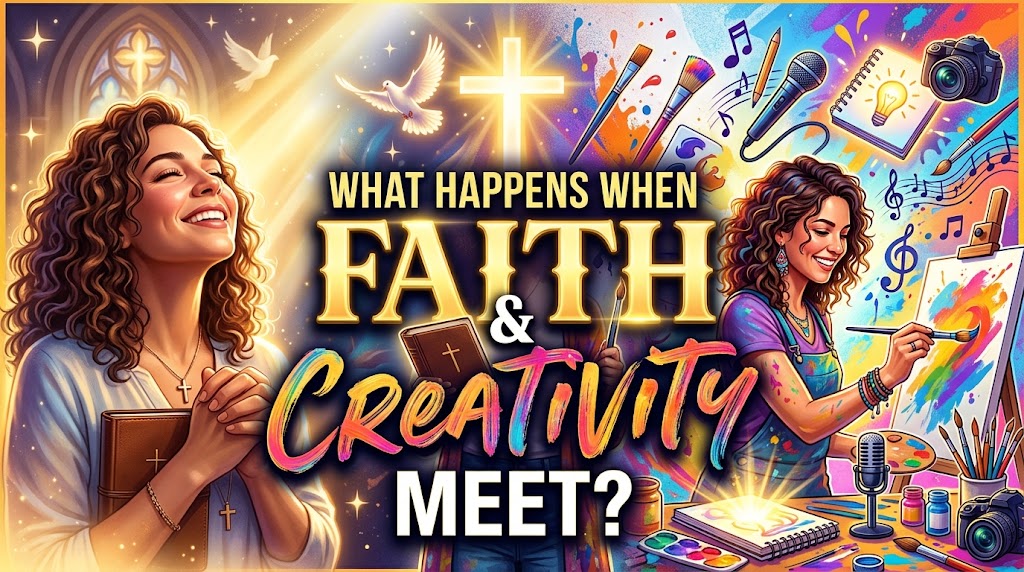
What Happens When Faith and Creativity Meet?
What Happens When Faith and Creativity Meet?
What happens when faith and creativity meet? Something powerful begins to happen. Ideas gain meaning, imagination finds direction, and ordinary human expression can become a reflection of something much deeper. Faith gives creativity a foundation, while creativity gives faith another language through which it can be communicated, experienced and remembered. This relationship can be seen clearly in Christian music, worship, songwriting, gospel art and countless other forms of Christian expression.
This question is becoming increasingly important in a world where people are constantly searching for meaningful content. Christians are not only looking for songs they can listen to. They are looking for music that speaks to their experiences, strengthens their faith, tells their stories, and gives words to emotions they sometimes struggle to express. Creativity makes that possible, while faith provides the message and purpose behind it.
Christian music has always demonstrated the meeting point between belief and imagination. A songwriter may begin with a Bible verse, a personal experience, a season of difficulty, a moment of gratitude or a simple prayer. That starting point can eventually become a song that reaches thousands or even millions of people. The original idea may have been deeply personal, but creativity can transform that private experience into something that others can understand.
When faith and creativity meet, personal experiences can become messages of hope. Someone who has experienced disappointment may write about God’s faithfulness. Someone who has gone through a difficult season may create a song about trusting God. Someone who has experienced forgiveness may express that experience through lyrics and melody. Creativity gives these experiences a form that other people can receive.A Personal Perspective: When Faith Inspires My Music
A Personal Perspective: When Faith Inspires My Music
For me, faith and creativity are closely connected. Many of the songs I write have not started as attempts to create something impressive. They have often started with gratitude, prayer, personal experiences, or a moment when I became more aware of God’s grace and mercy in my life. Those experiences can stay with me until words and melodies begin to come together.
I have learned that creativity can give expression to things that are sometimes difficult to explain in ordinary conversation. A feeling of gratitude can become a lyric. A testimony can become a chorus. A season of waiting can inspire a song about trusting God. In that way, songwriting can become both a creative process and an expression of faith.
When I write, I also think about the person who may eventually hear the song. The experience that inspired the song may be personal to me, but the message does not have to remain personal. Someone else may hear it during a completely different season and find encouragement, hope, or a reason to thank God.
That is one of the things I appreciate most about gospel music. Creativity gives me a way to communicate what I believe and what I have experienced with God, while faith gives the creativity a purpose beyond entertainment.
I want the music I create through Godsfame Music to reflect that purpose. I want the songs to be creative, but I also want them to carry truth, gratitude, worship, hope, and a genuine message of faith.
This is one reason Christian music can be so emotionally powerful. A theological truth can be understood intellectually, but when that truth is combined with melody, rhythm, harmony and storytelling, it can become something people carry with them. A person may forget a conversation after several years, but remember the words of a worship song they heard during a difficult period of their life.
Faith gives Christian creativity its deeper purpose. Creativity by itself is the ability to produce something new or communicate an idea in an original way. Faith introduces another dimension because the creative process can become connected to worship, testimony, encouragement and service. The objective is not simply to create something attractive. It can also be about communicating something meaningful.
This does not mean every Christian song has to sound the same. In fact, the meeting between faith and creativity should produce diversity. Christian musicians can explore different sounds, instruments, languages, cultures and musical arrangements while maintaining a message rooted in their beliefs. Gospel music can sound different in Nigeria, Ghana, South Africa, the United States, the United Kingdom or Brazil, yet believers can still recognise common themes of faith, hope, worship and gratitude.
African gospel music provides a particularly interesting example of what happens when faith and creativity meet. African musicians have incorporated local rhythms, languages, instruments and musical traditions into Christian music, creating sounds that are both culturally familiar and spiritually meaningful. This demonstrates that creativity does not have to destroy tradition. It can give tradition another opportunity to speak to a new generation.
The meeting of faith and creativity can also help younger Christians connect with spiritual messages. Every generation develops its own communication habits. Young people encounter information through music, video, social media, podcasts, streaming platforms and visual content. Christian creators who understand this environment can communicate timeless truths through contemporary creative forms.
This is not about changing the message simply to attract attention. It is about understanding how people receive information. The message may remain rooted in Scripture and Christian belief while the creative presentation evolves. A worship song can have a modern production style. A Christian artist can use digital platforms. A gospel musician can experiment with instrumentation. A songwriter can tell a biblical story using language that a younger audience understands.
When faith and creativity meet, creativity can also challenge people to think. Not every Christian song needs to provide an immediate answer. Some songs can ask difficult questions. Others can explore doubt, waiting, grief, loneliness, hope or spiritual growth. These experiences are part of the human journey, and Christian creativity can provide space for people to process them.
This is particularly important because faith does not mean pretending that difficult experiences do not exist. The Bible itself contains songs and writings that express joy, fear, frustration, sadness, gratitude, repentance and hope. The Psalms provide a powerful example of how deeply human emotions can exist alongside faith. Christian creativity can continue that tradition by giving modern believers language for their own experiences.
A creative Christian artist therefore does not have to choose between honesty and faith. Creativity can make room for both. A song can acknowledge pain while still expressing hope. A lyric can describe uncertainty while still pointing towards trust. A worship song can recognise human weakness while celebrating God’s strength.
What Happens When Faith and Creativity Meet? The answer can also be seen in songwriting. Great Christian songwriting often involves more than finding rhyming words. It requires observation, imagination, emotional intelligence and an understanding of the audience. The songwriter has to ask what people are experiencing and how a spiritual truth can be expressed in a way that feels genuine.
The strongest songs often come from authentic experiences. People can recognise when a song feels manufactured. They may not know exactly why something feels artificial, but they can sense when the words lack emotional truth. Creativity becomes more powerful when it is connected to genuine conviction.
This is why personal testimony has such an important place in gospel music. When an artist sings about God’s faithfulness after experiencing a difficult season, the song can carry an emotional weight that goes beyond technical musical quality. The listener may hear their own story inside the artist’s story.
Faith and creativity can also meet through visual art. Christian photographers, filmmakers, designers, painters and digital creators can communicate biblical themes without using the traditional format of a sermon or worship song. A powerful image can provoke reflection. A short film can communicate a message. A creative design can make a Christian idea memorable.
The digital age has expanded these possibilities dramatically. A Christian artist no longer has to depend entirely on traditional media companies to reach an audience. A song can be recorded independently, distributed through streaming platforms and promoted through social media. A new artist can build an audience from a bedroom studio or a small local church.
This creates opportunities, but it also creates responsibilities. When creativity becomes easier to distribute, the amount of content increases. Christian creators therefore have to think carefully about quality, originality and purpose. Producing content simply because something is trending may generate temporary attention, but meaningful creativity often requires patience.
The internet has also changed how people discover Christian music. A listener might discover a gospel artist through a short video, a recommendation, a playlist or a social media post. That discovery can lead to an entire album and eventually to a deeper interest in the artist’s message. Creativity can therefore become a bridge between people and Christian music they might never have encountered through traditional channels.
Another important result of faith meeting creativity is collaboration. Musicians from different backgrounds can work together to create something new. A worship leader can collaborate with a gospel producer. A traditional choir can work with contemporary musicians. Christian artists from different countries can combine their cultural influences. These collaborations can demonstrate that faith can create connections across geographical and cultural boundaries.
However, creativity within Christian music also requires discernment. Not every creative idea automatically becomes a good idea simply because it is creative. Christian creators have to consider whether their work communicates what they actually believe. Creativity should not become an excuse to abandon substance. At the same time, religious content should not become an excuse for poor creativity.
There is a valuable balance between message and artistic excellence. A powerful Christian message deserves thoughtful presentation. Good songwriting, strong musicianship, quality production and effective storytelling can help that message reach people more effectively. Excellence does not replace faith, but it can become one way of serving an audience.
This is particularly relevant for emerging gospel artists. Talent is important, but talent alone does not create a sustainable music ministry. Artists need discipline, learning, humility, consistency and an understanding of their audience. They also need to develop their creative identity rather than simply copying whatever is popular.
When faith and creativity meet, originality becomes valuable. Christian artists do not necessarily need to sound like everyone else. They can explore their own experiences, cultures, voices and perspectives. One artist may create worship music with traditional African influences. Another may use contemporary sounds. Someone else may focus on acoustic songwriting. Another may specialise in choir arrangements.
The diversity of these approaches can strengthen Christian music rather than weaken it. A larger creative landscape gives listeners more opportunities to discover music that speaks directly to their experiences.
There is also something deeply beautiful about the idea that creativity can become an act of worship. A songwriter writing honestly, a musician practising an instrument, a producer carefully arranging a song, a photographer capturing a meaningful moment and a designer creating something that communicates hope can all approach their work with a sense of purpose.
Creativity does not always have to happen on a stage. Sometimes it happens quietly. A person writes lyrics in a notebook. Someone records a melody on a phone. A young musician practises after everyone has gone to sleep. A church choir rehearses the same section repeatedly until the harmony sounds right. These small moments can eventually produce something that touches people far beyond the original creator.
Faith can also give creative people the courage to continue when recognition is absent. Many artists experience periods when nobody seems to notice their work. Songs may receive very few streams. Videos may attract limited attention. Articles may have little traffic. Creative projects may take longer than expected.
A strong sense of purpose can help creators continue developing their craft without depending entirely on immediate recognition. This does not mean ignoring results or refusing to improve. It means understanding that meaningful creative work can take time to mature.
The relationship between faith and creativity also raises an important question about success. Is a Christian song successful only when it becomes popular? Popularity can certainly provide opportunities to reach more people, but numbers cannot completely measure the value of creative work. A song heard by a million people may affect someone less deeply than a song heard by one person at exactly the moment they needed encouragement.
This perspective can change how Christian artists approach their work. Instead of creating only for algorithms, they can create for people. Instead of chasing every trend, they can develop a distinctive voice. Instead of measuring everything through numbers, they can consider whether their work communicates something truthful, meaningful and memorable.
What Faith and Creativity Mean to Me
For me, the meeting of faith and creativity begins with what God has already done in my life. Many of the songs I write have come from gratitude for God’s grace and mercy during personal experiences and different seasons of my journey. Sometimes an idea for a song begins with a simple thought of thanksgiving, a prayer, or a reflection on God’s faithfulness.
I have discovered that creativity gives me a way to express those experiences. A testimony can become a verse. Gratitude can become a chorus. A personal prayer can become a melody that someone else may eventually sing. What begins as something deeply personal can take on a new meaning when another person hears it.
That is one of the reasons I take the message behind gospel music seriously. I don’t want to create songs simply because music is enjoyable or because a particular style is popular. I want the music to communicate something meaningful. I want people to hear faith, gratitude, hope, worship, and a genuine appreciation for God’s goodness.
At the same time, I have learned that creativity requires discipline. A meaningful message still needs thoughtful songwriting, good musical arrangement, careful recording, and a willingness to improve. Faith gives me the reason for creating, but creativity challenges me to express that message with excellence.
I also believe that a Christian artist does not have to choose between being creative and being faithful. Creativity can be one of the ways faith is communicated. A song can carry a biblical truth while still having its own musical identity. A personal testimony can be expressed in a way that allows someone from another background or culture to understand and connect with it.
This is the vision behind Godsfame Music. I want to continue creating original gospel music that comes from genuine faith and gratitude, while also developing creatively and reaching people beyond my immediate surroundings.
I may never know where every song will travel or how every listener will respond. But I can make sure that what I create is honest, purposeful, and rooted in what I believe.
When faith gives creativity a purpose, the song becomes more than something to hear. It becomes a way to share what is in the heart.

Leave a Reply