
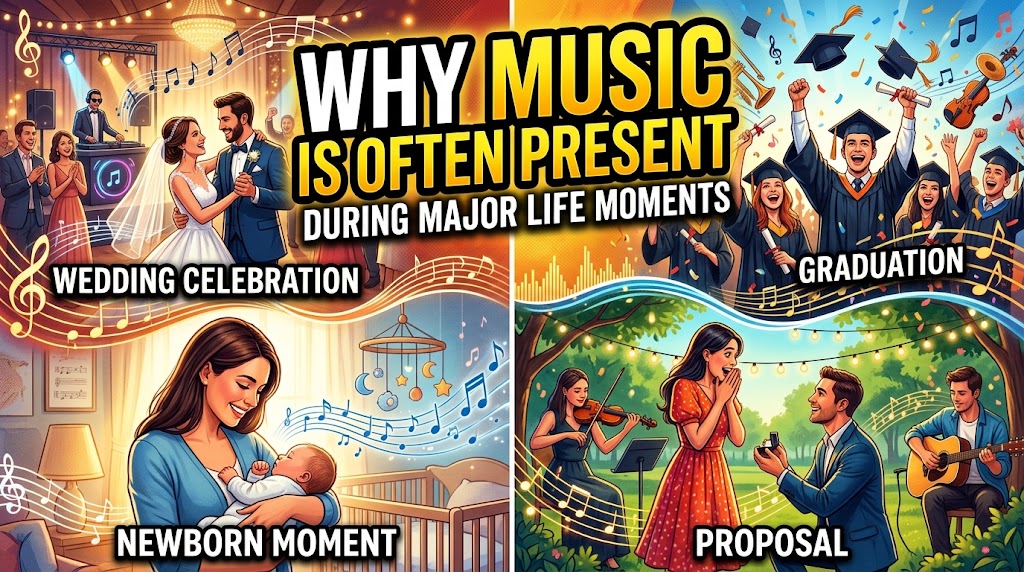
Why Music Is Often Present During Major Life Moments
Why Music Is Often Present During Major Life Moments
Music has a remarkable way of becoming part of the moments we remember most. From the excitement of a wedding to the sadness of a funeral, from the celebration of a graduation to the quiet reflection that follows a difficult season, music seems to appear whenever something important happens in human life. This raises an interesting question: why is music so often present during major life moments? The answer is connected to the powerful relationship between music, memory, emotion, culture, relationships, and human expression. Music does more than provide entertainment. It can help people express feelings that ordinary words sometimes cannot fully communicate.
Why Music Is Often Present During Major Life Moments becomes easier to understand when we consider how deeply music is connected to human emotions. People do not simply hear music. They often feel it. A particular melody can create excitement, peace, sadness, hope, nostalgia, or joy within seconds. This emotional power makes music especially useful during occasions that carry strong personal or collective meaning. When people gather to celebrate, remember, mourn, worship, or begin a new chapter in life, music can help create an atmosphere that matches the emotional significance of the moment.
Think about a wedding. Music is usually present from the beginning of the ceremony through the celebration that follows. Certain songs may be selected because they represent love, commitment, friendship, family, or hope for the future. Years later, hearing one of those songs can instantly bring back memories of the wedding day. The song becomes more than a piece of music. It becomes connected to a particular place, group of people, emotion, and period in life. This is one of the reasons music can become such a powerful part of personal memories.
Graduation ceremonies provide another example. When students complete an important stage of their education, music often accompanies the celebration. A particular song may represent achievement, perseverance, friendship, ambition, or the excitement of entering a new stage of life. Even decades later, graduates may hear that song and remember the people they knew, the challenges they overcame, and the dreams they had at the time. Music can therefore act almost like an emotional photograph, preserving the atmosphere surrounding an important event.
A Personal Perspective on Music and Life Moments
For me, music is closely connected to memory and gratitude. Many of the songs I write have come from personal experiences and from moments when I have become deeply aware of God’s grace, mercy, faithfulness, and preservation in my life.
Sometimes an experience can stay in the heart long after the moment has passed. A song can give that experience a voice. What begins as a personal reflection may eventually become lyrics and melody that preserve what I felt and what I learned during that season.
I have also come to understand that people often connect with songs because of what the songs represent in their own lives. A listener may hear a song and remember a prayer, a family member, a difficult season, a celebration, or a moment when God helped them. The song then becomes connected to their own story.
This is one reason I believe music can be so powerful during important moments. It does not simply accompany an event; sometimes it becomes part of the memory itself.
As a gospel music artist, I want the music I create through Godsfame Music to carry meaningful messages that people can connect with in different seasons of life. Whether someone is celebrating God’s goodness, remembering His faithfulness, or going through a difficult period, I hope the music can give them something meaningful to hold onto.
Music is also commonly present during funerals and memorial services. In these moments, music can provide a form of emotional communication when words feel inadequate. A song may remind people of the person who has died, express grief, celebrate their life, or provide comfort to those who remain. Sometimes a family chooses a song because it was meaningful to the person who passed away. In other situations, a hymn or worship song may communicate beliefs about hope, eternity, faith, and life beyond death. Music does not remove the pain of loss, but it can give people a meaningful way to experience and express their emotions together.
Another reason Why Music Is Often Present During Major Life Moments is that music helps groups of people experience the same moment together. Singing or listening to music collectively creates a shared emotional experience. At a concert, church service, wedding, graduation, national celebration, or community gathering, hundreds or even thousands of people can become connected through the same rhythm, melody, lyrics, or performance. The experience becomes collective rather than individual.
This collective quality is particularly important in Christian worship. Music has been part of Christian worship for centuries, with hymns, psalms, spiritual songs, choirs, worship teams, and contemporary gospel music helping believers express their faith. Christian music can create an atmosphere for prayer, reflection, celebration, gratitude, repentance, and hope. During major Christian events such as weddings, baptisms, Easter celebrations, Christmas services, conferences, and funerals, music often helps communicate the spiritual meaning of the occasion.
Music also plays an important role during birthdays. Although birthdays may appear simple compared with weddings or funerals, they represent another milestone in a person’s life. The familiar birthday song has become one of the most recognisable musical traditions around the world. People sing it to mark the passage of another year and to celebrate the existence of a particular person. This simple example demonstrates that music does not have to be complicated to become part of an important human ritual.
The connection between music and memory is another major reason music appears during important moments. Human beings can associate songs with particular experiences very strongly. A song heard during childhood may bring back memories of family gatherings. A particular gospel song may remind someone of a church they attended years ago. A romantic song may remind someone of a relationship. A song played during a difficult period may bring back memories of how a person survived that season.
This connection explains why people sometimes experience powerful emotions when they unexpectedly hear an old song. The music can unlock memories that have been dormant for years. A few seconds of melody can transport someone mentally to another time. The listener may remember where they were, who they were with, what they were doing, and how they felt. Music therefore has an unusual ability to connect the present with the past.
Why Music Is Often Present During Major Life Moments is also connected to cultural traditions. Different societies use music to mark important stages of life. Traditional songs may accompany weddings, naming ceremonies, funerals, festivals, religious events, coronations, community celebrations, and other significant occasions. In many African cultures, music is deeply connected to communal life. Drums, singing, dancing, praise singing, call and response patterns, and other musical traditions can help communities celebrate important events and preserve cultural identity.
In Nigeria, for example, music is an important part of many social and religious gatherings. Weddings can involve several musical styles, from traditional performances to contemporary Afrobeats and gospel music. Birthday celebrations often include specially selected songs and live performances. Churches frequently use music during worship, thanksgiving, weddings, funerals, conventions, and other programmes. Music is therefore not simply something played in the background. It can become part of the identity and emotional structure of the event.
Music also helps people communicate feelings that may be difficult to express through ordinary conversation. Imagine someone trying to explain the depth of their gratitude, grief, love, hope, or joy during an emotionally intense moment. Words may feel insufficient. A carefully selected song can communicate those emotions in a way that feels natural and powerful. This is particularly noticeable during weddings and memorial services, where songs can express emotions that individuals may struggle to articulate publicly.
Another important factor is atmosphere. Music can influence how people perceive an environment. A joyful song can make a celebration feel more energetic. A calm instrumental piece can create a peaceful atmosphere. A reflective worship song can encourage people to become quiet and thoughtful. A powerful performance can turn a gathering into an unforgettable experience. Event organisers therefore often consider music an essential part of creating the desired atmosphere.
Music can also provide structure during major events. Ceremonies often contain different stages, and music can signal transitions between them. At a wedding, music can accompany the entrance of the bride, the ceremony itself, the reception, the first dance, and other moments. During graduation ceremonies, music can accompany processions, presentations, and celebrations. During religious gatherings, music can help transition between prayer, teaching, worship, and reflection.
Technology has also made music even more present in modern life. People can now create playlists specifically for particular occasions, stream songs instantly, share music through social media, and record important moments with carefully selected soundtracks. A wedding video can include a couple’s favourite song. A birthday video can combine photographs with music. A graduation post can feature a song that represents the person’s journey. Music is increasingly becoming part of the digital record people create around major life experiences.
Social media has strengthened this relationship. People often attach songs to photographs and videos documenting important moments. A person announcing a new business may select an inspirational song. Someone celebrating an achievement may use a triumphant soundtrack. A couple may post wedding photographs alongside their favourite romantic song. A family may create a tribute video using music associated with a loved one. Through these practices, music becomes part of how people tell their stories publicly.
There is also something deeply human about using music to mark transitions. Human life is filled with beginnings and endings. People are born, grow up, graduate, fall in love, get married, change careers, relocate, become parents, overcome challenges, celebrate achievements, experience loss, and enter new stages of life. Music provides a way to recognise these transitions. It tells us that something meaningful has happened and deserves to be remembered.
This is why songs can become attached to specific periods of life. People sometimes refer to a particular song as the song of their university years, their wedding, their childhood, their first relationship, their spiritual awakening, or their journey through a difficult season. The song itself may not have changed, but its meaning to the listener has changed because of the experience associated with it.
Music can also bring comfort during uncertainty. Major life moments are not always happy. Moving to a new city, losing a job, ending a relationship, receiving difficult news, or facing an uncertain future can create emotional pressure. During such periods, people often turn to music because familiar songs can provide reassurance and companionship. Christian listeners may choose worship or gospel songs that remind them of God’s faithfulness, while others may choose songs that express their emotions and help them process what they are experiencing.
The relationship between music and major life moments also explains why certain songs become timeless. A song may survive for generations because it becomes connected to experiences that every generation understands. Love, loss, hope, celebration, faith, family, friendship, and change are universal aspects of human existence. When music speaks directly to these experiences, it can remain meaningful long after the circumstances surrounding its creation have changed.
Music can even influence how people remember an event. The emotional tone of a song can become part of the memory itself. A joyful song can make an occasion feel brighter in retrospect, while a reflective song can make a memory feel more emotional. This does not mean music completely determines how people remember events, but it can become one of the elements through which those memories are organised and recalled.
For musicians, this reality creates an enormous opportunity and responsibility. A song released today may eventually become the soundtrack to someone’s most important memory. It could be played at a wedding, graduation, birthday, church service, memorial, family gathering, or personal celebration. A musician may never know exactly where their song will travel or what memories listeners will attach to it. That is part of the remarkable power of music.
For Christian musicians especially, this responsibility can be even more significant. A gospel song may become the song someone listens to during prayer, the song a family sings during a difficult season, or the song that reminds someone of their faith when circumstances become overwhelming. Music can therefore become a form of ministry that continues beyond the original recording.
What Music and Memory Mean to Me
For me, music has always been closely connected to personal experience and gratitude. Many of the songs I write come from moments in my life when I have experienced God’s grace, mercy, faithfulness, and preservation. Sometimes I begin writing because I am simply reflecting on something God has done for me, and the experience gradually becomes words and melody.
I have come to understand that a song can preserve more than a sound. It can preserve a feeling, a lesson, a prayer, or a testimony. When I listen to a song connected to a particular season of my life, I can remember what I was going through and what God was teaching me at that time.
That is also why I believe gospel music can become meaningful during major moments in people’s lives. A song can accompany someone during a celebration, provide comfort during grief, or remind someone of God’s faithfulness during a difficult season. The songwriter may have had one experience in mind, but the listener may connect the song to an entirely different part of their own story.
As a gospel music artist, I want the songs I create through Godsfame Music to carry that kind of lasting meaning. I want them to be more than recordings that people hear once. I want the message to give people something they can remember, sing, pray with, and return to when they need encouragement.
I cannot know every moment in which someone may hear one of my songs. But I can choose to create music from genuine experiences, gratitude, faith, and a sincere desire to encourage others.
A song may last only a few minutes, but the message and memory it creates can remain in someone’s heart for many years.

Leave a Reply