
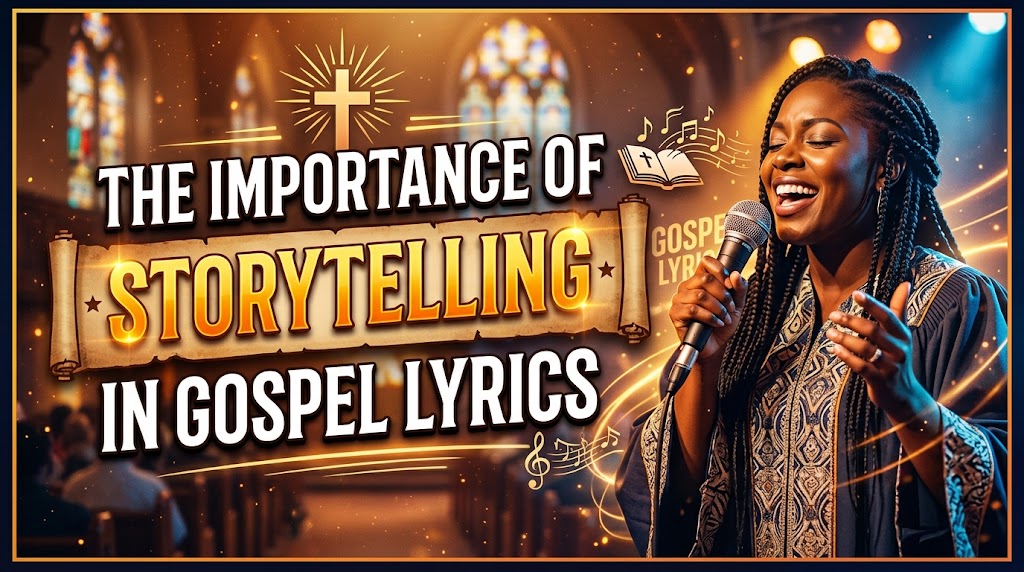
The Importance of Storytelling in Gospel Lyrics
The Importance of Storytelling in Gospel Lyrics
The Importance of Storytelling in Gospel Lyrics is one of the most significant aspects of Christian music because stories have a unique ability to communicate faith, emotion, experience, and truth in a way that people can easily understand and remember. Gospel music has never been only about beautiful melodies, impressive vocals, or powerful musical arrangements. At its heart, gospel music is about communicating a message. That message may be about God’s love, forgiveness, mercy, faithfulness, salvation, restoration, hope, or the personal journey of a believer. Storytelling gives these messages a human experience that listeners can connect with.
When a gospel artist tells a story through lyrics, the listener is not simply hearing words. The listener is being invited into an experience. A song can describe a difficult season, a prayer that seemed unanswered, a painful past, a miraculous breakthrough, a journey of faith, or a moment of encountering God. These experiences make gospel lyrics relatable because listeners often recognise parts of their own lives in the stories being presented. This is one major reason The Importance of Storytelling in Gospel Lyrics continues to grow as a subject worth discussing among Christian musicians, worshippers, songwriters, and listeners.
Storytelling has always been an important part of communicating spiritual truth. The Bible itself contains numerous stories that communicate profound lessons about faith and human life. Instead of presenting every lesson as an abstract statement, Scripture often communicates through the experiences of individuals and communities. Stories about Abraham, Joseph, Moses, David, Ruth, Esther, Peter, Paul, and many others allow readers to see faith expressed through real circumstances. Gospel music can use a similar approach by transforming experiences and biblical truths into songs that people can hear, sing, and remember.
One of the greatest strengths of storytelling in gospel lyrics is its ability to make spiritual messages personal. Saying that God is faithful is a powerful statement, but describing a situation in which someone experienced God’s faithfulness can make that message much more tangible. A songwriter may describe a period when everything appeared hopeless, followed by a moment of unexpected restoration. The listener may immediately connect with the story because they have experienced something similar. The song therefore becomes more than music. It becomes a reminder of what is possible through faith.
The Importance of Storytelling in Gospel Lyrics is also connected to emotional connection. Music already has a strong relationship with human emotion, but storytelling can make that connection even deeper. When listeners understand what a singer has experienced, they can feel the emotional weight behind the performance. A song about overcoming hardship can sound completely different when the listener understands the journey behind the lyrics. The words become more meaningful because they are connected to a story rather than existing as isolated statements.
This is particularly important in gospel music because Christian songs often address subjects that are deeply personal. People listen to gospel music when they are celebrating, praying, grieving, struggling, travelling, working, worshipping, or searching for encouragement. A well written story can meet listeners in these different moments. Someone who feels discouraged may hear a song about perseverance and find renewed courage. Someone who has experienced failure may hear a story about restoration and find hope. Someone who feels forgotten may hear lyrics describing God’s presence and feel encouraged to keep trusting.
Storytelling can also make gospel songs easier to remember. Human beings naturally remember stories because stories often have a beginning, a development, and a meaningful conclusion. A collection of disconnected statements may be difficult to retain, but a song that takes listeners through an experience can remain in their minds for a long time. This explains why certain gospel songs become closely associated with particular seasons, events, testimonies, or personal experiences. Years later, a listener may hear a song and immediately remember where they were, what they were experiencing, and how the song made them feel.
Another important reason for The Importance of Storytelling in Gospel Lyrics is that stories can communicate complex spiritual ideas without making the message unnecessarily complicated. Concepts such as grace, redemption, perseverance, forgiveness, obedience, surrender, and faith can sometimes sound abstract when presented only as definitions. Storytelling gives these concepts a practical context. Instead of simply saying that forgiveness is powerful, a songwriter can describe someone who experienced betrayal and eventually found the strength to forgive. Instead of simply saying that God provides, a song can describe a person who went through a difficult period and discovered unexpected provision.
Storytelling also gives gospel artists an opportunity to share their testimonies. Personal testimony has always been important within Christianity, and music provides a creative platform for presenting these experiences. A singer may use a song to describe where they came from, what they experienced, what they learned, and how their faith changed them. Such songs can be deeply powerful because they communicate authenticity. Listeners are often drawn to music that feels genuine, and a sincere story can create a connection that technical perfection alone cannot achieve.
However, effective storytelling in gospel lyrics does not necessarily mean that every song must contain a long and detailed personal biography. Sometimes a simple image, moment, conversation, or situation can communicate an entire story. A songwriter might describe a person kneeling beside a bed late at night, waiting for an answer to prayer. Another songwriter might describe the emotions of someone walking away from a painful past. Another might describe the joy of returning home after being lost for years. These simple scenes can carry significant emotional and spiritual meaning.
Storytelling is also valuable because it allows gospel music to address real life. Christian music should not pretend that believers never experience difficulties. Faith does not eliminate every challenge, disappointment, question, or season of uncertainty. Gospel songs that acknowledge these realities can become particularly meaningful because they allow listeners to see faith within the context of real human experiences. A song can acknowledge pain while still pointing towards hope. It can acknowledge fear while still expressing trust. It can describe failure while still communicating redemption.
This balance is one of the reasons powerful gospel storytelling can be different from simply creating inspirational slogans. A collection of motivational statements may sound positive, but a story can show how someone reached that point of confidence. Instead of telling listeners to be strong without acknowledging their struggles, storytelling can show a person who was weak, confused, or discouraged but continued moving forward. The eventual message of hope therefore feels earned rather than merely announced.
The Importance of Storytelling in Gospel Lyrics is particularly relevant in today’s digital music environment. Listeners have access to thousands of songs through streaming platforms and social media. Gospel artists are therefore competing for attention in an environment where people can quickly move from one song to another. A compelling story can help a song stand out because people are naturally attracted to narratives. When listeners hear lyrics that make them curious about what happens next, they have a reason to continue listening.
Storytelling can also encourage social media conversations. A powerful gospel song may remind someone of their own testimony, family, struggle, or spiritual journey. That listener may share the song with friends or post about what the lyrics mean to them. In this way, storytelling can extend the life of a song beyond the recording itself. The audience becomes part of the conversation surrounding the music.
Another advantage is that storytelling can help gospel music cross cultural and generational boundaries. While musical styles can differ considerably between countries and generations, human experiences remain surprisingly similar. People understand love, loss, hope, fear, disappointment, family, perseverance, gratitude, and restoration regardless of their cultural background. A well told story can therefore communicate across boundaries even when listeners do not share exactly the same musical preferences.
This is particularly significant for African gospel music, where storytelling has long been an important part of musical expression. Many African musical traditions place considerable value on testimony, communal experience, call and response, and narratives about everyday life. Contemporary gospel artists can build on these traditions while using modern production techniques and contemporary sounds. The result can be music that feels current while remaining deeply connected to the storytelling traditions that have influenced gospel music for generations.
Gospel songwriters can improve their storytelling by paying attention to ordinary experiences. Not every powerful song needs an extraordinary miracle. Sometimes the most relatable stories are found in everyday situations. A person waiting for an opportunity, caring for a family member, struggling to remain hopeful, rebuilding after failure, or learning to trust God can provide material for meaningful songwriting. Ordinary experiences become powerful when they reveal something deeper about faith and human nature.
Another important element is honesty. Listeners can often recognise when lyrics feel forced. Authentic storytelling does not require an artist to reveal every private detail of their life, but it does require emotional sincerity. A songwriter should understand the experience they are describing and communicate it in a way that feels believable. When lyrics come from genuine reflection, the song is more likely to resonate with people who have experienced similar circumstances.
The language used in storytelling also matters. Great gospel lyrics do not always need complicated vocabulary. Sometimes simple words communicate the strongest emotions. A songwriter who focuses too heavily on trying to sound sophisticated may accidentally make the story difficult to understand. Clear language can make a song more accessible, especially when the goal is to reach a wide audience.
Biblical storytelling can also provide a rich source of inspiration for gospel songwriters. Stories from Scripture can be interpreted through music while remaining faithful to their central themes. A songwriter can explore the courage of David, the perseverance of Job, the obedience of Mary, the transformation of Paul, the restoration of Peter, or the faithfulness of God throughout biblical history. These stories remain relevant because they address questions that people continue to face today.
At the same time, gospel artists should be thoughtful when adapting biblical stories. The purpose should not simply be to mention a biblical character’s name but to communicate the meaning of the story responsibly. Strong songwriting combines creativity with an understanding of the message being communicated. When biblical narratives are handled carefully, they can introduce listeners to Scripture while also providing fresh perspectives on familiar stories.
Storytelling can also help gospel artists create stronger albums. Instead of viewing every song as an isolated piece, an artist can develop a collection of songs that collectively tells a larger story. One song might introduce a period of struggle, another might describe the search for answers, another might express surrender, and another might celebrate restoration. Such an album can feel like a journey rather than simply a playlist.
For listeners, understanding The Importance of Storytelling in Gospel Lyrics can also change the way they experience music. Instead of listening only to the melody or vocal performance, listeners can pay attention to the story being communicated. They can ask what situation inspired the lyrics, what emotion the songwriter is expressing, what biblical truth is being communicated, and how the story relates to their own experience. This can turn ordinary listening into a deeper form of reflection.
Ultimately, gospel music has the extraordinary ability to preserve experiences. A song can become a musical record of a season in someone’s life. It can preserve a testimony, a prayer, a struggle, a victory, or a moment of gratitude. Long after the original circumstances have passed, the song can continue communicating the experience to new listeners. This is one reason storytelling gives gospel music lasting value.
The Importance of Storytelling in Gospel Lyrics therefore goes far beyond entertainment. Storytelling gives gospel songs identity, emotional depth, relatability, memorability, and spiritual meaning. It allows artists to communicate biblical truths through human experiences and gives listeners opportunities to recognise their own lives within those messages. A powerful gospel song does not merely tell people what to believe. Sometimes it takes them on a journey that allows them to feel, understand, question, remember, and ultimately reflect on their faith.
As gospel music continues to evolve through streaming platforms, social media, modern production, new musical styles, and emerging artists, storytelling remains an important creative tool. Technology may change how music is recorded and distributed, but the human desire for meaningful stories remains. People still want to hear songs that understand their struggles, celebrate their victories, acknowledge their questions, and remind them that their experiences have meaning.
For gospel artists and songwriters, the lesson is simple. Do not underestimate the power of a story. A strong melody may attract attention, an impressive vocal performance may create admiration, and excellent production may improve the listening experience, but a meaningful story can give a song a lasting place in someone’s heart. When faith is communicated through an authentic and well crafted story, the result can become more than a song. It can become a testimony that listeners carry with them.
That is ultimately The Importance of Storytelling in Gospel Lyrics. Stories help people connect with truth because they bring ideas to life. They turn experiences into music, memories into melodies, and testimonies into messages that can travel far beyond the person who originally experienced them. When gospel lyrics tell meaningful stories with sincerity, biblical wisdom, emotional honesty, and creative excellence, they can encourage listeners, strengthen faith, preserve testimonies, and point people towards hope. In a rapidly changing music industry, that timeless ability to tell a story may remain one of the greatest strengths gospel music possesses.

Leave a Reply