
How Gospel Music Inspires Community Engagement
How Gospel Music Inspires Community Engagement
How Gospel Music Inspires Community Engagement is a powerful subject because gospel music has never been only about sound, rhythm, singing, or entertainment. Across generations and cultures, gospel music has provided people with a way to express faith, share experiences, encourage one another, build relationships, and participate in activities that strengthen communities. Whether it is being performed inside a church, at a Christian concert, during a community celebration, at a charity programme, or through digital platforms, gospel music has a unique ability to bring people together around shared values and experiences.
When people ask how gospel music inspires community engagement, one of the clearest answers can be found in the way music creates a sense of belonging. A person may walk into a church or Christian gathering without knowing many people, but when everyone begins singing the same song, something changes. Individual voices become part of a collective expression. People who may have different backgrounds, professions, ages, experiences, and personalities suddenly participate in the same activity. That shared participation can create connections that might otherwise take much longer to develop.
Gospel music has traditionally played an important role in bringing people together because its messages often address experiences that many people understand. Faith, hope, gratitude, perseverance, forgiveness, love, restoration, encouragement, and trust are themes that appear frequently in gospel music. These themes can provide common ground for people from different walks of life. A song about overcoming difficult circumstances may remind one person of a personal testimony while reminding another person of a season they are currently experiencing. The music becomes a bridge between individual experiences.
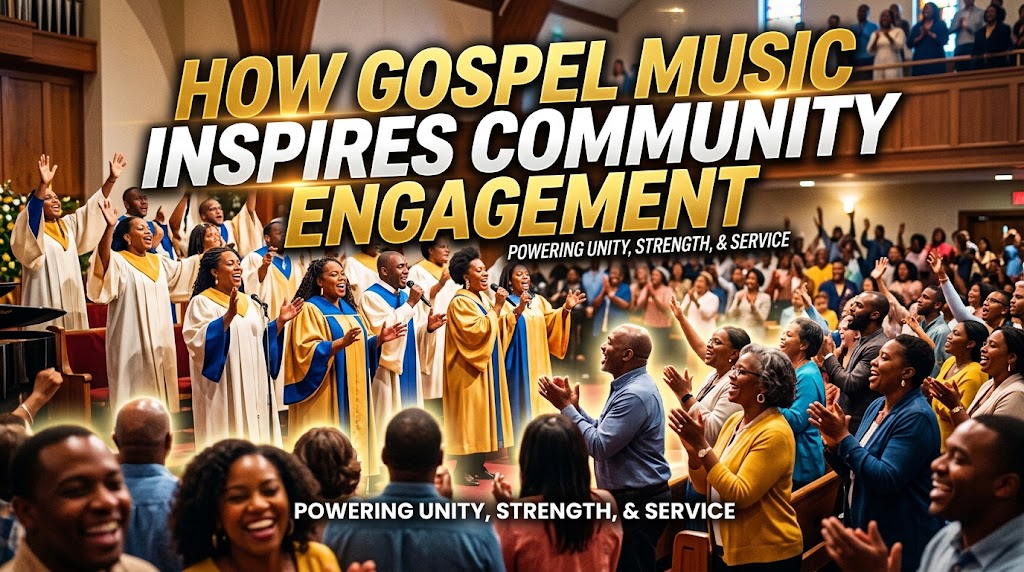
Another important reason gospel music inspires community engagement is its connection with collective worship. Worship is often experienced individually, but gospel music creates opportunities for people to express that worship together. When a congregation sings, the experience is no longer simply about the individual listener. It becomes a shared activity. People participate with their voices, emotions, movements, instruments, and attention. This collective experience can strengthen relationships because people are not merely watching an event. They are participating in it.
Church choirs provide another example of how gospel music can encourage community participation. A choir requires people to work together. Singers must listen to one another, follow musical direction, practise regularly, learn their parts, and contribute to a common performance. This process can teach cooperation, patience, discipline, responsibility, and teamwork. A choir therefore becomes more than a group of people who sing. It can become a community within a community.
Young people can also become more involved in their communities through gospel music. Music is already an important part of youth culture, and Christian music can provide young people with an avenue for creative expression while connecting them with faith based communities. Young people may participate as singers, instrumentalists, songwriters, producers, dancers, media volunteers, sound engineers, photographers, content creators, or event organisers. These roles can give them opportunities to develop skills while contributing to activities that bring people together.
The rise of digital media has expanded the ability of gospel music to inspire community engagement. A person no longer needs to attend a physical church or concert to discover a gospel song. Gospel music can now travel through streaming platforms, social media, websites, video platforms, podcasts, and online communities. A song released by an independent artist can reach listeners thousands of kilometres away. Someone in Nigeria can listen to a gospel artist from the United States, Ghana, South Africa, the United Kingdom, or another part of the world and feel connected through a shared musical and spiritual experience.
Social media has particularly changed how gospel music communities interact. A song can become the starting point for conversations, testimonies, challenges, covers, reactions, discussions, and collaborations. People can share how a song affected them, explain what a particular lyric means to them, or recommend the song to friends. Gospel music therefore becomes not just something people consume but something around which people communicate.
How Gospel Music Inspires Community Engagement can also be understood through charitable activities. Gospel musicians and Christian organisations sometimes use concerts and music events as opportunities to support causes within their communities. A musical event can be connected to fundraising, food distribution, educational support, youth programmes, humanitarian activities, hospital visits, community development projects, or assistance for vulnerable people. In such situations, music becomes a vehicle for bringing attention and participation to a wider cause.
The emotional power of gospel music can also encourage people to become more compassionate towards others. A song about suffering may encourage listeners to think about people facing similar difficulties. A song about generosity may encourage reflection on how individuals can support others. A song about forgiveness may inspire someone to reconsider a damaged relationship. Music cannot automatically produce these outcomes, but it can create emotional and reflective moments that encourage people to consider their responsibilities towards others.
Gospel music can also strengthen community engagement during important life events. Weddings, funerals, birthdays, church anniversaries, conferences, thanksgiving services, Christmas celebrations, Easter programmes, youth gatherings, and other occasions frequently involve music. These moments provide opportunities for people to gather physically and participate in shared experiences. The music helps create an atmosphere in which memories are formed and relationships are strengthened.
The role of gospel music in times of difficulty is particularly significant. Communities often face periods of economic hardship, natural disasters, conflict, bereavement, uncertainty, and other challenges. During such moments, music can provide encouragement and create a sense that people are not facing their circumstances alone. Gospel songs that communicate hope and faith can become sources of comfort for individuals and groups. When such songs are sung collectively, the message can feel even more communal because everyone is expressing the same hope together.
Gospel music can also help preserve cultural identity. In many parts of Africa, gospel music incorporates local languages, rhythms, instruments, vocal traditions, and cultural expressions. This creates a musical environment in which people can celebrate their heritage while expressing Christian faith. Nigerian gospel music, for example, includes a wide range of musical influences, languages, rhythms, and regional traditions. This diversity allows different communities to express their faith in ways that feel familiar and culturally meaningful.
Language itself can make gospel music a powerful community building tool. People may not share the same first language, but music can sometimes communicate emotions beyond ordinary conversation. Even when listeners do not understand every word, they may respond to the melody, rhythm, vocal delivery, and emotional atmosphere. When combined with translation or multilingual performances, gospel music can create opportunities for people from different linguistic backgrounds to participate together.
Gospel music also encourages collaboration. Artists may work with other singers, musicians, producers, choirs, churches, worship teams, and creative professionals. These collaborations can create relationships that extend beyond the recording studio. A song may bring together people who would otherwise never have met. Through such partnerships, gospel music can encourage networks of cooperation within the Christian community.
The community engagement created by gospel music is not limited to professional musicians. Ordinary members of a church or community can become active participants. Someone may volunteer to organise a concert. Another person may manage social media promotion. Someone else may operate the sound system. Others may welcome guests, arrange seating, provide security, coordinate transportation, prepare refreshments, or support fundraising activities. Music can therefore become the centre of a much larger network of community participation.
Gospel music can also provide opportunities for people who may feel disconnected from traditional community activities. Some people find it easier to express themselves through music than through formal conversations. A young person who struggles to participate in other church activities may become deeply involved after joining a music team. Someone who enjoys technology may discover a place in audio production or livestreaming. Another person may find purpose through songwriting. Music can create multiple entry points into community participation.
Another way gospel music inspires community engagement is through intergenerational connection. Older Christians may have favourite hymns and traditional gospel songs, while younger listeners may prefer contemporary sounds. When churches intentionally bring different musical generations together, music can become a bridge rather than a source of division. An older worshipper can share the history behind a classic song while a younger musician introduces a contemporary arrangement. Both generations learn from one another.
The influence of gospel music can extend beyond church buildings. Christian musicians may perform at public events, community celebrations, educational programmes, charity gatherings, cultural festivals, and other occasions. These appearances can introduce gospel music to people who may not regularly attend church. When the music communicates positive messages about hope, love, service, faith, and compassion, it can create opportunities for conversations between people with different backgrounds.
Gospel music can also inspire community engagement through local artists. Not every artist needs international recognition to make an impact. A local gospel musician who consistently participates in community activities can become an important part of the social fabric of that community. Local artists often understand the experiences, language, culture, and concerns of the people around them. Their music can reflect local realities and create a stronger sense of connection.
The internet has also created opportunities for smaller gospel artists to build communities around their music. An artist does not necessarily need a major record label before beginning to communicate with listeners. Through digital platforms, an independent artist can release songs, share behind the scenes content, host live sessions, interact with listeners, and create conversations around faith and music. This can transform listeners from passive consumers into an active community.
Gospel music can further encourage community engagement by creating spaces for testimonies. When people share the personal experiences connected to a song, listeners may discover that they are not alone in their struggles. Someone may explain how a particular song encouraged them during unemployment. Another person may describe how a song helped them through grief. Someone else may share how worship helped them regain hope. These stories can encourage conversations and strengthen relationships.
However, it is important to understand that music alone does not automatically create a healthy community. The people and organisations behind the music play an important role. If gospel music is used only for entertainment without opportunities for meaningful interaction, its community building potential may remain limited. Churches, artists, event organisers, and Christian communities can maximise the impact of music by creating spaces where people can connect, serve, communicate, and support one another.
Authenticity also matters. People are more likely to connect with music that feels genuine. Gospel music that communicates sincere faith, real experiences, and meaningful messages can create deeper connections than music that appears designed only to follow trends. This does not mean gospel music should avoid modern production or popular musical styles. Rather, it means that creativity and authenticity can work together.
Gospel music can also inspire community engagement among musicians themselves. Worship teams and gospel musicians frequently depend on collaboration. Musicians learn from one another, share equipment, rehearse together, perform together, and solve creative problems together. These interactions can create friendships and professional networks. In this sense, gospel music can strengthen both spiritual and creative communities.
Another powerful dimension is the use of gospel music in outreach. A concert or music programme can provide an opportunity for people to invite friends, relatives, neighbours, colleagues, and members of the wider community. Some people may attend because they enjoy music before becoming interested in the message behind it. Music can therefore provide an accessible entry point for conversations about faith.
Gospel music can also encourage volunteerism. Large music events require people willing to give their time and skills. Volunteers may spend hours rehearsing, organising, promoting, setting up equipment, assisting guests, or cleaning after an event. Although these activities may seem ordinary, they contribute to a culture of service. People learn that community building is not only about receiving from others but also about contributing something valuable.
The relationship between gospel music and community engagement is especially visible when music responds to real community needs. A gospel artist who understands the challenges facing their audience can use music to encourage constructive action. Songs can draw attention to hope, responsibility, compassion, reconciliation, family, integrity, perseverance, and service. These themes can stimulate conversations that continue long after the song ends.
For bloggers and Christian music platforms, How Gospel Music Inspires Community Engagement is also an important topic because digital publications can help extend these conversations. A music blog can publish interviews with gospel artists, explain the stories behind songs, highlight community projects, review albums, discuss emerging gospel movements, and share testimonies from listeners. In doing so, the blog itself can become part of the community surrounding Christian music.
The future of gospel music and community engagement will likely continue to be influenced by technology. Streaming platforms, short form video, livestreaming, artificial intelligence assisted production, digital communities, podcasts, and social media are changing how music is created and discovered. These technologies provide new opportunities for gospel musicians to connect with audiences. At the same time, the fundamental purpose of community engagement remains human. People still want to be heard, understood, encouraged, included, and connected.
Ultimately, How Gospel Music Inspires Community Engagement comes down to connection. Gospel music connects people with messages of faith. It connects individuals with congregations. It connects artists with listeners. It connects generations with one another. It connects communities with charitable causes. It connects personal testimonies with shared experiences. It can even connect people from different cultures through a common appreciation of music and faith.
The most powerful community created around gospel music is therefore not necessarily the largest one. It is the one where people move beyond listening and begin participating. They sing together, serve together, encourage one another, support meaningful causes, share experiences, develop friendships, and use their talents to contribute to something larger than themselves. When gospel music becomes a catalyst for these activities, its influence reaches far beyond the speakers, headphones, church stage, or recording studio.
Gospel music will continue to evolve as new artists emerge, new sounds develop, and new technologies change the way people discover songs. Yet its ability to bring people together remains one of its most important qualities. From a small church choir to a global streaming audience, music can create moments in which individuals recognise that their stories are connected. That shared experience is one of the reasons gospel music continues to occupy such an important place in Christian communities around the world.
Understanding How Gospel Music Inspires Community Engagement therefore requires looking beyond the music itself. The real impact can be found in the relationships, conversations, acts of service, collaborations, celebrations, testimonies, and shared experiences that music can encourage. A powerful gospel song may begin with one singer, but its message can travel through thousands of voices. When those voices become connected through faith, creativity, compassion, and community, gospel music becomes much more than a form of musical expression. It becomes a tool through which people can gather, participate, encourage one another, and build stronger communities.

Leave a Reply