
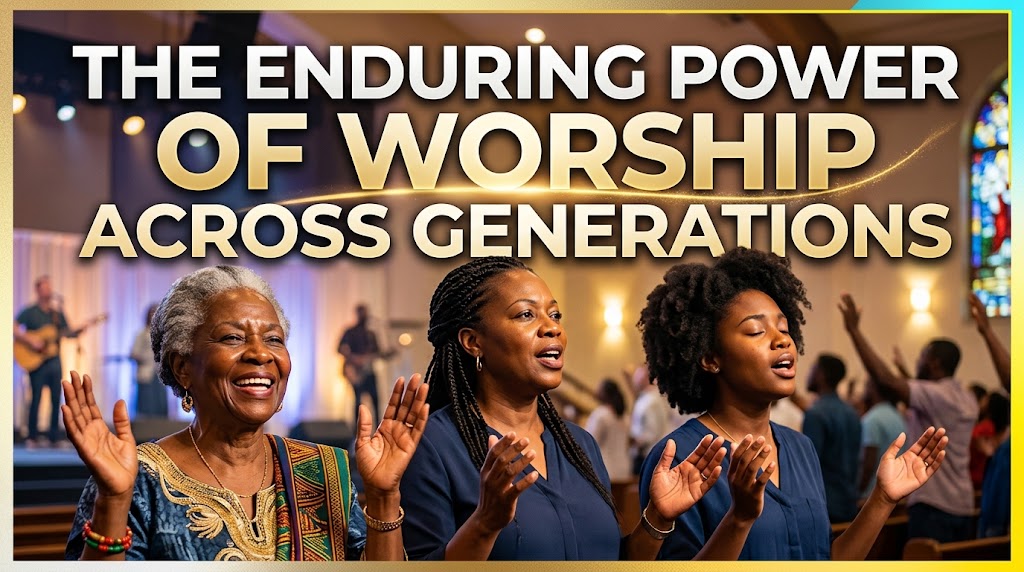
The Enduring Power of Worship Across Generations
The Enduring Power of Worship Across Generations
There are some songs that seem to belong to a particular generation, and then there are songs that somehow belong to everybody. You can hear an older Christian singing them, watch a young person discover them for the first time, and still feel the same message carrying through both voices. That is one of the things that has always fascinated me about worship. Music changes, instruments change, technology changes, and the way people consume music changes, but genuine worship continues to find its way into the hearts of people across generations. This is where I have come to appreciate The Enduring Power of Worship Across Generations.
When I think about worship, I do not only think about what happens inside a church on Sunday morning. I think about those quiet moments when someone puts on a worship song while getting ready for work. I think about a mother singing a familiar Christian song while doing household chores. I think about a young person listening to gospel music through headphones on the way to school. I think about a family singing together in the car. I think about someone going through a difficult season and finding enough strength to whisper the words of a worship song. These moments may look different, but they all demonstrate something powerful. Worship has a way of meeting people where they are.
One of the clearest things I have noticed is that worship does not seem to care about age. A song that was written decades ago can still move someone who was not even born when it was released. At the same time, a new worship song can introduce an older generation to a sound they have never heard before. This exchange between generations is one of the reasons Christian music remains so meaningful.
I remember hearing older Christians talk about songs that were important to them when they were younger. The way they described those songs was interesting. They were not simply talking about melodies or singers. They were talking about memories. They remembered where they were when they heard certain songs. They remembered what they were going through. They remembered how particular lyrics encouraged them during difficult moments. Sometimes they could sing almost every word without looking at the lyrics because the songs had become part of their lives.
That made me realise that worship music is capable of becoming much more than entertainment. A song can become a marker in someone’s spiritual journey. Years later, hearing the same melody can bring back memories of prayers, church services, family gatherings, personal victories and even difficult seasons. The music becomes connected to the story of the person who listened to it.
This is one reason The Enduring Power of Worship Across Generations is worth discussing. Worship survives because it is not ultimately dependent on a particular musical style. Styles come and go. One generation may prefer hymns, another may prefer contemporary worship, another may embrace gospel, Afro Gospel, Christian hip hop or other expressions of faith based music. The sound may change, but the desire to express faith through music remains.
I have seen how easily generations can disagree about music. Older Christians may sometimes wonder why younger worshippers prefer certain sounds. Younger Christians may wonder why older believers still love songs that seem musically simple compared with modern productions. But when you look beyond the instruments, production quality and musical arrangement, you often discover that both generations are searching for the same thing. They want music that helps them express what they believe and what they feel about God.
That is where worship becomes bigger than musical preference.
A song does not have to sound modern to be meaningful. It does not have to have an elaborate production to carry a powerful message. Likewise, a modern worship song does not become less meaningful simply because it uses contemporary sounds. The important question is what the song communicates and what it inspires within the listener.
There is something particularly powerful about watching different generations worship together. Imagine a church where grandparents, parents and teenagers are all singing the same song. They may have completely different musical preferences outside the church, but for a few minutes, those differences become less important. They are standing together, singing the same words and directing their attention towards the same God.
That experience reminds me that worship can become a bridge between generations.
Families can also experience this power in their homes. Some of the Christian songs people remember most strongly are songs they heard from their parents. A child may grow up hearing a particular worship song repeatedly without understanding its significance. Years later, that child becomes an adult and suddenly hears the same song again. The words may take on an entirely different meaning because life has changed.
Perhaps the person is now raising children of their own. Perhaps they have experienced disappointment, answered prayers, loss, success or a season of uncertainty. Suddenly, the song they heard as a child speaks to them differently. The music has not changed, but the listener has.
That is one of the beautiful things about Christian music. A song can meet you at different levels throughout your life.
When you are young, you may hear the melody. Later, you understand the lyrics. Years after that, you experience the truth behind those lyrics personally. A song can therefore grow with you.
This is particularly evident with worship songs centred on themes such as faith, hope, grace, mercy, God’s faithfulness and trust. These themes do not become outdated because human beings continue to experience the same fundamental realities of life. People still experience fear. People still need hope. People still face uncertainty. People still celebrate answered prayers. People still experience loss. People still need encouragement. And people still desire to express gratitude to God.
This explains why worship continues to cross generational boundaries.
Technology has also changed the way this happens. Previous generations may have depended heavily on church services, radio, cassette tapes, records, CDs and personal recommendations to discover Christian music. Today, a teenager can discover a worship song from another country within minutes. A person can listen to a Christian artist from Africa, Europe, America or another part of the world without leaving their home.
This has created an interesting environment for Christian music. Generations are no longer limited to the music produced within their immediate communities. A young Nigerian Christian can discover an old worship song from another country, while an older Christian can discover a new Afro Gospel artist through a streaming platform or social media.
The result is a constant exchange of musical experiences.
I believe this is one reason the future of worship music is so interesting. We are seeing old songs being rediscovered, new songs being created and different musical traditions influencing one another. A worship song can carry elements of traditional Christian music while using modern production techniques. A gospel artist can incorporate contemporary sounds while maintaining a strong message of faith. A young songwriter can draw inspiration from hymns that were written long before they were born.
Rather than completely replacing the old with the new, Christian music can allow generations to speak to one another.
There is also something special about older worship songs because many of them have survived decades of cultural and musical change. Their continued relevance demonstrates that a strong message can outlive the period in which it was written. People may change the way they listen to music, but meaningful expressions of faith can continue to resonate.
At the same time, we should not romanticise the past and assume everything old was automatically better. Every generation has something to contribute. Young Christian musicians bring creativity, fresh perspectives, new sounds and new ways of communicating faith. Older generations bring experience, history, musical traditions and stories that should not be forgotten.
The healthiest Christian music culture should have room for both.
This is why I think churches and Christian families should encourage conversations between generations about worship music. Instead of simply arguing about which songs are better, people can ask why particular songs matter to them. An older Christian can explain why a hymn reminds them of a significant period in their life. A younger Christian can explain why a contemporary worship song speaks to their present experience.
Those conversations can reveal something beautiful. Beneath the differences in musical taste, there may be more similarities than people realise.
Worship also teaches something important about continuity. Every generation eventually becomes the previous generation. The young people who are discovering Christian music today will one day have their own memories and stories connected to particular songs. Some of the songs they currently love may eventually become nostalgic reminders of their younger years.
That means today’s worship music is not only being consumed. It is becoming part of someone’s history.
This thought makes me take Christian music more seriously. When a songwriter writes a worship song, they may never know how far that song will travel. They may not know that someone will listen to it during a difficult night. They may not know that a family will sing it together. They may not know that a child will hear it from their parents and remember it decades later.
Music has a strange ability to travel beyond the intentions and expectations of the person who created it.
A worship song can leave the studio and enter people’s homes, churches, cars, workplaces and private moments. It can cross national borders and generational boundaries. It can become part of someone’s prayer life without the songwriter ever meeting the listener.
That is The Enduring Power of Worship Across Generations.
It is not simply about old songs remaining popular. It is about the ability of worship to communicate truths that remain relevant even when the world around us changes. The instruments may change. The recording technology may change. The fashion surrounding Christian music may change. The platforms used to distribute songs may change. But the human heart continues to search for hope, meaning, peace and a reason to give thanks.
Worship gives people a language for expressing those things.
I have also come to believe that worship is one of the places where generations can learn from one another. Younger Christians do not have to reject everything from the past to embrace the future. Older Christians do not have to reject every new sound to preserve what they value. There is room for discovery, adaptation and appreciation.
A church can sing an old hymn one week and a contemporary worship song the next. A family can listen to traditional gospel music in the morning and a modern Christian artist later in the day. What matters is not simply whether the music sounds old or new, but whether it contributes meaningfully to the worship experience.
The enduring nature of worship reminds us that Christianity is not limited to one generation. The faith is passed from one generation to another, and music can become one of the vessels through which that connection is experienced.
A grandmother may teach a worship song to her daughter. The daughter may teach it to her children. Those children may eventually introduce another generation to the same song. Along the way, each generation may add its own musical expression, but the message can continue.
That is a remarkable legacy.
Perhaps this is why some worship songs seem to become almost impossible to forget. They are not simply songs anymore. They are memories, prayers, testimonies and reminders of God’s faithfulness woven together through music.
When I think about The Enduring Power of Worship Across Generations, I therefore think about more than Christian music. I think about connection. I think about families. I think about churches. I think about memories. I think about people who have walked with God for decades and people who are only beginning their journey. I think about how one song can mean something completely different to two people while still bringing them into the same moment of worship.
The next time you hear an older Christian singing a song you thought belonged to another generation, listen carefully. There may be a story behind those words. There may be decades of faith behind that voice. And the next time you hear a young Christian passionately singing a newly released worship song, remember that they too are creating the memories that another generation may one day inherit.
This is what makes worship so powerful.
Songs may have release dates, but worship does not have an expiration date. Musical trends may disappear, but the desire to worship continues. Generations come and go, but songs of faith continue to provide language for gratitude, hope, surrender and trust.
The enduring power of worship across generations is ultimately found in its ability to connect the past, present and future. It reminds us that while the sound of Christian music may continue to evolve, the heart behind genuine worship can remain remarkably constant.
And perhaps that is the greatest testimony of all. A song written yesterday can touch someone today. A hymn written generations ago can still bring tears to someone’s eyes. A new generation can discover an old melody and make it their own. Somewhere between those moments, worship continues doing what it has always done: bringing people together in an expression of faith that can travel far beyond a single voice, a single church or a single generation.

Leave a Reply