
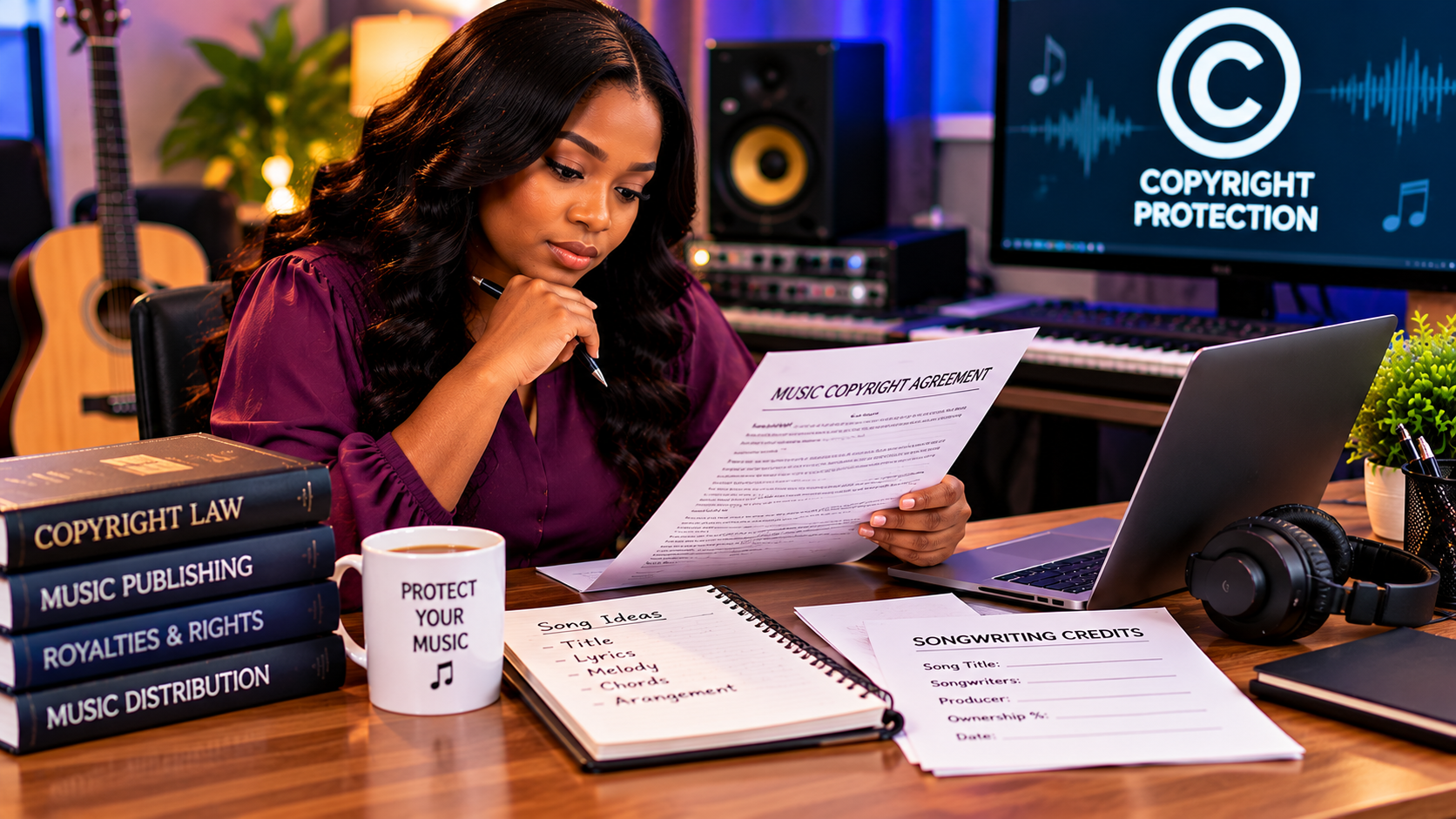
How to Protect Your Gospel Music From Copyright Infringement
How to Protect Your Gospel Music From Copyright Infringement
Writing and recording a gospel song takes creativity, time, and effort. Whether you write worship songs, record praise music, or produce Christian instrumental tracks, it is important to understand how to protect your work from unauthorised use.
Copyright protection can help creators control certain uses of their original music and establish their rights when disputes arise. However, many independent gospel artists do not fully understand the difference between owning a song, owning a recording, registering copyright, and collecting royalties.
Learning these distinctions can help you manage your music more responsibly and avoid preventable disagreements with collaborators, producers, and other industry professionals.
This article explains practical steps gospel artists can take to protect their original music and manage their rights.
1. Understand What Copyright Protects
Copyright generally protects original creative works that meet the applicable legal requirements. In music, two important categories are the musical composition and the sound recording.
The musical composition includes the underlying music and lyrics. Depending on the circumstances, songwriters, composers, and other eligible creators may hold rights in this work.
The sound recording is the particular recorded performance of a song. It may involve a singer, instrumentalists, a producer, and a recording studio.
These are separate rights, even when they relate to the same song.
For example, you might write the lyrics and melody but hire a studio to record the performance. The ownership of the composition and the ownership or control of the resulting recording depend on the applicable law and the agreements between the parties.
Do not assume that paying for studio time automatically settles every ownership question. Clarify the relevant rights and responsibilities before releasing your music.
2. Keep Evidence of Your Creative Work
Maintaining organised records can help you demonstrate how a song was developed and identify the people who contributed to it.
Keep copies of your original lyrics, melody recordings, voice notes, project files, and dated drafts. Store final audio masters and relevant production documents securely.
You can also retain emails, messages, and signed agreements that record decisions about songwriting credits, ownership, and permissions.
For collaborative projects, document each person’s contribution and any agreed songwriting shares.
These records do not automatically establish every legal right, but they may be useful if questions arise about authorship or ownership.
Back up important files in more than one secure location. Losing your original material can make it harder to manage a release or resolve a dispute later.
3. Put Agreements With Collaborators in Writing
Gospel music is often created through collaboration. A songwriter may work with a composer, producer, vocalist, instrumentalist, or recording engineer.
Before work begins, discuss the roles of everyone involved.
Clarify who owns the composition, who owns or controls the master recording, how songwriting credits will be assigned, and whether any royalties or other payments are due.
A producer’s fee, a musician’s session payment, and an agreement to share ownership are not necessarily the same arrangement.
For example, paying a musician a fixed fee for a performance does not, by itself, answer every question about the rights involved. The agreement and applicable law matter.
Write down the agreed terms, make sure everyone understands them, and retain copies signed by the relevant parties.
For complicated arrangements or significant commercial releases, consider obtaining advice from a qualified music lawyer or other appropriate legal professional.
4. Be Careful When Using Instrumentals, Samples, and Cover Songs
Not every instrumental track or musical element found online is free to use.
A backing track may be subject to copyright or licensing restrictions. A sample taken from an existing recording may require permission from the relevant rights holders. The rules can differ depending on the material and the intended use.
Before using an instrumental, sample, or beat, read the licence and confirm that it permits your intended activities, including commercial distribution if applicable.
Keep evidence of permissions and licences.
Cover songs also require attention to the applicable rights and licensing rules. The fact that a song is popular, widely performed in churches, or available online does not mean every recording or distribution use is automatically authorised.
When uncertain, contact the relevant rights holder, distributor, licensing organisation, or qualified legal professional before releasing the material.
5. Understand Copyright Registration
Copyright protection and copyright registration are not identical.
In some countries, copyright can arise automatically when an eligible original work is created and fixed in a qualifying form. Registration may provide additional legal or administrative benefits, depending on the jurisdiction.
The United States Copyright Office, for example, provides information about copyright registration for musical compositions and sound recordings. Its procedures and legal effects should not be assumed to apply identically in Nigeria or other countries.
If you live in Nigeria or distribute your music internationally, check the applicable local law and official guidance for the relevant jurisdiction.
Keep in mind that registering a song with a music distributor or adding it to a streaming platform is not necessarily the same as registering copyright with an official copyright authority.
Choose the registration or documentation steps appropriate to your circumstances, and seek legal advice if you need a definitive answer about your rights.
6. Understand the Role of Music Distributors
Digital distributors deliver recordings to streaming platforms and may provide services relating to reporting, royalties, or rights administration.
However, distributing a song does not automatically mean the distributor owns your music, nor does it settle every copyright issue.
Read the distributor’s agreement carefully. Understand what permissions you grant, how long the agreement lasts, what fees apply, and what happens if you remove your music or close your account.
Keep copies of your submission confirmations, release information, and royalty reports.
If you notice that your song has been assigned to the wrong artist profile or its information is incorrect, contact your distributor through its official support channels.
Never assume that a platform’s acceptance of a release proves that every underlying copyright issue has been resolved.
7. Use Content Identification Tools Responsibly
Some digital services offer tools that identify matching audio or help rights holders manage certain uses of their recordings.
For example, YouTube has copyright-related processes and tools, including Content ID for eligible rights holders and content, subject to its requirements.
These systems can help identify some uses of recordings, but they are not universal protection against every form of infringement.
Eligibility, administration, and enforcement procedures vary. A song’s presence on YouTube does not automatically mean the creator has access to Content ID.
Before using a rights-management service, understand its eligibility requirements, fees, contractual terms, and effect on other distribution arrangements.
Do not submit claims against material unless you have the necessary rights and a legitimate basis for doing so.
8. Monitor Where Your Music Appears
Once your music is released, periodically search for your artist name, song titles, and official links.
Check whether your music appears under the correct artist profile and whether your credits are accurate.
You may occasionally discover an unauthorised upload, incorrect attribution, or another issue that needs attention.
Before making a complaint, gather relevant evidence and review the platform’s official reporting process. Make sure you understand which rights you hold and what the alleged infringement involves.
Some uses may be licensed or otherwise permitted, so do not automatically assume that every appearance of your music is unlawful.
If the issue involves substantial financial loss, a serious ownership dispute, or a complicated licensing question, consider seeking qualified legal advice.
9. Respond Carefully to Suspected Infringement
If you believe someone has used your music without permission, remain calm and gather the relevant information.
Save the URL, screenshots, upload details, dates, and any evidence that helps explain the issue. Keep your original project files and ownership agreements available.
Next, review the platform’s official copyright complaint or dispute procedure. Follow its instructions and provide accurate information.
Avoid making public accusations before establishing the facts. A misunderstanding about licensing, credits, or ownership can sometimes be resolved through communication.
Do not submit false or exaggerated copyright claims. Such claims can create legal and platform-related consequences.
If you are unsure whether a use infringes your rights, seek advice from a qualified professional before taking formal action.
10. Protect Your Music Career Through Good Administration
Copyright protection is not only about responding to infringement. It also involves maintaining reliable records and making informed decisions before releasing your music.
Use consistent song titles and artist information. Retain agreements, licences, distribution records, and royalty statements. Keep backups of your masters and original songwriting material.
When collaborating, discuss rights and payments early rather than waiting until the song becomes commercially successful.
Review agreements before signing them, especially when another person or company offers to manage your recordings, publishing, or royalty collection.
As your music career develops, consider learning more about music publishing, performance royalties, sound-recording rights, and the requirements that apply in the territories where you operate.
Good administration can reduce confusion and help you focus on creating and sharing your music.
Conclusion
Protecting your gospel music begins with understanding your rights and maintaining clear records of your creative work.
Learn the difference between a musical composition and a sound recording, put collaboration agreements in writing, check permissions before using other people’s material, and understand how copyright rules apply in your jurisdiction.
Digital distributors and platform tools can support your music career, but they do not replace careful rights management or appropriate legal advice.
By taking these steps, independent gospel artists can manage their work more confidently, reduce avoidable disputes, and build a stronger foundation for their music ministry.

Leave a Reply