
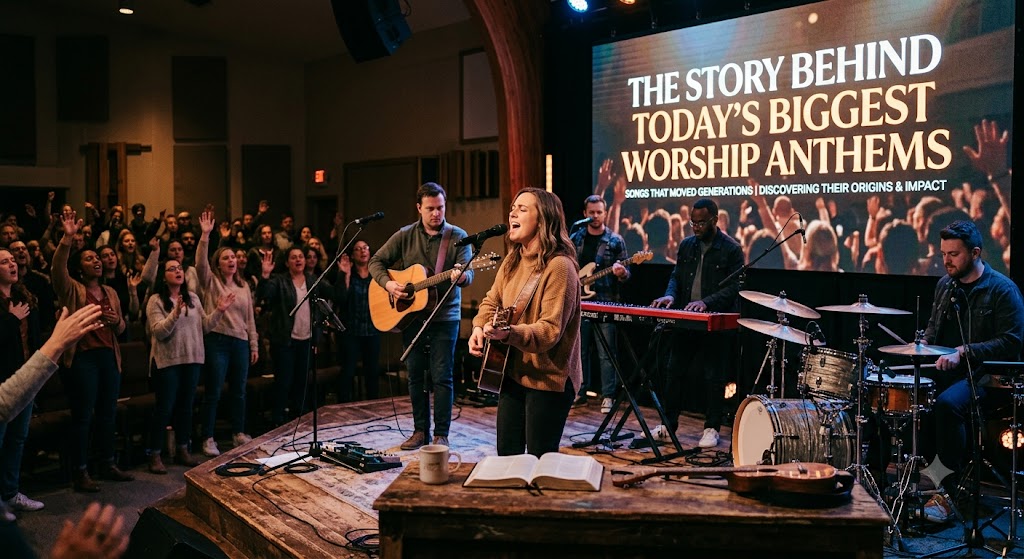
The Story Behind Today’s Biggest Worship Anthems
Today’s Biggest Worship Anthems have become more than just songs sung during church services. They have become testimonies wrapped in melodies, prayers expressed through lyrics, and reminders that God continues to work through ordinary people in extraordinary ways. Every generation has songs that define its faith journey, but what makes Today’s Biggest Worship Anthems so powerful is that they often emerge from moments of pain, hope, surrender, and unwavering trust in God. While millions of people sing these songs every week without knowing how they came to life, the stories behind them reveal a beautiful truth that God often births songs of hope from seasons of heartbreak.
Throughout history, worship has always been central to the relationship between God and His people. Long before modern instruments, recording studios, and streaming platforms existed, people lifted their voices to praise God. King David wrote songs that are still read and sung thousands of years later through the Book of Psalms. Those ancient songs were filled with joy, sorrow, repentance, thanksgiving, victory, and expectation. In many ways, Today’s Biggest Worship Anthems continue that same tradition. They speak to the realities of everyday life while pointing listeners toward the greatness and faithfulness of God.
One fascinating aspect of Today’s Biggest Worship Anthems is that many of them were never written with the intention of becoming worldwide hits. Most worship songwriters simply wanted to express what God was teaching them during a particular season. Many wrote while sitting quietly with a Bible, praying in their homes, or reflecting on difficult circumstances. Instead of chasing commercial success, they pursued authenticity. Ironically, that authenticity is exactly what made their songs resonate with millions of believers around the world.
Behind many of Today’s Biggest Worship Anthems are stories of personal struggles that listeners never see. Some were written during seasons of grief after losing loved ones. Others came during financial uncertainty, health challenges, ministry disappointments, or moments when the writers questioned their own strength. Rather than allowing pain to silence their worship, these individuals transformed their deepest emotions into songs that now comfort people across continents. This pattern reminds us that worship often becomes most meaningful when it is offered in difficult seasons rather than comfortable ones.
The reason Today’s Biggest Worship Anthems connect with so many people is because they are deeply rooted in biblical truth. While musical styles continue to evolve, the message remains timeless. The songs declare God’s holiness, His mercy, His love, His sovereignty, His grace, and His unchanging character. Trends in music may come and go, but songs built upon Scripture continue to endure because God’s Word never loses its relevance.
Technology has also played an important role in spreading Today’s Biggest Worship Anthems. Years ago, worship songs traveled slowly from one church to another. Today, a song written in one country can be heard by millions within days through streaming services, social media, live broadcasts, and video platforms. Churches across different cultures often sing the same songs in multiple languages, creating a unique sense of unity among believers worldwide. Worship has become one of the strongest expressions of global Christianity.
Many worship songs begin with a single verse inspired by a personal prayer. Songwriters often describe moments when words simply flowed naturally as they reflected on God’s goodness. Some melodies arrive unexpectedly during quiet moments, while others take months or even years to complete. The creative process behind Today’s Biggest Worship Anthems usually involves patience, prayer, collaboration, and constant refinement. The final version heard by audiences is often the result of many thoughtful revisions designed to ensure theological accuracy and heartfelt expression.
Church communities also contribute significantly to the growth of Today’s Biggest Worship Anthems. Before becoming internationally recognized, many songs are first introduced during local worship services. Congregational responses help songwriters understand whether a song truly connects with believers. If people naturally begin singing with conviction, remembering the lyrics, and carrying the song beyond Sunday gatherings, it often signals that the message has touched something deeper than musical preference.
The emotional power of Today’s Biggest Worship Anthems cannot be measured simply by streaming numbers or chart positions. Their greatest success lies in transformed lives. Countless testimonies describe people finding peace during hospital stays, hope during depression, courage during uncertainty, and renewed faith during seasons of spiritual dryness through worship music. While the songs themselves hold no supernatural power, they direct attention toward the God who does.
One reason Today’s Biggest Worship Anthems continue to thrive is their ability to unite people from different backgrounds. Worship removes many of the barriers that often divide society. During moments of praise, age, nationality, economic status, and cultural differences become secondary to a shared focus on Christ. A believer in Nigeria can sing the same worship song as someone in Brazil, South Korea, Australia, or Canada, each expressing the same devotion through different accents and cultures.
Another remarkable characteristic of Today’s Biggest Worship Anthems is their simplicity. Although many feature beautiful musical arrangements, their lyrics often remain straightforward enough for entire congregations to sing together. This simplicity allows worshippers to focus on God rather than becoming distracted by complicated musical structures. The greatest worship songs are usually easy to remember but profound enough to inspire lifelong reflection.
Many worship leaders explain that some of the most memorable songs were written after spending extended time studying Scripture rather than merely searching for emotional language. This highlights an important principle that worship should always be grounded in biblical truth. Feelings naturally rise and fall, but God’s character remains constant. Songs rooted in truth continue ministering to people long after emotional moments have passed.
The influence of Today’s Biggest Worship Anthems extends beyond church walls. They accompany believers during daily commutes, family devotions, personal prayer times, exercise routines, hospital visits, and moments of quiet reflection. In many homes, worship music creates an atmosphere where children learn about God from an early age. Parents often notice their children singing worship lyrics before they can fully explain their meaning, planting seeds of faith that continue growing throughout life.
Many of Today’s Biggest Worship Anthems have also become powerful evangelistic tools. People who would never attend a church service sometimes encounter worship music through online videos, social media, concerts, or recommendations from friends. The beauty of the melodies often captures their attention, while the message introduces them to biblical truth. Stories continue to emerge of individuals beginning their journey toward faith after repeatedly listening to worship songs during difficult seasons.
Collaboration has become another defining feature behind Today’s Biggest Worship Anthems. Rather than working alone, many songwriters partner with fellow musicians, pastors, theologians, and worship leaders. This collaborative process helps strengthen lyrical depth, musical quality, and theological integrity. Different perspectives often produce songs that speak to a broader audience while remaining faithful to Scripture.
The Story Behind Today’s Biggest Worship Anthems
The rise of multicultural worship has also shaped Today’s Biggest Worship Anthems. Churches increasingly embrace diverse musical influences, blending contemporary sounds with traditional worship expressions. African rhythms, Latin influences, gospel harmonies, orchestral arrangements, acoustic performances, and modern production techniques all contribute to a rich global worship experience. This diversity reflects the vision described in Scripture of people from every tribe, nation, and language worshipping God together.
Behind every successful worship anthem stands countless unseen individuals whose contributions often go unnoticed. Sound engineers, instrumentalists, choir members, producers, translators, video teams, church volunteers, and prayer partners all play important roles. While audiences usually recognize only the lead singer or songwriter, worship ministry is almost always a collective effort built upon humility and service.
One interesting aspect of Today’s Biggest Worship Anthems is that many continue evolving after their initial release. Churches create acoustic versions, choir arrangements, instrumental recordings, children’s adaptations, and translations into numerous languages. Each version allows the same biblical message to reach different audiences while maintaining its central focus on God’s greatness.
The digital era has transformed how believers discover Today’s Biggest Worship Anthems. Streaming platforms recommend songs based on listening habits, making worship music accessible to people who may never actively search for it. Online worship sessions, livestreamed church services, podcasts, and devotional playlists have expanded the reach of Christian music beyond physical church buildings. Worship now accompanies people virtually anywhere they go.
The stories behind Today’s Biggest Worship Anthems also remind believers that God often works through imperfect people. Worship songwriters openly acknowledge their own weaknesses, struggles, and ongoing need for grace. Their songs are not celebrations of human achievement but declarations of God’s faithfulness despite human limitations. This humility strengthens the credibility of their message because listeners recognize that genuine worship flows from dependence on God rather than personal perfection.
Many worship songs become especially meaningful during national or global crises. When uncertainty increases, believers naturally seek reminders of God’s unchanging promises. During times of loss, economic hardship, natural disasters, or widespread anxiety, Today’s Biggest Worship Anthems frequently experience renewed popularity because they provide hope anchored in eternal truth rather than temporary circumstances.
Another reason Today’s Biggest Worship Anthems remain influential is their emphasis on God’s character instead of human emotion alone. While emotions certainly play a role in worship, lasting songs consistently point listeners back to who God is rather than how people feel. This theological focus enables believers to continue worshipping even when emotions fluctuate or circumstances become difficult.
Church history demonstrates that every generation produces songs reflecting its unique experiences while proclaiming the same eternal gospel. Hymns written centuries ago continue inspiring modern congregations alongside newly composed worship songs. Rather than competing with one another, these different expressions reveal the timeless nature of worship. Today’s Biggest Worship Anthems stand upon foundations established by generations of faithful believers who praised God through music long before the digital age.
Many pastors encourage congregations to learn the stories behind worship songs because understanding their origins often deepens appreciation for their message. Knowing that a particular anthem emerged during personal tragedy or intense spiritual struggle transforms familiar lyrics into powerful testimonies of God’s sustaining grace. Suddenly, words that once seemed simple become profound reminders of God’s presence during life’s darkest moments.
The commercial success of Today’s Biggest Worship Anthems sometimes creates misconceptions about worship ministry. While some songs achieve remarkable sales and streaming milestones, faithful worship remains far removed from entertainment. Authentic worship points attention away from performers and toward Christ. The greatest worship leaders consistently remind audiences that the purpose of music is not personal recognition but glorifying God.
Social media has accelerated the spread of Today’s Biggest Worship Anthems by allowing believers to instantly share songs that encourage them. Short video clips featuring worship music frequently introduce new listeners to songs they later explore more deeply. Personal testimonies attached to these shared moments often increase the songs’ impact because they demonstrate how worship continues changing lives in practical ways.
The future of Today’s Biggest Worship Anthems will likely include even greater diversity as churches across Africa, Asia, South America, and other regions continue contributing original worship music. Rather than worship flowing primarily from one part of the world, believers increasingly celebrate songs emerging from many cultures. This reflects the expanding global Church and enriches worship with fresh perspectives rooted in the same biblical foundation.
Young Christian musicians entering worship ministry today can learn valuable lessons from the stories behind Today’s Biggest Worship Anthems. They discover that lasting influence comes not from chasing popularity but from faithfully serving God. Excellence in music matters, but intimacy with God matters even more. Technical ability can impress audiences temporarily, but genuine worship transforms hearts because it reflects an authentic relationship with Christ.
For listeners, understanding the stories behind Today’s Biggest Worship Anthems encourages a deeper appreciation for worship itself. Instead of viewing songs as background music, believers begin recognizing them as testimonies born from real experiences with God. Every lyric represents someone’s encounter with divine grace, every chorus reflects a moment of surrender, and every melody carries echoes of prayers once whispered in private before being sung by millions.
Ultimately, the greatest story behind Today’s Biggest Worship Anthems is not about famous artists, successful albums, or impressive streaming statistics. It is about God’s enduring faithfulness throughout every generation. He continues inspiring ordinary believers to write extraordinary songs that strengthen the Church, encourage the discouraged, comfort the grieving, and point countless people toward Jesus Christ. Long after musical trends change and popular styles evolve, worship rooted in biblical truth will continue echoing across churches, homes, nations, and generations.
As new songs continue to emerge, Today’s Biggest Worship Anthems will undoubtedly inspire future worshippers just as previous generations left songs that still bless the Church today. The melodies may sound different, the instruments may evolve, and technology will continue changing how music is shared, but the heart of worship remains unchanged. It is the humble response of grateful people recognizing the greatness of a holy, loving, faithful, and eternal God. That timeless truth explains why Today’s Biggest Worship Anthems continue touching lives around the world and why their stories remain worth telling for generations to come.

Leave a Reply