
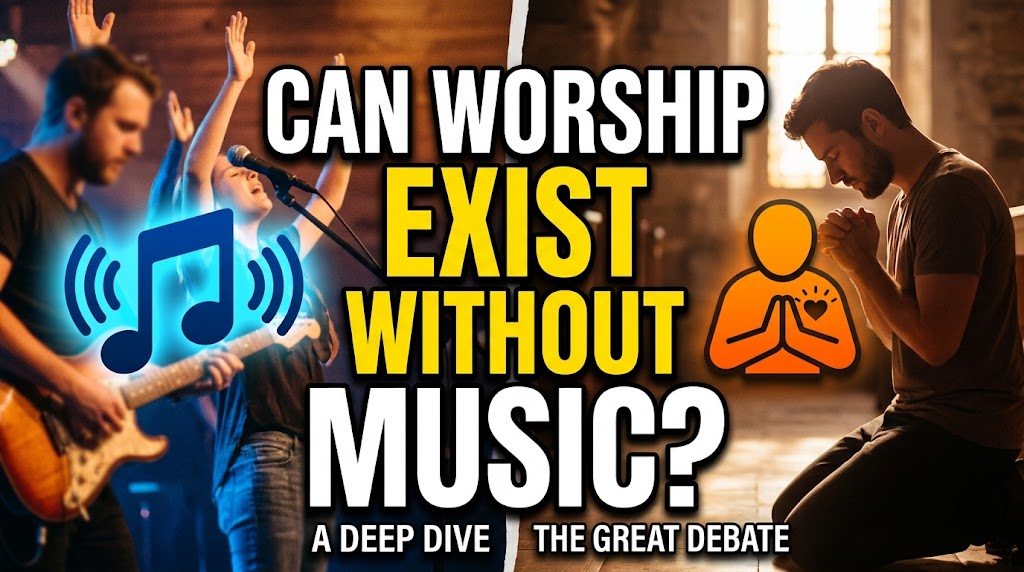
Can Worship Exist Without Music?
Can Worship Exist Without Music?
Music has become an important part of Christian worship. In many churches, worship is associated with singing, choirs, musical instruments, and praise teams. These expressions can help believers celebrate God’s goodness, remember His promises, and express their love for Him.
But an important question remains: Can worship exist without music?
The answer is yes. Music is a valuable expression of worship, but it is not the only way to honour God. Worship also involves prayer, obedience, thanksgiving, reverence, service, and the way believers live their daily lives.
Understanding this distinction helps Christians appreciate music without making it the only measure of a meaningful encounter with God.
1. Understanding the Meaning of Worship
To understand how worship can exist without music, we must first understand what worship means.
Worship is the act of recognising God’s worthiness and responding to Him with reverence, love, gratitude, and obedience. It involves more than what happens during a church service. It reflects the believer’s relationship with God and the choices that relationship inspires.
In John 4:23–24, Jesus teaches that true worshippers will worship the Father in spirit and in truth. His words direct attention to the nature of genuine worship rather than making a particular musical arrangement the requirement for approaching God.
This does not mean that music is unimportant. It means that worship cannot be reduced to singing alone.
A person may sing beautifully without giving serious attention to the message of the song. Another person may sit quietly, pray sincerely, and reflect on God’s Word without singing at all. The outward expressions differ, but music by itself does not determine the sincerity of a person’s worship.
2. Biblical Examples of Worship Beyond Singing
The Bible presents worship through different actions and attitudes, including reverence, prayer, obedience, and thanksgiving.
In Genesis 22, Abraham demonstrates his willingness to obey God when he is tested concerning Isaac. His response illustrates the seriousness of trusting and submitting to God, although the passage does not describe a musical performance.
In Exodus 3:5–6, Moses is instructed to remove his sandals because he is standing on holy ground. His encounter with God calls for reverence rather than a song.
Daniel 6:10 describes Daniel continuing his regular practice of praying to God despite the danger posed by the king’s decree. His devotion is expressed through prayer and faithfulness.
These examples help us understand that worship is not confined to one activity. Music can express reverence and devotion, but prayer, obedience, and submission to God are also important aspects of a believer’s spiritual life.
3. What Jesus Taught About Worship
John 4:23–24 is particularly important when considering the relationship between worship and music.
Jesus explains that true worshippers worship the Father in spirit and in truth. The passage emphasises a genuine response to God rather than dependence on outward forms alone.
Worship involves the heart, the understanding, and the truth of God’s revelation. A song can help communicate these things, but singing the words does not automatically mean that a person is living according to them.
For example, a believer may sing about forgiveness during a church service. The same message becomes meaningful in daily life when that person makes a sincere effort to forgive others.
Similarly, a song about God’s faithfulness can remind Christians to trust Him during uncertainty. That trust may be expressed in quiet prayer, patient endurance, or obedience when circumstances are difficult.
Music can reinforce the message of worship, but the believer’s response to God extends beyond the song.
4. Can Prayer Be an Expression of Worship?
Prayer is an important way Christians communicate with God. It may include praise, confession, thanksgiving, requests, and quiet reflection.
Some prayers are spoken aloud, while others are offered silently. Some are accompanied by music, but many take place without any musical sound.
Consider a believer who wakes early in the morning to thank God for another day. Another person may pray quietly while facing a difficult decision. A third may spend time confessing wrongdoing and asking God for wisdom to make better choices.
These moments need not include a melody or instrument to be meaningful acts of devotion.
Prayer and musical worship can complement one another, but neither needs to be reduced to the other. Christians can pray through a song, and they can also pray in silence.
5. The Place of Silence in Worship
Silence may seem unusual in churches where worship is commonly associated with singing and energetic praise. Yet quiet reflection can provide an opportunity to examine one’s heart, meditate on Scripture, and become more attentive to God’s truth.
Psalm 46:10 says, “Be still, and know that I am God” (King James Version).
This verse encourages believers to recognise God’s sovereignty. In personal devotion, stillness may involve putting aside distractions, reflecting on Scripture, confessing concerns to God, or simply spending time in quiet reverence.
Silence should not be treated as a spiritual technique that guarantees a special experience. Nor does every quiet moment necessarily constitute worship. Its value depends on how it is used and the attitude with which a believer approaches God.
The important point is that the absence of music does not prevent prayerful reflection or sincere devotion.
6. Worship Through Obedience and Daily Living
One of the clearest ways Christians express their devotion to God is through the choices they make.
Romans 12:1 encourages believers to present their bodies as a living sacrifice, holy and acceptable to God, describing this as their spiritual worship. The passage connects worship with the offering of one’s life to God rather than limiting it to a gathering or musical activity.
This principle has practical implications.
A businessperson who deals honestly with customers can honour God through integrity. A parent who cares patiently for a child can express love and responsibility. A student who studies diligently and acts honestly can demonstrate good stewardship. A Christian who serves a neighbour in need can put love into action.
These activities are not substitutes for every other expression of worship, but they illustrate how devotion can influence ordinary life.
Worship, therefore, is not simply something believers attend on a particular day. It can shape how they behave throughout the week.
7. Why Music Still Matters in Christian Worship
Recognising that worship can exist without music should not cause Christians to underestimate the value of singing and musical expression.
The Bible contains many references to music in praise and worship. Psalm 150 calls on God’s people to praise Him with musical instruments and joyful expressions. Colossians 3:16 encourages believers to teach and admonish one another through psalms, hymns, and spiritual songs, singing with gratitude to God.
Music can help congregations express shared beliefs, remember biblical truths, celebrate God’s goodness, and encourage one another.
A well-prepared worship song may give words to feelings that someone finds difficult to express. Singing together can also unite people from different backgrounds around a common message of faith.
Music is therefore a valuable gift to the church. The point is not to remove it from worship but to understand its proper place.
Music can serve worship, strengthen its expression, and communicate its message. It should not become the only standard by which worship is judged.
8. Can Someone Worship God Alone Without Singing?
Yes. Personal worship can take place in many settings, including the home, workplace, school, or another quiet environment.
A believer may read a passage of Scripture and reflect on what it teaches about God’s character. Another may express gratitude through prayer. Someone else may acknowledge wrongdoing, seek forgiveness, or make a decision to follow God’s instructions.
These experiences do not require musical accompaniment.
For Christians who cannot sing, have limited access to musical resources, or live in circumstances where singing aloud is impractical, this understanding is particularly important. Their ability to pray, reflect, and live faithfully is not dependent on having a musical instrument or a worship team.
At the same time, private worship should not be used as a reason to dismiss corporate worship or the encouragement that believers can receive from gathering together. Individual devotion and communal worship can serve different but complementary purposes.
9. Different Churches Express Worship in Different Ways
Christian communities have developed a variety of worship traditions. Some use choirs, orchestras, organs, drums, and contemporary worship bands. Others prefer simpler musical arrangements, chanting, or extended periods of silence and prayer.
Cultural backgrounds also influence the sounds and forms of Christian music. Nigerian gospel worship, for example, may incorporate local rhythms and musical traditions alongside contemporary styles. Other communities may use different instruments, languages, and forms of expression.
These differences demonstrate that there is no single musical arrangement that defines all Christian worship.
However, musical diversity should not distract from the deeper purpose of worship: honouring God sincerely and responding to Him in accordance with the truth of Scripture.
Churches can appreciate their different musical traditions while remembering that the quality of a worship service cannot be measured solely by the number of instruments, the volume of the music, or the performance of the singers.
10. Practical Ways to Worship Without Music
Believers who want to develop a fuller understanding of worship can include simple practices in their daily lives.
Read and reflect on Scripture. Choose a Bible passage, read it carefully, and consider what it teaches about God and how it should influence your actions.
Pray sincerely. Offer prayers of thanksgiving, confession, praise, and dependence on God without feeling that every prayer must be accompanied by a song.
Practise gratitude. Take time to recognise the blessings you have received and express your thanks to God.
Obey what you understand from Scripture. Let your beliefs influence your decisions, relationships, and responsibilities.
Serve others. Show compassion, generosity, patience, and kindness in practical ways.
Make time for quiet reflection. Reduce distractions and examine your heart, motives, and relationship with God.
These practices do not need to follow a complicated routine. The goal is to develop a sincere and consistent relationship with God rather than to replace one performance with another.
Conclusion: Worship Is More Than a Song
Can worship exist without music? Yes. The Bible presents worship through prayer, reverence, obedience, thanksgiving, service, and the offering of one’s life to God.
Jesus’ teaching in John 4:23–24 reminds believers that true worship involves spirit and truth. Romans 12:1 further connects worship with the way Christians offer their lives to God.
Music remains an important expression of Christian praise. Through songs and instruments, believers can celebrate God’s goodness, remember His promises, and encourage one another. Yet music is a means of expressing worship, not the only possible expression of devotion.
A Christian can sing during a church service, pray in silence at home, show kindness to a neighbour, and choose honesty at work. Each action has its own purpose, and its relationship to worship depends on the believer’s response to God.
When Christians understand this distinction, they can appreciate music without becoming dependent on it as the sole measure of spiritual devotion.
Ultimately, worship is not limited to the moments when a song begins or ends. It concerns the heart’s response to God and the way that response is expressed in daily life.

Leave a Reply