
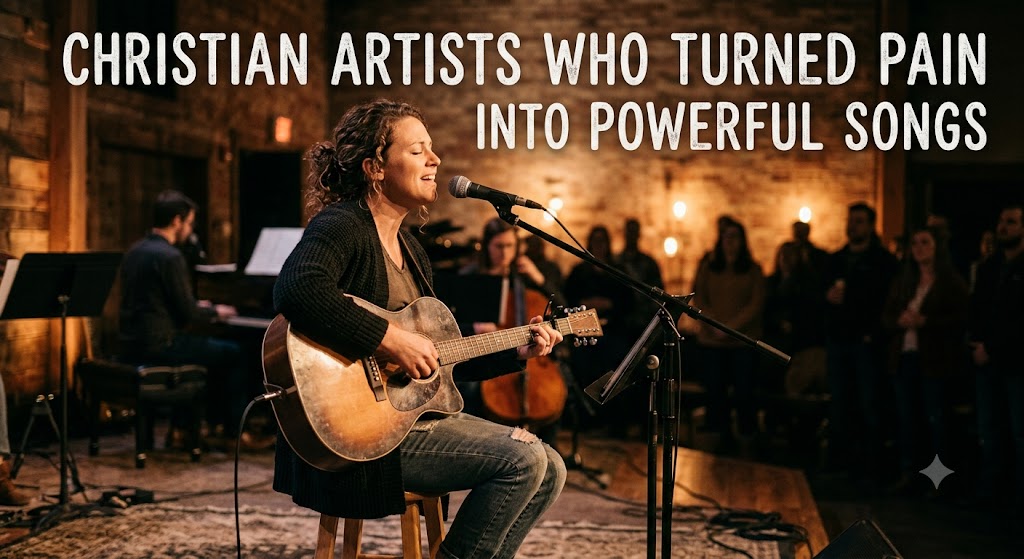
Christian Artists Who Turned Pain Into Powerful Songs
Some songs entertain you for three minutes, while others sit with you in your darkest moments and somehow give you the strength to keep going. There is something uniquely powerful about music created from real pain. When an artist has experienced heartbreak, disappointment, grief, rejection, loneliness, failure or seasons of uncertainty, the resulting song can carry an emotional weight that cannot be manufactured in a studio. This is one reason Christian artists who turned pain into powerful songs continue to touch millions of lives around the world.
Christian music has always had a special relationship with suffering and hope. The Bible itself contains songs and prayers written from places of fear, loss, confusion and desperation. The Psalms repeatedly show people crying out to God while still choosing to trust Him. That same tension between pain and faith can be heard in many Christian songs today. The artist may be hurting, but the message refuses to surrender to hopelessness.
Some of the most memorable Christian songs were born during seasons when the songwriter had every reason to stop singing. Instead, they wrote. They prayed. They worshipped. They told their stories through melodies and lyrics. Their pain became a testimony, and their testimony became an encouragement to someone they might never meet.
This is what makes Christian artists who turned pain into powerful songs so inspiring. They did not necessarily pretend that everything was fine. They did something more honest. They acknowledged that life can hurt while still pointing towards God.
One of the most important examples is Jeremy Camp. His story has become closely associated with music created in the middle of profound personal loss. Camp experienced the devastating death of his first wife, Melissa, who died from ovarian cancer shortly after their marriage. Rather than allowing the tragedy to silence his musical voice, Camp continued creating music that reflected his faith and determination to trust God through grief.
His experience demonstrated that Christian music does not have to deny suffering to offer hope. Sometimes the most powerful expression of faith is admitting that you are hurting while refusing to believe that God has abandoned you. Camp’s music has therefore connected deeply with listeners who have experienced grief, illness and devastating circumstances.
Another powerful example is Casting Crowns, whose music has repeatedly addressed the struggles Christians experience behind closed doors. The band’s songs have explored issues such as spiritual weakness, hypocrisy, identity, loneliness and the struggle to remain faithful in a complicated world.
What makes this kind of music powerful is its honesty. Christianity does not mean that believers never struggle. Christian artists can experience doubt, disappointment and emotional exhaustion just like anyone else. When those experiences become songs, listeners often recognise themselves in the lyrics.
Francesca Battistelli has also demonstrated how ordinary struggles can become meaningful Christian music. Her songs have often explored identity, family, vulnerability, personal growth and the realities of living out faith in everyday life. Her music reminds listeners that pain does not always arrive as a dramatic tragedy. Sometimes it appears through insecurity, pressure, disappointment or the feeling that you are not enough.
That kind of pain is incredibly common. Millions of people quietly struggle with questions about their value and purpose. A song that speaks directly into those struggles can become more than entertainment. It can become reassurance.
Tasha Cobbs Leonard is another artist whose worship ministry demonstrates how deeply personal faith can influence powerful music. Her songs have become an important part of worship for many Christians because they communicate surrender, trust, praise and dependence on God.
Worship created from genuine spiritual experience carries a different kind of weight. It is not simply about producing an impressive vocal performance. It is about communicating something the singer has lived through. When an artist sings about trusting God during difficult circumstances, listeners can often feel the sincerity behind the message.
Then there is TobyMac, whose music has also been shaped by significant personal loss. Following the death of his son Truett, TobyMac publicly experienced a devastating season of grief. His later music reflected themes of pain, faith, questioning, memory and hope.
Christian Artists Who Turned Pain Into Powerful Songs
Grief changes a person. It can make familiar words feel inadequate. It can create questions that do not have immediate answers. For a Christian artist, transforming that experience into music can become a way of processing pain while also helping others who are walking through similar valleys.
This is one of the reasons Christian music matters beyond church services. A person grieving late at night may not have the emotional strength to read a theological book. They may not want a long explanation. Sometimes they simply need a song that says, “You are not alone.”
Music can meet people in places where ordinary conversation cannot.
Mandisa’s story also illustrates the complicated relationship between faith, personal struggle and music. Her career included songs that celebrated hope, resilience and God’s presence while also reflecting the reality of personal battles.
Her music encouraged listeners to confront difficult seasons without allowing those seasons to define their entire identity. That message is particularly important because many people believe that struggling means they have failed spiritually.
Christian music can challenge that assumption.
You can love God and still cry.
You can have faith and still feel afraid.
You can pray and still have unanswered questions.
You can worship and still be walking through pain.
The existence of pain does not automatically mean the absence of faith.
This is one of the most important messages found in Christian artists who turned pain into powerful songs. Their music often creates room for people to be honest about their struggles without abandoning hope.
In Africa, gospel music has also become one of the strongest ways artists communicate personal experiences of hardship, perseverance and faith. African Christian musicians frequently draw inspiration from family struggles, economic difficulties, illness, disappointment, spiritual battles and the realities of everyday life.
Artists such as Sinach have created songs that speak about God’s faithfulness, hope and victory. Her music has travelled far beyond Nigeria and reached Christian audiences around the world. What makes songs like these powerful is their ability to communicate faith in simple but emotionally resonant language.
The African gospel scene demonstrates that powerful Christian music does not need to imitate Western sounds to be globally relevant. Authentic stories can cross cultural boundaries.
When someone sings about surviving a difficult season and still believing that God is faithful, another person thousands of miles away can understand the emotion.
That is the universal language of testimony.
Nathaniel Bassey is another Nigerian gospel artist whose music has become closely connected with worship, prayer and spiritual devotion. His trumpet driven worship style and songs have become significant within contemporary African Christian music.
The strength of this kind of music often comes from its ability to turn personal devotion into collective worship. One person’s experience becomes the soundtrack for thousands of other people’s prayers.
Mercy Chinwo has also become an important voice within contemporary Nigerian gospel music. Her songs frequently centre around gratitude, God’s goodness, faith and the believer’s relationship with Christ. Her music demonstrates how testimony can be transformed into songs that encourage listeners to remember God’s faithfulness.
The power of Christian music is therefore not simply found in the sadness behind a song. Pain alone does not make a song powerful. The transformation of pain into meaning is what makes the difference.
Anyone can write about suffering.
The remarkable thing is writing about suffering while still discovering hope.
This is why songs created during difficult seasons can become deeply meaningful. They tell listeners that pain may be part of the story, but it does not have to be the final chapter.
There is also something deeply human about hearing an artist admit vulnerability. Modern culture often rewards people for appearing successful, confident and strong. Social media can make everyone’s life look perfect. People post achievements, celebrations, holidays, weddings, promotions and beautiful photographs.
But very few people post the nights they cried themselves to sleep.
Very few people show the moments when they questioned their future.
Very few people share the prayers they whispered when they had no idea what would happen next.
Christian music can give those hidden moments a voice.
A powerful song can say what someone has been unable to say publicly.
This is why Christian artists who turned pain into powerful songs deserve attention beyond their musical achievements. Their greatest contribution may not be a chart position, award or streaming milestone. It may be the person who decided not to give up because of a song.
Imagine someone sitting in a hospital waiting room listening to a worship song.
Imagine someone mourning a parent listening to a song about God’s presence.
Imagine someone who has experienced rejection hearing lyrics about identity in Christ.
Imagine someone who feels spiritually exhausted hearing a song that reminds them that weakness does not make them worthless.
That is the hidden ministry of Christian music.
The song may have been recorded years ago, but its purpose can continue long after the artist has moved on from the season that inspired it.
Pain also teaches artists something that comfort sometimes cannot. It creates depth.
An artist who has never experienced disappointment may sing about hope theoretically. An artist who has experienced disappointment and still found a reason to hope can communicate something different.
The difference is not necessarily technical ability.
It is lived experience.
This is why some songs feel almost like prayers. The listener can sense that the artist is not simply performing words. They are remembering something.
Perhaps that is why the most powerful Christian songs often contain simple messages. Trust God. Keep going. You are not alone. God is faithful. There is still hope. Your story is not over.
These messages may sound simple, but simplicity becomes powerful when someone desperately needs to hear it.
Christian artists also remind us that pain can become part of our purpose without becoming our identity. A painful experience can produce a song, a testimony, a ministry or an encouragement for somebody else. That does not mean people should romanticise suffering or assume that every painful experience happens for an obvious reason.
It means that pain does not have to be wasted.
Something broken can still become meaningful.
Something painful can still produce compassion.
Something that nearly destroyed you can eventually become part of the testimony you use to encourage someone else.
This is particularly relevant for young Christian musicians. Many aspiring artists want to create songs that immediately become popular. They study trends, sounds, production techniques and social media strategies.
Those things matter.
But authenticity matters too.
Listeners can recognise when a song feels manufactured.
They can also recognise when someone is singing from experience.
The strongest Christian artists are not necessarily those who have experienced the easiest lives. Sometimes their difficult seasons give them the emotional vocabulary needed to reach hurting people.
This does not mean artists must expose every private detail of their lives. Vulnerability does not require the destruction of personal boundaries. Artists can tell their stories wisely while protecting what should remain private.
What matters is honesty.
Christian music becomes especially powerful when it refuses to offer shallow answers to complicated pain. Telling someone who is grieving to “just have faith” may not address what they are feeling. A meaningful worship song can acknowledge grief while still pointing towards God’s presence.
That balance is important.
Hope is more believable when it has looked directly at pain.
A song that says everything is perfect may feel disconnected from reality. A song that says life can be devastating but God remains worthy of trust can meet people where they actually are.
This is why Christian artists who turned pain into powerful songs continue to matter.
Their music gives people permission to feel while encouraging them not to surrender.
It reminds believers that tears do not cancel faith.
It reminds broken hearts that disappointment does not mean the end.
It reminds people who have lost something precious that memories can coexist with hope.
And it reminds every listener that sometimes the most beautiful songs are written in the darkest chapters.
Perhaps the next powerful Christian song will come from someone currently sitting in a difficult season.
Perhaps it will come from someone who has just experienced rejection.
Perhaps it will come from someone grieving.
Perhaps it will come from someone who feels forgotten.
Perhaps it will come from someone who is questioning everything but still has enough faith to whisper one more prayer.
That is the mystery of Christian music.
The song may begin with pain, but it does not have to end there.
The artists who turn their struggles into music give the rest of us something precious. They show us that pain can have a voice without having the final word. They demonstrate that faith is not pretending that suffering does not exist. Sometimes faith is looking directly at suffering and choosing to keep singing anyway.
And perhaps that is the greatest power of Christian music.
It does not always remove the storm.
Sometimes it simply gives you a song to sing while you walk through it.

Leave a Reply