
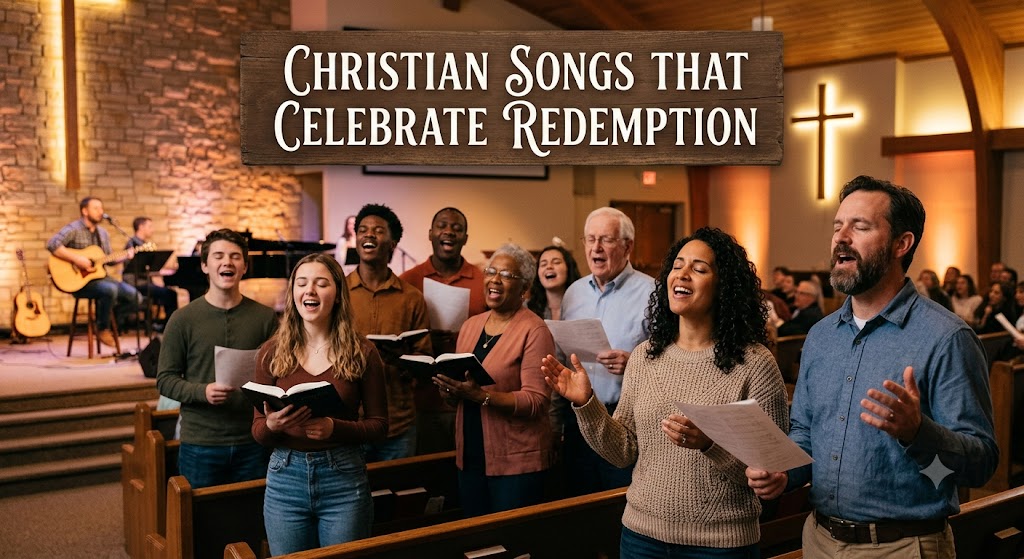
Christian Songs That Celebrate Redemption
Christian Songs That Celebrate Redemption have a special place in the hearts of believers because they tell one of the most powerful stories in Christianity: the story of being lost and being found, broken and restored, guilty and forgiven, distant and brought back into the presence of God. Redemption is not simply a religious idea. It is a personal experience for millions of Christians who believe that God can take a life marked by mistakes, pain, failure and disappointment and give it a completely new direction. This is why Christian music about redemption continues to resonate across generations, cultures and denominations.
There is something deeply emotional about hearing a song that describes the journey from darkness into light. A person may have walked into a church feeling hopeless, but a worship song about God’s mercy can remind them that their story is not finished. Someone struggling with guilt may hear lyrics about forgiveness and realise that their past does not have to define their future. Someone who believes they have wandered too far from God may hear a song about grace and discover the courage to return. This is the remarkable power behind Christian songs that celebrate redemption.
At the centre of the Christian message is the belief that humanity can be reconciled to God through Jesus Christ. The Bible repeatedly presents redemption as an act of divine love. Christians believe that Jesus gave His life for humanity, offering forgiveness and salvation to those who put their faith in Him. Because of this, redemption is not merely about becoming a better person. It is about receiving grace, experiencing forgiveness and beginning a transformed life through a relationship with God.
Christian music has given believers a beautiful language for expressing this truth. Some songs tell the story directly, while others use personal experiences of failure, restoration, mercy and transformation. A powerful redemption song can make theology feel personal. Instead of simply hearing that God forgives, the listener hears someone singing about being forgiven. Instead of reading about grace as an abstract concept, the listener hears a testimony wrapped inside melody and emotion.
One reason Christian songs that celebrate redemption remain so popular is that almost everyone understands the feeling of needing another chance. People make mistakes. Families experience conflict. Friendships break down. Dreams collapse. People make decisions they later regret. Some carry private battles that nobody else knows about. In those moments, a message of redemption can feel like a lifeline.
The beauty of redemption is that it does not pretend the past never happened. Instead, it declares that the past does not have the final word. Christian songs about redemption often capture this distinction beautifully. They acknowledge pain, failure and brokenness while pointing towards restoration. The message is not that the believer never failed. The message is that failure does not have to be the end of the story.
This is why redemption songs can be especially powerful during seasons of personal struggle. Imagine someone sitting alone after making a terrible mistake and wondering whether God can still love them. A song reminding them about mercy can reach places that a simple conversation sometimes cannot. Music engages emotion, memory and imagination. A meaningful melody can stay with someone long after the song has ended.
Many Christian songs about redemption also focus on the transformation of identity. Before encountering God’s grace, a person may define themselves by their mistakes. They may say, “I am a failure,” “I am unforgivable,” or “I will always be this way.” Redemption introduces a different perspective. The believer begins to see themselves not merely through the lens of what they have done, but through what God has done for them.
This is one of the strongest themes found in Christian music. The old identity does not have to control the new life. The person who once lived without direction can find purpose. The person who was trapped in destructive habits can begin walking towards freedom. The person who felt spiritually dead can discover renewed hope. These stories make Christian songs about redemption more than entertainment. They become reminders of transformation.
Another important element of redemption music is grace. Grace is powerful because it challenges the human tendency to believe that everything must be earned. Society often teaches people that they are valuable because of what they achieve, how much they earn, how attractive they look, how successful they become or how useful they are to others. Christianity presents another message. God’s grace is not something a person purchases through perfection. It is received as an expression of divine love.
Christian songs that celebrate redemption often turn this truth into something emotionally tangible. They remind listeners that God is not waiting for them to become perfect before they can approach Him. They encourage people to come honestly, repent sincerely and trust in God’s mercy. For someone carrying years of guilt, this message can be life changing.
Redemption is also closely connected with the idea of restoration. Being redeemed does not simply mean being rescued from something. It can also mean being restored to something. A broken relationship with God can be restored. A damaged sense of purpose can be renewed. A life that appeared to have been wasted can become useful again.
This is one reason gospel music has always been filled with testimonies of transformation. From traditional hymns to contemporary worship songs, Christian musicians have repeatedly returned to themes of grace, salvation, mercy and restoration. The musical styles may change, but the message remains remarkably consistent.
Some redemption songs focus on the cross of Jesus Christ. For Christians, the cross represents the ultimate demonstration of sacrificial love. It represents the belief that Christ willingly gave Himself so that humanity could receive forgiveness and reconciliation with God. Songs centred on the cross often carry an emotional weight because they connect personal redemption to the central event of the Christian faith.
Other songs focus more directly on personal testimony. They describe where the singer came from and what God has done in their life. These songs can be particularly powerful because they remind listeners that faith is not simply a collection of doctrines. It is also a lived experience.
A testimony can say, “This is where I was, but this is where God brought me.” That simple message can give hope to someone who feels trapped in the same place. The listener may not have experienced exactly the same circumstances as the singer, but they can recognise the universal desire for another chance.
Christian songs that celebrate redemption can also be powerful tools for evangelism. A person who may not be interested in listening to a sermon might listen to a song. Someone who would never walk into a church may encounter a Christian song through YouTube, Spotify, social media or a friend’s playlist. A few minutes of music can introduce someone to a message they might otherwise never have heard.
This is particularly significant in the digital age. Christian music is no longer limited to church services, radio stations and physical albums. Songs can travel around the world within minutes. An independent gospel artist can record a song in a bedroom studio and reach listeners in countries they have never visited. A worship song recorded in one nation can become part of church worship in another.
The growth of digital music has therefore created new opportunities for redemption stories to be shared. Christian artists can use music platforms and social media to communicate messages of hope, forgiveness and transformation to audiences far beyond their traditional communities.
For Christian bloggers and music websites, this also creates an opportunity to explore the stories behind redemption songs. Readers often want more than the title of a song. They want to understand what inspired it, what the lyrics mean, how it connects with Scripture and why it has touched so many people.
The story behind a Christian song can sometimes be as powerful as the song itself. When listeners discover that a song was written during a difficult season, after a personal loss, following a spiritual breakthrough or during a period of uncertainty, the lyrics can take on an entirely new meaning.
Redemption music can also help people understand that spiritual growth is a process. Redemption does not mean that every problem disappears immediately. A person can be forgiven and still need to heal. A believer can experience salvation and still face difficult circumstances. A new beginning does not necessarily mean an easy beginning.
Christian Songs That Celebrate Redemption
This is an important message because some people become discouraged when their lives do not instantly change after turning to God. Christian songs that honestly address struggle while maintaining hope can remind them that transformation often happens gradually. God can be working even when the progress is difficult to see.
There is also something beautiful about hearing redemption expressed through different generations of Christian music. Older hymns often use poetic language to describe grace, salvation and the cross. Traditional gospel music frequently tells stories of hardship, faith and divine intervention. Contemporary Christian music often combines these timeless messages with modern sounds and personal storytelling.
The style may change, but redemption remains relevant because human beings continue to need hope. Every generation has people who need forgiveness. Every generation has people who have made mistakes. Every generation has people who wonder whether they can start again. That means every generation needs songs that remind them that restoration is possible.
Christian songs about redemption can also encourage believers to extend grace to others. When someone understands how much mercy they have received, they may become more willing to show mercy. Redemption is not supposed to end with the individual. It should influence how people treat their families, friends, neighbours and even those who have hurt them.
A song about forgiveness can therefore challenge the listener personally. It can make someone ask whether they are holding onto resentment. It can remind them that they too have been given second chances. It can encourage them to release bitterness and pursue reconciliation where appropriate.
This is where Christian music becomes more than emotional inspiration. At its best, it can provoke reflection and action. A powerful song can make someone pray. It can make someone apologise. It can encourage someone to return to church. It can inspire someone to open the Bible again. It can give someone the courage to believe that their life still has purpose.
The emotional power of redemption music is also one reason these songs work so well during worship services. When a congregation sings about grace and salvation together, individual stories become part of a larger expression of faith. People with completely different backgrounds can sing the same words and find different personal meanings in them.
One person may sing about redemption because they have experienced a dramatic life transformation. Another may sing because they were raised in the church and have always trusted Christ. Another may be going through a crisis and desperately need to believe the words they are singing. The same song can meet all three people in different ways.
For anyone searching for Christian songs that celebrate redemption, it is worth exploring different styles rather than limiting the search to one category. Traditional hymns, contemporary worship, gospel, Afro Gospel, Christian R&B, Christian hip hop and acoustic worship can all communicate the message of redemption in different ways.
Afro Gospel in particular has created exciting opportunities for Christian artists to communicate biblical messages through energetic rhythms, contemporary production and culturally relevant storytelling. Across Africa and among African communities around the world, gospel music continues to evolve while retaining its focus on faith, testimony and hope.
The global Christian music community is also becoming increasingly diverse. Artists from Africa, Europe, North America, Asia and Latin America are contributing different musical traditions to the broader Christian sound. This diversity demonstrates that the message of redemption is not restricted to one culture.
At the heart of every redemption story is hope. Hope says that failure does not have to define the future. Hope says that brokenness can be followed by restoration. Hope says that forgiveness is possible. Hope says that God can still write a new chapter.
That is ultimately why Christian songs that celebrate redemption matter. They give people words when they cannot find their own. They give people courage when their faith feels weak. They remind people of God’s mercy when guilt becomes overwhelming. They celebrate the possibility of transformation when circumstances suggest that nothing will ever change.
The most powerful redemption songs do not simply tell listeners to forget their past. They help them understand their past through the lens of grace. They turn stories of failure into testimonies of mercy. They turn moments of despair into reminders of faith. They turn wounds into opportunities for testimony.
If you are building a Christian music playlist, consider including songs that speak directly to redemption, grace, forgiveness, restoration and salvation. Listen not only to the melody but also to the message. Pay attention to the words. Ask yourself what the songwriter is communicating about God, humanity, forgiveness and new life.
You may discover that a song you have heard many times contains a message you never noticed before. Sometimes a lyric becomes more meaningful because of what you are currently experiencing. The same song that sounded ordinary yesterday can become deeply personal during a difficult season.
Christian music has a unique ability to travel with people through different stages of life. A song heard during childhood may return decades later with a completely different meaning. A worship song heard during a church service may become a source of comfort during a personal crisis. A gospel song played during a celebration may later remind someone of God’s faithfulness during a difficult period.
This is the lasting power of music that celebrates redemption. It does not merely occupy a few minutes of someone’s day. It can become attached to memories, prayers, testimonies and turning points.
Ultimately, redemption is a story of hope. It is the story of God meeting broken humanity with mercy. It is the story of forgiveness overcoming guilt, grace overcoming shame and restoration overcoming destruction. For Christians, it points ultimately to Jesus Christ and the belief that His sacrifice makes reconciliation with God possible.
That message will never become outdated.
People will continue to fail and need forgiveness. People will continue to lose hope and need encouragement. People will continue to search for meaning and purpose. People will continue to wonder whether their mistakes have permanently destroyed their future. And Christian music will continue to answer those questions with songs about grace, mercy, salvation and redemption.
Christian songs that celebrate redemption remind us that the final chapter has not necessarily been written. They remind the broken that restoration is possible, the guilty that forgiveness is available, the discouraged that hope remains and the wandering that there is always a way back to God.
Perhaps that is why these songs continue to touch millions of hearts. They do not promise that life will never hurt again. They offer something deeper. They remind us that pain does not have to be pointless, failure does not have to be final and the past does not have to control the future.
Redemption gives the human story another possibility.
And when that story is transformed into music, the message can reach places words alone sometimes cannot.

Leave a Reply