
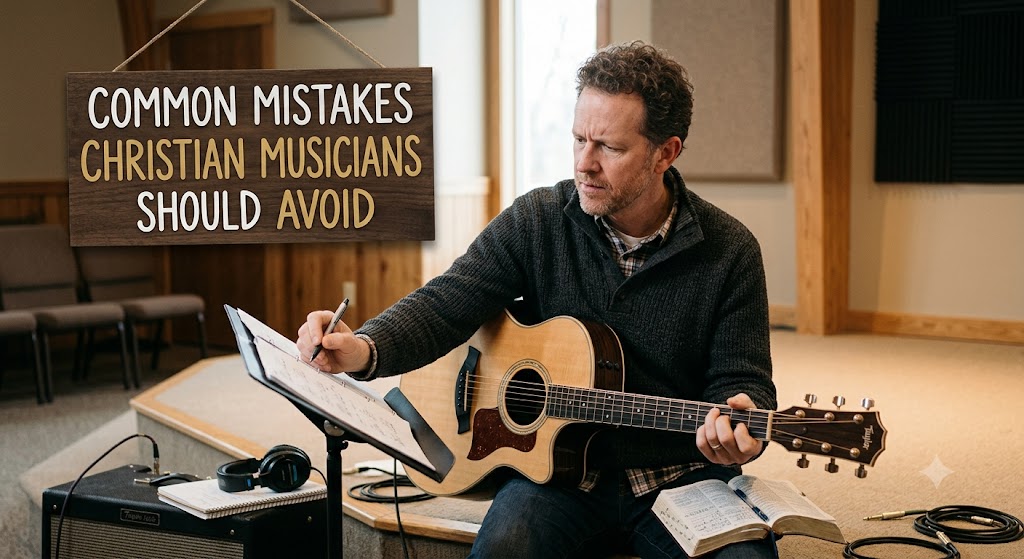
Common Mistakes Christian Musicians Should Avoid
Christian music has always played a unique role in the life of the Church and in the spiritual growth of believers. From the songs of David in the Old Testament to the hymns sung by the early Church and the contemporary worship songs heard around the world today, music has been one of God’s most powerful gifts for expressing faith, declaring truth, encouraging believers and drawing hearts closer to Him. While musical talent is valuable, Christian musicians carry a responsibility that extends far beyond creating beautiful melodies or performing before an audience. Their calling is not merely artistic but deeply spiritual. Every song, every rehearsal, every performance and every interaction has the potential to influence lives either positively or negatively. Understanding the common mistakes Christian musicians should avoid is therefore essential for anyone who desires to honour God through music and ministry.
One of the greatest misconceptions among Christian musicians is believing that talent alone guarantees a successful ministry. Exceptional vocal ability, outstanding instrumental skills or impressive songwriting may attract listeners, but they cannot replace a genuine relationship with God. Many gifted musicians have discovered that technical excellence without spiritual depth eventually produces empty performances. Audiences may applaud, but hearts remain unchanged. Christian music was never intended to entertain people alone. It exists to glorify God and point listeners towards Jesus Christ. When musicians focus more on perfecting their image than nurturing their walk with God, they risk becoming performers rather than ministers.
Another of the common mistakes Christian musicians should avoid is neglecting personal prayer and Bible study. Ministry on stage should always flow from a vibrant private life with God. A musician who spends hours practising songs but very little time in prayer may become spiritually exhausted even while appearing successful. Prayer provides wisdom, humility and direction. Scripture shapes character and guards against false teaching. Without these foundations, even the most gifted musician can slowly drift away from God’s purpose.
Pride has destroyed countless ministries throughout history. Success often brings recognition, invitations, social media followers and financial opportunities. While there is nothing wrong with being appreciated for one’s gifts, allowing success to inflate the ego is dangerous. Pride subtly shifts attention from God to self. Instead of asking how people can encounter Christ through the music, pride asks how many compliments, awards or followers can be gained. Christian musicians should constantly remember that every gift they possess was given by God. Remaining humble keeps the focus where it belongs and protects both ministry and personal character.
Many musicians also make the mistake of seeking popularity before seeking God’s approval. The pressure to gain more streams, views, likes and subscribers can tempt artists to compromise biblical values in pursuit of wider acceptance. Some may dilute the Gospel message to appeal to larger audiences, while others imitate secular trends without considering whether their content still reflects Christ. Although creativity and innovation are valuable, Christian music should never sacrifice truth for popularity. The message must always remain stronger than the marketing strategy.
Among the common mistakes Christian musicians should avoid is failing to maintain integrity off the stage. People often observe a musician’s lifestyle as closely as they listen to their songs. A powerful worship performance loses credibility when the artist’s daily life consistently contradicts biblical teachings. This does not mean Christian musicians must be perfect, but they should strive to live lives characterised by honesty, love, forgiveness, purity and humility. Authenticity speaks louder than any performance.
Comparison is another trap that affects many Christian musicians. It is easy to look at another artist’s success, larger audience or faster career growth and begin questioning God’s plan. Social media has only intensified this tendency by constantly displaying other people’s achievements. However, every ministry has a unique assignment. God never intended every musician to follow the same path. Some are called to serve faithfully in local churches while others travel internationally. Comparing ministries often produces envy, discouragement and unnecessary competition. Christian musicians should celebrate the success of others while remaining faithful to their own calling.
Many musicians underestimate the importance of preparation. They assume that because worship involves the Holy Spirit, rehearsals and planning are unnecessary. This misunderstanding often leads to avoidable mistakes during performances and church services. Excellence honours God. Careful preparation allows musicians to serve with confidence and reduces distractions that could prevent people from focusing on worship. Spiritual dependence and practical preparation should always work together rather than compete with each other.
One of the most overlooked common mistakes Christian musicians should avoid is ignoring accountability. Every believer needs trusted spiritual leaders, mentors or mature Christians who can provide correction, encouragement and guidance. Musicians who isolate themselves become vulnerable to poor decisions and spiritual deception. Accountability helps identify blind spots before they become serious problems. Wise correction may not always feel comfortable, but it often prevents long-term damage to both personal life and ministry.
Financial stewardship is another area where mistakes frequently occur. Christian musicians sometimes struggle with balancing ministry and business responsibilities. There is nothing inherently wrong with earning income through music. Scripture teaches that workers deserve their wages. However, when financial gain becomes the primary motivation, ministry gradually loses its spiritual focus. Christian musicians should handle finances honestly, avoid greed and remain transparent in their business dealings. Trust grows when people know that integrity guides every financial decision.
Some musicians fall into the habit of copying others rather than developing their own God-given voice. While learning from experienced artists is beneficial, constantly imitating someone else’s style prevents originality. God created every individual with unique gifts, experiences and perspectives. Authentic ministry often grows from embracing those differences rather than hiding them. Listeners are often drawn to sincerity more than perfection.
One of the common mistakes Christian musicians should avoid is writing songs with shallow theology. Worship music teaches people what to believe. Congregations often remember lyrics long after sermons have ended. For this reason, every song should be grounded in biblical truth. Songs that focus exclusively on emotions without presenting sound doctrine may create temporary inspiration but lack lasting spiritual impact. Christian musicians should study Scripture carefully and ensure that their lyrics accurately reflect God’s character and His Word.
Another mistake involves neglecting the local church. Some musicians become so focused on recording projects, concerts and online platforms that they disconnect from church life. Yet the local church remains God’s primary community for spiritual growth, discipleship and accountability. Remaining actively involved in a healthy church keeps musicians spiritually grounded and connected to fellow believers who can provide encouragement and wisdom.
Impatience is another obstacle that many Christian musicians face. In today’s digital world, people often expect rapid success. When recognition does not come quickly, discouragement can set in. Some become tempted to compromise their values or abandon ministry altogether. God’s timing rarely follows human expectations. Many respected Christian artists spent years serving faithfully before receiving wider recognition. Seasons of waiting often develop character, perseverance and dependence upon God.
The desire for perfection can also become unhealthy. While excellence is important, perfectionism may create unnecessary stress, fear of failure and constant dissatisfaction. Christian musicians should strive to offer their very best while recognising that only God is perfect. Sometimes genuine worship offered with sincerity has greater impact than flawless performances lacking heartfelt devotion.
Poor communication within worship teams and music groups often creates unnecessary conflict. Misunderstandings, assumptions and unresolved disagreements can damage relationships and weaken ministry effectiveness. Christian musicians should practise open, respectful and honest communication. They should be willing to listen, apologise when necessary and extend forgiveness quickly. Unity within a ministry team reflects Christ far more powerfully than musical excellence alone.
One of the significant common mistakes Christian musicians should avoid is allowing ministry to replace family responsibilities. Busy schedules filled with rehearsals, travel, recordings and events can unintentionally lead to neglecting spouses, children and close relationships. Scripture consistently emphasises the importance of caring for one’s family. Healthy ministry begins with healthy relationships at home. Success in public ministry should never come at the expense of faithfulness in private life.
Many musicians also overlook the importance of emotional health. Constant public expectations, criticism, travel and ministry demands can lead to burnout. Some continue serving despite physical exhaustion or emotional struggles until they eventually reach a breaking point. Rest is not laziness. Even Jesus withdrew regularly for prayer and renewal. Christian musicians should establish healthy rhythms of work, worship and rest to maintain long-term effectiveness.
Another mistake involves reacting poorly to criticism. No matter how sincere a ministry may be, criticism is inevitable. Some criticism is unfair, while some contains valuable lessons. Christian musicians should respond with humility rather than defensiveness. Listening carefully, evaluating feedback prayerfully and remaining teachable demonstrate spiritual maturity. Not every opinion deserves equal attention, but neither should every criticism be automatically dismissed.
Social media has become an essential platform for many Christian musicians, yet it also presents significant challenges. Constant self-promotion, unhealthy comparisons and online arguments can distract from genuine ministry. Christian musicians should use digital platforms wisely, remembering that every post contributes to their witness. Social media should serve the mission rather than become the mission itself.
Failing to disciple younger musicians is another missed opportunity. Experienced Christian artists possess valuable knowledge gained through years of ministry. Sharing that wisdom strengthens future generations of worship leaders and musicians. Mentorship reflects the biblical principle of investing in others rather than focusing solely on personal success. A lasting ministry is measured not only by songs released but also by lives influenced.
Many Christian musicians also forget the importance of continual learning. Musical styles evolve, production techniques improve and ministry challenges change over time. Remaining teachable allows musicians to grow both artistically and spiritually. Reading books, attending workshops, studying Scripture and learning from experienced leaders contribute to long-term development without compromising biblical values.
Among the common mistakes Christian musicians should avoid is seeking emotional experiences while neglecting genuine obedience. Worship often produces powerful emotions, but emotional moments alone do not measure spiritual maturity. A truly successful ministry produces transformed lives characterised by love, holiness, compassion and obedience to God’s Word. Music should inspire believers to follow Christ faithfully beyond the duration of a concert or worship service.
Common Mistakes Christian Musicians Should Avoid
Christian musicians should also guard against becoming overly dependent on public affirmation. Compliments and encouragement are appreciated, but personal identity must remain rooted in Christ rather than audience reactions. Some performances receive enthusiastic applause while others may appear unnoticed. Neither response should determine a musician’s sense of worth. Identity anchored in Christ provides stability regardless of changing public opinions.
Another common mistake is overlooking the importance of serving rather than being served. Jesus taught that greatness in God’s Kingdom comes through humility and service. Christian musicians should approach every opportunity with the attitude of servants rather than celebrities. This mindset transforms rehearsals, performances, leadership and relationships within ministry teams. People are often more impacted by genuine kindness than by extraordinary musical ability.
Many musicians also underestimate the spiritual battles associated with ministry. Christian music is not simply another entertainment industry. It often involves spiritual warfare because it proclaims biblical truth and encourages worship. Prayer should therefore surround every aspect of ministry, from songwriting and rehearsals to concerts and personal decisions. Dependence upon God’s strength enables musicians to remain faithful through challenges that cannot be overcome by talent alone.
Another important lesson concerns patience in creative work. Not every song needs to be released immediately. Sometimes allowing ideas to mature through prayer, revision and trusted feedback results in stronger songs with deeper spiritual impact. Rushing creative projects often sacrifices quality and biblical depth for speed.
Christian musicians should also avoid measuring success solely by visible achievements. Album sales, concert attendance, streaming numbers and awards may indicate popularity, but they cannot fully measure eternal impact. A single song that leads one person to Christ carries greater significance than millions of online views without spiritual transformation. God’s definition of success centres on faithfulness rather than fame.
Ultimately, understanding the common mistakes Christian musicians should avoid is about more than preventing failure. It is about pursuing a ministry that consistently honours God, serves His people and proclaims the Gospel with integrity. Christian musicians have been entrusted with a remarkable opportunity to encourage believers, reach the lost and glorify Christ through music. This calling deserves careful stewardship, continual spiritual growth and unwavering commitment to biblical truth.
As the world continues to change, Christian musicians will encounter new opportunities and fresh challenges. Technology, social media, streaming platforms and global audiences have expanded the reach of Christian music beyond anything previous generations could have imagined. Yet the essential principles remain unchanged. Humility, integrity, prayer, sound doctrine, faithful service, genuine worship and unwavering devotion to Christ will always form the foundation of effective ministry. Musicians who remain grounded in these timeless truths will not only avoid many of the common mistakes Christian musicians should avoid but will also build ministries that leave lasting spiritual legacies for generations to come.:::

Leave a Reply