
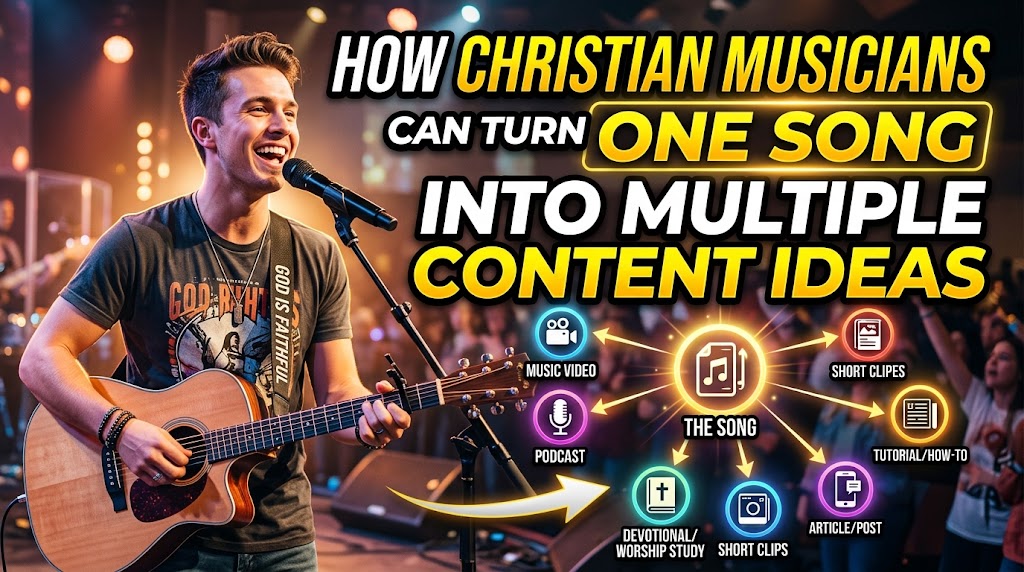
How Christian Musicians Can Turn One Song Into Multiple Content Ideas
How Christian Musicians Can Turn One Song Into Multiple Content Ideas
Releasing a new gospel song is an important milestone, but the work of introducing that song to listeners does not have to end with a single announcement. One song can inspire meaningful conversations, educational posts, short videos, devotionals, and behind-the-scenes content for weeks.
Many independent Christian musicians spend considerable time writing, recording, and producing their music. Yet after sharing the cover artwork and streaming link a few times, they move on to their next project because they believe they have run out of things to say.
The problem is not always a lack of ideas. Sometimes artists have not yet explored the different stories, messages, and experiences contained in the music they have already created.
A gospel song may communicate a message of hope, reflect a biblical principle, tell part of an artist’s story, or express a feeling that listeners recognise from their own lives. Each of these elements can provide a starting point for useful content.
The goal is not to repeat the same advertisement every day. It is to help people discover the song through different experiences and understand the message behind it.
1. Begin With the Story Behind the Song
One of the easiest ways to create content around a song is to explain why you wrote it.
Was the song inspired by a Bible passage, a personal reflection, a prayer, or a message you wanted to share with others? Did the idea begin with a lyric, a melody, or a particular experience?
These questions can help you develop content that introduces listeners to the meaning behind the music.
For example, if you wrote a song about God’s faithfulness, you could record a short video explaining why that theme matters to you. You could also write a short article describing the message you hope listeners will take away from the song.
You do not need to share private experiences or invent a dramatic testimony. Explain only what is true and what you are comfortable sharing.
Practical content ideas:
- A short video explaining the inspiration behind the song.
- A written post about why you chose the title.
- A photograph from the songwriting or recording process.
- A reflection on the lesson you hoped to communicate.
A good story gives listeners context and helps them understand the song beyond its melody.
2. Turn Memorable Lyrics Into Content
Your lyrics can provide several opportunities for meaningful posts.
Identify one or two lines that express the central message of the song. You can use an appropriate lyric excerpt in a graphic, short video, caption, or spoken reflection.
Suppose your song contains the line, “Even when I cannot see the way, I will trust in You.”
You could create a simple graphic featuring that lyric. Another post could ask your audience how they remain hopeful during uncertain seasons. A short video could explain what the line means within the song.
The important thing is to give each post its own purpose.
Avoid publishing the same lyric graphic repeatedly with only minor changes. Instead, explore the idea behind the words and invite listeners to reflect on their meaning.
When using your lyrics, make sure you have the necessary rights to share any material written by collaborators.
3. Connect the Song to Scripture
Many gospel songs draw inspiration from biblical themes such as faith, forgiveness, grace, hope, salvation, and gratitude.
If your song was influenced by a particular Bible passage, you can create content that helps readers understand the connection.
For example, a song about trusting God might lead to a reflection on Proverbs 3:5–6. A song about gratitude could introduce a discussion of Psalm 100.
You might explain how the passage relates to the song, invite readers to study the surrounding verses, or share a short reflection on the passage’s message.
Be careful to distinguish Scripture from your own lyrics and personal interpretations. Quote Bible passages accurately, identify the translation where appropriate, and avoid presenting a lyric as though it were a direct biblical quotation.
This approach can make your music promotion useful to people who are interested in Christian encouragement and biblical reflection, even before they listen to the full song.
4. Create Short Videos From Your Music
A full song can be presented in several formats. You might create a lyric video, a live performance, a rehearsal clip, or a short video featuring a memorable section of the recording.
Short clips can introduce people to a chorus or verse and direct interested listeners to the complete song.
For example, you could record a 20-second performance of the chorus, followed by a caption explaining the message behind it. Another video might show you singing the same section with a simple acoustic arrangement.
You do not need expensive equipment for every piece of content. A clear recording, suitable lighting, understandable audio, and a relevant message can be enough for a simple social media video.
Choose formats that suit your resources and the platforms you use. Always check each platform’s current requirements and use audio and visuals you have permission to publish.
5. Share the Creative Process
Listeners may be interested in how a song develops from an initial idea into a finished recording.
If you have suitable material, show part of the songwriting process, a rehearsal, a studio session, or an early demonstration of the melody.
You could explain how you developed the chorus, why you selected a particular musical arrangement, or what you learned while recording the song.
A comparison between an early demo and the final version can also be interesting, provided you have permission to share both recordings.
Behind-the-scenes content does not need to look like a professional documentary. A short, honest explanation of one stage of the process can help listeners appreciate the effort behind the finished music.
Do not manufacture mistakes or exaggerate production difficulties simply to attract attention. Authenticity is more valuable than unnecessary drama.
6. Turn the Message Into a Conversation
Social media provides an opportunity to listen to your audience, not just broadcast announcements.
If your song is about gratitude, ask followers to share something they are thankful for. If it is about hope, invite them to reflect on what encourages them during difficult seasons.
Keep questions relevant to the song and respectful of people’s privacy. Do not pressure followers to disclose painful experiences or personal information publicly.
You can also respond to comments, thank people for sharing their thoughts, and use recurring questions to identify topics your audience would like to explore.
For example, if several listeners say that a song encouraged them during a challenging period, you might create a follow-up reflection on the message that resonated with them.
A conversation should offer genuine engagement rather than serve only as a way to increase comments.
7. Create a Devotional or Prayer Inspired by the Song
A song’s central message may provide a starting point for a short devotional or prayer.
For a song about peace, you might share a reflection on a relevant biblical passage and a short prayer asking God for wisdom and calm during difficult circumstances.
For a song about forgiveness, you could discuss a relevant Christian principle and invite readers to reflect on how they apply it in daily life.
Keep the material focused and thoughtful. A devotional should offer something useful in its own right, rather than simply repeat the song’s title and tell readers to stream it.
Where you use Scripture, quote it accurately and provide the reference. Make it clear when you are offering a personal reflection rather than stating a direct biblical quotation.
This allows the song to become part of a broader conversation about faith without forcing every post to become a sales message.
8. Explore Different Performance Formats
One song can sound different when presented in another setting or arrangement.
Depending on your resources, you might create:
- An acoustic performance.
- A live worship version.
- A piano or keyboard rendition.
- A rehearsal recording.
- A short vocal-only performance.
- A performance with a small group of musicians.
Each version can reveal a different aspect of the song. A full studio recording may showcase the production, while an acoustic version may place more emphasis on the lyrics and melody.
Choose formats that suit the song and your available resources. You do not need to produce every possible version of every release.
Before publishing alternate recordings, make sure you have the relevant permissions and that the arrangement and recording rights are properly handled.
9. Explain the Meaning of the Song Title and Artwork
Your song title and cover artwork can also provide content ideas.
You could explain why you selected the title, what it represents, or how it connects to the central message of the song. If the artwork was developed around a particular concept, you can explain that concept as well.
For example, if your cover artwork includes a road or a sunrise, you might explain whether those elements represent hope, a new beginning, or another idea connected to the music.
Do not assume that every listener will interpret the imagery in the same way. Share the meaning you intended to communicate rather than claiming that the artwork has a universal interpretation.
This type of content helps people understand the thought behind the release and can introduce the song to audiences who have already seen its cover image.
10. Build a Seven-Day Content Plan
Instead of posting randomly, organise your ideas into a simple schedule. The following example shows how one song can support a week of varied content.
<box border radius=”lg” padding={3} gap={3}> <row align=”start” gap={3}> <box background=”surface-secondary” radius=”md” padding={2} width=”76px” align=”center”> <title size=”md”>Day 1</title> </box> <box flex=”1″ gap={1}> **Introduce the song**
  Share the cover artwork, song title, official listening link, and a short explanation of the message.
</box>
</row> <divider color=”subtle” /> <row align=”start” gap={3}> <box background=”surface-secondary” radius=”md” padding={2} width=”76px” align=”center”> <title size=”md”>Day 2</title> </box> <box flex=”1″ gap={1}> **Highlight a lyric**
  Share one meaningful line from the song with a brief explanation of its significance.
</box>
</row> <divider color=”subtle” /> <row align=”start” gap={3}> <box background=”surface-secondary” radius=”md” padding={2} width=”76px” align=”center”> <title size=”md”>Day 3</title> </box> <box flex=”1″ gap={1}> **Share the inspiration**
  Record a short video or write a post about the story behind the song.
</box>
</row> <divider color=”subtle” /> <row align=”start” gap={3}> <box background=”surface-secondary” radius=”md” padding={2} width=”76px” align=”center”> <title size=”md”>Day 4</title> </box> <box flex=”1″ gap={1}> **Connect it to Scripture**
  Share a relevant Bible passage and a thoughtful reflection on its connection to the song.
</box>
</row> <divider color=”subtle” /> <row align=”start” gap={3}> <box background=”surface-secondary” radius=”md” padding={2} width=”76px” align=”center”> <title size=”md”>Day 5</title> </box> <box flex=”1″ gap={1}> **Show a performance**
  Publish a short chorus clip, live performance, or acoustic rendition.
</box>
</row> <divider color=”subtle” /> <row align=”start” gap={3}> <box background=”surface-secondary” radius=”md” padding={2} width=”76px” align=”center”> <title size=”md”>Day 6</title> </box> <box flex=”1″ gap={1}> **Invite conversation**
  Ask a relevant question that encourages listeners to reflect on the song's message.
</box>
</row> <divider color=”subtle” /> <row align=”start” gap={3}> <box background=”surface-secondary” radius=”md” padding={2} width=”76px” align=”center”> <title size=”md”>Day 7</title> </box> <box flex=”1″ gap={1}> **Reflect and share again**
  Offer a short devotional, thank listeners for their support, and make the official song link available.
</box>
</row> </box>
This is a suggested plan, not a requirement to publish every day. Adapt the schedule to your audience, workload, and available resources. You can spread the ideas across several weeks rather than publishing them all in a single week.
11. Measure What Your Audience Finds Useful
Content creation becomes more effective when you pay attention to how people respond.
Look at available information such as video views, meaningful comments, shares, website visits, and clicks on official music links. Different platforms offer different measurements, so use the information available to you.
Do not assume that a post with the most views has necessarily produced the strongest connection with your audience. A smaller post that encourages thoughtful discussion or directs interested listeners to the full song may also be valuable.
Use these observations to improve future content. If your audience responds well to live performances, you might create more performance clips. If people engage with the stories behind your lyrics, consider sharing more songwriting reflections.
The aim is to understand your audience better, not to chase every trend or measure your worth by online statistics.
Conclusion
One gospel song can provide many opportunities for meaningful content. Its lyrics, inspiration, biblical connections, recording process, performance, and central message can each introduce listeners to a different aspect of the music.
The key is to approach every post with a clear purpose. Share something useful, invite genuine conversation, or help people experience the song in a new way. Avoid repeating the same promotional message so often that it loses its meaning.
For independent Christian musicians, this approach can make better use of the time and resources already invested in each release. You do not need to write a new song every time you want to publish something. Sometimes you need to explore the message of the song you have already created.
Start with one release. Write down the story behind it, the lyrics that matter most, the Scriptures that influenced it, and the creative decisions that shaped it. Turn those ideas into a manageable content plan, observe what your audience finds useful, and improve your approach over time.
Your song can be more than a recording people hear once. It can be the beginning of a meaningful conversation, a thoughtful reflection, and a deeper connection with the people your music is intended to serve.

Leave a Reply