
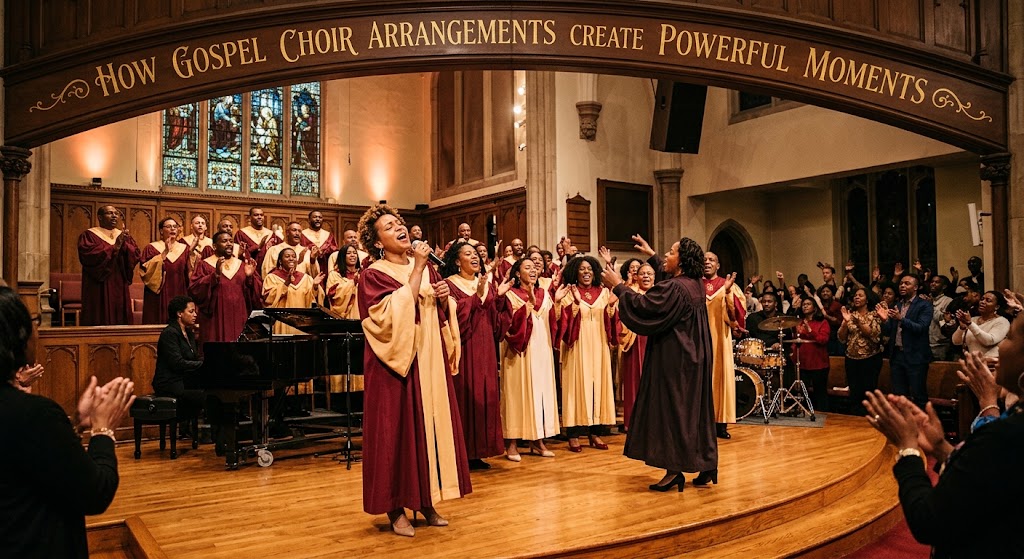
How Gospel Choir Arrangements Create Powerful Moments
How Gospel Choir Arrangements Create Powerful Moments
How Gospel Choir Arrangements Create Powerful Moments is a question that becomes especially interesting when you experience a great gospel choir in person. There is something remarkably powerful about hearing many voices come together as one, moving through different melodies, harmonies, rhythms and dynamics while communicating a message of faith. A gospel choir can transform an ordinary song into an emotional and spiritual experience that stays with listeners long after the final note has disappeared.
Gospel music has always placed great importance on collective expression. Unlike musical styles that may focus heavily on an individual performer, gospel choir music often draws its strength from the combined voices of a group. Each singer contributes something different, yet the arrangement brings those individual contributions together into one musical experience. This is one of the major reasons gospel choir arrangements can create powerful moments during worship services, concerts, church programmes, recordings and other Christian gatherings.
At the heart of How Gospel Choir Arrangements Create Powerful Moments is the understanding that a choir arrangement is much more than deciding which notes different singers should sing. A thoughtful arrangement determines how a song develops emotionally. It decides when the choir should sing softly, when certain sections should become stronger, when a lead vocalist should take the spotlight, when the entire choir should respond, and when silence should be allowed to create anticipation. Every one of these decisions can influence how listeners experience the song.
One of the most important elements of a powerful gospel choir arrangement is harmony. Harmony gives a choir its distinctive richness because several voices can sing different notes that work together to create a fuller musical sound. When sopranos, altos and tenors combine effectively, the result can feel much bigger than a single melody. Bass voices can provide depth and stability, while higher voices can add brightness and emotional intensity.
Good harmony is not simply about adding as many notes as possible. The arrangement has to respect the character of the song. Sometimes a simple two or three part harmony can be more powerful than an extremely complicated arrangement. The goal is to support the message and emotion of the song rather than demonstrate musical complexity for its own sake.
Another reason gospel choir arrangements create powerful moments is the use of call and response. Call and response is deeply associated with gospel music and allows one voice or group of voices to make a musical statement while another responds. This technique can make a performance feel like a conversation rather than a one sided presentation.
A lead singer may introduce a phrase, and the choir can answer with a powerful response. The lead may sing about God’s faithfulness, while the choir reinforces the statement with a repeated phrase. As the song progresses, the interaction can become increasingly energetic. The audience may eventually join in, transforming the performance from something they are simply listening to into something they are actively experiencing.
This participatory quality is one of the greatest strengths of gospel choir music. People often do not simply listen to gospel music with their ears. They respond physically and emotionally. They clap, sing, raise their voices, move to the rhythm and sometimes become deeply reflective. A strong choir arrangement creates opportunities for these responses by giving listeners familiar phrases, repeated sections and memorable musical moments.
Dynamics are another major factor in creating emotional impact. A choir does not have to sing at maximum volume throughout an entire song to sound powerful. In fact, constantly singing loudly can reduce the impact of the biggest moments because there is nowhere else for the music to go.
Effective gospel choir arrangements often move between quieter and louder sections. A song might begin with a single voice or a small group singing gently. The choir may then gradually enter, adding harmony and volume. Instruments can join the progression, and eventually the entire choir may reach a powerful musical peak. Because the arrangement created space for the music to grow, that climax can feel much more significant.
This is an important lesson for anyone interested in understanding How Gospel Choir Arrangements Create Powerful Moments. Powerful music is not always about volume. Sometimes the most emotional moment happens immediately after a quiet section because the contrast creates anticipation. Silence and restraint can therefore be just as important as sound.
Repetition is another characteristic that gives gospel choir arrangements their emotional strength. In many gospel songs, an important phrase may be repeated several times. To someone unfamiliar with gospel music, this repetition might initially appear unnecessary. However, repetition serves an important musical and emotional purpose.
When a phrase is repeated, listeners have an opportunity to absorb its meaning. The choir can gradually introduce variations in harmony, rhythm, volume and vocal intensity. The words remain familiar while the musical experience continues to develop. A simple statement can therefore become increasingly powerful each time it returns.
Repetition also makes gospel music highly accessible. Listeners can quickly learn a chorus and begin singing along even if they have never heard the song before. In a church setting, this can create a strong sense of unity because everyone can participate regardless of their musical background.
The arrangement of different vocal sections also contributes significantly to the sound of a gospel choir. Each section has its own role, and a skilled arranger knows how to use these voices effectively. Sopranos may carry a high harmony, altos can provide warmth in the middle register, tenors can contribute strength and movement, while bass singers establish the foundation.
When these sections interact creatively, the choir can produce moments that would be difficult for a single vocalist to achieve. One section may begin a phrase, another may enter shortly afterwards, and the full choir may eventually unite. This layering gives the music movement and creates a sense of musical conversation.
Layering is particularly effective during climactic sections. Rather than having every singer perform exactly the same thing from beginning to end, the arrangement can gradually add different vocal parts. The listener hears the musical texture becoming fuller and more exciting. By the time the entire choir comes together, the moment can feel enormous.
Rhythm also plays a crucial role in gospel choir arrangements. Gospel music has a long tradition of rhythmic energy, and choirs can use rhythm to create excitement and movement. Syncopation, rhythmic repetition, clapping patterns and interaction with the band can make a performance feel alive.
The relationship between the choir and instrumentalists is particularly important. A gospel choir rarely exists in complete isolation from the musicians supporting it. Drums, keyboards, bass, guitars and other instruments can respond to the choir, reinforce important phrases and help build musical intensity.
A skilled arrangement allows the choir and band to communicate. There may be moments when the instruments become quieter so the voices can be heard clearly. At other points, the band may respond to the choir with a strong rhythmic accent. These interactions can create spontaneous sounding moments even when much of the performance has been carefully rehearsed.
This is another reason gospel choir arrangements can feel different from ordinary group singing. The music often has movement. It breathes, builds, pauses and responds. The arrangement gives the performers room to communicate with one another rather than simply delivering notes mechanically.
Emotional storytelling is equally important. A great gospel song usually communicates something beyond its melody. It may tell a story of struggle, redemption, hope, gratitude, faith, forgiveness, victory or God’s faithfulness. The choir arrangement should help communicate that story.
For example, a song about overcoming hardship might begin quietly, reflecting uncertainty or pain. As the message shifts towards hope, the arrangement can become stronger. Additional voices may enter, harmonies may become richer and the rhythm may become more energetic. By the end, the musical transformation mirrors the emotional journey contained within the lyrics.
This connection between lyrics and arrangement is one of the reasons gospel choir performances can feel deeply personal. Even when hundreds of people are listening, an individual listener may hear something that reminds them of their own life. The music creates an emotional space where personal experiences can connect with the message being presented.
The lead vocalist also plays an important role in choir arrangements. A lead singer often provides the individual voice while the choir represents the collective response. This relationship can create a powerful contrast between vulnerability and strength.
A lead vocalist might sing a personal statement with a relatively exposed voice. The choir then enters to reinforce the message. That moment can feel like an individual discovering that they are not alone. Musically, the choir provides support. Emotionally, the arrangement can communicate community, encouragement and shared faith.
Gospel choir arrangements can also create powerful moments through unexpected changes. A sudden change in rhythm, key, harmony or vocal texture can capture the listener’s attention. A song that appears to be reaching its conclusion may suddenly return with renewed energy. A choir may repeat a familiar phrase in a higher key, creating a sense of progression and excitement.
Key changes have traditionally been used in many gospel performances to increase intensity. When handled effectively, a key change can make the final section feel like a genuine musical lift. However, the technique works best when it serves the song rather than being inserted simply because it is expected. The emotional development should justify the musical change.
Another powerful technique is allowing individual choir members or smaller groups to step forward. A full choir can sound impressive, but contrast can make the performance more interesting. A small vocal group may sing one section before the entire choir joins. A male section might respond to a female section, or different groups might alternate phrases.
These exchanges create variety while maintaining the identity of the choir. They also allow different voices to contribute to the overall story. The audience hears both individuality and unity, which is an important part of the gospel choir tradition.
The spiritual dimension should not be overlooked when discussing How Gospel Choir Arrangements Create Powerful Moments. For many Christians, gospel music is not simply entertainment. It can be an expression of worship, testimony, prayer and encouragement. The arrangement therefore has the potential to support an experience that goes beyond musical appreciation.
When the musical structure supports the message of the song, listeners can become more attentive to the words. A carefully timed pause can make a lyric stand out. A gradual build can reinforce a declaration of faith. A powerful harmony can underline an important statement. The arrangement becomes a tool for communicating the message.
This does not mean that every gospel performance has to be dramatic. Some of the most meaningful moments can be incredibly simple. A choir singing quietly together can sometimes create more emotional impact than a massive musical climax. What matters is whether the arrangement matches the message and creates an appropriate emotional journey.
Preparation is also essential. Powerful choir moments may appear spontaneous to the audience, but they often require significant rehearsal. Singers must understand their parts, timing, pronunciation, dynamics and entrances. They need to know when to lead and when to support. They must also listen carefully to one another.
A choir that sings technically correct notes but does not listen collectively can struggle to create emotional impact. Great ensemble singing requires awareness. Singers have to hear the people around them and adjust their volume and tone accordingly. When everyone listens, the choir begins to sound like a single musical instrument made up of many individuals.
This unity is perhaps the greatest secret behind powerful gospel choir arrangements. The strength of the choir comes from bringing different voices together without completely eliminating their individuality. Each singer has a role, but everyone serves the larger musical purpose.
Technology has also changed the way gospel choir arrangements are created and distributed. Modern recording techniques allow producers to layer vocal performances, experiment with harmonies and create large sounding choirs even when the number of singers is relatively small. Digital platforms have also made it possible for gospel music from different regions to reach audiences around the world.
However, technology cannot replace genuine musical communication. Software can correct pitch, increase volume and create layers, but it cannot automatically create the emotional connection that comes from singers who understand and believe in the message they are delivering. The human element remains central.
For gospel musicians and choir directors, understanding how arrangements influence listeners can make a significant difference. Instead of asking only whether a song sounds impressive, they can ask what the arrangement is trying to communicate. Where should the audience feel anticipation? Where should they sing along? Where should the choir become quiet? Where should the music reach its emotional peak?
These questions can turn a collection of voices into a compelling musical experience.
For listeners, understanding How Gospel Choir Arrangements Create Powerful Moments can also change the way gospel music is appreciated. The next time you hear a choir perform, listen for the different elements working together. Notice how the harmonies enter. Pay attention to the relationship between the lead singer and choir. Listen for changes in dynamics and rhythm. Notice how repetition affects your emotional response. Observe how the arrangement develops from the beginning to the end.
You may discover that the moment that moved you most was not accidental. It may have been created through careful decisions about harmony, rhythm, dynamics, repetition, vocal layering, instrumentation and timing.
Ultimately, powerful gospel choir arrangements succeed because they combine musical skill with meaningful communication. They give singers a framework through which they can express faith collectively while giving listeners opportunities to participate emotionally and spiritually.
The beauty of gospel choir music is found in that combination of many voices becoming one. A single singer can communicate something powerful, but a choir can create a sense of community, strength and shared experience that reaches an entirely different level. When the arrangement is thoughtful, the voices are prepared, the musicians are connected and the message is meaningful, the result can become more than a performance.
It can become a moment.
That is the real answer to How Gospel Choir Arrangements Create Powerful Moments. They create powerful moments by carefully controlling musical tension and release, combining individual voices into rich harmonies, using call and response to encourage participation, building intensity through dynamics and rhythm, and allowing the message of the song to guide the musical journey. When all these elements work together, gospel choir music can reach the heart in a way that words alone sometimes cannot.
Whether performed inside a church, recorded in a studio, presented at a gospel concert or shared online, a well arranged gospel choir has the ability to make people stop, listen, sing, reflect and remember. And that is what makes gospel choir arrangements so special. They do not merely organise voices. They create an environment where music, message, emotion and community can come together in one unforgettable experience.

Leave a Reply