
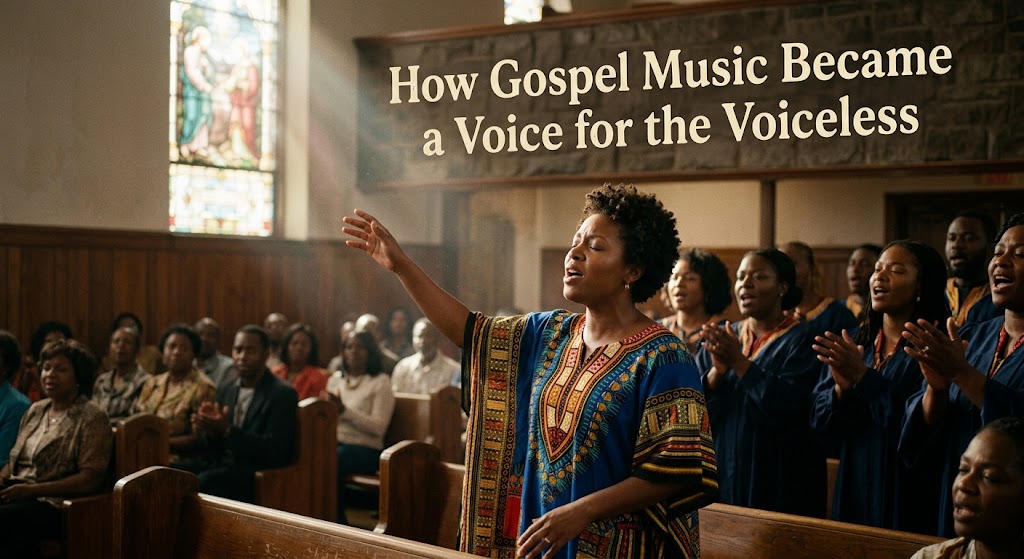
How Gospel Music Became a Voice for the Voiceless
Music has always been more than sound. Long before streaming platforms, music videos and social media turned songs into global products, people used music to express emotions, preserve history, challenge injustice and speak about experiences that were difficult to put into ordinary words. Among the many musical traditions that have carried powerful messages across generations, gospel music stands out because of its unique relationship with faith, suffering, hope and human dignity. How Gospel Music Became a Voice for the Voiceless is a story that cannot be separated from the experiences of ordinary people who found strength in singing when their circumstances gave them very little reason to celebrate.
Gospel music has traditionally given expression to people who felt ignored, oppressed, rejected or forgotten. It has provided a language for pain while simultaneously pointing towards hope. A person may have had no political influence, no wealth, no public platform and no ability to change their circumstances immediately, yet that same person could sing about God’s faithfulness, justice, mercy and deliverance. In that moment, their voice became part of something much larger than themselves.
To understand How Gospel Music Became a Voice for the Voiceless, it is important to understand that gospel music did not develop simply as entertainment. Its roots are deeply connected to religious expression and the lived experiences of communities facing hardship. Songs became a way to communicate faith, preserve identity, encourage one another and survive difficult circumstances. The message was often simple, but its emotional power was enormous.
For generations, people have turned to gospel music when ordinary language seemed inadequate. There are moments when someone cannot explain their grief, disappointment or fear, but a song can say everything they are feeling. A powerful gospel song can tell someone who feels forgotten that they are not alone. It can remind a struggling person that suffering is not necessarily the end of their story. It can give courage to someone who has become exhausted from fighting battles that nobody else sees.
This is one of the reasons gospel music has remained relevant across generations. Musical styles have changed dramatically, but the human experiences behind many gospel songs have remained remarkably similar. People still experience poverty, rejection, injustice, bereavement, loneliness, disappointment, uncertainty and fear. People still search for meaning. People still need hope. Gospel music continues to meet people in those places.
One of the most powerful things about gospel music is its ability to transform private pain into collective expression. A person may listen to a song alone and feel as though the singer understands exactly what they are going through. Then that same song can be sung in a church, concert, family gathering or community event, turning an individual experience into a shared one. Suddenly, the person who thought they were suffering alone discovers that thousands or even millions of other people understand the same pain.
This is how music becomes a voice for the voiceless. It does not always speak on behalf of people by giving a political speech or making a direct accusation. Sometimes it simply tells the truth about what people are experiencing. It says that people are hurting. It says that people are waiting. It says that people are struggling to survive. It says that people still believe there is hope.
Gospel music has also played an important role in preserving stories that might otherwise disappear. Every generation leaves behind songs that reveal what people valued, feared, endured and hoped for. When researchers and historians look at the cultural history of different communities, music often provides a powerful window into everyday life. Songs can reveal the emotional realities of people who were not wealthy enough, powerful enough or famous enough to have their stories recorded in other ways.
The spiritual language of gospel music has made this even more powerful. Themes such as deliverance, freedom, justice, mercy, redemption and divine intervention have allowed people to describe their circumstances while placing those circumstances within a larger story of faith. A person experiencing hardship can sing about being brought through the storm. Someone facing rejection can sing about being accepted by God. Someone who has lost almost everything can sing about still having faith.
That ability to connect suffering with hope is one of gospel music’s greatest strengths.
Gospel music has also provided a platform for artists who wanted to communicate more than musical ability. Many gospel musicians have used their voices to discuss social issues, family struggles, poverty, discrimination, addiction, broken relationships, grief and the difficulties faced by ordinary people. Their songs have often created conversations that might not have happened otherwise.
This is particularly important because music can reach people in ways that formal speeches cannot. A lecture may educate the mind, but a song can reach the emotions. A newspaper article may describe suffering, but a song can make listeners feel the weight of that suffering. A political statement may divide an audience, but a carefully written song can create empathy by allowing listeners to experience another person’s perspective.
That does not mean every gospel song is intended to address social problems. Many gospel songs focus primarily on worship, praise, thanksgiving and personal faith. However, even these songs can become deeply meaningful to people facing difficult circumstances. A simple declaration of faith can become an emotional lifeline for someone who feels that everything around them is collapsing.
The rise of gospel music across Africa has further demonstrated how the genre can reflect the realities of ordinary people. African gospel music has developed into a broad and diverse musical world that incorporates local languages, rhythms, instruments and cultural expressions. In countries such as Nigeria, Ghana, South Africa and many others, gospel music has become an important part of everyday Christian life.
In Nigeria especially, gospel music has become much more than something heard inside church buildings. Gospel songs can be heard in homes, cars, weddings, religious gatherings, radio programmes, television shows, concerts and online platforms. Artists have increasingly used contemporary production techniques, African rhythms and modern songwriting approaches to communicate messages of faith to younger audiences.
This evolution demonstrates that being a voice for the voiceless does not require music to remain stuck in one particular sound. The message can travel through traditional hymns, choir arrangements, contemporary worship, Afro gospel, gospel hip hop, gospel soul and other musical expressions. What changes is the musical language. The human need for hope remains.
Social media has also changed the relationship between gospel music and its audience. In the past, an aspiring artist might have needed access to a major record label, radio station or television network before reaching a large audience. Today, a talented independent musician can record a song and share it online with listeners around the world.
This has created opportunities for voices that might previously have remained unheard. A gospel artist from a small community can reach listeners thousands of kilometres away. A songwriter can tell a personal story and discover that people from completely different backgrounds relate to it. A song created in a bedroom studio can eventually become part of someone’s daily worship routine.
Digital platforms have therefore expanded the meaning of being a voice for the voiceless. The person without access to traditional media can now potentially reach an audience directly. The listener also has greater power to decide which voices deserve attention.
How Gospel Music Became a Voice for the Voiceless
However, this development comes with its own challenges. The modern music industry can sometimes reward popularity more quickly than substance. Songs can become trends, artists can become brands and meaningful messages can sometimes compete with the pressure to gain streams, followers and views. Gospel musicians therefore face the challenge of remaining authentic while operating within an increasingly commercial music environment.
The question is not whether gospel music should be commercially successful. Artists deserve to be rewarded for their creativity, hard work and professional investment. The more important question is whether success should become more important than the message.
At its best, gospel music demonstrates that the two do not have to be enemies. A song can be beautifully produced, widely streamed and commercially successful while still carrying a meaningful message. The real challenge is maintaining integrity when popularity creates pressure to compromise.
Another reason gospel music has become a voice for the voiceless is its ability to speak to people who feel emotionally invisible. Not every form of suffering is visible. Some people appear successful while privately battling loneliness, grief, disappointment or fear. They may attend church, go to work, raise families and interact with friends while carrying enormous emotional burdens.
A song can reach such a person in a quiet moment when nobody else knows what they are experiencing. The lyrics may remind them that their situation is not meaningless and that they are not completely alone. For someone in that position, a gospel song can become more than music. It can become companionship.
This emotional connection explains why certain gospel songs remain meaningful long after their original release. People attach songs to important seasons of their lives. A particular song may remind someone of a parent who has passed away, a difficult period they survived, a prayer that was eventually answered or a moment when they almost gave up.
The song becomes part of their personal history.
Gospel music also gives families and communities a way to pass faith and values from one generation to another. Parents teach songs to children. Churches teach songs to congregations. Older believers introduce younger people to music that shaped their own spiritual journeys. In this way, gospel music becomes a cultural bridge connecting generations.
The lyrics may change. The instruments may change. The production may change. The language may change. But the central themes of faith, hope, love, mercy, forgiveness and perseverance continue to appear.
There is also something powerful about the collective nature of singing. When hundreds or thousands of people sing together, individual voices become one sound. The person who feels powerless on their own becomes part of a community. That experience can create a sense of belonging that is difficult to achieve through ordinary conversation.
This is particularly significant for people who feel excluded from society. Gospel music can remind them that their lives matter and that their stories deserve to be heard. It can create a space where people are not defined solely by their financial situation, social status, occupation or past mistakes.
The message of redemption found throughout gospel music is especially powerful in this regard. Many people have made mistakes that they regret. Some have experienced failure, addiction, broken relationships or painful personal circumstances. Gospel music frequently communicates the possibility of restoration. It tells people that their worst moment does not necessarily have to become their permanent identity.
That message has given countless listeners the courage to keep moving.
Gospel music has also challenged the idea that strength means pretending everything is fine. Some of the most powerful songs acknowledge pain honestly. They allow people to say, in effect, “I am hurting, but I am still believing.” That combination of vulnerability and faith is one of the qualities that makes gospel music so emotionally powerful.
The genre therefore occupies an unusual space. It can acknowledge suffering without surrendering to hopelessness. It can discuss injustice without abandoning faith. It can celebrate victory without pretending that the struggle never existed.
This balance is one reason How Gospel Music Became a Voice for the Voiceless remains such an important conversation. The story is not only about the history of a musical genre. It is about ordinary people discovering that their experiences can be expressed, remembered and shared through music.
The future of gospel music will likely continue to evolve. New technologies will change how songs are produced and distributed. New generations will introduce new sounds. Artificial intelligence, streaming platforms, short form video and global collaborations will influence the industry. Artists will continue experimenting with different genres and production styles.
Yet the most important element will remain the message.
As long as people experience hardship, gospel music will have something to say. As long as people search for hope, gospel music will have an audience. As long as people feel forgotten, there will be songs reminding them that their lives have value. As long as people struggle to find words for their pain, there will be musicians willing to turn those emotions into melodies.
How Gospel Music Became a Voice for the Voiceless is ultimately a story about the extraordinary power of ordinary voices. A person does not need a position of authority to tell the truth about their experience. They do not need millions of followers to create something meaningful. Sometimes a microphone, a melody and an honest story are enough.
The most powerful gospel songs are not necessarily the loudest songs. They are the songs that meet people where they are. They speak to the person sitting alone at night. They encourage the mother trying to hold her family together. They strengthen the young person questioning whether life will ever improve. They comfort the grieving person. They encourage the person who has failed. They remind the discouraged believer that tomorrow is still worth facing.
That is why gospel music continues to matter.
It gives people language when pain becomes difficult to explain. It gives communities a way to remember. It gives believers a way to worship. It gives struggling people a reason to hope. It gives artists a platform to tell stories that deserve attention. Most importantly, it reminds listeners that silence does not mean their experiences are insignificant.
From traditional hymns to modern gospel recordings, from church choirs to independent artists publishing music online, gospel music has continued to evolve while carrying an enduring responsibility. It speaks about the human condition through the language of faith.
And perhaps that is the greatest reason gospel music became a voice for the voiceless. It never required everyone to have power before allowing them to speak. It simply gave them a song.
When people sing together, their individual voices may be impossible to separate. But the message becomes stronger. The forgotten are remembered. The discouraged are encouraged. The grieving find comfort. The fearful find courage. The broken discover hope.
Gospel music has therefore become more than a collection of songs. It has become a living record of faith, struggle, resilience and hope. Its melodies may change with every generation, but its ability to give voice to people who feel unseen remains one of its greatest gifts.
In a world where many people are competing to be heard, gospel music continues to remind us of something remarkably simple. Sometimes the most important voices are not the ones with the biggest platforms. They are the voices carrying stories of survival, faith and hope. And sometimes, all those voices need is a song.

Leave a Reply