
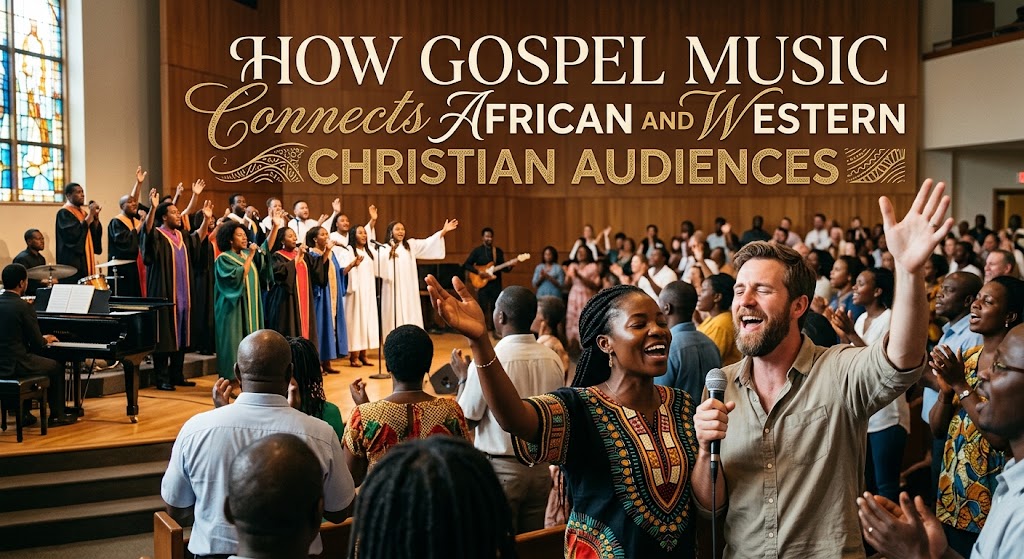
How Gospel Music Connects African and Western Christian Audiences
How Gospel Music Connects African and Western Christian Audiences is a fascinating question because gospel music has become much more than a genre of Christian music. It has developed into a powerful cultural and spiritual bridge connecting believers from different countries, languages, backgrounds and traditions. From the energetic sounds of African gospel to the contemporary worship styles popular across Europe and North America, Christian music continues to cross borders and bring people together through a shared message of faith, hope, love and devotion to God.
Music has always played an important role in Christian worship, but the growth of digital platforms has completely changed how believers discover and experience gospel music. A Christian in Nigeria can listen to a worship song recorded in the United States within seconds. A believer in the United Kingdom can discover an African gospel artist through YouTube, Spotify, TikTok or another social platform. Someone in Ghana can sing along to a worship anthem created by a church in Australia, while Christians in the United States can discover African praise songs that introduce them to a completely different musical expression of the same faith.
This growing exchange helps explain How Gospel Music Connects African and Western Christian Audiences. Although African and Western Christian communities may have different musical traditions, they often share the same spiritual foundation. The sounds may differ, the instruments may differ, the languages may differ and even the way people physically express worship may differ, but the central themes of Christian music remain remarkably similar.
Faith is one of the strongest connections between African and Western gospel audiences. A worship song may come from Lagos, London, Atlanta, Accra, Johannesburg or another part of the world, yet its message can still resonate deeply with listeners thousands of kilometres away. Songs about trusting God, overcoming difficult seasons, celebrating salvation, seeking divine direction and expressing gratitude can connect with Christians regardless of their geographical location.
African gospel music has become particularly influential in introducing Western Christian audiences to vibrant rhythms, powerful vocal arrangements and energetic expressions of praise. Gospel music from countries such as Nigeria, Ghana and South Africa has attracted listeners far beyond the African continent. African gospel artists increasingly use digital platforms to distribute their music internationally, allowing listeners who may never have visited Africa to experience elements of African Christian culture through music.
One of the most noticeable characteristics of African gospel music is its energy. Praise can involve dancing, clapping, call and response, layered vocals and rhythmic instrumentation. These characteristics create an atmosphere that can feel highly communal. Western Christian listeners who encounter this style may discover a fresh approach to expressing joy and celebration in worship.
How Gospel Music Connects African and Western Christian Audiences
At the same time, Western Christian music has also influenced African gospel audiences. Contemporary worship music from the United States, United Kingdom, Canada and other Western countries has found large audiences across Africa. Modern production techniques, songwriting approaches, instrumentation and worship arrangements have become increasingly common among African Christian musicians.
This exchange is not simply about one side influencing the other. It is increasingly becoming a two way conversation. African artists are influencing the global Christian music scene while Western Christian artists continue to influence African listeners. As a result, a more interconnected Christian music culture is developing.
Language is another fascinating factor in How Gospel Music Connects African and Western Christian Audiences. English has played an important role because it is widely understood across many African countries and is also one of the dominant languages used in Western Christian music. A gospel song recorded in English can therefore travel relatively easily between different audiences.
However, language differences do not necessarily prevent gospel music from connecting people. African gospel artists frequently release music in local languages, yet international listeners can still enjoy the music even when they do not understand every word. Rhythm, melody, emotion, vocal expression and repeated phrases can communicate feelings that go beyond literal translation.
This demonstrates something important about music. People do not always need to understand every word to understand the emotion behind a song. A worship song can communicate joy, sorrow, gratitude, surrender or hope through its melody and performance. This emotional connection creates opportunities for Christian music to reach audiences who may not share the same language.
Another major factor is the shared experience of faith. Christians across continents face many different circumstances, but certain experiences are universal. People experience disappointment, loss, uncertainty, success, gratitude, family struggles, financial pressure, loneliness and personal transformation. Gospel music gives people a way to express these experiences through the lens of Christian faith.
A worship song about trusting God during difficult circumstances can therefore resonate with a Nigerian listener and an American listener for completely different personal reasons. Their circumstances may not be identical, but their emotional and spiritual response to the message can be similar.
How Gospel Music Connects African and Western Christian Audiences can also be understood through the growing popularity of Christian music collaborations. When artists from different countries work together, they create opportunities for their respective audiences to discover one another. A collaboration between an African gospel singer and a Western Christian artist can expose each artist to listeners who may not have encountered their music otherwise.
These collaborations can also produce interesting musical combinations. African rhythms can be combined with contemporary worship arrangements, traditional gospel influences can meet modern production, and different vocal styles can work together to create something that feels both familiar and new.
Social media has accelerated this process. In previous generations, discovering music from another continent could require purchasing a foreign record, listening to international radio or physically travelling. Today, a short video can introduce millions of people to an unfamiliar Christian artist.
A gospel song can become popular because someone uses it in a worship video, testimony, church performance, family celebration or inspirational social media post. Once the content begins circulating, listeners from different countries can discover the original artist. This creates a digital pathway between Christian communities that might otherwise have very little direct interaction.
YouTube has been particularly important to the international growth of gospel music. Artists and churches can publish music videos, live worship sessions, concerts and performances for global audiences. Viewers can discover music based on recommendations rather than geography. Someone searching for worship music can easily encounter an African gospel performance even if they originally intended to listen to a Western artist.
Streaming platforms have strengthened this trend even further. Playlists allow listeners to move naturally between different Christian artists and musical traditions. A person may begin with a contemporary worship song from the United States and eventually discover a Nigerian praise song, a South African worship group or a Ghanaian gospel artist.
This creates what can be described as a global Christian music ecosystem. The boundaries between local and international gospel music are becoming less rigid because listeners now have access to an enormous variety of Christian sounds.
The influence of African gospel music on Western audiences is especially significant because African Christianity has a rich musical heritage. Many African churches have developed worship cultures that emphasise participation, communal singing and rhythmic expression. These characteristics can provide a different experience for listeners accustomed to more restrained forms of worship.
African gospel music can also introduce Western listeners to new musical patterns. Percussion, traditional instruments, indigenous vocal styles and African languages can create a distinctive sound. Rather than being viewed simply as foreign music, these elements can become part of a broader Christian musical conversation.
Western Christian music, meanwhile, has its own powerful influence. Contemporary worship has become widely recognised through large churches, Christian festivals, worship conferences, radio, streaming services and international Christian ministries. Its songwriting structures and production styles have influenced churches and gospel artists across Africa.
This cultural exchange can benefit both audiences. African listeners can discover new approaches to songwriting and worship production, while Western listeners can encounter musical expressions that challenge them to think beyond their familiar traditions.
Perhaps one of the most important contributions of gospel music is its ability to create a sense of shared identity. Christians may disagree about many things, including culture, worship preferences and church traditions, but music can remind them that they share a faith centred on Jesus Christ.
A worship song sung by thousands of people in a church can create a powerful feeling of unity. That same song can then be listened to privately by someone on another continent. The experience is different, but the spiritual message remains connected.
This is why How Gospel Music Connects African and Western Christian Audiences is not simply a question about musical trends. It is also a question about culture, communication and Christian fellowship. Gospel music creates opportunities for people to learn about one another while celebrating the faith they share.
There is also an important storytelling element in gospel music. Many African gospel artists draw inspiration from personal testimonies, family experiences, biblical stories and everyday struggles. Western Christian musicians do the same in their own cultural contexts. When these stories are turned into songs, listeners can recognise parts of their own experiences within them.
A person who has survived a difficult season may connect deeply with a gospel song about God’s faithfulness. Someone who has experienced a major life change may identify with a song about trusting God. Someone celebrating a personal breakthrough may find joy in a praise song recorded thousands of kilometres away.
The story may belong to the artist, but the emotion can belong to the listener.
Another reason gospel music connects audiences is its ability to adapt without losing its central message. Music changes with technology and culture. Production becomes more sophisticated, artists experiment with new sounds and listeners develop new preferences. Yet the fundamental Christian themes remain.
This adaptability allows gospel music to remain relevant to younger audiences. Young Christians who spend significant amounts of time on digital platforms can discover worship and gospel music in formats that fit naturally into their daily lives.
Short videos, live streams, music videos, streaming playlists and social media performances have made gospel music more accessible than ever. This does not mean traditional church music is disappearing. Instead, traditional and contemporary forms increasingly exist alongside one another.
African and Western Christian audiences can therefore participate in the same global conversation while maintaining their individual cultural identities. An African believer does not have to abandon African musical traditions to appreciate Western worship music. Likewise, a Western Christian does not have to abandon their familiar worship style to appreciate African gospel music.
This mutual appreciation can encourage greater cultural understanding. Music allows people to encounter another culture in a positive and meaningful context. A listener may become curious about the artist’s country, language, church tradition or cultural background after discovering their music.
Gospel music can therefore become an informal form of cultural education.
The future of How Gospel Music Connects African and Western Christian Audiences is likely to become even more interesting as technology continues to develop. Artists have access to global audiences without necessarily needing major record labels or traditional distribution systems. Independent musicians can release songs directly to listeners around the world.
Artificial intelligence, digital production tools, social media marketing, streaming technology and affordable recording equipment are also lowering some of the barriers that once limited international music distribution. A talented gospel artist can build an audience internationally from a relatively small studio.
This creates enormous opportunities for African Christian musicians. Artists who once depended heavily on local radio or physical music sales can now reach listeners in Europe, North America, Asia and other regions. Western Christian artists can also use the same platforms to reach African audiences.
However, global exposure also creates a responsibility for artists. As gospel music reaches larger audiences, Christian musicians must consider the message behind their music. The pursuit of views, streams and popularity should not completely replace authenticity, spiritual depth and meaningful songwriting.
For listeners, the growing diversity of gospel music offers an opportunity to explore beyond familiar sounds. Someone who has always listened to Western contemporary worship can discover African praise music. Someone who primarily listens to African gospel can explore hymns, contemporary worship and Christian music from other parts of the world.
This wider musical experience can enrich personal worship and increase appreciation for the creativity within the global Christian community.
Ultimately, How Gospel Music Connects African and Western Christian Audiences comes down to something much deeper than beats, vocals or production. It is about a shared message expressed through different cultural voices. The music may sound different, but the desire to worship, encourage, testify, celebrate and draw closer to God creates a powerful point of connection.
African gospel music has something important to contribute to the global Christian music conversation. Its rhythms, languages, vocal traditions, energy and testimonies provide a unique expression of faith. Western Christian music also contributes its own traditions, songwriting approaches, production styles and worship culture. When these different expressions meet, the result can be more than musical entertainment. It can become an exchange of faith and culture.
The internet has made this exchange easier than ever. A song recorded in a small African studio can reach a listener in a Western city. A worship anthem recorded in a Western church can become part of a Christian’s playlist in an African home. Distance is no longer the barrier it once was.
That is the real power of gospel music. It can travel where people cannot. It can introduce cultures to one another. It can turn personal testimonies into shared experiences. It can make a listener feel understood even when the singer lives on another continent.
As Christian music continues to evolve, the relationship between African and Western audiences will likely become even stronger. More collaborations will emerge, more artists will discover international audiences and more listeners will explore Christian music beyond their own cultural traditions.
Gospel music is proving that faith does not have to sound the same everywhere to bring people together. Different cultures can worship through different rhythms, melodies, languages and musical traditions while still celebrating the same central hope.
For anyone interested in Christian music, this global connection is something worth watching. The future of gospel music will not belong exclusively to one continent or one musical tradition. It will increasingly reflect the voices of Christians from around the world, each bringing their own story, culture and creativity to a shared expression of faith.
And perhaps that is the most beautiful answer to How Gospel Music Connects African and Western Christian Audiences. It reminds us that while people may live in different countries, speak different languages and worship through different musical traditions, a powerful song can still make them feel like they belong to the same family.

Leave a Reply