
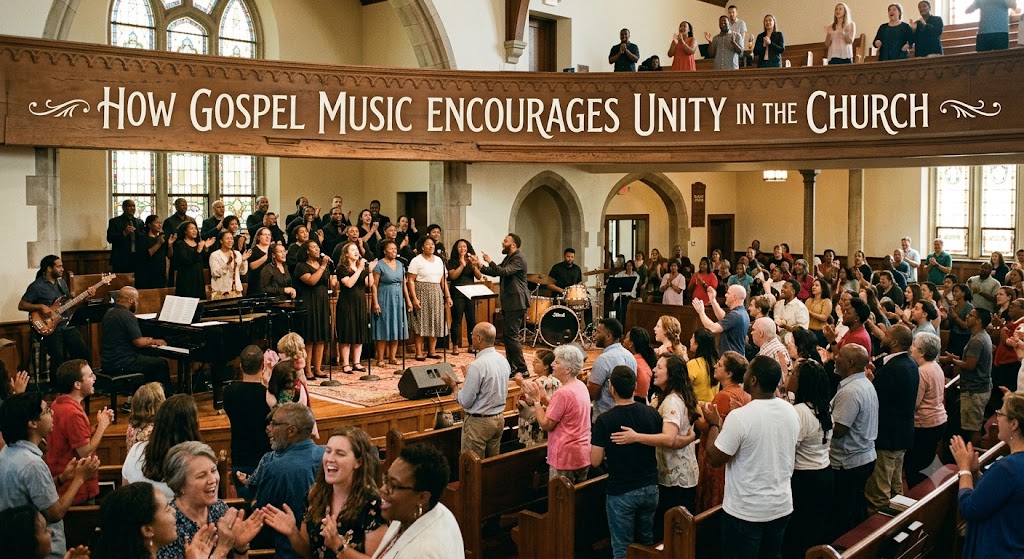
How Gospel Music Encourages Unity in the Church
How Gospel Music Encourages Unity in the Church is a question that goes far beyond music itself. Gospel music has a unique ability to bring people together, even when they come from different backgrounds, generations, cultures, social classes, and personal experiences. In a world where disagreements can easily create division, a powerful worship song can remind believers of what they have in common. They may speak differently, dress differently, worship differently, or have completely different stories, but when they lift their voices together in praise, those differences can become secondary to their shared faith in God.
Music has always played an important role in Christian worship. From the songs of the Psalms to the hymns sung by congregations throughout history, believers have used music to express faith, gratitude, repentance, hope, love, and devotion to God. Gospel music continues that tradition while speaking to the realities of modern life. Its messages often focus on God’s goodness, grace, mercy, faithfulness, salvation, and power. These themes create common ground for Christians and give them reasons to worship together.
One of the clearest ways How Gospel Music Encourages Unity in the Church can be understood is through collective participation. Listening to a song alone can be meaningful, but singing together creates a completely different experience. When hundreds or thousands of people sing the same words at the same time, they participate in something bigger than themselves. Individual voices become one sound. Individual experiences become part of a collective expression of faith. That simple act can create a powerful sense of belonging.
Imagine a church congregation filled with people who have never met each other outside the church. One person may be a business owner, another may be a student, another may be unemployed, while another may be struggling with personal difficulties. They may have different opinions about politics, relationships, money, education, or everyday life. Yet when a gospel song begins and everyone joins in worship, those differences can temporarily lose their power. The congregation is no longer simply a collection of individuals. It becomes a community united by a shared message and a shared faith.
This is one reason gospel music remains so powerful in church environments. It does not require everyone to have the same personality or life experience. Instead, it gives people a common language through which they can express their faith. A person who struggles to explain their emotions may find their feelings expressed perfectly through a worship song. Someone who has experienced disappointment may find encouragement in a song about God’s faithfulness. Someone celebrating a breakthrough may find a song that captures their joy. When these people worship together, music creates a bridge between their individual experiences.
Another important part of How Gospel Music Encourages Unity in the Church is its ability to cross generational boundaries. Churches often contain several generations worshipping under the same roof. Older believers may have grown up listening to traditional hymns and classic gospel songs, while younger Christians may prefer contemporary worship, Afro Gospel, Christian hip hop, or modern praise music. These differences can sometimes create tension when people believe their preferred style is the only acceptable form of Christian music.
However, gospel music can become a meeting point between generations when churches approach it with wisdom. A worship service can incorporate traditional songs alongside contemporary expressions of faith. Older believers can introduce younger Christians to songs that carried them through difficult seasons, while younger believers can introduce older generations to new sounds and artists. When this happens, music becomes more than entertainment. It becomes a way for generations to learn from one another.
The message of gospel music is also central to its unifying power. A song focused on God’s love can remind believers that they share a common identity in Christ. A song about forgiveness can encourage people to release bitterness. A song about grace can remind people that nobody stands before God because of personal perfection. A song about hope can encourage people who are struggling. These messages can change the emotional atmosphere of a congregation and help people focus on what truly matters.
How Gospel Music Encourages Unity in the Church is therefore not simply about getting people to sing together. It is also about shaping what people think about while they are singing. Music has a powerful relationship with memory and emotion. A song heard repeatedly during worship can become connected to important moments in a person’s spiritual journey. Years later, hearing that same song can bring back memories of prayer, fellowship, breakthrough, grief, or restoration. When many people share similar musical experiences within a church community, those songs can become part of the congregation’s collective memory.
How Gospel Music Encourages Unity in the Church
Gospel music can also help break down social barriers. Churches are supposed to be communities where people are welcomed because of their faith rather than their financial status, professional position, educational background, or social influence. Music can reinforce this principle by giving everyone an opportunity to participate. During worship, the microphone may belong to the worship leader, but the song belongs to the congregation. The wealthy person and the struggling person can sing the same words. The influential person and the unknown person can raise the same hands. The person who has been a Christian for decades and the person who recently found faith can worship the same God.
This shared participation can create a powerful sense of equality. Nobody needs a perfect voice to worship. Nobody needs expensive clothing. Nobody needs a particular social status. Nobody needs to prove their importance. The central focus is God. When a church keeps that focus, gospel music can help people move beyond competition and comparison.
There is also a strong connection between gospel music and emotional connection. People do not experience faith only intellectually. They experience it emotionally as well. A powerful song can create an atmosphere where people feel safe enough to reflect, pray, repent, forgive, or express gratitude. When people experience those emotions together, they can become more compassionate towards one another.
For example, someone may walk into church carrying an invisible burden. They may have experienced rejection, financial pressure, family problems, disappointment, or personal failure. During worship, a gospel song about God’s unfailing love may speak directly to that person. The person standing beside them may have no idea what they are going through, but they may also be experiencing their own struggle. When both worship together, they discover something important. They are not alone.
That shared understanding can strengthen relationships within the church. People who worship together regularly often develop a deeper sense of community because they are sharing more than physical space. They are sharing experiences. They celebrate together, mourn together, pray together, and worship together. Gospel music becomes part of that shared journey.
How Gospel Music Encourages Unity in the Church can also be seen through choir ministry. A church choir is a practical example of many individuals working together toward one purpose. Different voices have different ranges, strengths, and weaknesses. A soprano cannot sing exactly like an alto. An alto cannot sing exactly like a tenor. A tenor cannot sing exactly like a bass. Yet when each person understands their role and listens to the others, those different voices can produce beautiful harmony.
That principle offers a powerful lesson for the wider church. Unity does not mean uniformity. Christians do not have to become identical to be united. They can have different personalities, gifts, backgrounds, preferences, and experiences while remaining committed to the same faith. A choir demonstrates this visually and audibly. The beauty comes partly from the differences between the voices.
This is an important lesson for churches today. Sometimes division develops because people confuse unity with agreement on every personal preference. One group prefers traditional worship. Another prefers contemporary worship. One person loves drums. Another prefers piano. Someone enjoys slow worship songs, while another prefers energetic praise. These preferences can become unnecessary sources of conflict when people forget the purpose behind worship.
The church becomes stronger when believers learn to distinguish between biblical principles and personal preferences. Gospel music can help create that balance when the emphasis remains on the message rather than the style. The sound may change from generation to generation, but the central message of faith can remain constant.
Another way gospel music strengthens unity is by encouraging participation outside formal worship services. Churches can use music during community events, youth programmes, outreach activities, conferences, prayer meetings, weddings, celebrations, and other gatherings. Shared musical experiences can help people connect naturally. Someone who may feel uncomfortable starting a conversation with a stranger may find themselves singing alongside that person within minutes.
Music can also create opportunities for collaboration. Worship teams require musicians, singers, sound engineers, songwriters, producers, choir members, and leaders to work together. Each person contributes something different. When the team understands that the goal is not individual attention but collective ministry, music becomes an exercise in cooperation.
This cooperation teaches valuable lessons about humility. A talented singer may not always be the person leading the song. A skilled musician may need to support rather than dominate. A worship leader may need to listen to the choir. A choir member may need to follow the conductor. Everyone must understand that the quality of the overall performance depends on people working together.
That principle extends beyond the music ministry. A healthy church also requires people with different gifts working together. Some teach. Some preach. Some organise. Some encourage. Some give. Some serve children. Some care for vulnerable people. Some handle technical responsibilities. Others quietly support activities behind the scenes. Gospel music can remind believers that every contribution matters when it serves a common purpose.
The rise of African gospel music has added another dimension to this conversation. African gospel music has increasingly reached audiences beyond local churches and national borders. Different countries have developed distinct musical expressions while sharing Christian themes that listeners across cultures can understand. Rhythms, languages, instruments, and vocal styles may differ, but messages about faith, hope, worship, grace, and God’s goodness can connect people across geographical boundaries.
This demonstrates that unity does not require cultural sameness. A Christian in Nigeria can worship with a song from South Africa. Someone in Ghana can enjoy a worship song from Kenya. A believer in the United Kingdom can connect with an African gospel song even without sharing the same cultural background. Music can travel across borders faster than many other forms of communication.
Technology has made this even more powerful. Streaming platforms, social media, music videos, podcasts, and online worship communities allow gospel music to reach people who may never physically attend the same church. A song recorded in one country can become part of the worship playlist of believers thousands of kilometres away. This creates a wider Christian musical community.
However, churches should remember that music alone cannot solve every form of division. A congregation can sing together on Sunday and still struggle with unforgiveness, prejudice, gossip, competition, or unhealthy leadership during the week. Singing about unity is not the same as practising unity. Gospel music is most powerful when its message is reflected in the behaviour of the people singing it.
If believers sing about love but refuse to love one another, the song becomes disconnected from their lives. If they sing about forgiveness while holding onto bitterness, the message remains incomplete. If they sing about God’s grace while constantly judging others, they miss an important part of the gospel. Music can inspire unity, but believers must choose to live out the values expressed in the songs.
This is why the strongest answer to How Gospel Music Encourages Unity in the Church involves both music and action. A song can open a heart, but relationships must be built through communication, forgiveness, patience, service, and genuine love. A worship moment can bring people together emotionally, but consistent fellowship strengthens that connection over time.
Church leaders can intentionally use gospel music as part of a broader strategy for building community. They can encourage different age groups to participate in worship. They can create opportunities for different cultural groups to share their musical traditions. They can involve members with different gifts in music ministry. They can choose songs whose messages encourage love, forgiveness, service, humility, hope, and faith.
Worship leaders also have an important responsibility. They should remember that their role is not simply to impress the congregation. The goal is to help people focus on God. When worship becomes a competition for popularity, attention, or applause, its ability to unite can be weakened. When the focus remains on sincere worship, music can become a powerful tool for bringing people together.
Gospel musicians also influence the wider Christian community through their personal examples. Their songs may inspire millions, but their character can either strengthen or weaken the message they communicate. Artists who demonstrate humility, integrity, respect, and love can reinforce the values found in their music. Their influence can extend beyond their recordings into the lives of listeners.
There is something deeply powerful about hearing thousands of people sing together. For a few minutes, individual voices become one. Personal problems do not disappear, but people are reminded that they belong to something bigger than themselves. Personal differences do not necessarily vanish, but they become less important in the presence of a shared purpose.
That is ultimately the heart of How Gospel Music Encourages Unity in the Church. Gospel music gives believers a shared language, shared experiences, shared messages, and shared moments of worship. It can connect generations, cross cultural boundaries, strengthen relationships, encourage cooperation, and remind Christians of the faith they have in common.
The church does not need everyone to sound the same. It needs people who are willing to listen to one another, serve one another, forgive one another, and worship together. Just as different musical notes can create harmony, different people can contribute to the beauty of a united Christian community.
The next time a congregation begins singing a gospel song, it may be worth looking beyond the melody. Look at the people singing beside you. Some may be celebrating. Some may be hurting. Some may be uncertain. Some may be waiting for an answer to prayer. Some may have been in church for decades, while others may be there for the first time. They may have very different stories, but for that moment, they are sharing one song.
That is the remarkable power of gospel music. It reminds people that faith is not meant to be lived entirely alone. Christianity is also about community, fellowship, service, encouragement, and shared worship. When gospel music is used with sincerity and purpose, it can help transform a room full of individuals into a community of believers lifting their voices together.
How Gospel Music Encourages Unity in the Church is therefore not merely a question about sound or entertainment. It is a question about connection. It is about how a song can remind people of what they believe, who they belong to, and how they should treat one another. When the message of the music moves from the lips into the heart and finally into everyday behaviour, gospel music becomes more than something Christians listen to. It becomes a tool for building stronger relationships and a more united church.
In a divided world, that message is more important than ever. People are surrounded by arguments, competition, social divisions, cultural disagreements, and endless reasons to separate themselves from one another. The church has an opportunity to demonstrate something different. It can show that people with different stories can stand together, sing together, pray together, serve together, and worship together.
Sometimes unity begins with something as simple as a song. One voice starts. Another joins. Then another. Soon, hundreds of voices are singing the same words. Nobody owns the sound alone. Everyone contributes to it. And for that moment, the differences that separate people become less powerful than the faith that brings them together.
That is the beauty of gospel music. It does not simply give the church something to sing. At its best, it gives the church something to share.

Leave a Reply