
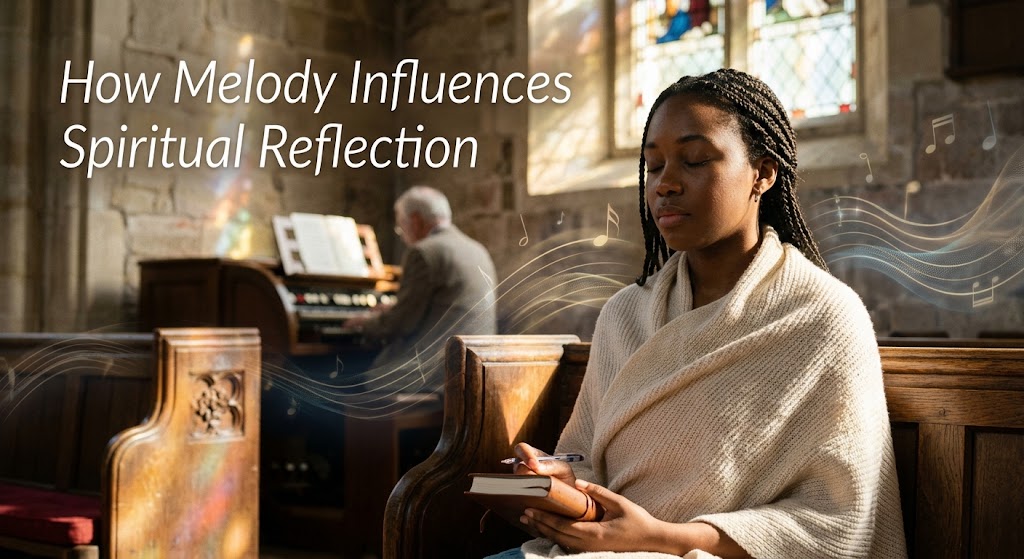
How Melody Influences Spiritual Reflection
How Melody Influences Spiritual Reflection
Music has a remarkable ability to reach parts of the human experience that ordinary conversation sometimes cannot. A person can hear a melody and suddenly remember a childhood moment, feel encouraged after a difficult day, become peaceful during a stressful season, or find themselves reflecting on questions they had previously ignored. This connection becomes especially meaningful within Christian music, where melody is often combined with lyrics, Scripture, prayer, worship, and personal testimony. Understanding how melody influences spiritual reflection helps explain why certain Christian songs remain deeply meaningful long after the music has stopped playing.
How Melody Influences Spiritual Reflection is an important subject because Christian music is not simply about producing pleasant sounds. Melody can influence attention, emotion, memory, and atmosphere, creating an environment in which a listener becomes more receptive to reflection. While melody itself does not possess supernatural power, the emotional and psychological response it creates can help a person slow down, focus, remember meaningful truths, and contemplate their relationship with God.
When people ask how melody influences spiritual reflection, one of the first things to understand is that melody gives emotional shape to words. A lyric can contain a powerful message, but the way that message is sung can dramatically affect how it is received. The same sentence can sound comforting, joyful, mournful, urgent, or triumphant depending on the melody, tempo, rhythm, harmony, and vocal delivery surrounding it.
Consider a Christian song centred on God’s faithfulness. The words might communicate hope and trust, but a gentle melody can make those words feel like a quiet reassurance. A stronger and more uplifting melody can communicate confidence and celebration. A slower melody might encourage the listener to sit with the message rather than rush through it. In this way, melody becomes an emotional framework through which spiritual ideas are experienced.
This is one reason Christian music has remained such an important part of worship throughout history. People do not simply hear theological statements in songs. They experience those statements through sound. A melody can help transform an abstract idea into something emotionally memorable.
How Melody Influences Spiritual Reflection can also be understood through the relationship between music and memory. Many people can remember the melody of a song even when they cannot remember every word. Once a familiar melody begins playing, the associated lyrics and memories can return almost automatically. This makes Christian music particularly powerful for reinforcing messages of faith.
A worship song heard repeatedly during a significant period of someone’s life can become connected to that season. Years later, hearing the same melody may bring back memories of a church service, a difficult period, a moment of prayer, a family gathering, or a personal breakthrough. The music becomes more than entertainment because it has become connected to an experience.
This explains why certain Christian songs can feel deeply personal to listeners. The song may have been written by someone else, but the listener has attached their own story to it. The melody becomes a kind of emotional doorway into memories and reflections that may otherwise remain difficult to access.
Another important factor is the ability of melody to encourage stillness. Modern life is filled with noise, notifications, conversations, responsibilities, entertainment, and constant digital stimulation. Many people rarely experience genuine quietness. Christian music can sometimes create a deliberate interruption in that constant activity.
A slow and peaceful melody can encourage a listener to pause. Instead of rushing from one responsibility to another, the person may sit quietly and listen. That pause creates an opportunity for reflection. The listener may begin thinking about their life, their choices, their relationships, their hopes, their fears, and their faith.
This does not mean every worship song needs to be slow. Joyful and energetic melodies can also encourage spiritual reflection. Reflection does not always mean sadness or silence. Sometimes reflection happens through celebration. A joyful melody can remind a person of gratitude, God’s goodness, answered prayers, or the privilege of being alive.
This is another reason the relationship between melody and spirituality is so fascinating. Different melodies can create different emotional environments. A celebratory melody may encourage thanksgiving, while a contemplative melody may encourage quiet examination. A powerful melody may inspire courage, while a gentle melody may create a sense of peace.
How Melody Influences Spiritual Reflection is therefore not about one particular musical style. Gospel music, contemporary worship, hymns, African Christian music, choir arrangements, acoustic worship, instrumental music, and other forms of Christian music can all encourage reflection in different ways.
Culture also plays a significant role. A melody that feels deeply moving to one person may not produce the same reaction in another person. Musical experiences are shaped by upbringing, language, community, culture, personal memories, and individual preferences. This is particularly obvious in African gospel music, where rhythm, vocal patterns, percussion, harmonies, and call and response traditions can create a powerful communal experience.
For many African Christians, music is not simply something listened to privately through headphones. It can be part of church gatherings, family celebrations, prayer meetings, weddings, funerals, youth programmes, religious events, and community life. Because music is integrated into these experiences, certain melodies can carry significant emotional and spiritual meaning.
The voice itself also matters. A melody performed with sincerity can feel different from the same melody delivered mechanically. Listeners often respond not only to musical structure but also to the perceived emotion behind the performance. A singer who communicates vulnerability, conviction, joy, gratitude, or hope can make a song feel more personal.
This is particularly important in Christian music because listeners often want authenticity. They are not simply looking for technically impressive vocals. They want music that communicates something believable. A technically perfect song can still feel emotionally empty if the performance lacks connection with its message.
At the same time, it is important not to confuse emotional intensity with spiritual depth. A beautiful melody can make someone emotional without necessarily producing meaningful spiritual reflection. Someone can be moved by music simply because it is musically powerful. Emotional response and spiritual transformation are not automatically the same thing.
This distinction is important for both Christian listeners and musicians. Melody can create an environment for reflection, but it does not replace faith, Scripture, prayer, obedience, or personal spiritual growth. A powerful song may inspire someone for a few minutes, but what happens after the music ends is ultimately more important.
How Melody Influences Spiritual Reflection becomes even more interesting when we consider repetition. Repetition is a major feature of many worship songs. A chorus may be sung several times, allowing the listener to move beyond simply processing the words and begin contemplating their meaning.
Repeated phrases can become easier to remember and may remain in someone’s mind throughout the day. A person might leave church singing a particular line and later find themselves thinking about what it means. The melody helps carry the message beyond the original setting.
However, repetition can work both ways. When used thoughtfully, it can deepen attention and create space for reflection. When used without purpose, it can become predictable or emotionally manipulative. The effectiveness of repetition depends largely on whether it helps listeners engage meaningfully with the message.
Melody can also influence the pace at which people process spiritual ideas. Fast music naturally creates a different listening experience from slow music. When a song moves quickly, the listener may focus more on energy, rhythm, celebration, and participation. When the music slows down, there may be more room to consider individual words and emotions.
This does not mean slow music is inherently more spiritual than fast music. Christianity contains both celebration and contemplation. The Bible itself contains songs of joy, lament, thanksgiving, victory, repentance, longing, and praise. Christian music can therefore legitimately express a wide range of human emotions.
One of the most powerful applications of melody is during difficult seasons. When someone is grieving, disappointed, confused, or discouraged, ordinary explanations may not always provide the comfort they need. A Christian song can give language to emotions that the person struggles to express.
A melody can accompany someone through sadness without requiring them to explain everything. It can remind them that other people have experienced pain, questioned, hoped, waited, and trusted before them. When combined with meaningful Christian lyrics, music can help listeners reflect on suffering without feeling completely alone.
This does not mean Christian music should be treated as a replacement for professional help, pastoral guidance, friendship, or practical support when those are needed. Music can be a meaningful source of encouragement, but it should be understood as one part of a broader spiritual and human experience.
Another reason melody influences spiritual reflection is that music can direct attention. When people listen carefully to a melody, they temporarily shift their focus away from competing thoughts. This can make it easier to concentrate on lyrics or personal reflection.
Imagine someone listening to a worship song early in the morning before beginning their day. The melody becomes part of a quiet routine. Instead of immediately checking messages or social media, the person spends a few minutes listening, thinking, praying, and preparing mentally for the day. The melody has not magically changed their circumstances, but it has helped create a moment of intentionality.
This is where Christian music can become part of a personal devotional routine. Some people listen while praying. Others listen while reading Scripture. Some play worship music while travelling, exercising, working, or preparing for sleep. The important factor is not simply having music in the background but intentionally engaging with the message.
Songwriters also have an important responsibility in this process. When creating Christian music, they are not merely choosing notes that sound attractive. They are creating an emotional vehicle for a message. Melody, lyrics, arrangement, instrumentation, tempo, and vocal delivery all contribute to the final experience.
A strong Christian song therefore needs more than a catchy melody. It needs meaningful content. A melody may attract the listener, but the message gives the listener something to contemplate. The best songs often bring these elements together so naturally that the listener remembers both the music and the truth behind it.
This is particularly relevant in an age where songs can become viral within hours. A catchy melody can spread rapidly through social media, short videos, streaming platforms, and online communities. Christian musicians now have opportunities to reach audiences far beyond traditional church environments.
But greater reach also creates greater responsibility. A song can become popular because of its melody without necessarily having substantial spiritual content. Christian artists therefore have an opportunity to create music that is both musically compelling and spiritually meaningful.
How Melody Influences Spiritual Reflection also raises an interesting question about whether music can change someone’s faith. Music alone should not be presented as a substitute for personal conviction or spiritual understanding. However, music can influence emotions, memories, attention, and the way people engage with ideas. Those influences can contribute to moments of reflection that may become meaningful parts of someone’s spiritual journey.
A melody can make someone stop and think. It can remind someone of a truth they had forgotten. It can create space for prayer. It can bring back a meaningful memory. It can help someone articulate gratitude. It can give someone words for grief. It can encourage someone to consider forgiveness, purpose, hope, faith, or dependence on God.
The real power of Christian music may therefore exist not only in what happens while the song is playing but also in what happens after it ends.
A melody can disappear from the speakers while its message continues in the listener’s mind. Someone may hear a song in the morning and think about one particular lyric throughout the afternoon. Someone may hear a worship melody during a difficult season and remember it years later. Someone may encounter a Christian song online and become curious about the faith behind its message.
This is why understanding How Melody Influences Spiritual Reflection matters to Christian musicians, worship leaders, songwriters, churches, and listeners. Melody is not merely decoration placed around lyrics. It can shape how those lyrics are remembered, felt, interpreted, and revisited.
Ultimately, music is one of the many ways human beings process meaning. A melody cannot replace Scripture, prayer, community, or personal action, but it can help create moments in which those things receive greater attention. It can slow the mind down, awaken memories, express emotions, and encourage people to consider truths that might otherwise be ignored.
Perhaps that is why certain Christian melodies never truly disappear. The recording may become old. The artist may release new music. Musical trends may change. Streaming platforms may replace yesterday’s favourites with tomorrow’s discoveries. Yet one melody can remain connected to a particular prayer, a particular season, a particular Scripture, or a particular moment with God.
The most meaningful Christian music does not simply ask people to listen. It invites them to remember, consider, feel, pray, and respond.
And perhaps the most powerful question is not whether a melody sounds beautiful, but what it causes you to think about when the music finally becomes silent.

Leave a Reply