
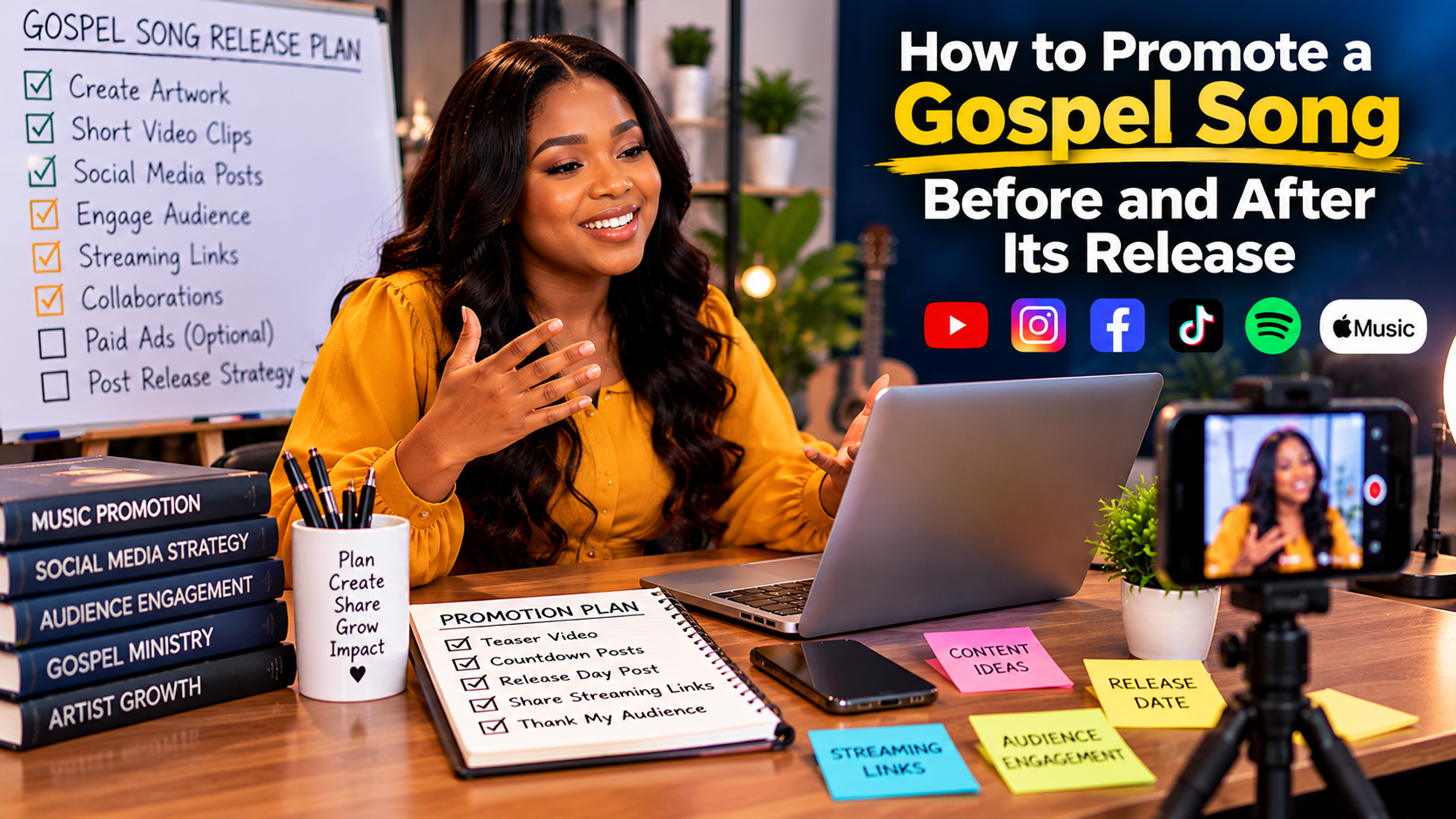
How to Promote a Gospel Song Before and After Its Release
How to Promote a Gospel Song Before and After Its Release
Releasing a new gospel song is an exciting moment for every Christian musician. After investing time in songwriting, recording, mixing, and mastering, you naturally want people to hear the message behind your music.
However, completing a song is only one part of the process. Without a thoughtful promotional plan, even a meaningful gospel song can struggle to reach the people who might benefit from it.
The good news is that independent gospel artists do not need a huge advertising budget to begin promoting their music. With preparation, consistency, and genuine audience engagement, you can create awareness before your release and continue attracting listeners afterwards.
This guide explains how to promote a gospel song before and after its release using practical strategies that independent artists can apply.
1. Start Planning Before the Release Date
One of the most common mistakes artists make is waiting until release day to begin promotion.
A better approach is to start planning several weeks in advance. This gives you enough time to prepare your artwork, promotional videos, song description, streaming links, and social media announcements.
Begin by confirming your release date with your distributor. Allow enough time for the song to be processed and delivered to the intended platforms.
Next, prepare a simple promotional calendar. Decide what you will post each week, which platforms you will use, and how you will encourage people to listen.
Your plan does not have to be complicated. A notebook or spreadsheet can help you organise the most important tasks.
For example, you could spend the first week introducing the song’s message, the second week sharing a short preview, and the final days reminding listeners about the release date.
Planning ahead reduces last-minute pressure and helps you communicate consistently.
2. Explain the Message Behind Your Song
Gospel music carries messages of faith, worship, thanksgiving, hope, repentance, and encouragement. Helping people understand the inspiration behind your song can make your promotion more meaningful.
Before releasing a song, think about the experience, Scripture, or spiritual message that inspired it.
You might share a short video explaining why you wrote the song, what a particular lyric means, or how its message relates to everyday life.
For instance, if your song celebrates God’s faithfulness, you could explain why remembering God’s goodness matters during difficult seasons.
Psalm 96:1 encourages people to sing a new song to the Lord. This verse can serve as an inspiration for musicians who want to use their gifts to express praise and communicate spiritual truth.
Let your promotional content reflect the message of the song rather than relying only on repeated announcements.
When listeners understand the heart behind your music, they have a clearer reason to explore it.
3. Create Short Videos Before Release Day
Short videos can introduce your music to people who have never heard your name before.
You do not need an expensive camera or a professional film crew to begin. A smartphone, clear audio, good lighting, and a simple background can be enough for a useful promotional clip.
Consider creating several different videos from the same song:
- A short preview featuring the chorus.
- A video explaining the meaning of the lyrics.
- A behind-the-scenes clip from the recording session.
- A performance of a memorable section of the song.
- A brief invitation telling viewers when the full song will be released.
Make each video serve a clear purpose. One clip might introduce the song, another might communicate its message, and another might remind viewers about the release date.
Avoid posting exactly the same promotional material every day. Vary the format and message to keep your content interesting.
Always make sure you have the necessary rights to use any background music, video footage, photographs, or other material included in your posts.
4. Use Your Existing Audience First
Your first listeners may already be among your friends, family members, church community, social media followers, and people who have supported your previous songs.
Begin by informing these people about the upcoming release.
Share a clear announcement containing the song title, release date, and a brief explanation of its message. Where appropriate, invite people to follow your artist profiles so they can find the song when it becomes available.
You can also send personal messages to people who have expressed genuine interest in your music.
However, avoid sending repeated unsolicited messages or adding people to promotional groups without their permission. Respectful communication protects relationships and helps people feel comfortable supporting your work.
If a listener shares your announcement or asks a question, respond appreciatively. Genuine interaction can be more valuable than simply counting the number of promotional posts you publish.
5. Prepare Your Streaming Links
Once your song becomes available, make it easy for people to find it.
Check the release on the platforms supported by your distributor. Confirm that the song title, artist name, artwork, and artist profile are correct.
Collect the direct links to the platforms where your song is live. You can place these links on your official website, social media profiles, and promotional posts.
If you use a music-link service, check that it directs listeners to the correct release.
Do not advertise a streaming platform as a destination for your song until the song is actually available there. If a platform has not received the release yet, explain that clearly and share the links that are working.
A simple call to action can help people know what to do next. For example, invite them to listen to the full song, save it to a playlist, or share it with someone who may appreciate its message.
6. Make Release Day Meaningful
Release day is an opportunity to bring your promotional activities together.
Publish an announcement with your song artwork and working streaming links. Share a short clip of the music, explain what you hope listeners will take away from it, and thank those who have supported the process.
You could also organise a short live session where you discuss the inspiration behind the song, answer questions, or perform an acoustic version.
If your church or music community has an appropriate event, you might share the release there with permission from the organisers.
Prepare your materials in advance so you can focus on engaging with listeners rather than trying to create everything at the last minute.
Remember that a successful release day is not measured only by the number of streams received in the first few hours. It is also an opportunity to introduce your music to new people and build lasting connections.
7. Continue Promoting the Song After Release
Some artists stop promoting a song as soon as it becomes available. This can cause them to miss opportunities to reach listeners who did not see the original announcement.
Continue sharing your music after release day, but use different approaches.
For example, during the first week, you could post a lyric video or a short performance. During the second week, explain the story behind the chorus. Later, share a listener response, a rehearsal clip, or a video discussing the song’s central message.
You can also introduce the song to relevant Christian communities and contact appropriate gospel music blogs, radio programmes, or event organisers.
Be professional when contacting media outlets. Provide a short introduction, a brief artist biography, the song link, and any other information requested by the outlet.
Do not assume that every outlet will feature your music. Follow its submission guidelines and respect its editorial decisions.
A song can continue reaching new listeners long after its release date, particularly when you give people fresh reasons to discover it.
8. Collaborate With Other Creators
Working with other people can introduce your song to audiences beyond your existing network.
Consider collaborating with gospel singers, instrumentalists, worship leaders, Christian video creators, or other musicians whose audiences may appreciate your music.
You could record a joint performance, create a lyric discussion, share a short interview, or produce a video exploring the song’s message.
Before collaborating, agree on responsibilities, credits, costs, and how the content will be shared.
Make sure any use of the song is permitted under your distribution arrangements and applicable rights agreements.
Choose collaborations that make sense for your music rather than working with someone simply because they have a large following.
A smaller, relevant audience that genuinely appreciates your message may be more valuable than a large audience with little interest in your music.
9. Use Paid Advertising Carefully
Paid advertising can help you introduce your song to new listeners, but it should not be your first or only promotional strategy.
Before spending money, make sure your song is available, your links work, and your promotional video or artwork communicates the message clearly.
Start with a budget you can afford to lose. Test one advertisement with a clear goal, such as directing interested people to a music page or introducing a short song preview.
Review the results before spending more. Look beyond views and impressions to understand whether people are actually engaging with the content and following through on your intended action.
Avoid borrowing money you cannot comfortably repay or spending essential living expenses on music promotion.
Be especially cautious of companies that promise guaranteed streams, artificial followers, or instant playlist placement. Such promises may be misleading and could expose your music to activity that violates streaming-platform rules.
A modest, well-planned campaign is preferable to expensive advertising without a clear objective.
10. Measure Results and Learn From Each Release
After your promotional campaign, take time to review what happened.
Use available analytics from your streaming platforms, social media accounts, website, and advertising tools.
Ask yourself which posts attracted attention, which videos encouraged meaningful engagement, and where listeners appeared to discover the song.
Record useful information such as the release date, promotional expenses, content published, streaming links, and results.
You may find that a behind-the-scenes video attracts more interest than a standard announcement. Alternatively, a short explanation of the lyrics may encourage more meaningful conversations than a promotional graphic.
Use these observations to improve your next release.
Do not judge the entire value of a song by its first-week performance. Audience growth often takes time, and each release provides an opportunity to learn.
Conclusion
Promoting a gospel song requires preparation before release day and consistent effort afterwards.
By planning ahead, explaining your song’s message, creating short videos, connecting with your existing audience, preparing working streaming links, and continuing to share useful content, you can give your music more opportunities to reach the right listeners.
Independent gospel artists do not need to do everything at once. Begin with a manageable plan, work within your budget, respect your audience, and improve your approach with each release.
Your song may carry a message that someone needs to hear. Thoughtful promotion can help that message travel beyond your immediate community and reach people who might never have discovered it otherwise.

Leave a Reply