
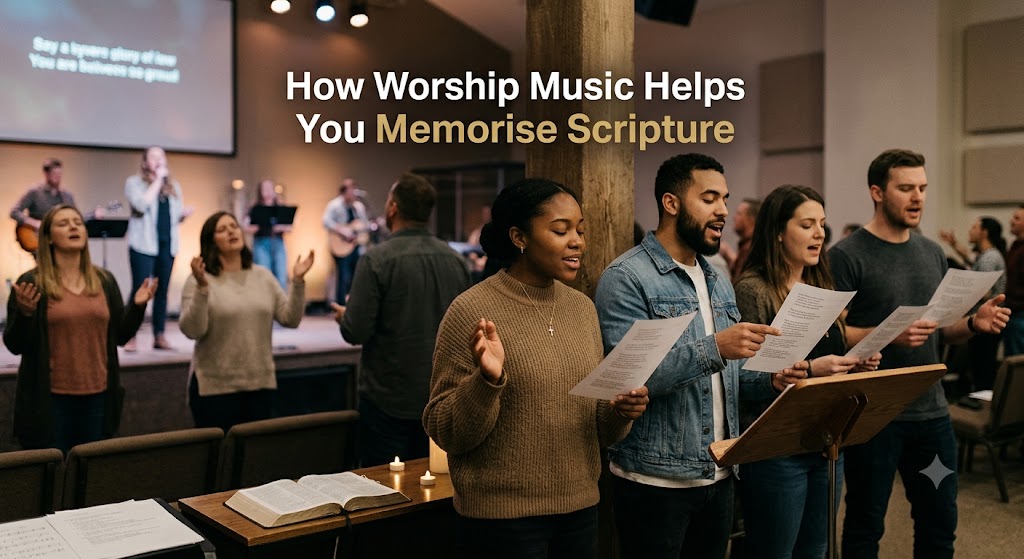
How Worship Music Helps You Memorise Scripture
One of the greatest challenges many Christians face is remembering God’s Word throughout their daily lives. It is one thing to read the Bible during a quiet morning devotion and another to recall specific verses when facing temptation, making important decisions, overcoming fear, or encouraging someone else. While there are many proven ways to commit Scripture to memory, one of the most effective and enjoyable methods is through worship. Understanding how worship music helps you memorise Scripture can transform your relationship with the Bible and deepen your walk with God in ways you may never have imagined. Music has a unique ability to connect words with emotions, rhythm, and repetition, making it easier for the mind to retain information. When biblical truth is woven into beautiful melodies, those verses often become permanently engraved in our hearts and minds.
Throughout history, God’s people have used songs to remember His commands, His promises, and His mighty works. Long before printed Bibles became widely available, believers passed down biblical truths through singing. Worship music became a living reminder of God’s faithfulness, allowing generations to remember His Word even when they did not have access to written Scriptures. This timeless practice continues today as millions of Christians around the world find themselves recalling Bible verses simply because they once heard them sung during a worship service, on the radio, or while listening to their favourite Christian artists.
How worship music helps you memorise Scripture begins with the remarkable way the human brain processes music. Scientists have long observed that melodies improve memory by creating stronger neural connections. Most people can easily remember songs they learned many years ago, even if they have forgotten names, dates, or conversations from the same period. Music activates multiple areas of the brain simultaneously, combining language, emotion, rhythm, and repetition into one unforgettable experience. This is one reason children often learn the alphabet through song instead of ordinary speech. The same principle applies to Scripture. When Bible verses are placed into memorable melodies, they become easier to recall during everyday life.
Another reason how worship music helps you memorise Scripture is through repetition. Worship songs are rarely sung only once. They are repeated during church services, personal devotion, conferences, youth gatherings, prayer meetings, and while driving or working. Every repetition reinforces the biblical message. Over time, the words become familiar without requiring conscious effort. Before long, believers find themselves singing verses from Psalms, Isaiah, Romans, Philippians, or Revelation almost automatically because those passages have become part of songs they love.
The emotional power of worship also strengthens memory. Human beings naturally remember experiences that carry emotional significance. Worship often creates moments of joy, gratitude, peace, repentance, hope, and awe before God. When Scripture is connected with these powerful emotions, it becomes far easier to remember. A verse learned during an ordinary reading session may eventually fade from memory, but the same verse experienced during heartfelt worship can remain vivid for years. This emotional connection makes worship music one of the most effective tools for internalising God’s Word.
The Bible itself contains numerous examples of singing as a way of remembering God’s truth. The Book of Psalms stands as the largest collection of worship songs ever written. These inspired songs taught Israel about God’s holiness, justice, mercy, faithfulness, forgiveness, and covenant promises. They reminded God’s people of historical events such as the Exodus, His provision in the wilderness, His victories over enemies, and His enduring love. Singing these psalms ensured that future generations would remember both God’s acts and His words.
Moses also used music to help Israel remember God’s covenant. After leading the Israelites through the wilderness, he taught them a song that summarised God’s faithfulness and warned against turning away from Him. This song served as a lasting witness for future generations. Rather than relying solely on written instruction, God allowed music to become a vehicle for preserving His truth in the hearts of His people.
King David understood the power of worship better than almost anyone in Scripture. Many of his psalms continue to inspire worshippers thousands of years after they were written. David poured Scripture, prayer, praise, confession, thanksgiving, and prophecy into songs that God’s people could sing together. Through worship, biblical truths became deeply rooted in the spiritual identity of Israel.
The New Testament also encourages believers to teach and encourage one another through songs filled with God’s truth. Worship is not merely an emotional experience or musical performance. It is also a powerful teaching ministry. Every biblically sound worship song becomes an opportunity to reinforce Scripture within the hearts of those who sing it. This explains why many churches carefully select songs that faithfully reflect biblical doctrine rather than simply appealing melodies.
How worship music helps you memorise Scripture becomes especially evident during life’s most difficult moments. Many believers have experienced situations where fear, grief, anxiety, or uncertainty made it difficult to remember specific Bible passages. Yet suddenly a worship song comes to mind, bringing with it the Scripture embedded within its lyrics. The melody becomes the key that unlocks God’s promises at precisely the moment they are needed. This is one reason worship often brings comfort during hospital visits, funerals, personal crises, or seasons of spiritual struggle.
How Worship Music Helps You Memorise Scripture
Children benefit tremendously from Scripture-based worship songs. Young minds absorb information rapidly, especially when learning involves music and movement. Sunday school classes around the world use songs to teach Bible verses because children naturally remember lyrics long after lessons have ended. Many adults can still recall Scripture songs they learned decades earlier because those melodies became permanent memory anchors. Parents who regularly play Scripture-filled worship music at home provide their children with an environment where God’s Word is continually planted in their hearts.
Teenagers and young adults also discover how worship music helps you memorise Scripture while navigating some of life’s most challenging years. Surrounded by countless influences competing for their attention, Christian music offers an opportunity to fill their minds with biblical truth instead of negative messages. Repeated exposure to Scripture-centred worship songs gradually shapes their thinking, attitudes, and decision-making. The verses become readily available whenever they face temptation, peer pressure, discouragement, or uncertainty about the future.
Adults likewise benefit from making worship a regular part of daily life. Busy schedules often leave little time for lengthy Bible study sessions, yet worship music can accompany believers almost anywhere. Whether commuting to work, exercising, cooking dinner, cleaning the house, or travelling, Christians can continue absorbing biblical truth through songs rooted in Scripture. These ordinary moments become opportunities for spiritual growth as God’s Word is quietly reinforced throughout the day.
The effectiveness of worship music depends greatly upon the quality of its biblical content. While many contemporary Christian songs contain inspiring messages, believers should intentionally seek worship music that accurately reflects Scripture rather than relying solely on emotional language. Songs directly quoting Bible passages or closely paraphrasing them often provide the greatest benefit for memorisation. As believers sing these songs repeatedly, they are not merely learning lyrics but committing God’s actual Word to memory.
Combining Bible reading with worship music produces even stronger results. Reading a passage before listening to a song based on that same Scripture creates multiple pathways for memory formation. The eyes see the words, the ears hear the melody, the mouth sings the lyrics, and the heart connects emotionally with God’s truth. This combination strengthens long-term retention far more effectively than relying on a single learning method.
Another important aspect of how worship music helps you memorise Scripture is meditation. Worship naturally slows the mind and encourages reflection. Rather than rushing through Bible verses, believers often linger on repeated phrases during songs, allowing their meaning to sink deeply into the heart. This extended focus transforms memorisation from mere intellectual exercise into genuine spiritual formation. God’s Word begins not only to inform the mind but also to shape character, attitudes, and priorities.
Corporate worship offers additional benefits for Scripture memorisation. Singing together with fellow believers reinforces both memory and unity. Hearing hundreds of voices proclaim biblical truth creates a powerful shared experience that strengthens learning. Church congregations often discover that favourite worship songs become part of their collective spiritual identity, carrying Scripture from one generation to another.
Personal worship also provides unique opportunities for memorising Scripture. Quiet moments alone with God allow believers to sing without distraction, reflect upon the lyrics, and pray through the verses they are learning. These personal encounters often produce lasting spiritual transformation because the Scriptures move beyond memorisation into heartfelt conversation with God.
Technology has made Scripture-centred worship more accessible than ever before. Christians can now listen to worship music through streaming services, mobile applications, online radio stations, podcasts, and video platforms. This constant availability allows believers to immerse themselves in biblical truth throughout the day. Instead of allowing negative media to dominate their thoughts, they can intentionally fill their minds with songs that continually reinforce God’s Word.
Many worship leaders intentionally compose songs around entire passages of Scripture rather than isolated phrases. This approach enables believers to memorise larger sections of the Bible without realising how much they are learning. Entire psalms, prophetic promises, gospel teachings, and apostolic prayers become familiar through repeated singing. Over time, worshippers develop greater confidence in recalling these passages during personal study, ministry, and evangelism.
How worship music helps you memorise Scripture also contributes to spiritual resilience. Jesus responded to temptation by quoting Scripture. Likewise, believers today are strengthened when God’s Word is readily available in their minds. Worship songs filled with biblical truth prepare Christians to face spiritual battles with confidence because the verses emerge naturally when needed. Instead of relying solely on personal feelings, they respond according to God’s revealed truth.
Missionaries throughout history have recognised the value of teaching Scripture through song. In communities with limited literacy, worship music often becomes one of the primary methods for sharing and preserving biblical truth. New believers quickly learn foundational doctrines by singing together, allowing Scripture to spread even where written materials remain scarce. This demonstrates once again that music serves not merely as artistic expression but as a powerful educational tool within God’s Kingdom.
The benefits extend beyond memorisation alone. As Scripture becomes embedded through worship, it begins influencing everyday conversations, prayers, decisions, relationships, and attitudes. Believers who regularly sing God’s Word often discover themselves naturally speaking biblical truth to others because those verses have become deeply rooted within them. What begins as a simple melody gradually shapes an entire lifestyle centred upon God’s truth.
Families can intentionally use worship music to strengthen Scripture memorisation together. Playing biblically rich songs during meals, family devotions, car journeys, or evening routines creates a home environment saturated with God’s Word. Parents may be surprised to hear young children singing Bible verses without prompting simply because they have heard them consistently through worship. These shared experiences create lasting spiritual memories that often remain throughout life.
Churches also have an important responsibility to choose songs that faithfully communicate Scripture. Worship should never sacrifice biblical truth for popularity or entertainment. Every lyric carries teaching influence, shaping the beliefs of those who sing it. By prioritising songs grounded in God’s Word, churches help congregations memorise Scripture while simultaneously protecting sound doctrine.
Some believers struggle with traditional memorisation techniques involving flashcards, written repetition, or structured recitation. For these individuals, worship music offers an alternative approach that feels natural and enjoyable. Instead of viewing memorisation as difficult or burdensome, they experience it as an act of joyful worship. Learning Scripture becomes something they eagerly anticipate rather than reluctantly endure.
How worship music helps you memorise Scripture ultimately points to a greater purpose than simply recalling verses accurately. God’s desire is not merely that His people know His Word intellectually but that they live according to it daily. Worship creates an environment where Scripture moves from the page into the heart, from memory into practice, and from knowledge into transformation. As believers repeatedly sing God’s truth, they gradually become shaped by the very words they proclaim.
Every melody rooted in Scripture becomes another opportunity for the Holy Spirit to remind believers of God’s promises, commands, comfort, and faithfulness. Whether during seasons of celebration or moments of suffering, worship songs continue speaking truth long after the music has ended. They become faithful companions throughout life’s journey, carrying God’s Word into the deepest places of the human heart.
If you desire to strengthen your knowledge of the Bible, do

Leave a Reply