
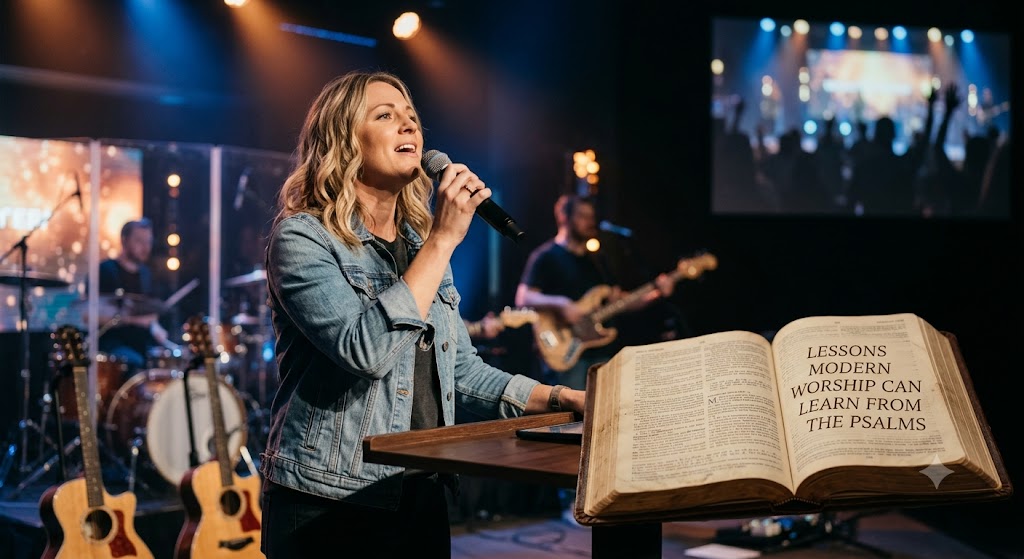
Lessons Modern Worship Can Learn from the Psalms
The book of Psalms has remained one of the most treasured portions of the Bible for thousands of years. Long before modern instruments, worship bands, sound systems, live streaming, and digital playlists existed, God’s people poured out their hearts through songs that reflected every human emotion imaginable. The Psalms reveal joy, sorrow, victory, repentance, gratitude, fear, hope, trust, celebration, and unwavering faith. They remind believers that true worship is not built upon musical trends or impressive performances but upon a sincere relationship with God. As churches around the world continue to embrace contemporary styles and creative expressions of praise, there are timeless principles found in Scripture that should never be overlooked. Lessons Modern Worship Can Learn from the Psalms is not simply an interesting topic for discussion but a necessary reflection for every worship leader, musician, songwriter, pastor, and believer who desires to honour God in spirit and in truth.
Modern worship has experienced tremendous growth over the past few decades. Churches now produce albums, organise worship conferences, release original songs, and reach millions of people through online platforms. Christian music has become one of the fastest-growing genres globally, influencing believers from different cultures and backgrounds. While this expansion has created incredible opportunities to spread the Gospel, it has also introduced new challenges. It is possible for worship to become more focused on production than devotion, more centred on personalities than on Christ, or more concerned with applause than genuine surrender. This is precisely why returning to the Psalms provides wisdom that remains as relevant today as it was centuries ago.
One of the greatest lessons modern worship can learn from the Psalms is the importance of honesty before God. The writers of the Psalms never pretended that life was always easy. David, Asaph, the sons of Korah, and other contributors openly expressed disappointment, fear, loneliness, confusion, grief, and even moments when they struggled to understand God’s ways. Yet they consistently directed those emotions toward God instead of away from Him. This teaches modern believers that worship does not require pretending everything is perfect. Authentic worship begins when people bring their real hearts before the Lord. Churches that encourage genuine expressions of faith often create environments where people experience healing because they realise they do not have to hide their struggles from God.
Another important truth found throughout the Psalms is that worship should always focus on God’s character rather than human emotions alone. While feelings naturally play a role in worship, the Psalms repeatedly point believers back to who God is. He is holy, righteous, faithful, compassionate, merciful, sovereign, loving, and eternal. Even when circumstances appeared hopeless, the psalmists reminded themselves of God’s unchanging nature. Modern worship songs become stronger when they emphasise God’s attributes instead of simply describing human experiences. Songs that magnify God’s greatness often remain meaningful across generations because His character never changes.
Lessons Modern Worship Can Learn from the Psalms also include understanding that worship is deeply rooted in Scripture. Many of today’s worship songs contain beautiful melodies and inspiring lyrics, but their lasting impact depends upon biblical truth. The Psalms consistently proclaim God’s promises, His laws, His covenant, His faithfulness, and His mighty works throughout history. Worship that is grounded in Scripture strengthens believers because it builds faith upon eternal truth instead of temporary emotions. Churches benefit greatly when songs echo biblical language and encourage believers to meditate on God’s Word long after the music has ended.
Humility is another lesson that echoes throughout the Psalms. Although David became one of Israel’s greatest kings, he repeatedly acknowledged his dependence upon God. He recognised that victories came from the Lord rather than personal ability. His prayers reflected a heart that understood the greatness of God and the limitations of humanity. Modern worship leaders can learn that influence should never replace humility. Regardless of musical talent, vocal ability, or public recognition, worship remains an act of surrender. The platform should never become greater than the presence of God.
The Psalms also demonstrate that worship includes thanksgiving. Again and again, believers are encouraged to remember God’s goodness and give thanks for His blessings. Gratitude shifts attention away from personal problems and toward God’s faithfulness. Modern worship often includes songs of celebration, but the Psalms reveal that thanksgiving should become a daily habit rather than an occasional event. Christians who continually remember God’s past faithfulness develop stronger confidence for future challenges. Gratitude fuels hope because it reminds believers that the God who has helped before will remain faithful again.
Another valuable principle is that worship should involve the whole person. The Psalms speak of lifting hands, singing loudly, bowing down, clapping, dancing, shouting for joy, meditating quietly, and waiting patiently before the Lord. Worship was never limited to one expression. Different personalities, cultures, and situations produced different responses to God’s presence. Modern churches sometimes debate preferred worship styles, but the Psalms reveal that sincere worship can take many forms as long as God remains the centre. This encourages unity rather than unnecessary division over musical preferences.
The theme of remembrance appears repeatedly throughout the Psalms. God’s people were constantly reminded to recall His miracles, His deliverance, His covenant, and His faithfulness across generations. Modern worship can become richer when songs tell the story of God’s work instead of focusing exclusively on present experiences. Remembering what God has done builds confidence in what He will continue to do. Worship becomes an opportunity to pass faith from one generation to another by celebrating God’s unchanging character.
Lessons Modern Worship Can Learn from the Psalms also reveal the importance of repentance. Some of the most powerful Psalms were written after moments of personal failure. Psalm 51, for example, demonstrates genuine sorrow for sin alongside complete confidence in God’s mercy. True worship cannot exist without a heart that is willing to confess wrongdoing. While celebration is important, worship should also create space for conviction, restoration, and renewed commitment to holy living. God’s grace becomes even more beautiful when believers recognise their need for forgiveness.
The Psalms consistently point toward God’s sovereignty. Whether facing enemies, natural disasters, political instability, or personal suffering, the writers repeatedly declared that God remained on His throne. This perspective is especially valuable in today’s uncertain world. Modern worship should continually remind believers that circumstances may change, but God’s authority never changes. Songs that declare God’s reign strengthen faith during difficult seasons because they shift attention from temporary problems to eternal hope.
Community worship also receives significant emphasis throughout the Psalms. Many passages invite the entire congregation to praise together. Worship was never intended to become an isolated activity reserved for individuals alone. Corporate worship unites believers around a shared declaration of God’s greatness. Modern churches benefit when worship encourages participation rather than passive observation. Congregational singing reminds everyone that faith is strengthened within the community of believers.
The Psalms also teach patience. Many prayers were written while answers had not yet arrived. David often cried out to God during seasons of waiting, yet he continued trusting God’s timing. Modern worship sometimes celebrates immediate breakthroughs, but Scripture reminds believers that faithful waiting is also an act of worship. Singing about trust during unanswered prayers often ministers deeply to those walking through prolonged challenges. Worship should encourage perseverance rather than suggesting that faith always produces instant results.
Another remarkable lesson involves creativity. The Psalms contain poetry, parallelism, vivid imagery, storytelling, prophetic language, historical reflection, celebration, lament, and personal testimony. God clearly delights in creative expressions that communicate eternal truth. Modern worship musicians and songwriters can embrace creativity while remaining faithful to Scripture. Excellence in music and artistic expression becomes meaningful when it points listeners toward Christ rather than drawing attention solely to artistic achievement.
Lessons Modern Worship Can Learn from the Psalms also highlight the importance of declaring God’s works to future generations. Many Psalms intentionally recount Israel’s history so children and grandchildren would remember God’s faithfulness. Modern worship should likewise preserve biblical truth for generations yet unborn. Songs that clearly proclaim the Gospel help parents teach their children while strengthening the church’s spiritual heritage. Worship becomes an investment in future discipleship.
Hope is another recurring theme woven throughout the Psalms. Even in moments of despair, the writers often concluded by expressing confidence that God would remain faithful. This movement from sorrow to hope reflects mature faith. Modern worship should never ignore life’s hardships, but neither should it leave believers without encouragement. Christian worship ultimately points toward God’s promises, Christ’s victory, and the certainty of eternal life. Hope transforms worship from emotional expression into confident expectation.
The Psalms repeatedly celebrate God’s creation as evidence of His glory. Mountains, rivers, stars, oceans, animals, seasons, and the heavens all testify to God’s majesty. Modern worship can rediscover the beauty of recognising God’s fingerprints throughout creation. Praising God for His handiwork cultivates gratitude, wonder, and reverence while reminding believers that the Creator remains actively involved in His world.
Another essential lesson concerns dependence upon prayer. Many Psalms are actually prayers set to music. Worship and prayer were never separated. Songs became conversations with God rather than performances for audiences. Modern worship flourishes when musicians prepare their hearts through prayer before leading others. Churches experience greater spiritual depth when worship grows naturally from personal communion with God throughout the week instead of depending solely upon rehearsals and musical preparation.
The Psalms also remind believers that worship belongs to God regardless of circumstances. Some Psalms were written during military victories, while others emerged from caves, exile, betrayal, sickness, or persecution. This teaches that worship is not dependent upon favourable conditions. Christians today continue to face personal struggles, economic uncertainty, family difficulties, and health challenges, yet the invitation to worship remains constant. Praising God in difficult seasons demonstrates trust that extends beyond visible circumstances.
Lessons Modern Worship Can Learn from the Psalms
Another lesson modern worship can embrace is the balance between reverence and joy. The Psalms celebrate joyful praise while simultaneously acknowledging God’s holiness. Worship is both joyful and reverent because believers approach a loving Father who is also the sovereign King of the universe. Maintaining this balance helps churches avoid reducing worship either to entertainment or to lifeless ritual. Genuine worship reflects both celebration and awe.
The Psalms consistently direct praise toward God’s saving acts. For Christians, this naturally points to Jesus Christ, whose death and resurrection fulfilled God’s plan of redemption. Modern worship reaches its highest purpose when it continually points people toward the Gospel. Every song, every melody, every lyric, and every act of praise finds its deepest meaning in Christ. Worship that exalts Jesus above every other subject remains spiritually fruitful regardless of changing musical trends.
Lessons Modern Worship Can Learn from the Psalms also remind believers that worship extends beyond music. Although the Psalms are songs, they consistently connect praise with obedience, righteousness, justice, compassion, and faithful living. Singing beautiful words without living according to God’s commands creates inconsistency between worship and daily life. True worship continues after the final song ends because it shapes attitudes, decisions, relationships, and character throughout the week.
The Psalms encourage believers to seek God continually. Worship was never presented as something limited to one day each week. Instead, the writers spoke of meditating on God’s Word day and night, praising Him continually, and remembering His goodness at all times. Modern Christians benefit greatly when worship becomes a daily rhythm rather than a weekly routine. Personal devotion strengthens corporate worship because hearts already connected with God naturally overflow in praise.
Another enduring lesson involves confidence in God’s promises. Throughout the Psalms, believers repeatedly declared trust in God’s unfailing love and covenant faithfulness. Even when visible evidence seemed absent, they chose to believe God’s Word. Modern worship should continue proclaiming biblical promises that strengthen faith and encourage perseverance. Songs filled with scriptural hope become powerful reminders that God’s promises remain trustworthy across every generation.
The Psalms also reveal that worship often grows through life’s greatest trials. Many of the most beloved passages were born from seasons of pain rather than comfort. This demonstrates that suffering does not prevent worship but can deepen it. Believers frequently discover God’s presence most profoundly when earthly security disappears. Modern worship that acknowledges this reality becomes more authentic and more comforting to those facing difficult circumstances.
Ultimately, Lessons Modern Worship Can Learn from the Psalms reminds every believer that true worship begins with the heart. Technology will continue to advance, musical styles will evolve, and churches will adopt new methods of reaching people, but the foundational principles of worship remain unchanged. God still desires hearts that are humble, grateful, obedient, truthful, and fully devoted to Him. The Psalms continue to serve as an inspired guide that teaches believers how to worship with sincerity, biblical truth, reverence, joy, hope, repentance, thanksgiving, and unwavering faith. Every generation has the opportunity to sing new songs to the Lord, yet those songs become most powerful when they reflect the timeless wisdom found in the Psalms. As modern worship continues to influence millions around the world, returning to these inspired songs of Scripture ensures that praise remains centred on God alone. When churches, worship leaders, musicians, and individual believers embrace these timeless truths, they discover that the ancient words of the Psalms still have the power to shape vibrant worship that glorifies God, strengthens the Church, proclaims the Gospel, and leaves a lasting spiritual legacy for generations to come.

Leave a Reply