
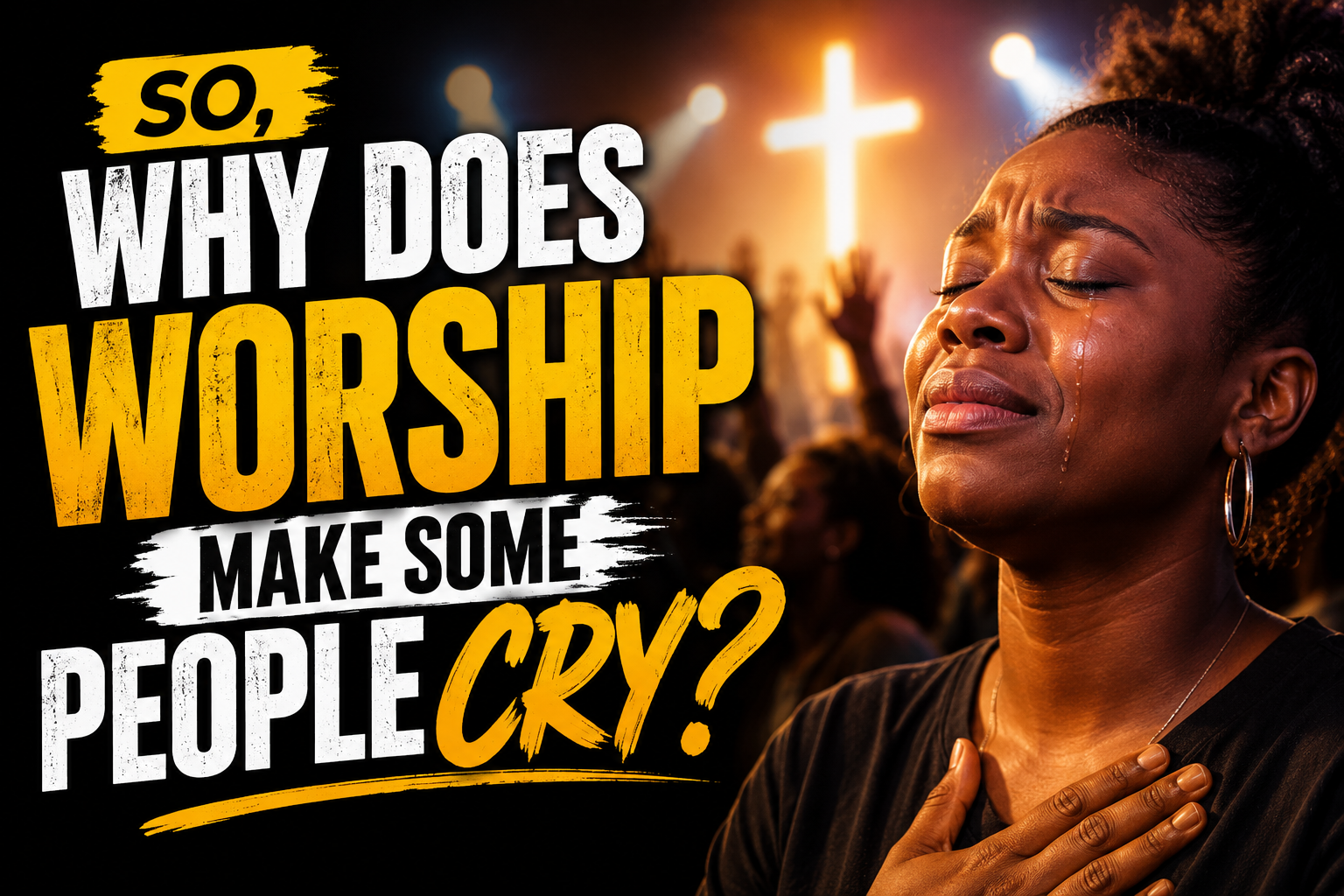
So, Why Does Worship Make Some People Cry?
There are moments in worship when a song begins, a voice rises, and tears suddenly appear without warning. Some people wipe their eyes quietly while others weep openly. To an observer, it may seem unusual. Why would music, prayer, or a church gathering cause such a strong emotional reaction? The question Why Does Worship Make Some People Cry? is one that many believers and even nonbelievers ask after witnessing tears during worship. The answer is deeper than simple emotion. Worship has a unique way of touching the human heart, awakening memories, stirring spiritual awareness, and creating a sense of connection with God that words alone often cannot express.
Why Does Worship Make Some People Cry? The first reason is that worship reaches parts of the heart that daily life often keeps hidden. People carry burdens, disappointments, fears, regrets, and unanswered questions. Many spend their week trying to appear strong. When worship begins, the atmosphere changes. The focus shifts away from performance, deadlines, and pressure. In that moment, a person may finally feel safe enough to release what has been held inside. Tears become a natural response to emotional release.
Music itself is powerful. Scientists have long observed that music affects the brain, emotions, and even the body. A melody can bring back childhood memories, remind someone of a loved one, or create a feeling of peace. Worship music adds another layer because it combines music with spiritual meaning. The words often speak about love, forgiveness, hope, grace, and God’s presence. When someone hears truths that deeply relate to their personal struggles, tears may come unexpectedly.
For many believers, worship is not merely singing songs. It is an encounter with God. When a person senses God’s love, mercy, or nearness, the emotional impact can be overwhelming. Someone who feels unworthy may suddenly realize they are loved. Someone carrying guilt may feel forgiven. Someone who has been lonely may feel seen and known. These experiences can produce tears of gratitude, relief, and joy.
Why Does Worship Make Some People Cry? Sometimes the tears come from conviction rather than comfort. Worship often draws attention to the condition of the heart. Lyrics about holiness, surrender, or faithfulness may cause a person to reflect on areas where they have drifted from God. This realization can lead to repentance. Tears in these moments are not necessarily tears of sadness. They may be tears of humility and a desire to return to God.
Another reason worship causes tears is that it creates a sense of unity. In a worship gathering, people from different backgrounds sing the same words together. A person who has felt isolated may suddenly realize they are not alone. Hearing hundreds of voices declare hope and faith can be deeply moving. The human heart longs for connection, and worship often provides that connection in a powerful way.
Past experiences also play a role. A particular worship song may have been playing during a significant moment in someone’s life. It may remind them of a difficult season when they prayed for help, a time when they experienced healing, or the memory of a loved one who shared their faith. When that song is heard again, emotions connected to those memories can return with great intensity.
Why Does Worship Make Some People Cry? Because worship gives people permission to feel. In many environments, emotional expression is discouraged. People are told to move on, stay strong, or hide their feelings. During worship, emotions are often welcomed rather than judged. Whether the tears come from joy, sorrow, gratitude, repentance, or longing, worship creates space for honest expression before God.
There are also physical factors involved. Strong emotions can trigger tears through the body’s natural response system. When a person experiences awe, relief, compassion, or deep affection, the nervous system reacts. Worship can combine several of these emotions at once. A believer may feel awe at God’s greatness, relief from carrying burdens, gratitude for blessings, and hope for the future all within a few minutes. The body responds accordingly.
Many people describe worship tears as different from ordinary crying. They may not even know exactly why they are crying. Instead of feeling overwhelmed by despair, they often feel lighter afterward. This is one reason the question Why Does Worship Make Some People Cry? continues to fascinate people. The tears are frequently accompanied by peace, clarity, or renewed faith.
So, Why Does Worship Make Some People Cry?
In the Bible, emotional responses to God’s presence are common. People fell to their knees, trembled, rejoiced loudly, and wept. King David danced before the Lord. Mary wept at Jesus’ feet. Peter wept after recognizing his failure. The Psalms are filled with honest emotion, ranging from sorrow to overflowing joy. Scripture does not present worship as a cold or purely intellectual activity. It often involves the whole person, including the emotions.
Some people worry that crying in worship means they are emotionally weak. In reality, tears can be a sign of sincerity. They show that the heart is engaged. Not everyone expresses worship the same way. Some people cry, some become quiet, some smile, some raise their hands, and some simply reflect deeply. The absence of tears does not mean the absence of worship, and the presence of tears does not automatically make someone more spiritual. Tears are one possible response among many.
Why Does Worship Make Some People Cry? Another important reason is the experience of surrender. Many people spend much of life trying to stay in control. Worship invites surrender. Lyrics such as “I trust You,” “I need You,” or “I give You my life” can touch areas where a person has been holding tightly to fear or anxiety. Letting go emotionally and spiritually can produce tears.
There are also moments when worship brings hope to someone who has been struggling for a long time. Imagine a person dealing with illness, financial hardship, grief, or disappointment. They enter a worship service feeling exhausted. Then they hear words declaring that God is faithful and present. Even if their circumstances have not changed, hope begins to rise. The contrast between despair and renewed hope can be powerful enough to bring tears.
Worship tears are not always connected to pain. Some of the deepest tears come from joy. A person may be overwhelmed by gratitude for prayers that were answered, protection they received, family restored, or simply the realization that they are alive and loved. Joy can be just as tearful as sorrow.
Another fascinating aspect of the question Why Does Worship Make Some People Cry? is that tears often appear during moments of awe. When people contemplate the greatness of God, the beauty of creation, or the wonder of grace, they may experience what psychologists call a transcendent emotion. This feeling is bigger than ordinary happiness. It creates a sense of being connected to something eternal and magnificent. Tears are a common human response to awe.
Church leaders and worship musicians frequently witness this phenomenon. A simple song with a sincere message can move an entire congregation. Interestingly, it is not always the most complex music that produces the strongest reaction. Often, the songs that speak clearly about God’s love, faithfulness, and mercy touch people most deeply because they connect with universal human needs.
Cultural background can influence how people express emotion in worship, but the experience itself is found across the world. In different countries, languages, and church traditions, people report similar moments of tears during worship. This suggests that the experience touches something fundamentally human.
Why Does Worship Make Some People Cry? Because worship reminds people that they were made for more than survival. Daily life can become repetitive and stressful. Worship lifts the eyes beyond immediate problems and points toward meaning, purpose, and eternity. When a person who has been carrying the weight of life suddenly senses that their story matters to God, emotions can overflow.
It is also worth noting that some people cry in worship during seasons of healing. Emotional wounds are not always healed instantly. Sometimes worship becomes part of a gradual process. A song about God’s faithfulness may touch a wound that has been ignored for years. Tears can be the beginning of healing rather than the sign of a problem.
Parents often cry during worship while thinking about their children. Couples may cry while remembering difficult seasons they survived together. Older believers may cry as they reflect on decades of God’s faithfulness. Young believers may cry because they are experiencing God’s presence in a new way. The same worship song can carry different meanings for different people.
Some skeptics argue that worship tears are simply emotional manipulation. While emotions can certainly be influenced by music and atmosphere, this explanation does not fully account for the experience many people describe. Worship tears often occur unexpectedly, even during quiet moments without dramatic music. They may happen alone at home, while listening to a simple hymn, or during personal prayer. For many believers, the tears are connected to a genuine sense of God’s presence rather than external pressure.
Why Does Worship Make Some People Cry? Because worship touches identity. Many people secretly wonder whether they are enough, whether they are loved, and whether their lives have purpose. Worship speaks directly to these questions. Hearing that God knows them, values them, and calls them His own can reach the deepest parts of the human heart.
There is also a mystery to worship that cannot be completely explained. Human beings are emotional, physical, and spiritual creatures. Worship engages all three dimensions. The mind reflects on truth, the body responds through singing and posture, and the spirit reaches toward God. When these dimensions align, the experience can be profoundly moving.
Interestingly, people sometimes cry during worship even when they entered the service feeling emotionally numb. They may have been unable to cry about personal problems, yet worship unlocks emotions that seemed buried. This is one reason pastors and counselors often recognize worship as a meaningful part of spiritual and emotional health.
The question Why Does Worship Make Some People Cry? ultimately points to the depth of the human heart. Tears during worship can arise from pain, joy, gratitude, repentance, awe, hope, surrender, healing, memory, connection, or the sensed presence of God. Often, several of these reasons are happening at the same time. A person may be grieving a loss while also feeling comforted by God’s love. They may be remembering past failures while also receiving forgiveness. The mixture of emotions becomes too deep for words, and tears speak where words cannot.
For those who have never experienced it, worship tears may seem strange. For those who have, they are often remembered as moments of unusual honesty and closeness to God. Whether the tears are quiet or overwhelming, they remind us that worship is not merely a performance or a routine. It is a meeting place where truth, emotion, memory, hope, and faith come together.
So, Why Does Worship Make Some People Cry? Because worship has the power to reach the hidden places of the heart. It can awaken gratitude, expose pain, inspire hope, bring healing, and create a sense of being deeply loved by God. In a world where many people spend their days holding everything together, worship offers a moment where the heart can finally let go. Sometimes that release comes through words, sometimes through silence, and very often through tears.

Leave a Reply