
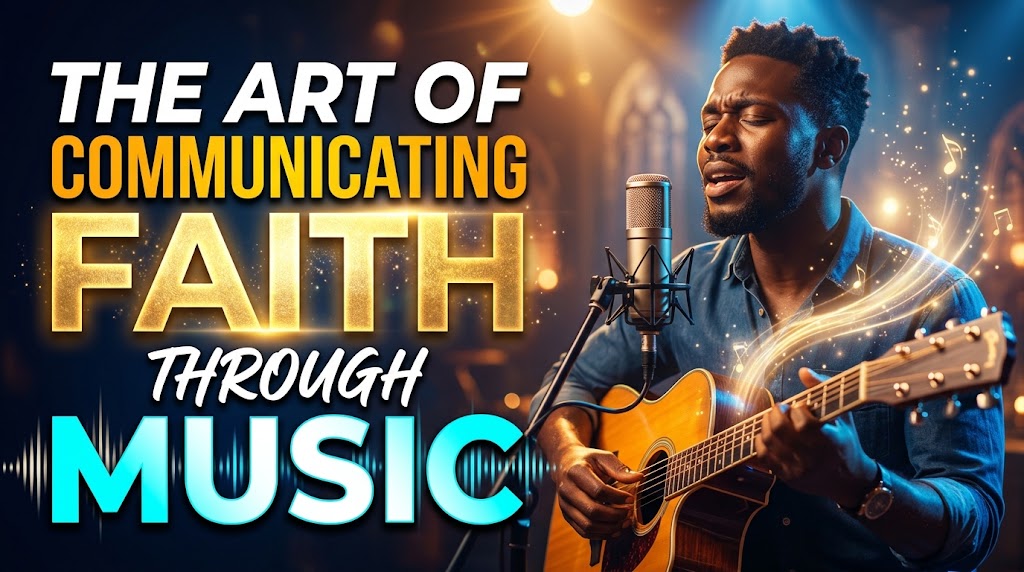
The Art of Communicating Faith Through Music
The Art of Communicating Faith Through Music
Music has a remarkable ability to communicate what ordinary words sometimes struggle to express. A melody can awaken a memory, a voice can carry emotion, and a carefully written lyric can place a message deep within the heart. For Christians, music has an even greater significance because it can become a powerful vehicle for expressing faith, proclaiming biblical truth, encouraging believers and pointing people towards God. This is where the art of communicating faith through music becomes so important.
The art of communicating faith through music is not simply about writing religious lyrics or adding Christian references to a song. It is about combining meaningful words, memorable melodies, emotional expression and genuine conviction to communicate a message of faith in a way that people can understand and remember. Christian music can tell stories of grace, describe seasons of struggle, celebrate God’s faithfulness, express gratitude and give hope to people who may be walking through difficult circumstances.
Throughout Christian history, music has played an important role in worship and spiritual expression. The Bible itself contains numerous examples of songs, psalms and musical expressions of faith. The Book of Psalms demonstrates how music can communicate an extraordinary range of human emotions while remaining centred on God. There are songs of praise, songs of thanksgiving, songs of repentance, songs of lament and songs expressing confidence in God’s promises. This demonstrates that communicating faith through music does not require pretending that life is always perfect. Authentic Christian music can acknowledge pain while still holding on to hope.
One of the most powerful aspects of the art of communicating faith through music is its ability to make biblical truths memorable. People may forget a paragraph they read several days ago, but a melody can remain in their minds for years. A powerful Christian song can take a message about God’s love, forgiveness, mercy, salvation or faithfulness and present it in a form that can be remembered and repeated. This makes music particularly valuable in Christian communities, where songs can help reinforce truths that believers encounter through preaching, Bible study and personal devotion.
The message, however, remains central. A beautiful melody may attract attention, but meaningful communication requires something worthwhile to say. Christian songwriters therefore have an important responsibility to think carefully about the message behind their music. A song can be emotionally powerful while still being unclear about its central idea. Strong Christian music brings together creativity and substance. It gives listeners something they can feel while also giving them something they can understand and reflect upon.
This is why Scripture can provide such a strong foundation for Christian songwriting. Biblical stories, principles and promises offer countless subjects for songs. A songwriter can explore themes such as redemption, grace, prayer, forgiveness, perseverance, trust, gratitude, obedience, hope and the character of God. Scripture can inspire lyrics that are both poetic and grounded in Christian truth. When biblical ideas are communicated creatively, listeners may encounter familiar truths from a fresh perspective.
The art of communicating faith through music also involves understanding the audience. A song written for a congregation may serve a different purpose from a song intended for personal listening. A worship song designed for collective singing needs lyrics that people can easily follow and melodies that a congregation can comfortably sing. A personal gospel song may have greater freedom to explore a detailed testimony or a complicated emotional journey. Music created for younger audiences may use different production techniques and musical influences while still communicating a sincere Christian message.
This does not mean Christian music has to sound a certain way. Faith can be communicated through many musical styles. Gospel, contemporary worship, Christian hip hop, Afro Gospel, Christian rock, hymns, soul, pop and other forms of music can all carry messages of faith. Musical diversity can allow Christian artists to reach different communities and generations. The important question is not simply what genre a song belongs to, but whether the music communicates its intended message effectively and authentically.
Emotion is another important part of communicating faith through music. Human beings respond strongly to sound because music can create emotional connections that ordinary speech does not always produce. A song about God’s faithfulness can create a sense of gratitude. A song about overcoming adversity can encourage someone who is struggling. A song about forgiveness can help someone reflect on their own experiences. A worship song can create an atmosphere in which listeners pause from the distractions of everyday life and focus their attention on God.
Authenticity makes that communication even stronger. Listeners can often connect with songs that feel honest because real experiences give lyrics depth. A Christian artist who has experienced disappointment, uncertainty, loss, restoration or personal growth may be able to communicate those experiences in ways that resonate deeply with others. Testimony is powerful because it reminds listeners that faith is not merely an abstract idea. It can be lived, challenged, questioned, strengthened and expressed through real human experiences.
This is one reason testimony driven gospel music continues to connect with audiences. When an artist sings about what they have experienced, listeners may recognise parts of their own stories. Someone who has experienced a difficult season may hear a song about perseverance and realise they are not alone. Someone who feels discouraged may encounter a lyric that reminds them to keep believing. Someone celebrating a personal breakthrough may find a song that gives language to their gratitude.
The art of communicating faith through music also requires careful attention to lyrics. Good Christian songwriting does not necessarily mean using complicated words. In many cases, simple language can communicate a powerful idea more effectively. A memorable line that expresses a clear truth can remain with a listener long after the song has ended. Clarity is especially important when a song is intended to introduce Christian ideas to people who may not have a strong background in the faith.
Storytelling is another powerful tool. Some of the most memorable songs communicate faith through a journey. The songwriter may begin with a problem, describe a season of uncertainty and eventually arrive at hope, restoration or renewed trust in God. This structure allows listeners to follow an emotional narrative. Rather than simply telling people what to believe, the song invites them into a story.
Christian music can also communicate faith by asking meaningful questions. Not every faith based song needs to provide an immediate answer. A song can explore questions about suffering, purpose, waiting, doubt, forgiveness and the future while ultimately directing the listener towards reflection and faith. Honest questions can make Christian music feel more relatable because many believers experience seasons when they are searching for understanding.
Another important element is melody. The art of communicating faith through music is not limited to lyrics because the melody itself contributes to the emotional meaning of a song. A gentle melody may support a reflective message, while a powerful arrangement may reinforce a celebration of victory or praise. Rhythm, harmony, instrumentation and vocal delivery can all influence how listeners experience the message.
Production has also become an important part of modern Christian music. Technology has made it possible for independent artists to create and distribute music to audiences around the world. A Christian musician no longer necessarily needs access to a major record label before sharing a song with listeners. Digital platforms, social media and music streaming services have created new opportunities for gospel artists to reach people across geographical boundaries.
This digital transformation has expanded the possibilities for communicating faith through music. A song recorded by an independent artist in Africa can be discovered by listeners in Europe, North America or other parts of the world. A worship performance can reach people who were not physically present in the church. A short video featuring a powerful Christian song can introduce an artist to an entirely new audience. Technology has therefore become another instrument through which faith can travel.
For Christian musicians, this opportunity also brings responsibility. The ability to reach large audiences means artists should think carefully about what they are communicating. The pursuit of streams, views and popularity can sometimes compete with the original purpose of creating faith based music. While professional production and audience growth are important aspects of the modern music industry, the message should not become an afterthought.
Christian artists can pursue excellence without losing authenticity. Excellence means taking songwriting, musicianship, recording, visual presentation and promotion seriously. Authenticity means ensuring that these elements serve a genuine message rather than replacing it. When creativity and conviction work together, Christian music can become both professionally produced and spiritually meaningful.
The role of the Christian music blogger is also significant in this process. Music blogs can introduce listeners to emerging artists, explain the stories behind songs, review new releases and create conversations around Christian music. A well written article can give an artist’s song additional context and help readers discover music that might otherwise remain unknown. Christian music websites therefore have an opportunity to contribute to the wider ecosystem of gospel music.
For emerging gospel artists, communicating faith effectively requires more than possessing a good singing voice. They need to understand their message, audience and identity. They need to develop songwriting skills and learn how to communicate their experiences honestly. They also need to understand how modern listeners discover music. Social media, music streaming platforms, websites and online communities can all become valuable channels for sharing their work.
At the heart of everything, however, is purpose. Why was the song written? What does the artist want the listener to remember? What emotion should the song create? What truth does it communicate? These questions can help an artist move beyond simply creating music towards creating music with meaning.
The art of communicating faith through music can also bring generations together. Older Christians may connect with hymns and traditional gospel songs that shaped their faith, while younger listeners may connect with contemporary sounds and modern production. Rather than viewing these approaches as enemies, Christian music can create opportunities for different generations to learn from one another. Traditional songs can preserve history and theological depth, while newer music can introduce fresh expressions of faith.
African Christian music provides a particularly interesting example of how faith and culture can meet through music. Across Africa, gospel music has incorporated local languages, rhythms, instruments and cultural expressions while communicating Christian messages. Afro Gospel and other contemporary African Christian sounds demonstrate how musicians can express faith without abandoning cultural identity. This fusion continues to create opportunities for Christian music to reach new audiences.
The future of Christian music will likely continue to involve experimentation. Artists will explore new genres, technologies and methods of distribution. Artificial intelligence, digital production, short form video, livestreaming and other emerging technologies may influence how music is created and consumed. Yet despite technological changes, the fundamental purpose of communicating a meaningful message will remain.
A song does not have to be complicated to be powerful. Sometimes the simplest expression of faith can become the most memorable. A sincere lyric, an honest testimony and a melody that people can sing together may have an impact that lasts far beyond the original recording. This is the beauty of music. It can travel from one person to another, from one generation to another and from one culture to another.
Ultimately, the art of communicating faith through music is about bringing together truth, creativity, emotion and authenticity. It is about transforming experiences and beliefs into sounds and words that can reach the human heart. Christian music can celebrate moments of victory, provide comfort during seasons of pain, encourage people who feel discouraged and remind believers of the foundations of their faith.
When musicians approach their craft with purpose, their songs can become more than entertainment. They can become testimonies, expressions of worship, sources of encouragement and reminders of hope. They can give people words when they cannot find their own words. They can help listeners reflect on their relationship with God and encourage them to keep moving forward.
The art of communicating faith through music will continue to evolve because music itself continues to evolve. New artists will emerge, new sounds will develop and new audiences will discover Christian music through platforms that previous generations could not have imagined. Yet the central opportunity remains the same: use the gift of music to communicate something meaningful.
For Christian musicians, that means remembering that every song has the potential to carry a message. For listeners, it means recognising that Christian music can offer more than a pleasant sound. And for the Christian music industry, it means creating spaces where talent, creativity, truth and authentic faith can exist together.
The most enduring Christian songs are often those that give people something they can carry beyond the moment of listening. They may provide courage during a difficult day, gratitude during a joyful season or hope when circumstances appear uncertain. That is ultimately the power behind the art of communicating faith through music. When faith is expressed through sincere words, compelling melodies and genuine human experience, music can become a bridge between the message and the heart, allowing timeless Christian truths to continue reaching new listeners in new ways.

Leave a Reply