
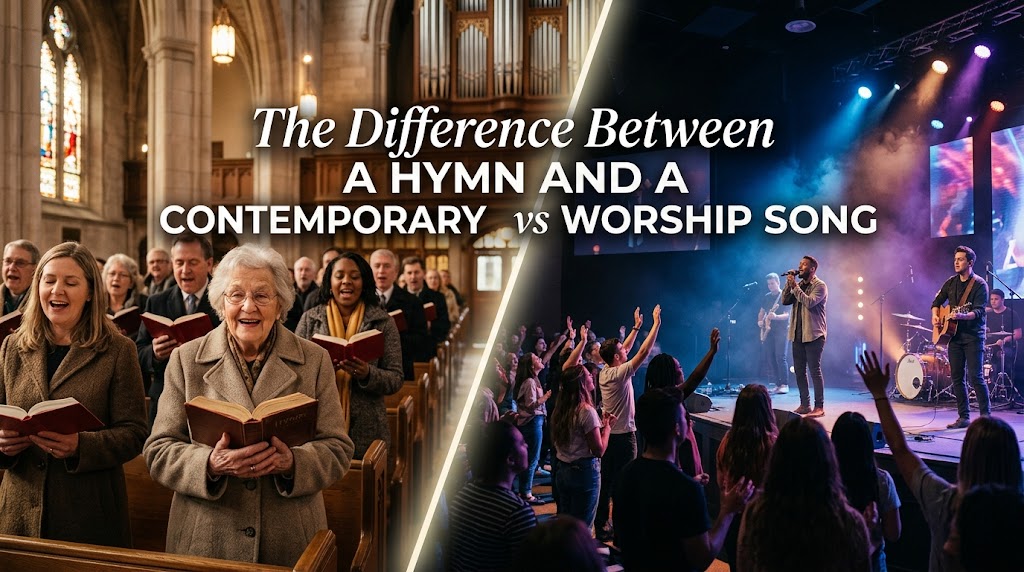
The Difference Between a Hymn and a Contemporary Worship Song
The Difference Between a Hymn and a Contemporary Worship Song
The Difference Between a Hymn and a Contemporary Worship Song is a topic that often sparks discussion among Christians, worship leaders, musicians, and church members. While both forms of music are designed to glorify God, encourage believers, and support congregational worship, they differ in several important ways. Understanding The Difference Between a Hymn and a Contemporary Worship Song can help churches appreciate the value of both styles and create worship experiences that honour God while serving the spiritual needs of diverse congregations.
Music has always played a significant role in Christian worship. From the songs of Moses and Miriam in the Old Testament to the psalms of David and the hymns sung by early Christians, believers have used music as a way to express faith, gratitude, repentance, and devotion. Throughout church history, different musical styles have emerged, reflecting the culture, language, and spiritual needs of each generation. Hymns became a dominant form of Christian worship music for centuries, while contemporary worship songs have gained widespread popularity in recent decades.
One of the most noticeable aspects of The Difference Between a Hymn and a Contemporary Worship Song is their structure. Traditional hymns typically follow a formal and organised pattern. They often contain multiple verses that develop a theme in a logical sequence. Each verse usually has the same melody, allowing worshippers to focus on the message while singing. Hymns are often rich in theological content and are designed to teach biblical truths in a systematic way.
Contemporary worship songs, on the other hand, often follow a verse and chorus structure similar to modern popular music. Many include a bridge section that adds emotional intensity or reinforces the central message. Repetition is a common feature of contemporary worship songs, allowing worshippers to meditate on key phrases and engage emotionally with the lyrics. While hymns often tell a story or explain a doctrine over several verses, contemporary worship songs tend to focus on a single theme or response to God.
Another important aspect of The Difference Between a Hymn and a Contemporary Worship Song is the language used in the lyrics. Hymns frequently contain formal language and poetic expressions. Many were written centuries ago, so some words and phrases may feel unfamiliar to modern audiences. Terms such as “thee,” “thou,” and “thy” are common in older hymns, reflecting the language of the time in which they were written. This style often gives hymns a sense of reverence and timelessness.
Contemporary worship songs generally use modern language that reflects everyday speech. The goal is often to make worship more accessible and relatable to present-day congregations. The lyrics are usually straightforward and easy to understand, enabling people from different backgrounds and age groups to connect with the message. This accessibility has contributed significantly to the popularity of contemporary worship music around the world.
The theological emphasis also highlights The Difference Between a Hymn and a Contemporary Worship Song. Hymns are often known for their deep doctrinal content. Many classic hymns were written by theologians, pastors, and church leaders who sought to teach biblical truths through music. Songs such as “Holy, Holy, Holy,” “A Mighty Fortress Is Our God,” and “When I Survey the Wondrous Cross” contain rich theological themes that explore the nature of God, salvation, grace, and the Christian life.
Contemporary worship songs often focus more on personal experiences and responses to God. Rather than explaining doctrine in detail, they frequently emphasise intimacy with God, gratitude, surrender, trust, and praise. This does not mean contemporary worship songs lack theological depth, but their approach is often more experiential. They seek to help worshippers encounter God emotionally and personally rather than primarily teaching doctrine through detailed lyrical exposition.
Musical style is another significant factor when discussing The Difference Between a Hymn and a Contemporary Worship Song. Hymns are traditionally accompanied by organs, pianos, choirs, or orchestral instruments. Their melodies are often written with congregational singing in mind, allowing large groups of people to participate together. The music tends to follow classical or traditional Western musical structures.
Contemporary worship songs usually incorporate instruments commonly found in modern bands, including guitars, keyboards, drums, bass guitars, and digital production elements. Their musical style is often influenced by contemporary genres such as pop, rock, folk, and even electronic music. This modern sound can make worship more appealing to younger generations and people who are accustomed to current musical trends.
The emotional tone also demonstrates The Difference Between a Hymn and a Contemporary Worship Song. Hymns often create a sense of reflection, reverence, and contemplation. Their focus on theological truths encourages worshippers to think deeply about God’s character and His work in their lives. The emotional impact of hymns often develops through thoughtful meditation on the lyrics.
Contemporary worship songs frequently place greater emphasis on emotional engagement. Through repetition, dynamic musical arrangements, and expressive lyrics, they encourage worshippers to respond emotionally to God’s presence. Many contemporary worship services are designed to create an atmosphere where people feel connected to God on a personal level. This emotional dimension can be a powerful tool for spiritual growth when balanced with sound biblical teaching.
Historical context provides another perspective on The Difference Between a Hymn and a Contemporary Worship Song. Hymns have a long history that spans centuries. Some of the most beloved hymns were written during significant periods of church history, including the Reformation, the Great Awakening, and various revival movements. These songs often carry the spiritual heritage of generations of believers and connect modern Christians with the broader history of the church.
Contemporary worship songs are largely products of the modern era. Many have emerged from churches, worship ministries, and Christian music movements over the last few decades. Organisations such as Hillsong Worship, Bethel Music, Passion, Elevation Worship, and others have played a major role in shaping contemporary worship music. These songs often reflect the concerns, language, and worship styles of today’s church.
Congregational participation is another area where The Difference Between a Hymn and a Contemporary Worship Song becomes evident. Hymns are often designed for collective singing, with harmonies and melodies that encourage participation from the entire congregation. Choirs and congregational singing have historically been central to hymn-based worship.
Contemporary worship songs also encourage participation but often do so in a different way. The use of repeated choruses and memorable melodies can make songs easier to learn quickly. Many worship leaders use these songs to create moments of spontaneous worship, prayer, and reflection. This flexibility allows congregations to engage with the music in a more personal and expressive manner.
The role of memory and teaching further illustrates The Difference Between a Hymn and a Contemporary Worship Song. Hymns have historically served as tools for teaching biblical truth. Before widespread literacy and access to theological resources, hymns helped believers learn and remember important doctrines. Their structured lyrics and rich theological content made them effective teaching instruments.
Contemporary worship songs also have teaching value, but they often focus on reinforcing key spiritual themes rather than providing comprehensive doctrinal instruction. Their strength lies in helping believers internalise messages of faith, hope, worship, and devotion through repeated phrases and memorable melodies.
Many debates surrounding The Difference Between a Hymn and a Contemporary Worship Song arise because people often associate their preferred style with spiritual authenticity. Some believers argue that hymns offer greater theological depth and stability. Others believe contemporary worship songs are more effective at helping people connect with God in today’s cultural context. However, viewing these styles as competitors misses the unique strengths that each brings to Christian worship.
The reality is that both hymns and contemporary worship songs have produced profound spiritual impact. Hymns have sustained believers through centuries of persecution, revival, and personal struggle. Contemporary worship songs have inspired millions of people around the world and have played a significant role in modern church growth and evangelism. Each style has helped countless Christians express their faith and deepen their relationship with God.
Churches that embrace both forms of music often benefit from a richer worship experience. Hymns can provide theological depth, historical continuity, and a sense of reverence. Contemporary worship songs can offer accessibility, emotional engagement, and cultural relevance. Together, they create a balanced approach that serves people from different generations and spiritual backgrounds.
It is also worth noting that the line between the two styles is not always clear. Some modern hymns combine traditional theological depth with contemporary musical arrangements. Likewise, many contemporary worship songs contain substantial biblical and theological content. The ongoing evolution of Christian music continues to blur the boundaries between these categories, creating new expressions of worship that draw from both traditions.
For worship leaders, understanding The Difference Between a Hymn and a Contemporary Worship Song is essential for building meaningful worship services. Effective worship planning involves considering the needs of the congregation, the message of the service, and the spiritual goals of the church. A thoughtful combination of hymns and contemporary worship songs can create a worship environment that is both biblically grounded and culturally relevant.
Ultimately, The Difference Between a Hymn and a Contemporary Worship Song is not about determining which style is superior. The primary purpose of Christian worship music is to glorify God, proclaim His truth, and encourage believers in their faith. Whether through the timeless words of a hymn or the heartfelt expressions of a contemporary worship song, music remains one of the most powerful ways for Christians to worship, learn, and connect with God.
As the church continues to grow and adapt to changing cultures, both hymns and contemporary worship songs will likely remain important parts of Christian worship. Each offers unique strengths that contribute to the spiritual life of believers. By appreciating the value of both traditions, Christians can celebrate the rich diversity of worship music while remaining united in their shared purpose of honouring God. Understanding The Difference Between a Hymn and a Contemporary Worship Song ultimately helps believers recognise that while musical styles may change, the message of God’s love, grace, and salvation remains the same across every generation.

Leave a Reply