
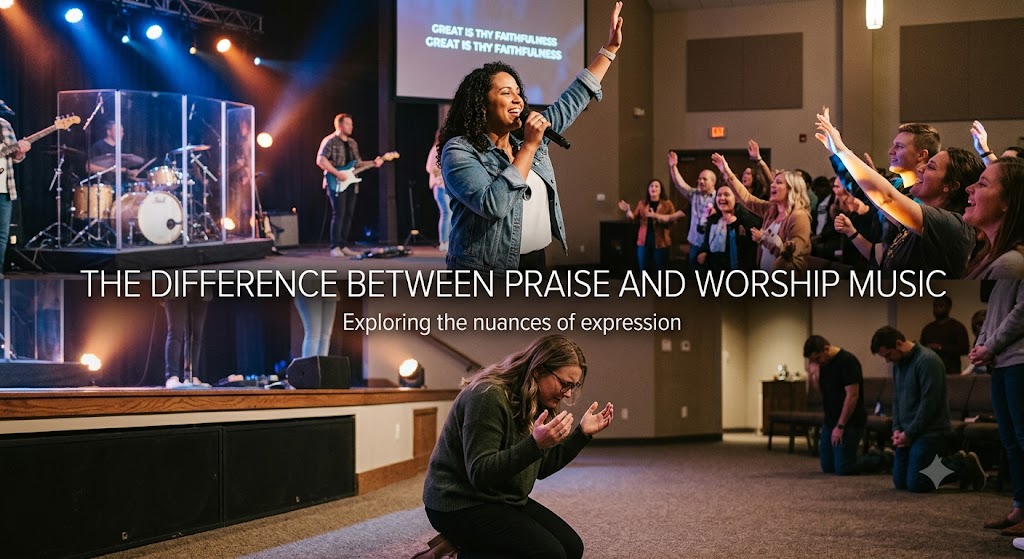
The Difference Between Praise and Worship Music
If you have spent any time in church, attended a Christian conference, or listened to gospel music, you have probably heard people use the words praise and worship as though they mean exactly the same thing. While they are closely connected and often flow together in church services, understanding The Difference Between Praise and Worship Music can deepen your relationship with God, enrich your personal devotion, and help you appreciate the purpose behind every song you sing. Many believers enjoy Christian music every day without ever stopping to ask why some songs inspire joyful celebration while others lead them into quiet surrender before God’s presence. Recognising these distinctions is not about creating unnecessary categories but about understanding the different ways music can express faith, gratitude, love, reverence, and complete dependence on God.
The Difference Between Praise and Worship Music is rooted in the Bible rather than in modern church traditions. From Genesis to Revelation, Scripture reveals that God’s people expressed themselves in different ways when approaching Him. There were moments of loud celebration after victories, heartfelt thanksgiving for answered prayers, and quiet moments of reverence when people recognised the greatness and holiness of God. Music became one of the most powerful vehicles through which these expressions were communicated. Today, Christian musicians continue this biblical pattern by writing songs that either celebrate what God has done or focus on who God is. Understanding this distinction allows believers to engage with songs more intentionally instead of simply singing familiar lyrics without reflecting on their meaning.
Praise music is generally characterised by joyful celebration, thanksgiving, excitement, and declarations of God’s mighty works. It is often energetic, uplifting, and filled with expressions of gratitude. Praise songs invite believers to rejoice because of God’s goodness, His faithfulness, His blessings, and His victories. They remind listeners that God answers prayers, provides for His children, protects His people, and remains faithful through every season of life. Throughout the Bible, praise is frequently associated with shouting, singing loudly, clapping hands, dancing, and rejoicing together as a community of believers. The Psalms are filled with invitations to praise the Lord with musical instruments, joyful voices, and thankful hearts.
When believers sing praise songs, they are proclaiming God’s greatness before others. These songs often contain statements about God’s power, mercy, kindness, miracles, and wonderful deeds. They encourage the church to celebrate together and strengthen one another through joyful declarations of faith. Praise is naturally outward in its expression because it proclaims what God has accomplished. It reminds believers of His mighty acts throughout history as well as His continued work in their personal lives. Whether someone has experienced healing, provision, restoration, forgiveness, or deliverance, praise becomes a natural response to God’s goodness.
Worship music, on the other hand, carries a different emphasis. Rather than focusing primarily on what God has done, worship centres on who God is. Worship songs invite believers into a deeper awareness of God’s holiness, majesty, sovereignty, love, and eternal nature. Instead of celebrating blessings, worship directs the heart towards the One who gives every blessing. Worship is often more reflective, intimate, and personal. It moves beyond expressions of gratitude into complete surrender, adoration, reverence, and devotion. While praise may celebrate God’s actions, worship treasures God’s character.
The Difference Between Praise and Worship Music becomes clearer when examining the language used in many Christian songs. Praise songs often include phrases that celebrate victory, thanksgiving, joy, and testimonies of God’s faithfulness. Worship songs frequently include expressions of surrender, honour, reverence, holiness, and love directed personally towards God. The focus shifts from speaking about God to speaking directly to Him. This creates an atmosphere where believers are reminded not merely of God’s blessings but of His very presence.
Another important aspect of The Difference Between Praise and Worship Music lies in the attitude of the heart. Praise can sometimes arise spontaneously when prayers are answered or when life is filled with reasons to celebrate. Worship, however, often continues even when circumstances remain difficult. A believer may have unanswered questions, face hardship, or experience uncertainty, yet still worship because God’s character never changes. Worship acknowledges that God deserves honour simply because He is God. It is not dependent on favourable circumstances but flows from genuine love and trust.
This distinction can be seen throughout Scripture. When the Israelites crossed the Red Sea after God delivered them from Egypt, they sang songs of praise celebrating His mighty power and miraculous victory. They rejoiced because God had rescued them from their enemies. In contrast, many biblical passages describing worship focus on individuals bowing before God, recognising His holiness, and surrendering themselves completely to His will. These moments were less about celebrating recent victories and more about acknowledging God’s greatness regardless of circumstances.
The Difference Between Praise and Worship Music also influences the atmosphere within church gatherings. Services often begin with energetic praise songs that unite the congregation, encourage participation, and prepare hearts for worship. As the service progresses, music may become slower and more reflective, helping believers focus on God’s presence rather than on themselves. This progression is not a strict biblical requirement but has become a meaningful pattern because it mirrors the spiritual journey from joyful celebration into deeper intimacy with God.
The Difference Between Praise and Worship Music
Christian songwriters intentionally write with these purposes in mind. A praise song usually aims to encourage believers, strengthen faith, and remind listeners of God’s goodness. A worship song often seeks to create space for reflection, repentance, surrender, and personal communion with God. Neither style is superior to the other because both serve important purposes within the Christian life. Together they create a balanced expression of faith that celebrates God’s works while honouring His character.
Many believers mistakenly assume that praise music is simply fast while worship music is always slow. Although tempo often reflects the mood of each style, speed alone does not determine whether a song is praise or worship. Some worship songs are joyful and upbeat, while certain praise songs may be slower and reflective. The true difference lies in the message, purpose, and spiritual focus of the lyrics rather than the musical arrangement. A song’s rhythm may influence emotions, but its words reveal whether the primary emphasis is thanksgiving for God’s works or adoration of God’s nature.
The Difference Between Praise and Worship Music is also evident in personal devotional life. During private prayer, believers may begin by thanking God for His blessings, protection, guidance, and faithfulness. This naturally becomes praise. As prayer deepens, attention often shifts away from personal needs and towards God’s holiness, love, wisdom, and greatness. At this point, praise gently transitions into worship. This progression helps believers move beyond simply requesting blessings and into enjoying God’s presence for who He is.
Church history demonstrates that both praise and worship have always been essential parts of Christian faith. Early believers sang hymns celebrating Christ’s resurrection, God’s salvation, and the hope of eternal life. They also composed songs expressing reverence, humility, and complete dependence upon God. Across different cultures and generations, Christian music has evolved in style, language, and instrumentation, yet the essential purposes of praise and worship remain unchanged. Whether accompanied by an organ, piano, choir, guitar, orchestra, or simple voices gathered together, the heart behind the music remains what matters most.
One reason understanding The Difference Between Praise and Worship Music is important is because it protects believers from reducing Christian music to mere entertainment. Modern music production has introduced impressive technology, creative arrangements, and professional performances that can sometimes distract listeners from the spiritual purpose behind the songs. When believers understand why they are singing, they become active participants rather than passive spectators. Instead of evaluating songs solely by their melody or popularity, they begin asking whether the music genuinely glorifies God and leads people closer to Him.
This understanding is equally valuable for worship leaders, musicians, choir members, and songwriters. Selecting songs becomes more intentional when leaders recognise the different roles praise and worship play during church gatherings. Rather than choosing songs simply because they are trending, effective leaders consider how each piece contributes to the spiritual journey of the congregation. A healthy balance between praise and worship helps believers experience both joyful celebration and quiet reverence within the same service.
The Difference Between Praise and Worship Music also teaches believers that emotions alone are not the measure of authentic worship. A person may feel excited during an energetic praise song or deeply moved during a reflective worship song, but genuine worship extends beyond temporary feelings. It involves a lifestyle of obedience, humility, faithfulness, and love for God. Jesus taught that true worshippers worship the Father in spirit and in truth, reminding believers that authentic worship is rooted in sincere devotion rather than emotional experience alone.
Praise and worship also shape Christian character in different but complementary ways. Praise strengthens gratitude by constantly reminding believers of God’s blessings. Gratitude protects the heart from bitterness, discouragement, entitlement, and complaining. Worship develops humility because it places God at the centre instead of ourselves. It reminds believers of God’s greatness while helping them recognise their complete dependence upon His grace. Together, praise and worship cultivate joyful hearts that remain anchored in faith regardless of life’s changing circumstances.
Many of the most beloved Christian songs combine elements of both praise and worship. A song may begin by celebrating God’s goodness and gradually transition into expressions of surrender and adoration. This reflects the natural movement of a believer’s heart as gratitude leads into intimacy with God. Such songs demonstrate that praise and worship are not opposing concepts but complementary expressions of a healthy spiritual life.
The Difference Between Praise and Worship Music is especially meaningful during difficult seasons. When facing loss, uncertainty, illness, disappointment, or unanswered prayers, praise reminds believers of God’s past faithfulness and strengthens hope for the future. Worship enables believers to trust God’s character even when His plans are not fully understood. Together they become powerful expressions of faith that refuse to allow circumstances to determine one’s relationship with God.
Parents also benefit from teaching children the biblical meaning behind praise and worship. Rather than viewing church music as simply another activity during Sunday services, children can learn that every song has a purpose. They begin to understand why some songs celebrate God’s blessings while others express love, reverence, and surrender. This foundation helps cultivate mature believers who participate thoughtfully in worship rather than merely following familiar routines.
The Christian music industry continues to expand across every continent, introducing new genres, languages, and creative expressions. Contemporary worship, gospel choir music, Christian hip-hop, Afro gospel, country gospel, Southern gospel, hymns, and acoustic worship all contribute unique sounds to the global church. Despite these stylistic differences, the biblical principles behind praise and worship remain timeless. Regardless of culture or musical preference, believers continue celebrating God’s mighty works while honouring His holy character.
Technology has also transformed the way Christians experience music. Streaming services, online worship sessions, digital concerts, and social media have made Christian music accessible to millions of people around the world. While these platforms provide incredible opportunities for ministry, they also remind believers that music should ultimately point beyond itself. Whether listening through headphones, attending a live church service, or watching a worship video online, the goal remains drawing closer to God rather than merely consuming inspiring content.
Understanding The Difference Between Praise and Worship Music encourages Christians to become more intentional listeners. Instead of choosing songs only because they sound appealing, believers begin selecting music that strengthens faith, teaches biblical truth, encourages gratitude, and deepens intimacy with God. This intentional approach transforms everyday listening into an opportunity for spiritual growth.
It is equally important to remember that praise and worship extend far beyond music. Singing provides one beautiful expression, but the Bible consistently teaches that a life lived in obedience, holiness, generosity, forgiveness, compassion, and faithful service also brings glory to God. Music becomes most meaningful when it reflects a heart that seeks to honour God in every area of life. Songs inspire believers, but transformed lives provide the strongest testimony of authentic faith.
Ultimately, The Difference Between Praise and Worship Music is not about creating divisions between different types of Christian songs but about appreciating the rich variety of ways believers respond to God. Praise celebrates His mighty works, while worship adores His eternal nature. Praise rejoices because of what God has done, while worship bows because of who God is. Praise declares God’s goodness to the world, while worship expresses personal devotion directly to Him. Together they form a complete expression of Christian faith that fills both the church and the believer’s daily life with gratitude, reverence, joy, humility, hope, and unwavering trust. When Christians understand and embrace both praise and worship, they experience a fuller relationship with God, one that celebrates His countless blessings while remaining captivated by His unchanging holiness, limitless love, and everlasting glory.

Leave a Reply