
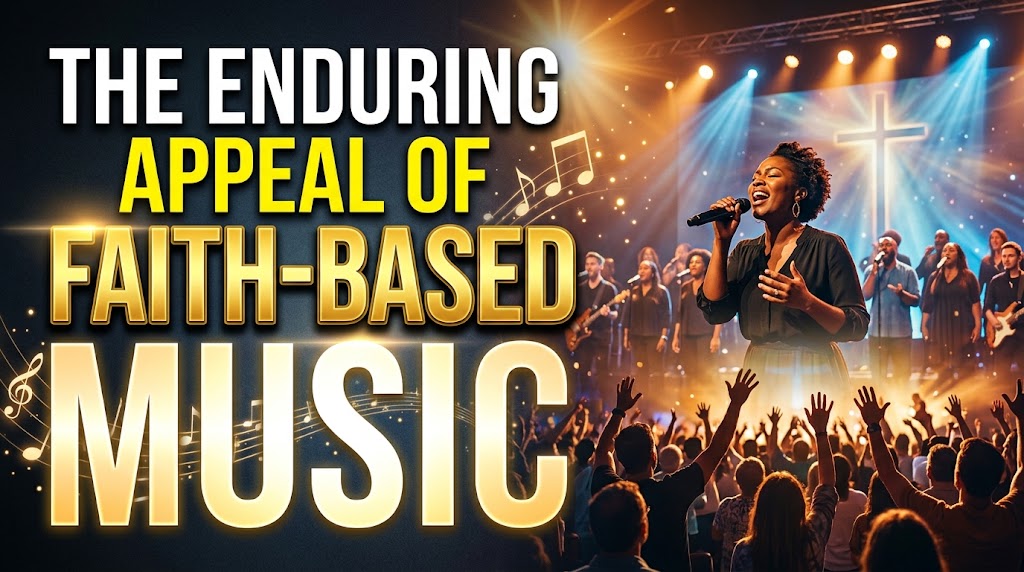
The Enduring Appeal of Faith-Based Music
The Enduring Appeal of Faith-Based Music
The enduring appeal of faith based music is one of the most fascinating things about the relationship between music, spirituality, culture, and human emotion. Across generations, languages, cultures, and geographical boundaries, people have continued to turn to songs that express faith, hope, gratitude, worship, struggle, love, and trust in God. While musical styles continue to change, the desire to hear and sing music that speaks to the deepest questions of life remains remarkably strong.
The enduring appeal of faith based music can be seen in churches, homes, concerts, digital streaming platforms, social media, radio stations, and personal playlists. A song created decades ago can suddenly become meaningful to a younger listener who discovers it for the first time. At the same time, new Christian artists continue to create music that speaks to contemporary audiences while drawing from timeless spiritual themes. This ability to connect the past with the present is one of the reasons faith based music continues to maintain an important place in the lives of millions of listeners.
Faith based music is much more than a category of entertainment. For many people, it is a means of expressing beliefs and emotions that are sometimes difficult to communicate through ordinary conversation. A person may struggle to explain feelings of gratitude, disappointment, hope, fear, repentance, or dependence on God, yet find the exact words they need in a song. When music gives those emotions a voice, it can become deeply personal.
This is part of what explains the enduring appeal of faith based music. The songs often address experiences that remain relevant regardless of the era in which someone lives. People experience joy, loss, uncertainty, celebration, disappointment, love, loneliness, success, failure, and hope in every generation. The musical arrangements may change, but these fundamental human experiences remain.
One of the strongest characteristics of faith based music is its ability to communicate messages of hope. Life can be unpredictable, and people often face circumstances that leave them searching for encouragement. During such moments, a meaningful Christian song can serve as a reminder that difficult circumstances do not necessarily define the whole story. Lyrics centred on faith and hope can encourage listeners to keep going when circumstances are challenging.
This does not mean music eliminates problems. Rather, it can provide emotional and spiritual language through which people process those problems. Someone going through a difficult period may listen to a worship song repeatedly, not because the song has solved the situation, but because its message gives them something to hold on to. That emotional connection can make a song considerably more significant than ordinary entertainment.
Another important reason for the enduring appeal of faith based music is its connection with worship. Music has played a major role in Christian worship for centuries. Singing allows individuals and congregations to participate rather than simply observe. A congregation singing together creates a shared experience in which individual voices become part of something collective.
That communal dimension remains important even as listening habits change. A person can listen to a worship song alone through headphones, but the same song can create a completely different experience when hundreds or thousands of people sing it together. The combination of melody, lyrics, voices, and shared belief can create powerful memories that remain with people long after the music stops.
Faith based music also provides a unique way to preserve and communicate Christian teachings. Songs can make ideas memorable because music and repetition help people remember words and phrases. Throughout Christian history, hymns and spiritual songs have helped generations learn theological concepts, biblical stories, prayers, and expressions of faith.
A person may forget the exact wording of a sermon but remember a song they learned as a child. Years later, hearing that song can bring back memories of family, church, childhood, or important moments in life. In this way, music can become a form of spiritual memory.
The enduring appeal of faith based music is also connected to its ability to evolve. Christian music has never existed in only one musical style. Hymns, gospel, contemporary worship, Christian rock, Christian hip hop, Afro Gospel, Southern Gospel, Christian pop, choir music, and many other expressions demonstrate how diverse faith based music can be.
This diversity allows different generations and cultures to express Christian faith through sounds that are familiar to them. A traditional hymn may deeply resonate with one listener, while another person may connect more strongly with contemporary worship or Afro Gospel. The differences in musical style do not necessarily eliminate the shared spiritual themes.
African Christian music provides an especially interesting example of how faith and culture can interact. Across many African communities, music is deeply connected with celebration, storytelling, community, worship, and cultural identity. Gospel music has therefore developed into numerous distinctive expressions, combining Christian messages with local languages, rhythms, instruments, vocal traditions, and contemporary production.
The global growth of African Gospel has also demonstrated that Christian music does not have to sound identical across cultures. Artists can communicate Christian messages while maintaining distinctive cultural identities. This creates opportunities for listeners around the world to discover different musical expressions of faith.
Technology has further expanded the enduring appeal of faith based music. In the past, discovering a Christian song often depended on radio, television, church services, physical albums, or recommendations from friends. Today, listeners can discover Christian music through streaming platforms, social media, music blogs, playlists, short videos, and online communities.
A song recorded by an independent artist can potentially reach listeners far beyond the artist’s local church or country. Someone in Nigeria can discover a worship artist from another continent, while a listener elsewhere can discover an African Gospel song through social media. Digital technology has made the discovery of faith based music more accessible than ever.
Social media has also changed how listeners interact with Christian artists. People do not simply listen to songs anymore. They comment on lyrics, share favourite sections, create videos, recommend songs to friends, and discuss the stories behind particular recordings. A powerful song can become part of an online conversation and introduce an artist to an audience that may never have encountered them through traditional media.
Another reason for the enduring appeal of faith based music is authenticity. Listeners often connect deeply with music that feels honest. A song written from genuine personal experience can communicate something that a technically perfect recording may not achieve on its own.
Many Christian songs emerge from real experiences of prayer, struggle, gratitude, disappointment, transformation, or renewed faith. When listeners recognise elements of their own experiences in those stories, they may develop a strong emotional connection with the music.
This is why testimony has such an important place in Christian music. A song can become more meaningful when listeners understand the experience that inspired it. The story behind a song may involve a season of difficulty, a personal breakthrough, a spiritual discovery, or an expression of gratitude. The music then becomes more than sound. It becomes a testimony that another person can relate to.
Faith based music can also provide companionship during private moments. People listen to music while travelling, working, exercising, studying, relaxing, praying, or reflecting. A worship song may become part of someone’s morning routine, while another person may turn to Gospel music at the end of a difficult day.
These personal listening habits demonstrate how deeply music can become integrated into everyday life. Instead of being restricted to formal worship services, faith based music can accompany people throughout different seasons and activities.
The enduring appeal of faith based music is particularly visible during major life events. Weddings, funerals, birthdays, church celebrations, graduations, conferences, prayer meetings, Christmas celebrations, Easter services, and other important occasions often involve Christian music. Certain songs become permanently associated with significant memories.
Music can therefore function as an emotional marker. Years after an event has passed, hearing a particular song may immediately transport someone back to that moment. This ability to connect music with memory contributes significantly to the longevity of faith based songs.
Another factor is the universal nature of many Christian themes. Faith based music frequently explores concepts such as grace, forgiveness, mercy, redemption, love, perseverance, gratitude, trust, worship, salvation, and hope. These themes are not limited to one particular generation.
Musical preferences may change dramatically, but the fundamental questions behind these themes remain. People continue to ask where they can find hope, how they should respond to suffering, what forgiveness means, how they can find purpose, and what it means to trust God. Music provides a creative way to explore these questions.
The enduring appeal of faith based music also comes from its ability to create a bridge between generations. Parents can introduce children to songs that shaped their own faith journeys. Older believers can discover contemporary Christian music alongside younger listeners. Churches can combine traditional hymns with newer worship songs, creating musical experiences that honour both heritage and innovation.
This generational connection is important because music can preserve history without preventing change. A new generation does not necessarily have to abandon everything that came before it. Instead, new artists can build on previous traditions while developing new sounds and approaches.
Christian musicians also play an important role in this process. Songwriters, singers, musicians, producers, choir directors, worship leaders, and independent artists all contribute to the constantly changing landscape of faith based music. Their creativity allows Christian music to remain relevant while continuing to communicate its central themes.
The modern Christian music industry has also created opportunities for artists who may not have access to major record labels. Digital distribution and social media allow musicians to release songs independently and build audiences directly. This has created a wider variety of voices and musical styles within Christian music.
For Christian music blogs, this changing environment presents enormous opportunities. There are stories to tell about emerging artists, new releases, worship movements, songwriting, music production, Gospel trends, Christian playlists, music technology, and the cultural impact of faith based music. Readers are interested not only in songs but also in the people and stories behind them.
A good Christian music blog can therefore become more than a place where readers discover new songs. It can become a platform for discovering artists, understanding lyrics, exploring musical traditions, discussing worship, and learning about the changing Christian music landscape.
The enduring appeal of faith based music ultimately comes from its ability to meet people at different points in their lives. Someone may listen to a song because they are celebrating. Another person may listen because they are grieving. Someone else may be searching for encouragement, while another listener simply enjoys the musical creativity.
The same song can mean different things to different people. That flexibility is one of music’s greatest strengths. A Christian song does not have to have only one emotional destination. Its meaning can develop as the listener’s own life changes.
A song that once seemed ordinary may become deeply meaningful years later after the listener experiences something that gives its lyrics new significance. This is one reason certain faith based songs remain relevant long after their original release.
As the Christian music landscape continues to change, the fundamental need for meaningful music is unlikely to disappear. New technologies will influence how songs are produced, distributed, discovered, and consumed. Musical styles will continue to evolve. New artists will emerge, and established artists will experiment with new sounds.
Yet the central themes of faith, hope, worship, gratitude, love, forgiveness, and perseverance will continue to provide material for Christian musicians and songwriters.
The enduring appeal of faith based music is therefore not simply about nostalgia or tradition. It is about the continuing human desire to find meaning through music. It is about songs that accompany people through celebrations and difficult seasons. It is about congregations singing together, families sharing songs, artists turning experiences into testimonies, and listeners finding words for emotions they cannot easily express themselves.
In a rapidly changing digital world, faith based music continues to demonstrate that some forms of human expression remain powerful because they address questions that technology cannot answer. A new streaming platform can change how people hear a song, but it cannot replace the emotional significance that the song may have for the listener.
From traditional hymns to modern worship recordings, from church choirs to independent Gospel artists, faith based music continues to adapt while retaining its ability to connect with people. Its sounds may change, its distribution methods may change, and its audiences may discover it in new ways, but its fundamental purpose remains deeply connected to human experience.
That is the heart of the enduring appeal of faith based music. It gives people something to sing when they are joyful, something to remember when they are grateful, something to hold on to when life becomes difficult, and something through which they can express their faith. As long as people continue to search for hope, purpose, worship, encouragement, and connection, there will continue to be a place for music that speaks to those deepest parts of life.
For Christian music lovers, that means there will always be new songs to discover, new artists to support, new stories to hear, and old songs waiting to be heard again from a completely different perspective. Faith based music continues to prove that a song can be more than entertainment. It can become a memory, a testimony, a prayer, a source of encouragement, and a lasting expression of faith.

Leave a Reply