
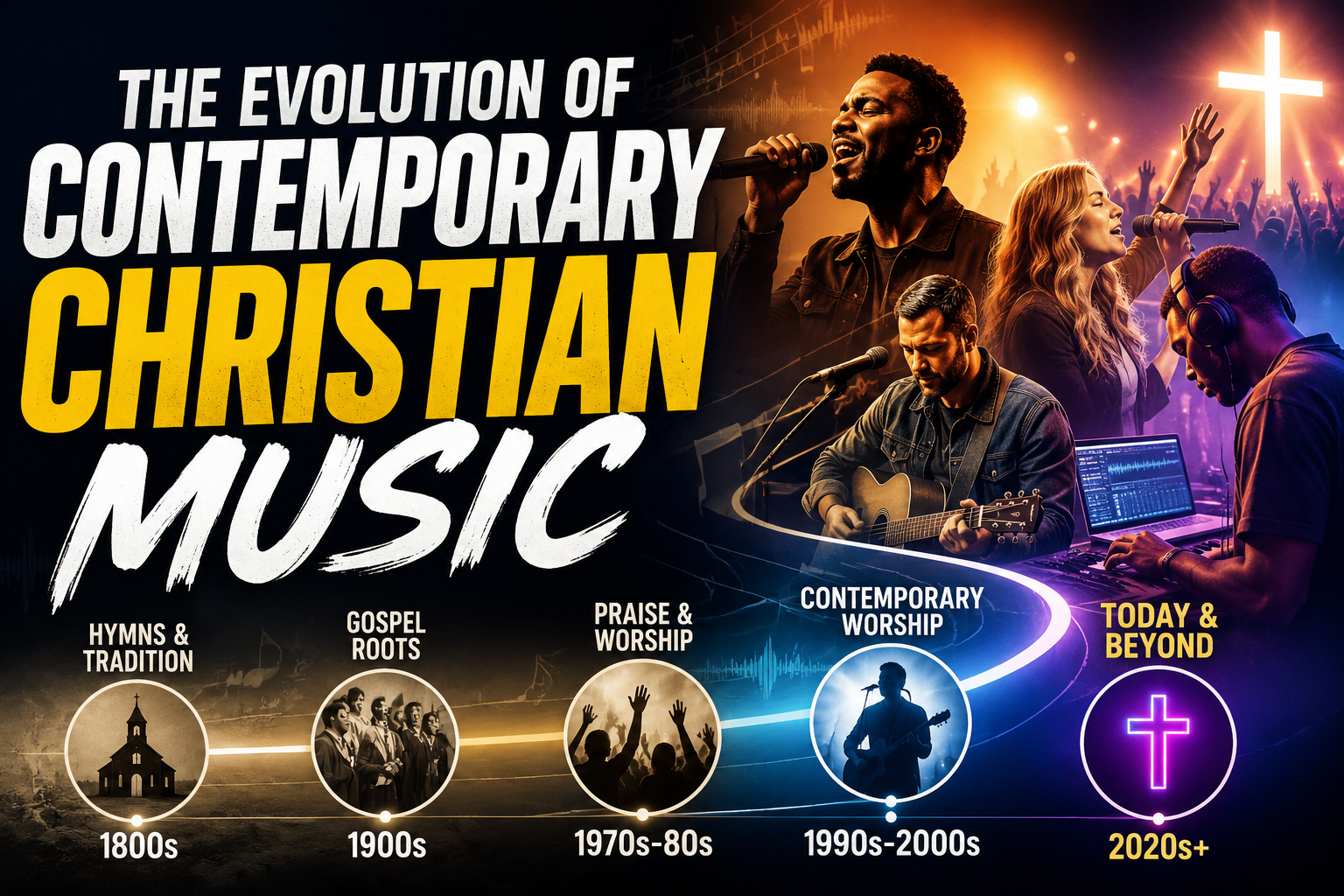
The Evolution of Contemporary Christian Music
The Evolution of Contemporary Christian Music is one of the most fascinating stories in the history of modern worship and faith-based entertainment. What began as a bold movement that blended biblical messages with contemporary musical styles has become a worldwide phenomenon, influencing millions of people across different cultures, languages, and generations. Today, contemporary Christian music is more than a genre. It is a global ministry, a source of encouragement, an expression of worship, and a bridge that connects people to God through melodies that reflect the sounds of their own time. From churches and stadiums to streaming platforms and social media, the influence of contemporary Christian music continues to grow, proving that timeless biblical truths can be communicated through ever-changing musical expressions.
Understanding the Evolution of Contemporary Christian Music requires looking beyond the songs themselves and appreciating the cultural shifts that shaped them. For centuries, Christian music was primarily associated with hymns, choirs, and traditional liturgical compositions. These songs carried deep theological truths and were often written with rich poetic language that helped believers worship collectively. While hymns remain treasured by many churches today, a new generation of Christians eventually desired music that reflected the sounds they heard in everyday life while remaining faithful to Scripture. This desire became one of the driving forces behind the emergence of contemporary Christian music.
During the middle of the twentieth century, popular music underwent dramatic changes. Rock and roll, folk, jazz, rhythm and blues, and later pop music transformed the entertainment industry. Young people connected deeply with these new styles, and many Christian musicians began asking whether these musical forms could also be used to glorify God. Although the idea faced criticism from some who believed sacred messages should remain separate from secular musical influences, others saw an opportunity to reach audiences that traditional church music struggled to engage.
The Evolution of Contemporary Christian Music accelerated significantly during the late 1960s and early 1970s with the emergence of the Jesus Movement. This spiritual revival attracted thousands of young people searching for hope, purpose, and authentic faith. Many of these new believers brought their musical backgrounds with them into Christianity. Instead of abandoning guitars, drums, keyboards, and modern songwriting techniques, they used them to create songs centred on Jesus Christ, salvation, love, grace, and worship. These songs sounded familiar to younger audiences while delivering life-changing biblical messages.
This period marked a turning point because Christian music was no longer confined to church buildings. Concerts became powerful evangelistic events where music served as a tool for sharing the Gospel. Christian artists began recording albums that combined professional production with sincere faith, demonstrating that excellence and ministry could work together. Audiences responded enthusiastically, and contemporary Christian music slowly developed its own identity within the broader music industry.
As recording technology improved, so did the quality of Christian music production. Musicians invested in better instruments, recording studios, vocal arrangements, and songwriting techniques. Producers realised that Christian listeners deserved music that could compete creatively and technically with mainstream releases. This commitment to quality elevated the reputation of contemporary Christian music and attracted listeners who appreciated both strong biblical messages and outstanding musical craftsmanship.
The Evolution of Contemporary Christian Music also reflects the changing ways believers worship together. Traditional worship services often relied heavily on hymn books and pipe organs, but contemporary churches gradually introduced worship bands featuring guitars, pianos, bass, drums, and synthesizers. Congregational singing became more expressive, with worshippers raising their hands, clapping, and actively participating in musical worship. Songs became easier to learn, allowing entire congregations to sing together without requiring formal musical training.
One of the defining characteristics of contemporary Christian music is its ability to adapt to different musical genres while preserving its central message. Pop, rock, country, hip hop, rap, reggae, electronic dance music, Afrobeat, R&B, soul, folk, and even orchestral styles have all found a place within Christian music. This diversity demonstrates that the Gospel is not restricted to one musical tradition. Instead, it can be communicated effectively through various sounds that resonate with different communities around the world.
The rise of worship-focused music has become one of the most influential chapters in the Evolution of Contemporary Christian Music. Worship songs shifted attention away from performance and towards collective praise. Instead of simply listening to artists perform, congregations actively participated by singing songs that expressed gratitude, surrender, hope, and devotion to God. Many churches began writing original worship songs that eventually spread internationally, allowing believers from different nations to sing the same lyrics in their own languages.
Another important factor in the Evolution of Contemporary Christian Music is the growth of Christian radio stations. Dedicated Christian broadcasters introduced millions of listeners to new artists, worship songs, inspirational messages, and faith-filled programming. Radio helped Christian musicians build loyal audiences while providing families with alternatives to secular entertainment. Daily exposure to uplifting music encouraged spiritual growth and strengthened communities of faith across many regions.
Television further expanded the reach of contemporary Christian music. Christian networks aired concerts, interviews, music videos, and worship services, bringing artists into homes around the world. Viewers discovered musicians whose songs became part of their daily devotional lives. Television also gave smaller ministries an opportunity to reach wider audiences, creating greater visibility for Christian music as a legitimate and growing industry.
The digital revolution transformed every aspect of the music business, and contemporary Christian music embraced these changes with remarkable speed. Streaming services made Christian songs instantly available to listeners across continents. People no longer needed physical CDs to enjoy their favourite worship albums. Instead, they could access thousands of songs with a single device, creating personalised playlists for prayer, Bible study, exercise, travel, or family worship.
Social media has become another major milestone in the Evolution of Contemporary Christian Music. Artists now communicate directly with supporters through live broadcasts, behind-the-scenes videos, devotionals, and interactive discussions. This direct connection strengthens relationships between musicians and audiences while allowing testimonies to spread rapidly across digital platforms. Fans often share how particular songs helped them overcome grief, depression, fear, loneliness, or personal struggles, demonstrating the lasting spiritual impact of Christian music.
The songwriting process has also evolved significantly over the years. Earlier Christian songs often emphasised clear doctrinal teaching and biblical storytelling. While these themes remain important, many modern worship songs incorporate deeply personal expressions of faith, allowing listeners to identify emotionally with the lyrics. Songs now frequently explore seasons of waiting, doubt, restoration, healing, forgiveness, gratitude, and renewed hope while pointing consistently towards God’s faithfulness.
The Evolution of Contemporary Christian Music has benefited greatly from international influences. African gospel music has introduced energetic rhythms, joyful praise, and vibrant choir arrangements that have inspired worship leaders worldwide. Latin American worship has contributed passionate expressions of faith and multilingual songs that unite believers across cultures. Asian Christian artists continue producing innovative music that reflects their local traditions while embracing global production standards. European worship movements have also influenced modern congregational singing, demonstrating that contemporary Christian music truly belongs to the global Church.
Collaboration has become increasingly common within the Christian music community. Artists from different countries, denominations, and musical backgrounds regularly record together, creating songs that reflect unity within the body of Christ. These collaborations expose listeners to fresh sounds while reminding believers that their shared faith transcends geographical boundaries.
The Evolution of Contemporary Christian Music
One remarkable aspect of the Evolution of Contemporary Christian Music is its growing influence on mainstream culture. Christian artists increasingly perform at major festivals, appear on international charts, receive prestigious awards, and collaborate with musicians outside the Christian industry. While opinions differ regarding the relationship between Christian and mainstream music, these opportunities allow biblical values and messages of hope to reach audiences that might never attend church.
Youth ministry has benefited enormously from contemporary Christian music. Young people often connect emotionally with songs that address real-life challenges from a biblical perspective. Issues such as identity, anxiety, relationships, purpose, temptation, forgiveness, and hope are explored through music that speaks the language of today’s generation. As a result, contemporary Christian music has become an effective tool for discipleship, helping young believers develop stronger relationships with Christ.
Families also experience the blessings of contemporary Christian music in everyday life. Parents often play worship songs during family devotions, road trips, meal times, and household activities. Children grow up singing biblical truths through memorable melodies, making Scripture more accessible and enjoyable. Music becomes part of family traditions, strengthening faith across generations.
Church leaders increasingly recognise music as an important aspect of spiritual formation. Songs shape theology because people often remember lyrics long after sermons have ended. Consequently, many worship leaders carefully select songs that accurately reflect biblical truth while remaining accessible to congregations. This balance between artistic creativity and theological integrity continues to influence the Evolution of Contemporary Christian Music.
Technology continues opening exciting possibilities for Christian musicians. Independent artists can now record professional-quality music from home studios, distribute songs globally without major record labels, and build international audiences through digital marketing. This democratisation of music production has introduced countless gifted worship leaders whose songs may never have been discovered in previous generations.
The Evolution of Contemporary Christian Music has also encouraged excellence in visual storytelling. Music videos now communicate biblical themes through creative cinematography, inspiring testimonies, dramatic narratives, and symbolic imagery. These visual elements complement the music while helping audiences connect more deeply with spiritual messages.
Despite its tremendous growth, contemporary Christian music has faced criticism and challenges throughout its history. Some argue that commercial success can distract artists from ministry, while others express concern that certain songs prioritise emotional experiences over sound biblical teaching. These discussions remain valuable because they encourage musicians, producers, pastors, and listeners to continually evaluate whether their music glorifies God and faithfully communicates Scripture.
Financial pressures within the music industry also affect Christian artists. Touring expenses, production costs, marketing campaigns, and changing consumer habits require musicians to balance creative passion with practical sustainability. Nevertheless, countless artists continue creating music because they view their work primarily as a calling rather than merely a profession.
Another defining feature in the Evolution of Contemporary Christian Music is the growing emphasis on authenticity. Modern audiences often value honesty more than perfection. Christian musicians increasingly share personal testimonies about struggles, disappointments, failures, restoration, and God’s grace. This openness reminds listeners that faith does not eliminate life’s challenges but provides hope through every season.
Contemporary Christian music has become a powerful tool during times of crisis. Whether communities face natural disasters, economic hardship, personal loss, or global uncertainty, worship songs often provide comfort when words alone seem insufficient. Music has a unique ability to calm anxious hearts, strengthen weary souls, and remind believers of God’s unchanging promises.
Missionary work has also benefited from contemporary Christian music. Songs translated into local languages help new believers worship in culturally meaningful ways while reinforcing biblical teaching. Music often crosses linguistic barriers more effectively than spoken communication, making it an essential part of evangelism and discipleship around the world.
The Evolution of Contemporary Christian Music continues through constant innovation. New artists experiment with fresh production techniques, multicultural influences, creative instrumentation, and emerging technologies while remaining rooted in biblical truth. Artificial intelligence, virtual concerts, immersive audio, and digital collaboration platforms may further reshape how Christian music is created and experienced in the years ahead.
One encouraging trend is the increasing participation of independent Christian creators who use online platforms to release original worship songs without waiting for traditional industry approval. This has resulted in greater diversity, allowing unique voices from smaller churches and developing nations to reach global audiences. As technology removes barriers, more believers have opportunities to contribute their gifts to the worldwide worship community.
The influence of contemporary Christian music extends beyond entertainment because its primary purpose remains spiritual transformation. Songs inspire prayer, encourage repentance, strengthen faith, comfort grieving hearts, celebrate salvation, and remind believers of God’s everlasting love. Unlike music created solely for commercial success, contemporary Christian music ultimately seeks to glorify Christ while pointing listeners towards eternal hope.
Many people can trace significant moments of their spiritual journey to particular worship songs. A lyric remembered during difficult circumstances, a chorus sung at a youth camp, or a melody heard during personal prayer often becomes deeply connected with God’s work in their lives. These experiences explain why contemporary Christian music holds such profound emotional and spiritual significance for millions of believers.
The future of contemporary Christian music appears exceptionally promising. Growing global connectivity allows artists from every continent to inspire one another creatively while sharing the universal message of the Gospel. Younger generations continue bringing fresh ideas, cultural diversity, and technological innovation into Christian music without abandoning the timeless truth found in God’s Word. As churches embrace both tradition and innovation, contemporary Christian music will likely continue expanding its influence across every nation.
The Evolution of Contemporary Christian Music demonstrates that while musical styles may change, the message of Jesus Christ remains constant. Instruments evolve, production techniques improve, digital platforms emerge, and cultural preferences shift, yet the central themes of redemption, grace, forgiveness, hope, worship, and eternal life continue inspiring every new generation of Christian musicians. This remarkable journey reflects the Church’s ongoing commitment to communicate the unchanging Gospel in ways that speak meaningfully to contemporary audiences.
Ultimately, the Evolution of Contemporary Christian Music is not simply the story of changing sounds or popular trends. It is the story of believers using every available creative resource to honour God, encourage His people, and proclaim His truth to the world. From humble church gatherings to sold-out arenas, from handwritten hymn books to global streaming platforms, contemporary Christian music has continually adapted while remaining anchored in faith. Its influence reaches far beyond playlists and concert stages because it touches hearts, strengthens communities, nurtures worship, and reminds countless people that God’s love remains as relevant today as it has always been. As long as believers continue lifting their voices in praise, embracing creativity with wisdom, and keeping Christ at the centre of every song, the Evolution of Contemporary Christian Music will continue writing new chapters that inspire generations yet to come.

Leave a Reply