
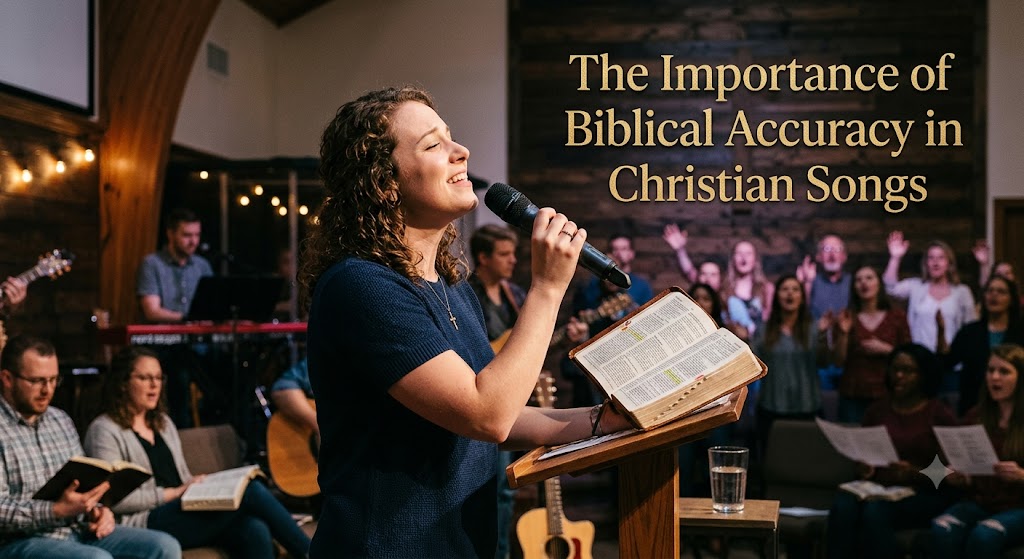
The Importance of Biblical Accuracy in Christian Songs
Music has always occupied a unique place in the life of God’s people. From the songs of Moses after the Israelites crossed the Red Sea to the psalms written by David, from the hymns sung by the early church to the worship songs heard in churches today, music has served as a powerful way to express faith, gratitude, repentance, hope, and devotion. It has the remarkable ability to reach the heart in ways that spoken words often cannot. Because songs are memorable, they have the power to shape beliefs, influence emotions, and reinforce spiritual truths for generations. This is precisely why the importance of biblical accuracy in Christian songs cannot be overstated. Every lyric that declares truth about God has the potential to strengthen faith, while every lyric that distorts Scripture can quietly mislead believers without them even realising it.
Christian songs are far more than artistic expressions. They are often sermons set to melody. Many believers remember the lyrics of worship songs long after they have forgotten an entire sermon. Children learn about God through songs before they can fully understand Bible studies. Adults facing difficult moments often recall the words of a worship chorus that gives them hope and strength. This extraordinary influence places a tremendous responsibility upon Christian songwriters, worship leaders, choirs, recording artists, and churches to ensure that every message aligns with God’s Word. The importance of biblical accuracy in Christian songs lies not only in preserving doctrinal truth but also in protecting the spiritual growth of believers.
The Bible repeatedly reminds Christians that God’s truth must never be altered. Scripture is the ultimate authority for faith and practice. Human emotions change, cultures shift, and opinions evolve, but God’s Word remains constant. Christian music should therefore reflect biblical truth rather than personal opinions or popular trends. Songs may be emotionally moving, beautifully composed, and professionally produced, but if they communicate ideas that contradict Scripture, they can gradually influence believers to accept false teaching without questioning it.
One reason biblical accuracy matters so much is because music has an exceptional ability to remain in the mind. People often remember songs they heard decades ago. A melody combined with meaningful lyrics creates lasting memories that shape perspectives. This is why advertisers use catchy jingles and why national anthems become symbols of identity. In the same way, Christian songs become part of a believer’s spiritual vocabulary. If the lyrics accurately reflect Scripture, they continually reinforce biblical truth. If they contain theological errors, they may unintentionally establish false beliefs that become difficult to correct later.
Throughout the Bible, singing is closely connected to teaching. The Apostle Paul instructed believers to teach and admonish one another through psalms, hymns, and spiritual songs. This instruction reveals that worship music is educational as well as inspirational. Christian songs are not designed merely to entertain congregations or create emotional experiences. They are intended to teach God’s truth while directing people’s hearts toward worship. The importance of biblical accuracy in Christian songs becomes even clearer when we understand that every worship service is also an opportunity for biblical instruction.
The modern Christian music industry has grown tremendously over the past few decades. New worship songs are released almost daily across streaming platforms, social media, and churches worldwide. While this growth has expanded opportunities for evangelism and encouragement, it has also increased the need for discernment. Not every song labelled as Christian accurately represents biblical doctrine. Some songs emphasise human feelings while neglecting God’s holiness. Others focus heavily on personal success without mentioning repentance, salvation, grace, or obedience. Some even introduce ideas that cannot be supported by Scripture. This makes it essential for churches and individual believers to evaluate lyrics carefully rather than accepting every popular worship song without question.
Biblical accuracy helps believers develop a correct understanding of God’s character. The Bible reveals God as loving, holy, righteous, merciful, just, compassionate, faithful, sovereign, and eternal. Christian songs should present a balanced picture of these attributes rather than highlighting only those qualities that appeal to modern culture. When worship music focuses exclusively on God’s love while ignoring His holiness and justice, believers may develop an incomplete understanding of who God truly is. Likewise, songs that emphasise fear without celebrating God’s grace fail to communicate the full message of Scripture. Accurate worship reflects the complete character of God as revealed in His Word.
Jesus Himself demonstrated the importance of Scripture in every area of life. During His temptation in the wilderness, He responded to Satan by quoting Scripture rather than relying on personal opinion or emotion. If the Son of God consistently upheld biblical truth, Christians should do the same in every ministry, including music. Worship songs should lead believers back to Scripture instead of replacing Scripture. A beautiful melody should never become more important than the truth it communicates.
Many Christians first encounter biblical truths through music. Children often memorise Bible verses by singing them. Youth groups use songs to reinforce spiritual lessons. Adults draw encouragement from worship during times of suffering. Missionaries introduce the gospel to new communities through translated hymns. In every case, biblical accuracy ensures that those hearing the music receive truth rather than confusion. The importance of biblical accuracy in Christian songs extends beyond church buildings because these songs often become tools for discipleship across homes, schools, missions, hospitals, prisons, and communities around the world.
Christian songwriters have a sacred responsibility to study Scripture diligently before composing lyrics. Creativity is a wonderful gift from God, but creativity should never replace truth. Every metaphor, illustration, and poetic expression should remain faithful to biblical teaching. Songs may use symbolic language, as the Psalms often do, but symbolism should always point listeners toward biblical truth rather than away from it. A songwriter’s greatest achievement is not producing a chart-topping worship song but creating music that faithfully glorifies God and accurately communicates His Word.
Church leaders also carry an important responsibility. Worship leaders should prayerfully examine the theology of every song before introducing it to a congregation. Popularity should never be the primary reason for selecting music. A song’s emotional impact should never outweigh its doctrinal soundness. Congregations trust their leaders to guide them spiritually, and this includes ensuring that the songs sung during worship reinforce biblical teaching. The importance of biblical accuracy in Christian songs therefore becomes part of pastoral care, helping believers grow in truth rather than error.
The Psalms provide an excellent model for Christian songwriting. They express joy, sorrow, repentance, thanksgiving, fear, hope, praise, and lament while remaining deeply rooted in God’s character and promises. David honestly poured out his emotions before God, yet his songs consistently returned to God’s faithfulness and truth. This demonstrates that emotionally honest worship and biblical accuracy are not opposites. In fact, the strongest worship songs combine genuine human emotion with unwavering scriptural truth.
One common challenge in contemporary Christian music is the temptation to prioritise emotional experiences over theological depth. Emotional engagement is valuable because God created human emotions. However, emotions should respond to truth rather than replace it. Worship that is built solely on feelings may fade when circumstances change. Worship rooted in Scripture remains steadfast because it depends on God’s unchanging promises. Songs grounded in biblical truth continue to encourage believers even during seasons of doubt, suffering, disappointment, and loss.
Another reason the importance of biblical accuracy in Christian songs matters is that false teaching rarely appears in obvious forms. Sometimes theological errors are subtle. A single phrase may exaggerate human ability, minimise God’s sovereignty, misrepresent salvation, or imply teachings that contradict Scripture. Repeated over time, these subtle inaccuracies can influence the beliefs of entire congregations. This is why careful examination of lyrics is an act of spiritual wisdom rather than unnecessary criticism.
Christian songs should consistently point listeners to Jesus Christ. The central message of Christianity is the gospel, the good news that Jesus died for our sins, was buried, rose again, and offers eternal life through faith in Him. Songs that celebrate God’s blessings without acknowledging Christ’s saving work present an incomplete message. Likewise, songs that focus primarily on human achievement rather than God’s grace risk shifting attention away from the true source of salvation. Biblical accuracy keeps Christ at the centre of Christian worship.
The Importance of Biblical Accuracy in Christian Songs
The global reach of Christian music means that songs written in one nation may soon be sung in churches across continents. Through digital platforms, millions of believers can learn a new worship song within days of its release. This unprecedented influence makes theological responsibility even more important than in previous generations. A biblically sound song can encourage believers worldwide, while an inaccurate one can spread misunderstanding just as quickly. Every songwriter should therefore approach the task with humility, prayer, and reverence for God’s Word.
Christian songs also serve as powerful tools for evangelism. Many people who would never attend a church service willingly listen to Christian music online or on the radio. For some, a worship song becomes their first introduction to the gospel. Because these songs may shape first impressions of Christianity, they should faithfully represent biblical truth. The importance of biblical accuracy in Christian songs extends beyond believers because these songs often become ambassadors of the Christian faith to those who have never opened a Bible.
History provides many examples of hymns that have endured for centuries because of their strong biblical foundations. Songs such as “Amazing Grace,” “Holy, Holy, Holy,” and many classic hymns continue to inspire believers because they communicate timeless scriptural truths rather than temporary cultural ideas. Their enduring influence reminds modern songwriters that biblical faithfulness creates lasting value. Trends come and go, but truth remains relevant in every generation.
Personal devotion is another area where biblical accuracy matters greatly. Many Christians begin or end their day by listening to worship music. During these quiet moments, songs often shape prayer, reflection, and meditation. Accurate lyrics help believers focus on God’s promises, while inaccurate ones may unintentionally shape misguided expectations. Worship should lead believers into deeper knowledge of God rather than reinforcing misunderstandings about His will or character.
The church has always defended sound doctrine because truth matters. Throughout history, false teachings have challenged the church in various forms. Christian leaders have consistently responded by returning to Scripture as the final authority. This same principle applies to music ministry today. The importance of biblical accuracy in Christian songs is not about discouraging creativity or limiting artistic freedom. Instead, it is about ensuring that creativity serves the truth rather than competing with it.
Believers should also cultivate discernment when listening to Christian music. Instead of assuming every song is biblically sound, Christians can compare lyrics with Scripture, ask thoughtful questions, and seek guidance from mature believers when uncertain. This habit strengthens biblical literacy while protecting against theological confusion. Discernment is not about becoming critical or suspicious of every artist but about loving God’s truth enough to evaluate everything through His Word.
Christian artists often have enormous influence, especially among younger audiences. Many listeners admire their favourite singers and naturally trust their messages. This influence creates both opportunity and responsibility. Artists who remain committed to biblical accuracy become instruments God can use to strengthen faith across generations. Their songs encourage believers not merely to enjoy music but to know God more deeply through His revealed truth.
It is also important to recognise that biblical accuracy and artistic excellence complement one another. Some assume that focusing on theology makes songs less creative or emotionally engaging, but history proves otherwise. Many of the greatest Christian hymns and worship songs combine profound doctrine with unforgettable melodies. Truth inspires creativity because God’s Word provides an endless source of beauty, wisdom, hope, and wonder. Songwriters who immerse themselves in Scripture often discover richer themes than those found in popular culture.
The importance of biblical accuracy in Christian songs ultimately reflects the importance of God’s Word itself. Christians believe that Scripture is inspired by God, profitable for teaching, correction, and training in righteousness. If believers treasure God’s Word in preaching, teaching, and personal study, they should value it equally in worship music. Every lyric becomes an opportunity either to honour God’s truth or to distort it. Every chorus becomes a chance to proclaim the gospel clearly or to obscure it.
When churches, songwriters, worship leaders, and believers collectively commit themselves to biblical faithfulness, Christian music becomes far more than entertainment. It becomes a powerful ministry that teaches sound doctrine, strengthens weary hearts, proclaims the gospel, glorifies Jesus Christ, and equips believers to remain steadfast in their faith. Songs rooted firmly in Scripture continue bearing spiritual fruit long after performances end because they echo eternal truths that never change.
As Christian music continues to influence millions of lives across every continent, the call for theological faithfulness becomes increasingly urgent. Melodies may capture attention, harmonies may stir emotions, and performances may inspire admiration, but only God’s truth transforms lives forever. The importance of biblical accuracy in Christian songs therefore remains one of the greatest priorities for anyone involved in Christian music. When every lyric faithfully reflects Scripture, worship becomes more than beautiful sound. It becomes a faithful declaration of God’s unchanging truth, drawing hearts toward Christ, strengthening believers in their daily walk, and ensuring that every generation sings not only with passion but also with biblical conviction.

Leave a Reply