
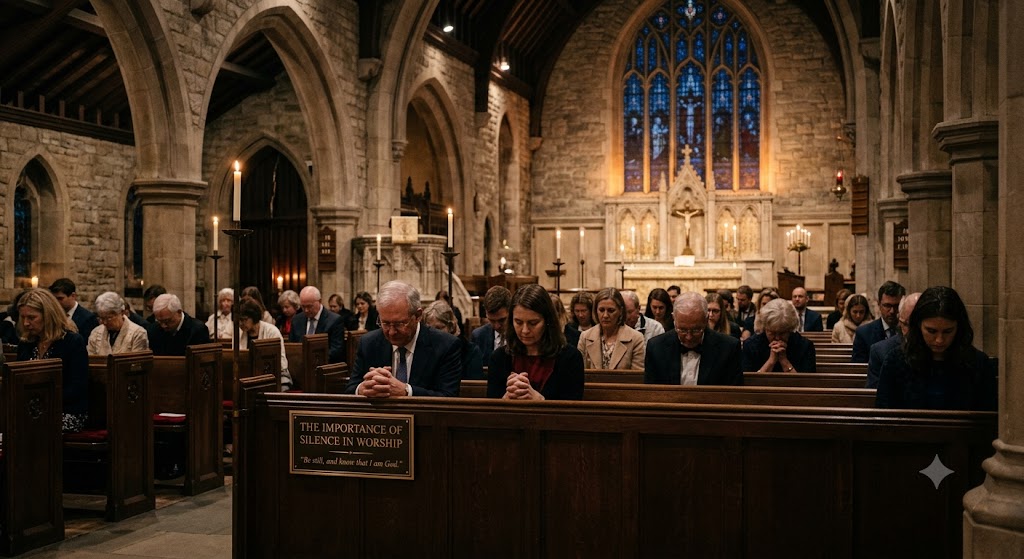
The Importance of Silence in Worship
In a world filled with constant noise, silence has become something many people struggle to embrace. From the moment we wake up, we are surrounded by notifications, conversations, music, traffic, television, social media, work demands and countless thoughts competing for our attention. Even when we are physically alone, our minds can remain incredibly busy. This is one reason why understanding the importance of silence in worship has become increasingly relevant for Christians today.
Worship is often associated with singing, musical instruments, raised hands, dancing, clapping, prayer and joyful celebration. These expressions are beautiful and deeply rooted in Christian worship. However, worship is not limited to sound. There are moments when the most meaningful response to God’s presence is simply to become still. Silence can create room for reflection, surrender, listening and awareness of God’s presence. The importance of silence in worship is therefore not about eliminating music or singing, but about recognising that worship also includes quietness before God.
The Bible contains many examples that reveal the spiritual value of being still. Psalm 46:10 says, “Be still, and know that I am God.” This powerful invitation reminds believers that knowing God is not always connected to activity. Sometimes we need to stop doing, stop speaking and simply recognise who God is. Silence can help remove some of the distractions that prevent us from paying attention to what is happening within our hearts.
In Christian music, there is often tremendous emphasis on the sound. A powerful vocalist can move a congregation. A skilled worship team can create an atmosphere of celebration. Beautiful lyrics can remind people of God’s promises. Instruments can help communicate emotions that ordinary speech sometimes cannot express. Yet there is something uniquely powerful about the moment when the music stops and everyone becomes quiet.
That silence can feel uncomfortable at first. People may wonder what they are supposed to do. Should they pray? Should they close their eyes? Should they wait? Should someone say something? The discomfort itself can reveal how accustomed we have become to constant stimulation. Silence forces us to confront the stillness we normally try to escape.
The importance of silence in worship becomes clearer when we understand that worship is fundamentally about relationship with God. A healthy relationship is not built entirely on talking. Listening matters too. If every worship experience consists of believers singing words to God without allowing space for reflection, the experience can become heavily focused on expression rather than attention. Silence creates an opportunity to listen, reflect and become more conscious of God’s presence.
This does not mean that every silent moment should be interpreted as God speaking directly to someone. Christians should exercise wisdom and measure spiritual impressions against Scripture. Silence is not a magical method for receiving supernatural messages. Instead, it provides an environment where believers can slow down, reflect on biblical truth and become more attentive to their relationship with God.
Jesus Himself demonstrated the value of withdrawing from noise and activity. Throughout the Gospels, we see Him intentionally seeking quiet places to pray. Luke 5:16 says that Jesus often withdrew to lonely places and prayed. His ministry was extremely demanding. Crowds followed Him. People needed healing. His disciples needed instruction. Yet Jesus still created space for solitude and prayer.
If Jesus recognised the value of withdrawing from crowds, modern Christians should not assume that constant activity is automatically evidence of spiritual maturity. Sometimes spiritual strength requires stepping away from the noise.
Silence in worship can also help believers examine their hearts. When there is no music covering the room and no preacher speaking, people are left with their own thoughts. This can be confronting. Silence may bring forgotten worries to the surface. It may remind someone of an unresolved conflict. It may expose bitterness, fear, pride, guilt or disappointment.
The Importance of Silence in Worship
This is not necessarily a bad thing. Worship is not simply about feeling good. Genuine worship brings us honestly before God. When silence reveals something in our hearts, it can become an opportunity for confession, repentance and surrender. Instead of running from uncomfortable emotions, believers can bring them before God.
The importance of silence in worship is particularly significant during difficult seasons. There are moments when a person does not have the strength to sing. There are seasons when prayers feel difficult. There are situations where words seem inadequate. A grieving person may sit quietly in God’s presence because they cannot explain what they are feeling.
Silence can become a language of its own.
Sometimes sitting quietly before God communicates, “Lord, I do not understand, but I am still here.” It can communicate surrender when there are no easy answers. It can express trust when circumstances remain uncertain. It can become an acknowledgement that God’s presence does not depend on our ability to find the right words.
This is one reason Christian music can benefit from intentional moments of silence. A worship song does not necessarily become more powerful because every second is filled with sound. Sometimes a pause after a powerful lyric can allow the message to settle into the heart. A musical break can give people time to reflect on what they have just sung.
Silence can also change the way people listen to worship music outside church. Instead of treating Christian songs as background entertainment, listeners can intentionally create quiet moments where they focus on the lyrics. A song about God’s faithfulness can become an opportunity to remember personal experiences of God’s provision. A song about surrender can become an invitation to examine what the listener is still holding onto.
In this way, silence can transform passive listening into active reflection.
There is also an important distinction between silence and emptiness. Silence does not mean that nothing is happening. A quiet room can be spiritually meaningful because something is happening internally. Thoughts are being processed. Scripture is being remembered. Emotions are being confronted. Gratitude is growing. The heart is becoming calmer.
The modern world often teaches people to fill every empty space. If there is silence, we reach for our phones. If there is a long journey, we put on music. If we are waiting, we scroll through social media. If we are alone, we search for entertainment. We have become extremely good at avoiding silence.
But worship can teach us another way.
It can teach us that we do not always need to fill the space.
Sometimes we need to sit.
Sometimes we need to breathe.
Sometimes we need to remember.
Sometimes we need to listen.
Sometimes we simply need to acknowledge that God is God.
The importance of silence in worship is also connected to humility. When we become silent, we temporarily stop trying to control the atmosphere. This is particularly important for worship leaders and musicians. Worship is not a performance designed to produce a particular emotional reaction from an audience. Its ultimate purpose is to honour God.
Musical excellence has value. Preparation matters. Good songwriting matters. Skilled musicianship matters. However, technical excellence should never become a substitute for spiritual sincerity. A beautifully performed worship song can still leave little room for personal reflection if the entire experience is designed around constant stimulation.
Silence can remind worship teams that they do not have to manufacture every emotional moment. Sometimes the most powerful thing a worship leader can do is stop singing and allow the congregation to respond personally.
This can be especially meaningful during congregational worship. When everyone is singing, individual voices become part of a collective sound. There is something beautiful about that unity. But when the singing stops, people can encounter God personally rather than only collectively. Each person has an opportunity to pray, reflect and respond from the heart.
Silence can therefore create both personal and communal depth.
The Bible also contains moments where silence is associated with awe. Habakkuk 2:20 says, “But the LORD is in his holy temple: let all the earth keep silence before him.” The imagery communicates reverence. There are moments when the appropriate response to God’s greatness is not more words but humble attention.
This idea is important in a culture where worship can sometimes become excessively focused on excitement. Joy is biblical. Celebration is biblical. Loud praise is biblical. Dancing is biblical. Instruments are biblical. But reverence is also biblical.
Christian worship does not need to choose between joyful sound and sacred silence. There is room for both.
The importance of silence in worship becomes even more powerful when believers understand that silence is not a rejection of music. Christian music remains one of the most beautiful ways believers express faith. Songs can teach theology, communicate testimony, strengthen hope and unite congregations. The issue is not whether worship should be loud or quiet. The deeper question is whether our worship creates genuine space for God.
A worship service can be filled with sound and still leave people spiritually distracted. Another service can contain moments of silence that encourage deep reflection. What matters is not the volume but the heart behind the worship.
Silence can also help believers appreciate sound differently. When someone experiences complete quietness, the return of music can feel more meaningful. A single piano note after a period of silence can carry emotional weight. A congregation singing together after a quiet prayer can feel more intentional. A worship leader speaking one simple sentence after several moments of silence can capture attention in a way that constant talking cannot.
Contrast creates attention.
This principle is useful for Christian musicians and worship leaders. Instead of filling every musical space, they can learn the value of pauses. A pause in music can give lyrics greater emotional impact. A moment of silence can allow a congregation to respond naturally rather than being immediately directed towards the next part of the song.
Silence can also be valuable during personal devotion. Christians can set aside a few minutes each day without music, social media or other distractions. They can sit quietly, read Scripture and allow themselves time to think about what they have read. The goal is not to force a supernatural experience but to cultivate attentiveness.
For someone who normally spends every quiet moment consuming content, even five minutes of silence can feel surprisingly difficult. That difficulty can become a lesson. It reveals how much stimulation has become normal.
Over time, quietness can become easier.
The mind may begin to settle more quickly. Prayer may become less rushed. Scripture may become easier to meditate on. Worship songs may begin to carry deeper meaning because the listener is no longer simply consuming music but reflecting on its message.
There is also a lesson here for Christian parents. Children are growing up in an extremely noisy digital environment. Teaching them how to sit quietly before God can become a valuable spiritual discipline. It does not need to be complicated. A parent can simply create a few quiet minutes during family devotion and encourage everyone to think about God’s goodness, read a short passage of Scripture or pray silently.
This teaches children that worship is not merely an event they attend. It is a relationship they cultivate.
The importance of silence in worship also matters for people who feel spiritually exhausted. Sometimes people are tired not because they lack faith but because they have been carrying too much noise. Their minds are constantly processing information. Their phones constantly demand attention. Their responsibilities never seem to end.
A quiet moment before God can become a place of rest.
Psalm 62:1 says, “Truly my soul waiteth upon God.” Waiting is difficult because it requires patience. Silence often feels like waiting. It removes our desire to rush towards the next thing. It teaches us to remain present.
This can be especially important when prayers seem unanswered. There are seasons when believers pray repeatedly and nothing appears to change. Silence during worship can help them acknowledge the reality of that season without pretending everything is fine.
Faith does not require pretending.
Sometimes worship sounds like singing loudly.
Sometimes worship sounds like crying.
Sometimes worship sounds like prayer.
And sometimes worship sounds like nothing at all.
A person sitting quietly before God can still be worshipping.
This understanding can also protect Christians from judging other people’s worship expressions. One person may worship through energetic singing. Another may worship quietly with tears in their eyes. Another may stand still and reflect. Another may kneel. Another may sing softly. Worship should not become a competition over who appears most spiritual.
The heart matters.
The importance of silence in worship ultimately points believers back to the character of God. God is not dependent on our noise. He does not become more powerful because we sing louder. He does not become more present because a worship service becomes emotionally intense. He is already God.
Silence gives us an opportunity to remember that.
It reminds us that worship is not about creating God’s presence but responding to Him.
It reminds us that our relationship with God is deeper than music.
It reminds us that faith is more than emotional excitement.
It reminds us that sometimes the most profound response to God’s greatness is simply to stop and recognise Him.
For Christian music bloggers, artists, worship leaders and listeners, this is an important conversation to have. As Christian music continues to evolve through streaming platforms, social media, short form videos and digital creativity, there will always be pressure to capture attention. Songs need strong introductions. Videos need compelling visuals. Artists need to compete for streams. Content needs to move quickly.
But worship should not become another form of endless digital noise.
There must still be room for stillness.
There must still be room for reflection.
There must still be room for reverence.
There must still be room for believers to encounter the message beneath the melody.
The importance of silence in worship is therefore not about making Christian worship boring or removing the joy from music. It is about restoring balance. There are times to sing and times to be quiet. There are moments for celebration and moments for contemplation. There are moments for corporate praise and moments for personal surrender.
The healthiest worship experience can make room for all of them.
Perhaps one of the greatest challenges for modern Christians is learning that silence does not mean God is absent. Sometimes silence is precisely where we become more aware of what has been present all along.
So the next time you listen to a worship song, do not rush to the next song when it ends. Sit quietly for a moment. Think about the words you just sang. Consider what they mean for your life. Ask yourself whether you truly believe what you were singing. Bring your fears, questions, gratitude and burdens before God.
And then simply be still.
You may discover that worship is not always found in the loudest part of the song.
Sometimes it is found in the pause.
Sometimes it is found in the breath between lyrics.
Sometimes it is found after the instruments stop.
Sometimes it is found when there is nothing left to say.
That is why the importance of silence in worship should not be overlooked. Silence can create space for reflection, humility, prayer, surrender and deeper awareness of God. It can help Christians move beyond consuming worship music towards genuinely engaging with its message. In a world that constantly demands our attention, choosing to become still before God can itself become a powerful act of faith.
The world will always have something to say.
Our phones will always have another notification.
Social media will always have another post.
The news will always have another headline.
Music will always have another song.
But there are moments when the soul needs something different.
It needs stillness.
It needs quiet.
It needs space to remember what matters.
And sometimes, in that silence, worship begins.

Leave a Reply