
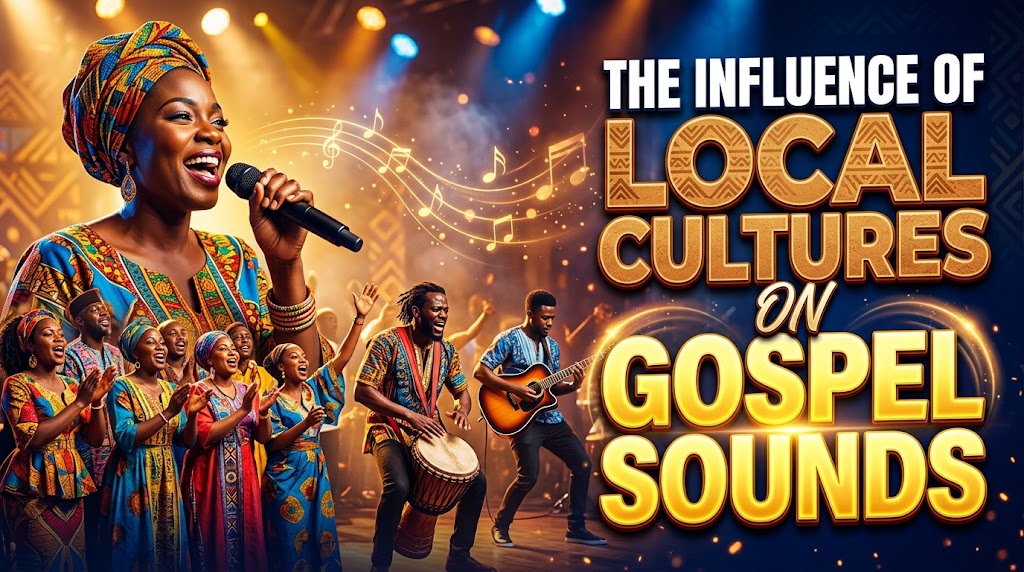
The Influence of Local Cultures on Gospel Sounds
The Influence of Local Cultures on Gospel Sounds
Gospel music has never existed in isolation from the communities that create, perform, share and celebrate it. Although the central message of gospel music is rooted in Christian faith, the way that message sounds can vary dramatically from one region, country, ethnic community or generation to another. This is why The Influence of Local Cultures on Gospel Sounds is such an important subject for anyone interested in understanding the development of Christian music around the world.
From African drums and indigenous rhythms to Caribbean grooves, American gospel traditions, European choral arrangements and contemporary Asian worship styles, local culture has consistently influenced how Christians express their faith through music. The result is a remarkable global collection of gospel sounds that may differ in language, rhythm, instrumentation, vocal delivery and performance style while still communicating themes of faith, hope, worship, salvation, gratitude and devotion to God.
The Influence of Local Cultures on Gospel Sounds can be seen most clearly when gospel music moves from one community to another. A Christian song may begin with a familiar worship message, but local musicians often interpret that message through the musical traditions they grew up hearing. They may introduce traditional instruments, regional rhythms, local languages, distinctive vocal patterns or cultural storytelling techniques. In doing so, they create music that feels familiar to their immediate audience while remaining connected to the wider Christian music tradition.
Culture influences music because music itself is deeply connected to human identity. People often respond naturally to rhythms, melodies and musical structures that they have encountered throughout their lives. A person who grows up hearing a particular drum pattern at celebrations, ceremonies or community gatherings may naturally incorporate similar rhythms into their musical expression. A vocalist raised around call and response singing may use that technique instinctively when leading worship. A songwriter surrounded by a particular language and storytelling tradition may communicate biblical ideas using expressions that resonate strongly with the local community.
This explains why gospel music does not sound exactly the same everywhere. Christianity may be global, but Christian musical expression is often local. The message can remain centred on Christ while the musical language changes according to the culture of the people expressing it.
Africa provides one of the clearest examples of The Influence of Local Cultures on Gospel Sounds. Across the continent, gospel music has developed through interactions between Christianity and diverse indigenous musical traditions. African gospel music is not one single sound because Africa contains thousands of cultural communities with different languages, rhythms, instruments and musical histories. Nigerian gospel music, Ghanaian gospel music, South African gospel music and gospel music from other African countries can therefore have noticeably different characteristics.
In Nigeria, for example, contemporary gospel music frequently incorporates elements of indigenous Nigerian music, highlife, Afrobeat, Afropop, traditional percussion, choral music and other modern influences. Nigerian gospel artists may sing in English, Pidgin English or indigenous languages such as Yoruba, Igbo and Hausa. These linguistic choices can make songs more accessible and emotionally meaningful to particular audiences.
Rhythm is another important cultural influence. Nigerian musical traditions have historically placed considerable emphasis on percussion, movement and rhythmic interaction. Contemporary gospel musicians can draw upon these characteristics when creating praise songs, worship recordings and celebratory gospel performances. The resulting music can feel distinctly Nigerian while communicating Christian themes that are understood far beyond Nigeria.
Language itself can transform gospel music. Singing a Christian song in a person’s native language can create a different emotional connection from hearing the same message in a foreign language. Indigenous languages carry cultural expressions, humour, poetry, history and emotional meanings that may not always translate perfectly into another language. When gospel musicians use local languages, they can communicate biblical themes in ways that feel deeply connected to everyday life.
This is one reason indigenous language gospel music continues to play an important role in many communities. A listener may understand English perfectly but still experience a particular worship song differently when it is performed in the language spoken by their parents or grandparents. The language becomes more than a communication tool. It becomes part of the musical identity of the song.
The Influence of Local Cultures on Gospel Sounds is also evident in the use of traditional instruments. Different societies have developed distinctive instruments over generations, and Christian musicians sometimes incorporate these instruments into worship and gospel recordings. Drums, flutes, string instruments, bells, shakers and other indigenous instruments can introduce cultural characteristics into a gospel arrangement.
The use of traditional instruments can also help preserve cultural heritage. Instead of completely abandoning indigenous musical traditions, musicians can integrate them into contemporary Christian compositions. This creates an opportunity for younger generations to encounter aspects of their cultural heritage through music while also engaging with modern Christian sounds.
Call and response is another cultural and musical feature that has had a significant influence on gospel music. In this approach, a leader sings or speaks a musical phrase and a group responds. The technique can create participation rather than simply encouraging an audience to listen passively.
This approach has become strongly associated with various African and African diaspora musical traditions and has also played a major role in gospel music in the United States. In a worship setting, call and response can turn a song into a communal experience. The congregation becomes part of the musical performance rather than remaining only an audience.
American gospel music demonstrates another important example of cultural development. African American gospel traditions developed through complex historical interactions involving Christian worship, spirituals, blues, jazz, soul and other musical forms. Over time, gospel musicians created distinctive approaches to harmony, rhythm, vocal expression and storytelling.
The emotional intensity often associated with traditional gospel singing demonstrates how musical culture can shape religious expression. Powerful vocal improvisation, choir arrangements, repetition and dynamic changes can communicate emotions that complement the words being sung. These characteristics have influenced numerous other forms of popular music while continuing to shape Christian music itself.
The Caribbean also provides a fascinating example of cultural influence. Gospel music in Caribbean communities can incorporate elements of reggae, calypso, soca and other regional musical traditions. The rhythms can give worship music a distinctive movement and energy that reflects the culture of the people performing it.
This demonstrates that cultural influence does not necessarily weaken the identity of gospel music. Instead, it can provide different communities with a way to express the Christian message using musical forms they already understand and appreciate.
Latin American gospel music offers another example. Christian musicians across Latin America may incorporate regional rhythms, Spanish language songwriting, indigenous influences and local musical traditions into their compositions. Worship can therefore sound different in Brazil, Mexico, Colombia, Argentina or other countries because each musical environment has its own history and cultural identity.
Brazilian Christian music, for example, can draw from musical traditions that are distinctly Brazilian. Spanish speaking countries can similarly combine Christian lyrics with musical structures familiar to their audiences. The result is not necessarily a completely separate category of music but rather a local expression of a global Christian musical tradition.
European gospel music has also developed through cultural adaptation. Choir traditions, classical music, organ arrangements and contemporary European popular music have influenced Christian recordings and worship practices in different parts of the continent. Some churches place strong emphasis on choral harmonies and formal arrangements, while others have adopted contemporary worship bands and modern production techniques.
Asia presents another broad example because of the enormous diversity of cultures across the continent. Christian music in South Korea, the Philippines, India, Indonesia and other Asian communities can incorporate local languages, instruments, melodies and musical structures. In places where Christianity is a minority religion, local Christian musicians may develop distinctive approaches that communicate their faith within a particular cultural environment.
The Philippines, for instance, has developed a strong Christian music culture in which English and Filipino languages can coexist within worship music. Local musicians can combine international contemporary worship influences with musical characteristics familiar to Filipino audiences.
The Influence of Local Cultures on Gospel Sounds also extends beyond traditional music. Modern technology has made it easier than ever for musical cultures to interact. A gospel artist in Lagos can listen to worship music from the United States, South Africa, Ghana, the United Kingdom or Australia within seconds. A Christian musician in Nairobi can be influenced by Nigerian gospel production. A worship leader in London can discover African praise rhythms through social media.
Streaming platforms, social media and digital distribution have therefore created a global musical conversation. Gospel artists no longer have to depend entirely on local radio stations, record shops or physical distribution networks to discover new sounds. They can study music from different parts of the world and incorporate selected influences into their own creative work.
This cultural exchange has created exciting possibilities, but it also raises questions about musical identity. When artists borrow sounds from another culture, they need to understand the difference between influence and imitation. Respect for the origins and meaning of particular musical traditions is important, especially when those traditions are closely connected to a community’s history.
At the same time, musical cultures have always interacted with one another. Very few modern genres exist without outside influences. Gospel music itself has evolved through centuries of cultural exchange. What listeners consider a traditional gospel sound today may have been shaped by musical developments that originated in different communities and historical periods.
Another important influence is the local church environment. Churches do not all worship in the same way. Some communities favour large choirs, while others prefer smaller worship teams. Some churches use keyboards, guitars and drums, while others incorporate organs, traditional percussion or acoustic instruments. These choices can influence the type of gospel music produced by musicians within those communities.
Church celebrations can also influence musical styles. Weddings, funerals, conferences, conventions, youth programmes and revival meetings may each create different opportunities for gospel musicians. Songs written for a large church celebration may sound different from intimate worship music intended for personal devotion.
Local culture also influences the themes that gospel musicians emphasise. Although biblical themes remain central, artists may write about experiences that are particularly relevant to their communities. Songs can address perseverance, family, poverty, migration, hope, community, gratitude, work, celebration and everyday struggles while connecting those experiences to Christian faith.
This makes gospel music a powerful form of cultural storytelling. A song can preserve the sound of a community while documenting what people believe, experience and hope for. Future generations can listen to older gospel recordings and discover not only musical styles but also aspects of the social and cultural environment in which those songs were created.
The digital age is likely to accelerate this process even further. Young Christian artists are growing up surrounded by multiple musical influences. They may listen to traditional hymns in church, African gospel at home, contemporary worship online, Afropop on streaming platforms and international Christian artists on social media. These different influences can eventually appear together in their own music.
This could produce increasingly diverse gospel sounds around the world. Instead of one dominant global style, Christian music may continue developing into thousands of local expressions connected through digital platforms.
The Influence of Local Cultures on Gospel Sounds therefore demonstrates an important truth about Christian music. Gospel music is not defined only by instruments, production techniques or musical genres. It is also shaped by people, communities, histories and experiences. When Christians express their faith through music, they often bring their cultural identity with them.
That cultural identity can be heard in the language of a song, the rhythm of a drum, the harmony of a choir, the structure of a melody, the emotion of a vocalist or the instruments used during a worship performance. These elements can make gospel music sound different from one location to another without removing its Christian foundation.
For gospel artists, understanding this relationship between culture and music can provide opportunities for greater creativity. Artists do not necessarily have to abandon their cultural heritage in order to participate in contemporary Christian music. Instead, they can explore how their local musical traditions can contribute something distinctive to the wider gospel community.
For listeners, understanding The Influence of Local Cultures on Gospel Sounds can also make listening to international gospel music more meaningful. Instead of hearing unfamiliar rhythms or languages simply as differences, listeners can recognise them as expressions of cultural identity and Christian faith.
Ultimately, the global gospel music landscape is powerful precisely because it contains so many different voices. A worship song performed in Lagos may sound different from one performed in Seoul, Kingston, London or Johannesburg. Yet each can provide a musical expression of faith that speaks to the people who created and received it.
The future of gospel music will likely continue to be shaped by this meeting between faith, culture and technology. Local musicians will keep adapting Christian messages to their own musical environments, while global platforms will expose those local sounds to audiences thousands of kilometres away.
The Influence of Local Cultures on Gospel Sounds is therefore not simply a historical phenomenon. It is an ongoing process. Every generation of Christian musicians has the opportunity to add something to the musical heritage that came before it. As new artists combine traditional influences with modern sounds, gospel music will continue to evolve while carrying its central message into new communities, languages and generations.
From indigenous rhythms to contemporary digital production, from traditional choirs to independent gospel artists releasing music directly to global audiences, culture remains one of the forces that gives Christian music its remarkable diversity. The sound may change from place to place, but the creative desire to express faith through music continues to connect Christian communities around the world.

Leave a Reply