
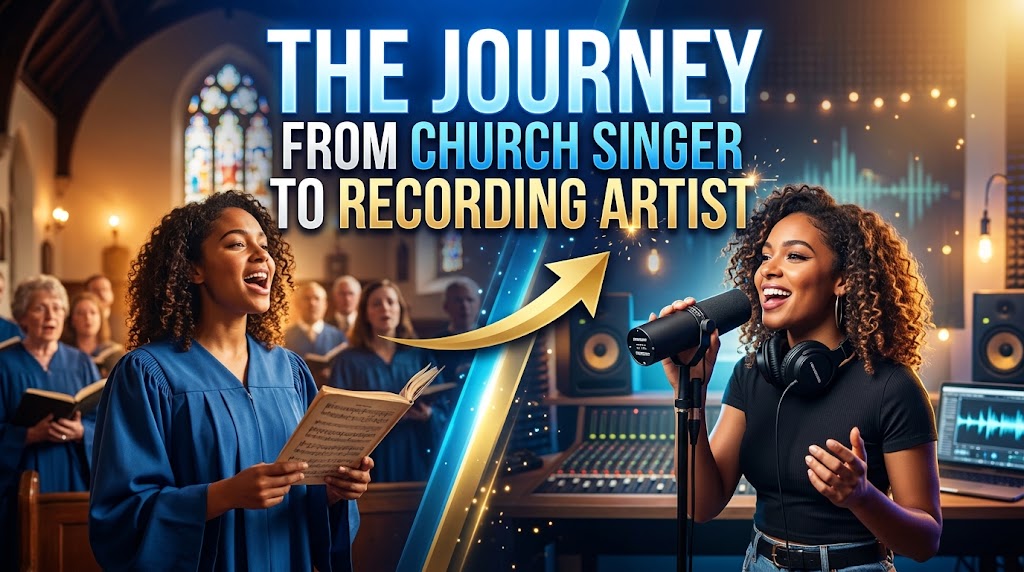
The Journey From Church Singer to Recording Artist
The Journey From Church Singer to Recording Artist
For many gospel artists, the journey into recorded music begins in a familiar place: the church. It may begin with singing in the choir, leading worship during a Sunday service, participating in a youth programme, or discovering a love for music during regular rehearsals.
At first, singing may simply be a way to serve God and encourage others. Over time, however, a person may begin writing original songs, receiving requests to record, or considering how their music could reach people beyond their local congregation.
Moving from church singing to becoming a recording artist is an exciting step, but it requires more than a good voice. It involves preparation, musical development, studio experience, understanding the music business, and learning how to share your work with a wider audience.
For aspiring gospel artists, the transition does not have to happen all at once. It can be approached gradually, with each stage providing lessons that prepare you for the next.
1. Recognise the Value of Your Church Experience
The church can provide a valuable foundation for a developing singer. Regular rehearsals help build discipline, while singing with other musicians teaches listening, timing, harmony, and teamwork. Participating in worship services can also help singers learn how to communicate emotion and meaning through music.
These experiences are useful when entering a recording studio. An artist who understands musical timing, follows direction, and works well with other musicians already has skills that can support the recording process.
However, singing in church and recording professionally are different experiences. A live performance involves a congregation, an atmosphere, and the energy of other singers and musicians. A studio recording requires close attention to pitch, timing, pronunciation, vocal consistency, and the smallest details of a performance.
Your church experience is a foundation, not a substitute for continued learning.
2. Discover Your Identity as a Gospel Artist
Before recording your first single, spend time thinking about the kind of music you want to create and the message you want to communicate.
Gospel music includes many styles, such as contemporary worship, traditional gospel, Afro Gospel, praise music, gospel highlife, and Christian contemporary music. You may be drawn to one style or enjoy combining several influences.
Listen carefully to different artists and observe how they approach songwriting, melodies, vocal delivery, arrangements, and production. Learning from established musicians can help you develop your skills, but the aim should be to discover your own artistic identity rather than imitate another person’s career.
Consider these questions:
- What message do I want my music to communicate?
- Which musical styles best express that message?
- What experiences or biblical themes inspire my songwriting?
- What makes my voice, perspective, or musical approach distinctive?
- Who might benefit from listening to my songs?
You do not need to have every answer before recording your first song. Your identity may become clearer as you gain experience. Nevertheless, having a general direction can help you make better decisions about songwriting, production, artwork, and promotion.
3. Develop Your Voice and Musical Skills
Natural talent is valuable, but consistent practice helps a singer become more dependable and expressive.
A church singer preparing to record should pay attention to breath control, pitch accuracy, vocal range, rhythm, diction, and the ability to maintain consistent delivery. Vocal exercises and appropriate coaching can help identify weaknesses that may not be obvious during a live performance.
It is also important to understand your comfortable singing range. A song that sounds powerful when sung in one key may become strained when recorded in another. Work with a capable musician or producer to select a key that allows your voice to communicate the song effectively.
Listening critically to your own practice recordings can be useful. You may notice unclear words, uneven phrasing, unnecessary vocal strain, or places where the melody could be delivered more naturally.
Do not treat every correction as a criticism of your ability. Learning to accept constructive feedback is part of becoming a better musician.
4. Learn to Prepare a Song Before Entering the Studio
A recording session becomes more productive when the artist arrives prepared.
Before booking studio time, make sure the song has a clear structure. Know where the verses, chorus, bridge, instrumental sections, and ending occur. Understand the melody and lyrics, and think about how the emotional direction should develop throughout the song.
If you write your own music, keep organised copies of your lyrics and song drafts. Record melody ideas when they come to you, and review them before committing to a final arrangement.
It can also help to create a simple demonstration recording. This does not need professional equipment. A basic recording can communicate the melody, rhythm, and intended feel of the song to a producer.
For gospel music, the message deserves particular attention. Ask whether the lyrics communicate what you intend, whether the biblical references are used accurately where applicable, and whether the musical arrangement supports the message.
Preparation does not mean every detail must be perfect before you begin. It means having enough clarity to use studio time wisely.
5. Choose the Right Producer and Studio
A music producer can influence the arrangement, instrumentation, sound, and overall direction of a recording. Choosing a producer should therefore involve more than comparing prices.
Listen to previous productions and consider whether the producer understands the style of music you want to make. Discuss your expectations, budget, recording schedule, and the services included in the agreed fee.
Communication is especially important. You should be able to explain your musical ideas, ask questions, and understand the producer’s suggestions. A good working relationship makes it easier to solve problems and improve the final recording.
Before beginning, clarify what you are paying for. Depending on the agreement, the fee may cover recording, vocal editing, mixing, mastering, or only some of these services.
Also discuss ownership and usage rights in writing. Establish who owns the master recording, whether any songwriting contributions are shared, what permissions are granted, and whether any royalties or additional payments are due.
A modest studio with a skilled producer and clear communication may be a better choice than an expensive studio that does not suit your needs.
6. Become Comfortable with Studio Recording
Many singers discover that recording requires a different kind of concentration from performing live.
In a studio, a producer may ask you to repeat a line several times, adjust your pronunciation, change the intensity of your voice, or sing a phrase more softly. You may record the same section repeatedly before achieving the desired result.
This is normal. Recording allows small details to be examined closely, and repeated takes can help an artist deliver a more polished performance.
Listen to the producer’s feedback and ask questions when an instruction is unclear. At the same time, communicate your own concerns if an adjustment feels unnatural or changes the intended message of the song.
The objective is not simply to produce a technically clean recording. It is to create a performance that communicates the song effectively.
Patience, preparation, and a willingness to improve can make the experience much more rewarding.
7. Understand Digital Distribution and Music Rights
Finishing a recording is a major milestone, but it is not the final step. If you want listeners to discover your song on streaming services, you will need to understand how digital distribution works.
A digital music distributor can deliver an eligible release to participating streaming platforms. Before submitting your song, check the distributor’s requirements for audio quality, artwork dimensions, artist information, release dates, and song metadata.
Make sure the song title and artist name are accurate and consistent. Submit your release early enough to allow time for processing and any corrections that may be required.
You should also understand the difference between the master recording and the underlying musical composition. The master is the particular recorded performance, while the composition includes the songwriting elements such as lyrics and melody.
Different people may have rights in these works, depending on who created or funded them and what agreements were made. Keep written records of songwriting contributions, producer agreements, and ownership arrangements.
If you write your own songs, learn about appropriate copyright registration and music publishing administration in the territories relevant to your career. Registration with a performing rights organisation may also be relevant, depending on your circumstances and the organisation’s rules.
Understanding these matters early can help prevent confusion when your music begins generating income or attracting collaboration opportunities.
8. Prepare for the Business Side of Music
Recording artists need more than musical ability. They must also learn how to manage the practical responsibilities surrounding their releases.
These responsibilities may include maintaining accurate music metadata, organising promotional materials, communicating with collaborators, keeping financial records, and tracking release dates.
Start with a simple plan for each song. Record the expected studio costs, artwork expenses, distribution fees, promotional spending, and other relevant costs. This will help you understand what each release requires financially.
Keep copies of important agreements, invoices, master recordings, lyrics, and final artwork. Organised records make it easier to manage your catalogue and resolve questions later.
You do not need to become an expert in every aspect of the music business before releasing your first single. Begin with the essentials and expand your knowledge as your career develops.
9. Promote Your Music with Purpose
A recording may be available online without reaching many listeners. Promotion helps people discover the music, understand its message, and decide whether they want to listen.
Independent gospel artists can begin with the platforms and resources they already have. Share official listening links, post short performance videos, introduce the song’s message, and communicate with listeners who show genuine interest.
You can also contact relevant Christian music blogs, local radio programmes, church media teams, and music communities. Research each platform before making a submission, and provide clear information about the release.
Your website can serve as a central destination for your music, biography, lyrics, announcements, and other useful content. Make sure visitors can find the song they came to hear without navigating through unnecessary pages.
Rather than publishing the same promotional message every day, create different content around the release. A lyric excerpt, a short performance, an explanation of the song’s inspiration, and a behind-the-scenes clip can each offer a different reason for someone to engage.
Promotion should help the music reach the right audience, not simply create the appearance of popularity. Avoid fake streams, misleading claims, and services that promise guaranteed success without explaining what they provide.
10. Be Patient with Your Progress
An artist’s first release may receive only a modest number of streams. A second song may attract a different response, while a later release may introduce the music to a wider audience.
These outcomes do not automatically determine the quality of the artist or the value of the work. Audience growth can depend on musical style, discoverability, promotion, timing, listener preferences, and many other factors.
Use the information available to learn. Which songs are listeners responding to? Where are people discovering your music? Are they visiting your artist profile, sharing your releases, or returning to listen again?
Streaming statistics and social media figures can be useful, but they do not tell the entire story. Meaningful feedback, invitations to perform, new relationships, and the effect your music has on individual listeners may also be valuable.
Set realistic goals and review your progress periodically. You might aim to improve your recording quality, release a song on schedule, build a more complete artist profile, or develop a consistent promotional routine.
Small improvements can prepare you for larger opportunities.
11. Keep Your Faith and Values at the Centre
For a Christian recording artist, the journey can involve spiritual as well as professional growth.
As your music becomes more widely available, you may begin paying closer attention to streaming figures, audience reactions, and the success of other artists. These things can provide useful information, but comparison can also become a distraction if they determine how you measure your worth.
Remember the reasons you began singing. If your purpose includes worship, encouragement, testimony, or sharing the Christian message, allow those values to inform your choices.
This does not mean avoiding excellence, planning, or promotion. It means pursuing those things without allowing recognition to become the only measure of success.
Constructive criticism can help you grow, while unfavourable opinions may sometimes reflect different musical preferences rather than a failure on your part. Learn to distinguish useful feedback from comments that do not help you improve.
Remain willing to learn, work with others respectfully, and make decisions that align with your convictions.
12. Take Your Next Step Deliberately
If you are currently singing in church and considering recording your own music, you do not need to solve every challenge immediately. Begin by identifying the next practical step.
You might start by writing an original song, improving your vocal technique, recording a demonstration, finding a suitable producer, or learning about digital distribution.
A simple action plan can help you move forward:
- Choose one song that you are prepared to develop.
- Review its lyrics, melody, and structure.
- Practise until you can perform it confidently.
- Research producers who work with your musical style.
- Set a realistic budget and agree on the work to be completed.
- Clarify ownership and contribution agreements before recording.
- Prepare your artwork, metadata, and release information.
- Plan how you will introduce the music to your audience.
- Review the results and identify what you can improve for the next release.
You can adapt this process to your circumstances. The important thing is to make deliberate progress rather than waiting until you feel completely ready.
Conclusion
The journey from church singer to recording artist is not defined by one recording session or a single successful release. It develops through practice, preparation, collaboration, learning, and a willingness to improve.
Church singing can provide a strong musical and spiritual foundation. Developing your voice, discovering your artistic identity, choosing the right collaborators, understanding music rights, and learning how to promote your work can help you build on that foundation.
You may begin with a single song, a limited budget, and a small audience. That does not make the beginning insignificant. Every step offers an opportunity to develop your craft and understand what the next stage requires.
If you are ready to move forward, begin with the resources available to you, seek advice where necessary, and keep learning as you go.
Your first recording does not have to mark the completion of your development. It can be the beginning of a more intentional journey as a gospel recording artist.

Leave a Reply