
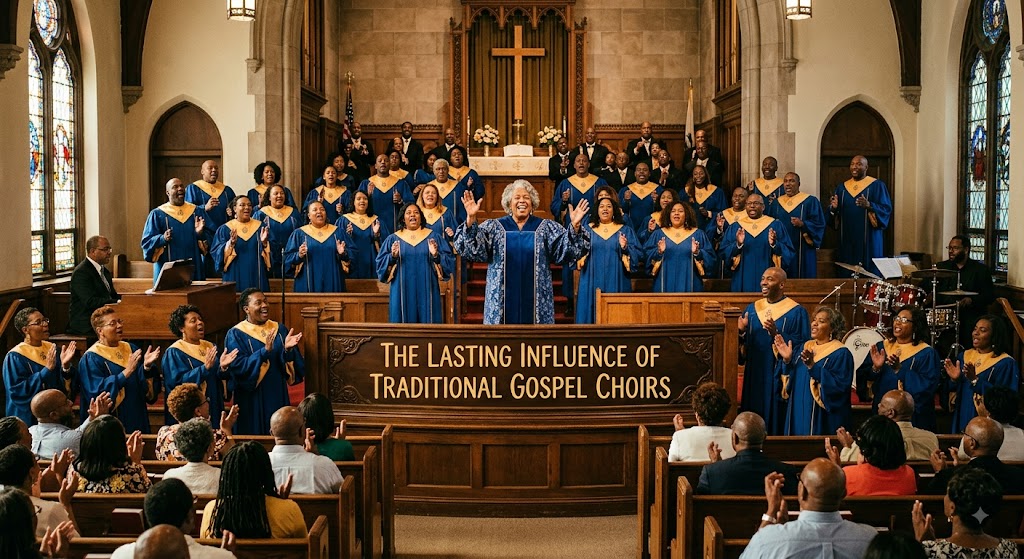
The Lasting Influence of Traditional Gospel Choirs
The Lasting Influence of Traditional Gospel Choirs can be felt far beyond the walls of churches where these powerful musical traditions first developed. Long before gospel music became a global industry with millions of streams, elaborate music videos, international tours and digital platforms, traditional gospel choirs were already using voices, instruments, harmonies and heartfelt lyrics to communicate faith, hope and resilience. Their music was not simply created for entertainment. It was deeply connected to worship, community, testimony and the everyday experiences of people who found strength in their faith.
Traditional gospel choirs have played an extraordinary role in shaping the sound and culture of Christian music. Their influence can be heard in modern worship, contemporary gospel, Christian soul, choir music, praise music and even some popular secular genres. Although music technology has changed dramatically, the fundamental power of a group of voices singing together with conviction has remained remarkably strong. This is one of the reasons The Lasting Influence of Traditional Gospel Choirs continues to matter in an age dominated by digital production and individual artists.
The traditional gospel choir represents something that is increasingly rare in modern music. It represents collective expression. Instead of placing all attention on one singer, the choir brings different voices together to create one musical experience. Each individual voice contributes to something larger than itself. Sopranos, altos and tenors can combine to create harmonies that are emotionally powerful, while bass voices provide depth and strength. When these voices come together, the result can communicate a sense of unity that a single performer may struggle to reproduce.
This collective nature is one of the most important reasons traditional gospel choirs have remained influential. Gospel music has always had a strong relationship with community. People sing together because they worship together, struggle together, celebrate together and encourage one another. The choir becomes a musical representation of that community. It reminds listeners that faith is not always a solitary journey and that people can find strength through shared experiences.
Another important part of the legacy of traditional gospel choirs is their ability to tell stories. Many traditional gospel songs communicate themes of perseverance, redemption, suffering, gratitude, salvation, hope and trust in God. These themes are timeless because human beings continue to experience difficult circumstances regardless of the generation in which they live. A song recorded decades ago can still speak directly to someone facing uncertainty today because its emotional message remains relevant.
The storytelling quality of traditional gospel music is particularly powerful because the singers often perform with genuine emotional conviction. Gospel choir music is not simply about singing the correct notes. It is about communicating a message. The words matter, but so does the emotion behind them. A choir can begin softly and gradually build intensity until the entire performance feels like a declaration of faith. That emotional progression has influenced countless Christian musicians and worship leaders.
The Lasting Influence of Traditional Gospel Choirs is also evident in the development of modern gospel music. Contemporary gospel artists have adopted many elements that traditional choirs helped establish. Powerful vocal harmonies, call and response, dynamic arrangements, repeated phrases and energetic musical climaxes remain important features of gospel music today. Even when these elements are presented through modern production techniques, their roots can often be traced back to traditional gospel performance.
Call and response is one of the most recognisable characteristics associated with gospel music. A lead singer may introduce a phrase while the choir responds with another phrase. This creates interaction between the individual and the group and can also encourage participation from the congregation. The technique gives gospel music a conversational quality. It feels less like a performance being delivered to passive listeners and more like a musical dialogue involving everyone in the room.
This approach has had an enormous influence on worship music. Many modern worship songs contain repeated lines designed to encourage congregational participation. Worship leaders frequently sing a phrase and invite the congregation to respond by repeating it. Although contemporary worship may use sophisticated instruments, production and technology, the underlying idea remains connected to the communal traditions of gospel choir music.
Traditional gospel choirs have also influenced the way Christian musicians understand vocal harmony. A choir can transform a simple melody into something rich and emotionally powerful through carefully arranged harmonies. Modern Christian artists frequently use layered background vocals to create a fuller sound. In many cases, the techniques used in contemporary recordings are extensions of practices that gospel choirs have refined for generations.
The influence goes beyond music itself. Traditional gospel choirs have helped preserve stories, values and cultural memories. Music can carry ideas from one generation to another in ways that ordinary conversation sometimes cannot. Parents can teach children songs. Older church members can introduce younger singers to traditional arrangements. Choir directors can pass musical knowledge to new generations. In this way, gospel music becomes part of a living cultural heritage.
The Lasting Influence of Traditional Gospel Choirs
This intergenerational connection is particularly important in an era when music trends can change almost overnight. New sounds appear on social media, new artists become popular and songs can become forgotten within weeks. Traditional gospel choir music offers a different perspective. It reminds listeners that not every meaningful song needs to be new. Some songs become more valuable with time because generations continue to discover meaning in them.
One of the greatest strengths of traditional gospel choirs is their ability to create an atmosphere. Anyone who has experienced a powerful choir performance understands that the effect can be difficult to describe. The combination of multiple voices, instruments, rhythm, lyrics and emotion can create a moment that feels larger than the individual components. This atmosphere is one reason choirs continue to play an important role in churches around the world.
Traditional gospel choirs have also demonstrated that music can become a source of encouragement during difficult circumstances. Throughout history, gospel music has given people words to express pain while simultaneously reminding them of hope. A person experiencing grief, disappointment, financial hardship or uncertainty may find comfort in a song that speaks about God’s faithfulness. The music does not necessarily remove the problem, but it can change the way the person faces it.
That emotional function remains highly relevant today. Modern listeners may discover gospel choir songs through streaming platforms, social media clips or recommendations from friends rather than through a church service. Yet the emotional connection can remain just as powerful. Digital technology has therefore created an unexpected opportunity for traditional gospel music to reach audiences that previous generations could never have imagined.
The internet has also made it possible for younger Christian musicians to study traditional choir arrangements. A young worship leader can listen to recordings from previous generations and learn about vocal harmony, musical structure, lyrical themes and performance techniques. This means traditional gospel music is no longer restricted to the geographical communities where it originated or developed. Its influence can cross national and cultural boundaries almost instantly.
African gospel music provides another powerful example of how traditional choir traditions continue to evolve. Across many African countries, gospel choirs have combined traditional vocal arrangements with local languages, rhythms and instruments. This has produced distinctive forms of Christian music that remain deeply connected to local cultures while communicating messages that resonate internationally.
In Nigeria and other parts of Africa, gospel choirs have played an especially important role in church life. Choir performances can become major parts of worship services, special programmes, celebrations and religious gatherings. The choir is often more than a musical group. It can function as a ministry that uses music to encourage worshippers and communicate biblical messages.
The growing popularity of Afro gospel and other African Christian music styles demonstrates that traditional choir principles are not disappearing. Instead, they are being reinterpreted. Younger artists may combine choir harmonies with Afrobeats, hip hop, R&B, electronic production or other modern sounds. The result may sound completely different from an older gospel recording, but the underlying emphasis on message, community, rhythm and spiritual expression remains.
This evolution is important because tradition does not have to mean refusing to change. A musical tradition survives when each generation understands its foundation and finds creative ways to express it. Traditional gospel choirs have survived precisely because their core ideas are adaptable. Their emphasis on harmony, testimony, worship and community can exist within many different musical styles.
Another significant contribution of traditional gospel choirs is the development of Christian musical leadership. Choir directors and worship leaders have historically been responsible for bringing singers together, teaching songs, maintaining discipline and helping performers understand the message behind the music. These skills continue to influence modern worship ministries.
A good choir director understands that technical ability alone does not create a powerful worship experience. Singers need preparation, discipline and teamwork. They need to listen to one another rather than compete for attention. They need to understand when to sing loudly and when to become quiet. They need to recognise that the purpose of the performance is bigger than individual recognition.
This lesson is especially valuable in today’s music environment, where visibility and personal branding can sometimes become more important than collective expression. Traditional gospel choirs provide a reminder that music can be powerful without making one person the centre of attention. The strength of the choir comes from its ability to work together.
The Lasting Influence of Traditional Gospel Choirs can also be seen in the way gospel music has influenced artists outside the Christian music industry. Gospel harmonies, vocal techniques and choir arrangements have influenced soul, R&B, blues and other musical styles. Many celebrated singers developed their vocal abilities by participating in church choirs or listening to gospel performances. The emotional intensity associated with gospel singing has become an important part of modern popular music.
This crossover demonstrates the extraordinary musical strength of the gospel tradition. A song can originate in a church environment and eventually influence musicians who perform for completely different audiences. Gospel music has therefore contributed not only to Christian culture but also to the broader development of modern music.
Despite all the changes in technology, traditional gospel choirs still possess something that cannot easily be replaced by software. Human voices carry imperfections, emotions and individual characteristics. When several people sing together, listeners can hear the humanity behind the music. There may be moments when a singer takes a breath, a harmony becomes especially strong or the congregation responds spontaneously. These details can make a performance feel authentic.
Modern production can create incredibly polished recordings, but perfection is not always the same thing as emotional connection. Traditional gospel choirs remind the music industry that people often connect most deeply with performances that feel genuine. The slight imperfections of live singing can sometimes make a song more memorable because they reveal the humanity of the performers.
Another reason traditional gospel choirs remain important is their ability to inspire participation. Listening to a solo artist can be enjoyable, but singing with other people can create a completely different experience. Choir music invites listeners to become involved. In church settings, congregations may sing along, clap, respond to the lead singer or participate in repeated sections of a song. The boundary between performer and audience becomes less obvious.
That participatory quality is one of gospel music’s greatest strengths. It turns music into an experience rather than simply a product. The song becomes something people do together rather than something they merely consume.
The future of gospel music will undoubtedly continue to change. New technologies will influence production. Artificial intelligence may change how music is created and distributed. Social media will continue to influence which songs become popular. Younger Christian artists will experiment with new genres and sounds. Yet none of these developments necessarily means that traditional gospel choirs will become irrelevant.
In fact, their influence may become even more valuable as music becomes increasingly digital. When listeners are surrounded by heavily produced sounds, authentic human performance can become more meaningful. When individual branding dominates music culture, collective singing can offer a refreshing alternative. When people feel increasingly isolated despite being connected online, choir music can remind them of the power of community.
The Lasting Influence of Traditional Gospel Choirs therefore cannot be measured only by the number of recordings they produced or the number of people who listen to their songs. Their deeper influence exists in the generations of singers they trained, the worshippers they encouraged, the churches they strengthened, the musicians they inspired and the stories they preserved.
Traditional gospel choirs have shown that music can carry faith from one generation to another. They have demonstrated that voices can become instruments of encouragement, that harmony can represent unity and that a simple song can remain meaningful long after its original performers are gone. Their contribution to Christian music is not simply historical. It continues to shape the sounds, values and experiences of modern worship.
For anyone interested in understanding Christian music, studying traditional gospel choirs provides an opportunity to understand where many modern sounds came from. Behind the contemporary production, streaming numbers and viral Christian songs are generations of singers who stood together and raised their voices with a common message. Their music reminds us that powerful songs do not always require complicated technology. Sometimes, they require people who believe deeply in what they are singing.
The Lasting Influence of Traditional Gospel Choirs is ultimately a story about music, faith, community and human connection. Their voices have travelled across generations, cultures and geographical boundaries. Their melodies have been adapted, their arrangements have evolved and their performances have inspired countless musicians. Yet the central message remains remarkably consistent: music can give people hope, bring communities together and provide a voice for faith.
As Christian music continues to evolve, traditional gospel choirs deserve to remain part of the conversation. They are not simply a chapter in the history of gospel music. They are one of the foundations upon which much of modern Christian music has been built. Their influence can still be heard whenever voices come together in harmony, whenever a congregation responds to a worship leader, whenever a singer turns a personal testimony into a song and whenever music gives someone the courage to keep believing.
That is why traditional gospel choir music continues to matter. Trends may change, instruments may change and technology may change, but the human desire to sing, worship, remember, encourage and hope remains. As long as people continue to find meaning in those things, the voices of traditional gospel choirs will continue to echo.

Leave a Reply