
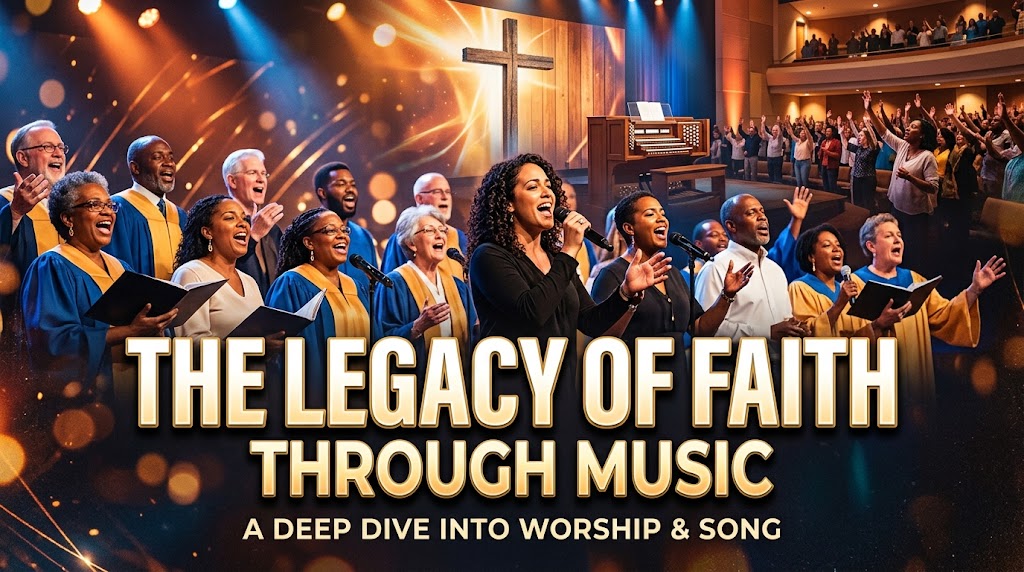
The Legacy of Faith Through Music
The Legacy of Faith Through Music
The Legacy of Faith Through Music is one of the most beautiful stories in Christian history. Long before music streaming platforms, social media, digital downloads and professionally produced worship albums existed, believers were already using songs to preserve their faith, express their devotion and tell stories about God’s goodness. Music has always provided Christians with a way to communicate what words alone sometimes struggle to express. Through songs of praise, worship, thanksgiving, sorrow, hope and surrender, generations of believers have passed their faith from one generation to another.
When people think about Christian music, they may immediately think about contemporary worship songs, gospel albums, church choirs or popular Christian artists. However, The Legacy of Faith Through Music reaches much further than modern recordings. It includes the songs sung by early Christians, the psalms passed down through generations, traditional hymns that shaped congregations, gospel songs born from difficult circumstances and contemporary worship music that continues to introduce younger generations to biblical truths. Every generation has contributed something to this remarkable musical heritage.
One of the greatest strengths of music is its ability to preserve memories. A person may forget a conversation that happened years ago, but a familiar song can immediately bring back a particular season, place or experience. This is one reason Christian music has played such an important role in preserving faith. A song can carry a message across decades. Parents can teach songs to their children, churches can pass songs from one generation to another, and communities can preserve their stories through music.
The Bible itself demonstrates the importance of music in the life of faith. The Book of Psalms contains songs and poems expressing worship, gratitude, repentance, fear, confidence and hope. The psalms show that faith does not require believers to pretend that life is always perfect. There are songs celebrating God’s goodness, but there are also expressions of pain, confusion and longing. This gives Christian music a remarkable emotional range. It can celebrate the mountaintop while also providing language for someone walking through the valley.
The Legacy of Faith Through Music can therefore be seen as a record of how believers have responded to life with faith. Songs often emerge from real experiences. A songwriter may create a worship song after surviving a difficult season, experiencing an answer to prayer, discovering hope after disappointment or simply reflecting on Scripture. When that song reaches another person, the songwriter’s personal experience can become an encouragement to someone facing a completely different situation.
This is one of the reasons gospel music has remained so influential. Gospel music has often given voice to hope in circumstances where hope could easily disappear. Across different cultures and generations, gospel singers have used music to communicate trust in God, perseverance, gratitude and expectation. Many songs have become more than entertainment. They have become companions during difficult seasons, songs of encouragement during prayer and reminders of faith when circumstances appear overwhelming.
Traditional hymns also occupy an important place in The Legacy of Faith Through Music. Many hymns have survived for generations because they combine memorable melodies with theological messages. People who grew up singing hymns may still remember the words decades later. Those words can continue to influence how they understand God’s character, grace, forgiveness, salvation and faithfulness. A hymn can therefore function almost like a musical memory bank, storing biblical ideas in a form that people can easily remember and repeat.
The power of Christian music does not depend entirely on complicated production. In fact, some of the most memorable songs have simple melodies and straightforward messages. A congregation does not necessarily need expensive instruments or elaborate arrangements to sing about faith. A single voice, a group of believers or an unaccompanied choir can communicate something deeply meaningful. The heart of Christian music is ultimately the message and the faith behind it.
The Legacy of Faith Through Music is also evident in the way families pass songs from one generation to another. A mother may sing a worship song to her child. A father may teach his children a hymn he learned while growing up. Grandparents may introduce younger family members to gospel songs that carried them through difficult periods. Years later, those children may sing the same songs to their own children. In this way, music can become a bridge connecting generations.
This generational connection is particularly important in a rapidly changing world. Musical styles change. Instruments change. Recording technology changes. The way people discover songs changes. Yet the fundamental desire to express faith through music remains. Contemporary Christian artists may use sounds that would have been unfamiliar to previous generations, but the themes of worship, grace, hope, trust and devotion continue to appear.
The digital age has introduced an entirely new chapter in The Legacy of Faith Through Music. A song that was once limited to a local church can now reach listeners across continents within hours. Independent Christian musicians can release music without necessarily depending on traditional distribution systems. Worship songs can be discovered through streaming platforms, social media, online communities and video platforms. A Christian artist in Africa can reach listeners in Europe, North America, Asia and other parts of the world without physically travelling to those places.
This global accessibility has created opportunities for Christian music to become increasingly diverse. Different cultures bring different rhythms, languages, instruments and musical traditions to gospel music. African gospel music, for example, has developed a strong international presence through energetic rhythms, powerful vocals, choir traditions and contemporary production. Other Christian communities around the world have similarly contributed their own musical expressions.
The growing diversity of Christian music does not necessarily mean that older traditions must disappear. Instead, new music can exist alongside traditional music. A church can sing a historic hymn during one service and a contemporary worship song during another. A gospel artist can incorporate traditional sounds into modern production. A songwriter can take inspiration from Scripture and express an ancient truth using a modern musical language. This combination of heritage and creativity helps keep The Legacy of Faith Through Music alive.
Another important aspect of this legacy is the role of Christian songwriters. Songwriters often serve as storytellers. Through carefully chosen words, they can transform personal experiences, biblical passages and spiritual reflections into songs that others can sing. Their work can influence people they may never meet. A songwriter may write a song in a small room, record it with limited resources and eventually discover that the song has become meaningful to thousands or even millions of listeners.
The influence of a Christian song can sometimes extend far beyond the intention of its creator. A song may become associated with a particular church, family, wedding, funeral, prayer meeting, revival or personal testimony. Someone may hear a song years after its release and immediately remember an important moment in life. This ability to become attached to human experiences gives music a unique place in the preservation of faith.
Christian music also plays an important role in communal worship. Singing together creates a shared experience that individual listening cannot completely reproduce. When a congregation sings the same words together, people from different backgrounds participate in a common expression of faith. The young and old can sing together. New believers and longtime Christians can sing together. Different social backgrounds can temporarily become less important as people focus on the same message.
This communal dimension is one reason worship music remains central to many Christian gatherings. Music can help prepare hearts for prayer, reflection and the reading of Scripture. It can create moments of celebration and moments of quiet reflection. It can give people language for gratitude and provide comfort during grief. Although music should not replace biblical teaching or personal devotion, it can work alongside them to create a rich expression of Christian faith.
The Legacy of Faith Through Music also includes songs that emerged during periods of hardship. History repeatedly shows that people create and preserve music during difficult circumstances. Songs can become declarations of hope when circumstances suggest hopelessness. They can remind believers of promises when fear becomes overwhelming. They can help communities maintain their identity when everything around them is changing.
This is particularly visible in gospel traditions that developed among communities facing serious social and economic challenges. Music provided a way to express pain while still holding on to hope. Songs could acknowledge suffering without allowing suffering to become the final message. That combination of honesty and hope remains one of the strongest characteristics of Christian music.
Another important feature of Christian music is its ability to communicate faith to people who may not regularly attend church. Someone may encounter a gospel song through a friend, a playlist, a social media video or a recommendation and become interested in the message behind it. Music can open a door to spiritual conversations. A song may cause someone to ask questions about its lyrics, the Bible or the beliefs of the artist who created it.
This does not mean every Christian song will affect every listener in the same way. People have different musical preferences, cultural backgrounds and spiritual experiences. What deeply moves one person may have little effect on another. Nevertheless, Christian music continues to provide one of the most accessible ways for faith based messages to enter popular culture.
Technology has also changed the way Christian music is preserved. In previous generations, preserving a song might depend on handwritten music, printed hymn books, oral tradition or physical recordings. Today, digital recordings can be stored and shared across the world. This means future generations may have access to an enormous archive of Christian music from different periods and cultures.
However, preserving music is not only about preserving audio files. It is also about preserving the stories behind the songs. Knowing why a song was written can make its message even more meaningful. A song about hope becomes more powerful when listeners understand that it was written during a season of personal struggle. A worship song about God’s faithfulness becomes more meaningful when its history reveals the circumstances that inspired it.
For Christian music blogs, this provides an enormous opportunity. Instead of simply publishing song lyrics or announcing new releases, writers can explore the stories, themes, cultural influences and spiritual messages behind Christian music. Readers are often interested not only in what a song sounds like but also in why it was created, what inspired it and how it has influenced listeners.
The Legacy of Faith Through Music is therefore not simply a historical subject. It is an ongoing story. Every generation adds another chapter. Today’s Christian artists are creating songs that may become tomorrow’s cherished classics. Today’s worship leaders are introducing songs to children who may eventually teach those same songs to their own families. Today’s independent gospel musicians may be laying the foundation for musical movements that future generations will study.
There is also a responsibility attached to this legacy. Christian musicians have the opportunity to create music that is artistically excellent while remaining meaningful. Songwriters have the opportunity to write words that encourage rather than merely entertain. Worship leaders have the opportunity to help congregations engage with biblical truth. Listeners have the opportunity to support artists whose music contributes positively to the Christian community.
The future of Christian music will almost certainly sound different from its past. New technologies will emerge. New genres will develop. Artists will experiment with new sounds. Artificial intelligence and digital production tools may influence the way music is created and distributed. Social media will continue to change how songs become popular. Yet the fundamental human need to express faith through music is unlikely to disappear.
If anything, the ability to create and distribute music more easily could result in an even greater diversity of Christian voices. More artists can tell their stories. More cultures can contribute their musical traditions. More languages can carry Christian messages to new audiences. More listeners can discover songs from communities they might never otherwise encounter.
Ultimately, The Legacy of Faith Through Music is about much more than melodies, instruments and recordings. It is about people using music to remember, worship, testify, encourage and communicate what they believe. It is about parents singing to children, congregations singing together, artists turning experiences into songs and listeners finding hope in words written by someone they may never meet.
A powerful Christian song can outlive the circumstances that inspired it. The songwriter may move on to another season. The original listeners may grow older. Musical trends may change. Technology may evolve. Yet the song can continue travelling from one person to another, carrying its message into places the original creator never imagined.
That is the remarkable strength of The Legacy of Faith Through Music. Faith can be preserved through words, but music gives those words movement. Faith can be taught through sermons, but songs can help people remember what they have learned. Faith can be discussed through conversations, but music can give people a shared language through which they express it.
Every generation inherits songs from those who came before and has the opportunity to create songs for those who will come after. Some songs will disappear with time, while others will become treasured parts of Christian heritage. Some will be heard only in small communities, while others will cross borders and languages. Regardless of their reach, each song can become part of the larger story of people seeking to express their faith through music.
The Legacy of Faith Through Music reminds us that Christian music is not merely a collection of sounds. It is a living archive of worship, testimony, struggle, hope and devotion. From ancient songs to traditional hymns, from gospel choirs to contemporary worship and from local church recordings to global digital releases, every era contributes something to the story.
As Christian music continues to evolve, its greatest legacy may not be the number of streams, awards or chart positions a song achieves. Its deepest legacy may be the lives it encourages, the families it connects, the faith it strengthens and the memories it leaves behind. Long after a particular musical style has faded, a meaningful song can continue to remind someone of God’s goodness.
That is why The Legacy of Faith Through Music deserves to be remembered, studied and celebrated. Music has helped believers carry their faith through generations, and the songs being created today will become part of the inheritance passed to tomorrow. The instruments may change, the production may become more sophisticated and the platforms may continue to evolve, but the desire to sing about faith, hope and God’s faithfulness remains as powerful as ever.
The story is still being written. Every worship song, gospel recording, hymn, choir performance and personal testimony expressed through music adds another page. And somewhere today, someone is hearing a Christian song for the first time, while somewhere else another person is singing an old song they learned as a child. Between those two moments lies the enduring story of The Legacy of Faith Through Music, a story that continues to connect generations through melody, memory and faith.

Leave a Reply