
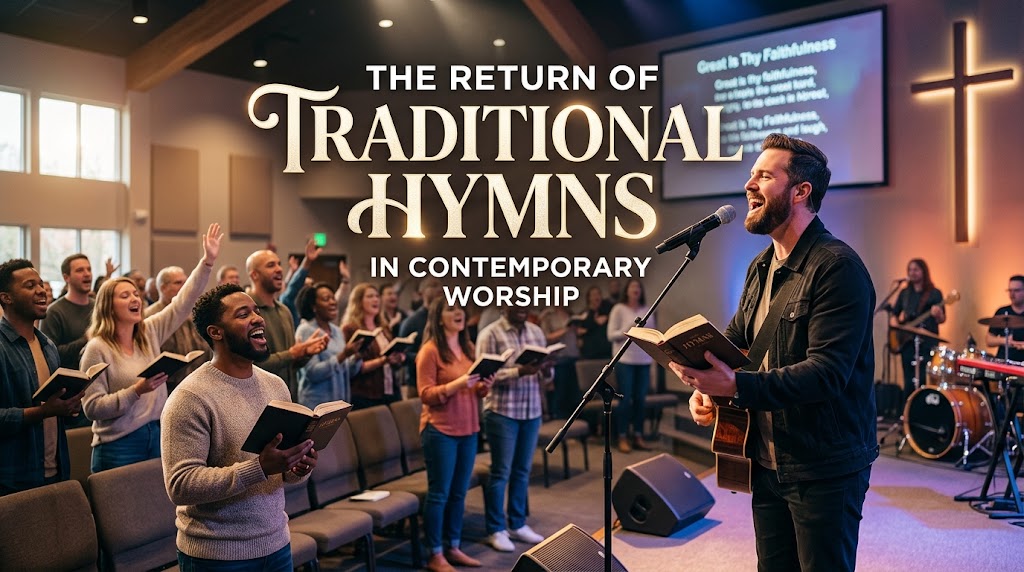
The Return of Traditional Hymns in Contemporary Worship
The Return of Traditional Hymns in Contemporary Worship
The Return of Traditional Hymns in Contemporary Worship is one of the most fascinating developments in modern Christian music. For many years, churches around the world embraced contemporary worship songs as their primary musical expression. Modern worship bands, projected lyrics, and newly written praise songs became the dominant sound in countless congregations. While contemporary worship music continues to play a significant role in churches today, something unexpected has happened in recent years. Traditional hymns, once considered old-fashioned or outdated by some believers, are making a remarkable comeback.
This renewed interest in hymns is not merely a matter of nostalgia. It represents a deeper desire among many Christians to reconnect with rich theological truths, historical faith traditions, and timeless expressions of worship. The Return of Traditional Hymns in Contemporary Worship reflects a growing recognition that songs written hundreds of years ago still possess the power to inspire faith, strengthen believers, and draw worshippers closer to God.
Traditional hymns have always held a special place in Christian history. Many of the most beloved hymns were written during periods of revival, spiritual awakening, and significant challenges within the Church. Songs such as “Amazing Grace,” “How Great Thou Art,” “It Is Well with My Soul,” and “Blessed Assurance” have endured for generations because they communicate profound biblical truths in a way that remains accessible and memorable. Unlike many modern songs that focus heavily on emotions and personal experiences, hymns often place strong emphasis on doctrine, scripture, and the character of God.
One of the major reasons behind The Return of Traditional Hymns in Contemporary Worship is the growing hunger for theological depth. Many Christians today are seeking songs that do more than create an emotional atmosphere. They want music that teaches, challenges, and reinforces their understanding of Scripture. Traditional hymns often excel in this area because their lyrics are carefully crafted to communicate biblical principles and essential Christian beliefs.
In a culture where attention spans are becoming shorter and information is consumed rapidly, hymns offer something unique. Their verses often tell complete stories of redemption, grace, faith, and hope. They encourage believers to reflect deeply on God’s nature and His work in their lives. As churches place greater emphasis on discipleship and spiritual growth, many worship leaders are rediscovering the value of incorporating hymns into their services.
Another factor contributing to The Return of Traditional Hymns in Contemporary Worship is the desire for authenticity. Many Christians long for worship experiences that feel rooted in something larger than current trends. While contemporary worship songs often reflect the language and style of a particular generation, hymns connect believers with centuries of Christian worship. Singing the same songs that inspired previous generations creates a sense of continuity and belonging within the global Church.
This connection to history can be especially meaningful in an age marked by constant change. Technology, social norms, and cultural values evolve rapidly, leaving many people searching for stability and permanence. Traditional hymns remind believers that the truths of Christianity remain unchanged regardless of societal shifts. The same God who inspired worship centuries ago continues to be worthy of praise today.
The Return of Traditional Hymns in Contemporary Worship has also been fueled by younger Christians. Contrary to the assumption that hymns appeal only to older generations, many young believers are discovering a deep appreciation for these timeless songs. In fact, some of the strongest advocates for hymn revival are millennials and members of Generation Z. These younger worshippers often describe hymns as refreshing, meaningful, and spiritually enriching.
Many young Christians are drawn to hymns because they offer an alternative to the fast-paced and highly commercialised nature of modern culture. In a world dominated by social media trends and fleeting entertainment, hymns provide a sense of depth and permanence. Their enduring messages stand in contrast to the temporary nature of much contemporary content. As a result, many younger believers see hymns as a valuable resource for spiritual formation.
Churches have responded to this growing interest by finding creative ways to integrate hymns into contemporary worship settings. Rather than simply reproducing hymns exactly as they were sung centuries ago, many worship leaders are reimagining them with modern arrangements. Traditional lyrics are often paired with contemporary instrumentation, fresh melodies, and updated production techniques. This approach allows congregations to enjoy the theological richness of hymns while engaging with musical styles that feel familiar and accessible.
The success of this approach can be seen in the popularity of modern hymn adaptations. Numerous Christian artists and worship groups have released updated versions of classic hymns that resonate with contemporary audiences. These recordings often introduce timeless songs to listeners who may never have encountered them otherwise. Through streaming platforms, social media, and online worship resources, hymns are reaching new generations in ways that would have been unimaginable in the past.
The Return of Traditional Hymns in Contemporary Worship is also connected to a broader movement within Christianity toward recovering historic practices. Many churches are rediscovering the value of liturgy, scripture reading, prayer traditions, and other elements of historic Christian worship. Hymns naturally fit within this renewed appreciation for the wisdom and practices of earlier generations. They serve as a bridge between the past and the present, allowing believers to participate in a tradition that extends far beyond their local congregation.
Another reason for the resurgence of hymns is their ability to provide comfort during difficult times. Throughout history, Christians have turned to hymns during periods of suffering, uncertainty, and loss. The powerful messages contained within these songs often address themes such as God’s faithfulness, eternal hope, divine sovereignty, and unwavering love. During challenging seasons, these truths can offer profound encouragement.
Events such as global crises, economic uncertainty, social unrest, and personal hardships have led many believers to seek deeper sources of hope and reassurance. Traditional hymns frequently remind worshippers that God remains in control regardless of circumstances. Their timeless messages continue to speak to human struggles and provide strength in moments of weakness.
The educational value of hymns cannot be overlooked when discussing The Return of Traditional Hymns in Contemporary Worship. Historically, hymns have played an important role in teaching Christian doctrine. Before widespread literacy and access to theological resources, many believers learned key aspects of their faith through congregational singing. The memorable structure of hymns made it easier to remember important biblical truths.
Today, hymns continue to serve as valuable teaching tools. In churches where biblical literacy is a concern, hymns can reinforce scriptural concepts and provide a foundation for spiritual growth. Their carefully written lyrics often function as miniature sermons, communicating profound truths in a way that remains memorable long after the service has ended.
The emotional power of hymns also contributes to their ongoing appeal. While hymns are known for their theological richness, they are far from emotionally cold or detached. Many of the most beloved hymns were written out of deeply personal experiences. Authors often expressed their faith through moments of joy, sorrow, triumph, and struggle. This authenticity continues to resonate with worshippers today.
When believers sing hymns, they are often reminded that Christians throughout history have faced similar challenges and found hope in God’s promises. This shared experience creates a sense of solidarity across generations. Worshippers recognise that they are part of a larger story of faith that extends beyond their own lives.
The Return of Traditional Hymns in Contemporary Worship has also encouraged greater intergenerational unity within churches. Music preferences can sometimes create divisions between older and younger members of congregations. Hymns provide an opportunity for different generations to worship together around songs that carry deep spiritual significance. Older believers appreciate hearing familiar hymns, while younger Christians gain exposure to the rich heritage of Christian worship.
When churches successfully blend traditional hymns with contemporary worship songs, they often create a more inclusive worship environment. This balanced approach acknowledges the value of both tradition and innovation. Rather than viewing hymns and contemporary songs as competitors, many congregations are learning to appreciate how each contributes to a fuller expression of worship.
Technology has played an unexpected role in supporting The Return of Traditional Hymns in Contemporary Worship. Digital platforms have made it easier than ever for churches and individuals to access hymn recordings, sheet music, historical information, and educational resources. Worship leaders can explore vast libraries of hymns and discover creative ways to incorporate them into modern services.
Streaming services have also exposed millions of listeners to hymn-based music. Christian artists frequently release contemporary interpretations of traditional hymns, helping introduce these songs to audiences around the world. As a result, hymns are no longer confined to specific denominations or worship traditions. They have become accessible to a much broader audience.
Critics sometimes argue that hymns are difficult for modern congregations to understand because of their older language and cultural references. While this challenge exists in some cases, many churches have successfully addressed it through thoughtful adaptation. Some hymn lyrics have been slightly updated to improve clarity while preserving their original message. Others are introduced alongside explanations that help worshippers understand their historical and theological significance.
The continued popularity of hymns demonstrates that meaningful worship is not determined solely by musical style. Whether accompanied by a pipe organ, an acoustic guitar, or a full worship band, the power of a hymn lies in its message. When believers encounter songs that faithfully communicate biblical truth and inspire genuine worship, the musical arrangement becomes secondary.
Looking ahead, The Return of Traditional Hymns in Contemporary Worship is likely to continue shaping the future of Christian music. As churches seek to balance relevance with theological depth, hymns offer a valuable resource that can enrich worship experiences. They remind believers that innovation does not require abandoning tradition and that the wisdom of previous generations still has much to offer.
The resurgence of hymns reflects a broader understanding that worship is about more than personal preference or musical trends. At its core, worship is about responding to God’s greatness, truth, and grace. Traditional hymns have helped Christians do that for centuries, and their enduring influence suggests they will continue to play a significant role for generations to come.
The Return of Traditional Hymns in Contemporary Worship is not simply a revival of old songs. It is a rediscovery of timeless truths, a reconnection with Christian heritage, and a reminder that genuine worship transcends generations. As churches continue to embrace both historic hymns and contemporary expressions of praise, they demonstrate that the richness of Christian worship is found not in choosing between the old and the new but in faithfully celebrating the eternal message that unites them both.

Leave a Reply