
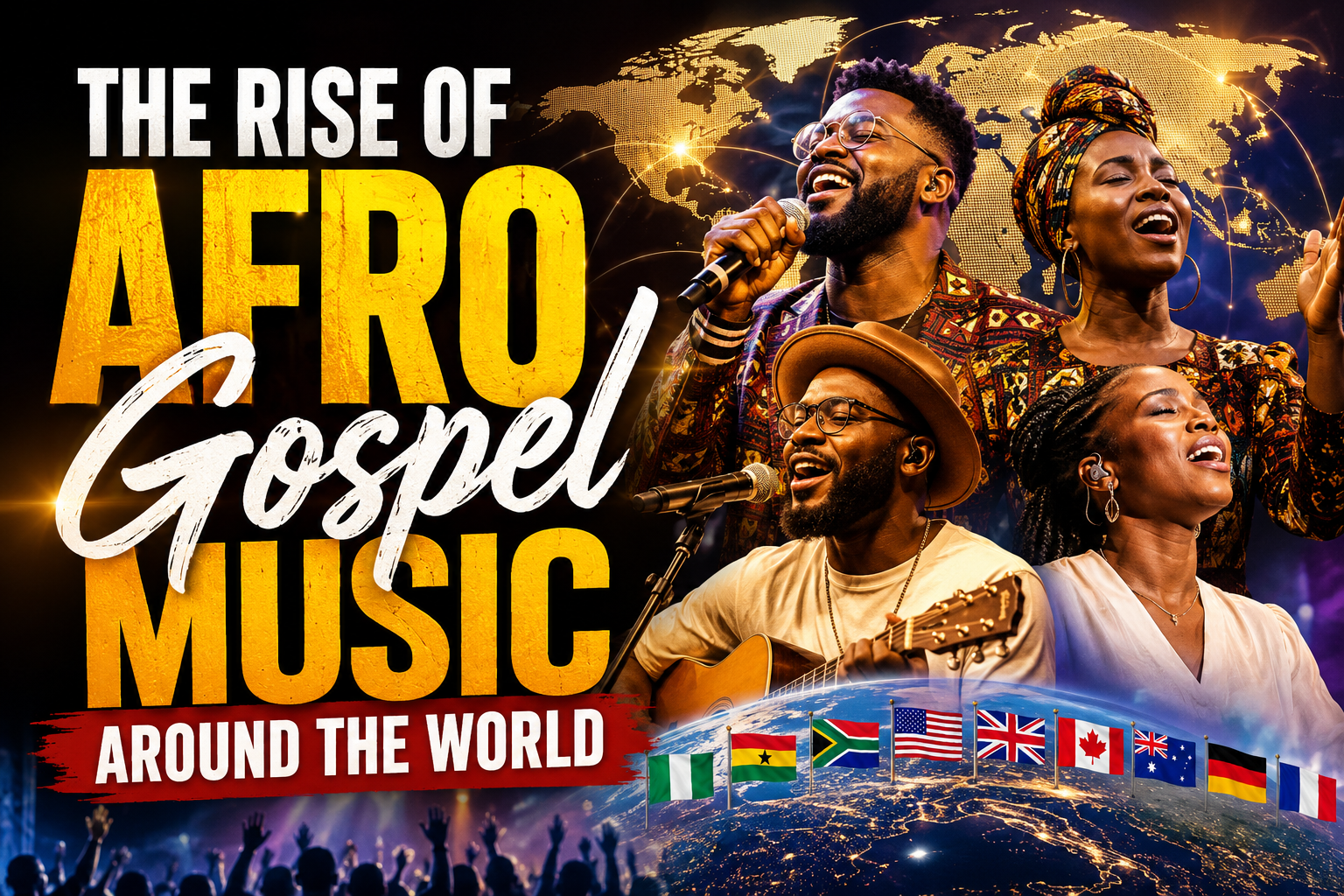
The Rise of Afro Gospel Music Around the World
Afro Gospel Music has grown from a vibrant expression of faith in African churches into a worldwide movement that is transforming the Christian music industry. What was once considered a regional style of worship is now filling playlists, inspiring millions of listeners, and influencing artists across continents. From packed church auditoriums in Lagos and Accra to sold out concerts in London, Toronto, Johannesburg, Sydney, and New York, Afro Gospel Music continues to cross cultural and geographical boundaries with remarkable speed. Its infectious rhythms, uplifting lyrics, authentic storytelling, and unmistakable celebration of God’s goodness have made it one of the fastest growing genres in Christian music today.
For decades, gospel music has been recognised as a powerful tool for spreading hope, encouraging believers, and strengthening faith. Every culture has contributed its own sound to gospel music, creating beautiful diversity within Christianity. Africa has always played a significant role in this story, but in recent years its influence has expanded dramatically. Afro Gospel Music is no longer viewed as a niche genre reserved for African audiences. Instead, it has become an international sound embraced by people from different backgrounds, languages, and denominations.
One of the greatest strengths of Afro Gospel Music is its ability to combine joyful celebration with deep spiritual messages. Unlike many genres that rely heavily on entertainment alone, Afro Gospel Music often carries messages of hope, redemption, gratitude, perseverance, salvation, and unwavering trust in God. These themes resonate universally because every person experiences moments of joy, struggle, victory, and uncertainty. The music speaks directly to the heart while inviting listeners to worship through energetic rhythms that naturally inspire movement.
Africa has always possessed a rich musical heritage. Long before modern recording studios existed, communities used songs to preserve history, express gratitude, celebrate victories, mourn losses, and strengthen social bonds. Music was woven into everyday life, making it a natural part of religious worship when Christianity spread throughout the continent. Churches quickly embraced indigenous instruments, traditional melodies, local languages, and cultural expressions, creating a distinctive style that reflected both biblical teachings and African identity.
As Christianity expanded across Africa, church choirs became centres of musical excellence. Choirs introduced harmony, disciplined performances, and locally inspired compositions that gradually evolved into today’s contemporary Afro Gospel Music. Over time, musicians began blending traditional African sounds with modern genres including Afrobeats, highlife, amapiano, hip hop, reggae, soul, R&B, jazz, and pop. This creative fusion allowed gospel music to remain spiritually grounded while appealing to younger audiences who desired contemporary production without compromising their faith.
The digital revolution has accelerated the global rise of Afro Gospel Music in ways that were unimaginable just two decades ago. Streaming platforms have eliminated many of the barriers that once prevented African artists from reaching international audiences. Today, a worship song recorded in Nigeria can become popular in Brazil within days. A praise anthem released in Ghana can inspire churches in Canada, while an artist from Kenya can build a loyal following across Europe through social media alone.
Platforms such as YouTube, Spotify, Apple Music, Boomplay, Audiomack, Deezer, TikTok, Instagram, Facebook, and other digital services have created opportunities for Afro Gospel Music to flourish globally. Listeners are no longer restricted by local radio stations or physical music stores. Instead, they can instantly discover inspirational songs from artists they have never heard before. Recommendation algorithms also expose millions of users to new music based on listening habits, allowing Afro Gospel Music to reach audiences that may not have actively searched for gospel content.
Social media has become another driving force behind the international success of Afro Gospel Music. Short video clips featuring worship sessions, dance challenges, choir performances, and live concerts regularly attract millions of views. Many songs gain popularity because believers naturally share inspirational content with friends and family. As these videos circulate across different countries, they introduce new listeners to African gospel artists and encourage further exploration of the genre.
Another reason Afro Gospel Music continues to grow is its authenticity. Many songs are inspired by real life testimonies rather than fictional stories. Artists frequently write about overcoming financial hardship, surviving illness, experiencing divine protection, finding peace during difficult seasons, receiving unexpected breakthroughs, and witnessing God’s faithfulness despite overwhelming challenges. These personal experiences create emotional connections with listeners because they reflect genuine faith instead of manufactured narratives.
Language diversity has also contributed significantly to the international appeal of Afro Gospel Music. African gospel artists often sing in English alongside indigenous languages such as Yoruba, Igbo, Hausa, Twi, Swahili, Zulu, Xhosa, Lingala, Efik, Ibibio, Shona, and many others. Rather than limiting their audience, these multilingual performances often enhance the emotional depth of the music. Even listeners who do not understand every word can feel the sincerity, passion, and spiritual atmosphere conveyed through the melodies and vocal expressions.
Music has always possessed the remarkable ability to transcend language barriers. A heartfelt worship experience does not always require complete linguistic understanding. Joy, gratitude, reverence, celebration, and hope can be communicated through vocal delivery, instrumentation, rhythm, and emotion. Afro Gospel Music demonstrates this truth beautifully by connecting people across cultures despite differences in language.
The influence of African churches within global Christian communities has also helped expand Afro Gospel Music internationally. Millions of Africans have migrated to countries across Europe, North America, Asia, and Australia over the past several decades. These diaspora communities established churches that retained vibrant African worship traditions while welcoming people from diverse cultural backgrounds. Visitors often experience energetic praise sessions unlike anything they had previously encountered, leading many to develop an appreciation for Afro Gospel Music.
International conferences, worship nights, youth conventions, revival meetings, and Christian festivals have further introduced Afro Gospel Music to global audiences. Artists frequently perform alongside internationally recognised worship leaders, creating collaborations that expose both fan bases to new musical styles. These partnerships strengthen unity within the global Church while demonstrating that worship transcends nationality and ethnicity.
The production quality of Afro Gospel Music has improved significantly over the years. Advances in recording technology, professional mixing, mastering, cinematography, and live event production have enabled African artists to compete confidently on the global stage. Modern music videos showcase stunning visuals, creative storytelling, cultural fashion, breathtaking landscapes, and world class performance standards. This professional presentation attracts wider audiences while challenging outdated stereotypes about African music production.
Young people have become one of the strongest supporters of Afro Gospel Music. Many younger Christians seek music that reflects both their faith and their cultural identity. Afro Gospel Music provides an exciting alternative that allows them to enjoy contemporary sounds without abandoning biblical values. Danceable rhythms, relatable lyrics, and modern production create an environment where worship feels joyful, authentic, and culturally relevant.
Unlike the misconception that gospel music must always be slow and solemn, Afro Gospel Music demonstrates that celebration can also be a powerful expression of worship. Throughout Scripture, believers are encouraged to sing, dance, clap, shout for joy, and celebrate God’s goodness. African worship naturally reflects these biblical expressions through energetic praise that invites full participation from congregations rather than passive observation.
Another remarkable feature of Afro Gospel Music is its emphasis on gratitude. Many songs focus on thanking God for His faithfulness regardless of circumstances. This attitude resonates deeply because gratitude remains central to Christian living. Instead of dwelling exclusively on life’s difficulties, Afro Gospel Music frequently celebrates victories, testimonies, answered prayers, divine provision, protection, healing, mercy, and grace. Such messages inspire optimism while strengthening believers during challenging seasons.
The rise of Afro Gospel Music has also encouraged greater cultural appreciation within the global Christian community. Listeners increasingly recognise that worship does not need to follow a single musical formula. Every culture possesses unique gifts that enrich the universal Church. African rhythms, languages, instruments, harmonies, and worship styles contribute valuable diversity while pointing believers toward the same God.
Church worship teams around the world have begun incorporating Afro Gospel songs into their regular services. Congregations that once relied primarily on Western contemporary worship now include African praise songs during Sunday services, conferences, youth gatherings, and outreach programmes. This growing acceptance reflects a broader appreciation for multicultural worship experiences that celebrate the global nature of Christianity.
Technology continues to reshape the future of Afro Gospel Music. Livestreamed concerts enable audiences from dozens of countries to worship together simultaneously. Online music lessons teach aspiring musicians African rhythms and vocal techniques. Virtual collaborations allow artists to record songs across continents without meeting physically. These innovations ensure that geographical distance no longer limits creative partnerships or ministry opportunities.
The Rise of Afro Gospel Music Around the World
Independent artists have also benefited tremendously from technological advancements. In previous generations, musicians often depended entirely on major record labels for production, marketing, and distribution. Today, talented gospel artists can record high quality music, distribute it globally, engage directly with supporters, and build successful careers through digital platforms. This independence has increased creativity while allowing many unique voices within Afro Gospel Music to emerge.
The genre’s influence extends beyond church buildings. Afro Gospel Music now appears in family celebrations, weddings, graduation ceremonies, community events, fitness playlists, radio stations, podcasts, television programmes, documentaries, and inspirational social media content. Many listeners appreciate the music not only for worship but also for its positive messages and uplifting atmosphere during everyday activities.
One important reason for the continued growth of Afro Gospel Music is its ability to unite generations. Older believers appreciate the strong biblical messages and reverence for God, while younger audiences enjoy contemporary production and energetic rhythms. This balance creates opportunities for families to worship together without significant generational divisions. Few music genres achieve this level of cross generational appeal so effectively.
Its success should never overshadow its spiritual purpose. While streaming numbers, awards, sold out concerts, and chart positions are encouraging, the true impact of gospel music lies in transformed lives. Countless testimonies describe individuals finding hope after listening to worship songs during periods of depression, loneliness, grief, addiction, or uncertainty. Others have rediscovered their faith, strengthened their prayer lives, or committed themselves more deeply to Christian service after encountering powerful gospel music.
Many churches also use Afro Gospel Music as an evangelistic tool. Visitors who may initially attend concerts because of the music often encounter messages of salvation, repentance, forgiveness, and God’s unconditional love. The joyful atmosphere creates opportunities for meaningful conversations about faith that extend beyond the performance itself. In this way, Afro Gospel Music serves not merely as entertainment but as ministry.
African gospel artists increasingly recognise their responsibility as spiritual influencers. Beyond producing excellent music, many actively engage in charitable initiatives, youth mentorship, educational programmes, community development projects, and humanitarian efforts. Their ministries demonstrate that authentic Christian witness extends beyond the stage into everyday acts of compassion and service.
The growing popularity of Afro Gospel Music has inspired many aspiring musicians to pursue excellence in both artistry and spiritual maturity. Rather than viewing ministry and professionalism as opposing values, today’s artists increasingly understand that both are essential. Strong biblical foundations, ethical conduct, musical excellence, financial accountability, and continuous learning contribute to sustainable and impactful ministries.
Collaborations have become another defining characteristic of the genre’s expansion. Artists from different African countries frequently work together, blending languages and regional styles into unified worship experiences. International collaborations with Christian musicians from Europe, North America, Latin America, and Asia further strengthen cultural exchange while introducing Afro Gospel Music to entirely new audiences.
Women have also played a significant role in the rise of Afro Gospel Music. Female worship leaders, songwriters, producers, instrumentalists, choir directors, and recording artists continue to shape the genre through remarkable creativity and spiritual leadership. Their contributions have expanded opportunities for future generations while enriching the diversity of voices within Christian music.
African producers and composers continue experimenting with innovative musical arrangements while preserving the spiritual integrity of gospel music. Traditional percussion instruments blend seamlessly with orchestral strings, electronic synthesisers, acoustic guitars, choirs, brass sections, and contemporary vocal harmonies. This willingness to innovate keeps Afro Gospel Music fresh while remaining firmly rooted in worship.
The influence of Afro Gospel Music extends into mainstream culture as well. Even listeners who do not identify as Christians often appreciate the uplifting themes, positive energy, and exceptional musicianship. While the primary mission remains sharing the Gospel, broader cultural appreciation demonstrates the universal appeal of music rooted in hope, gratitude, and authentic human experience.
Educational institutions have also begun recognising the significance of African gospel music. Music scholars increasingly study its cultural impact, theological themes, rhythmic complexity, and contribution to global worship traditions. Universities, seminaries, and music academies continue exploring how Afro Gospel Music has reshaped contemporary Christian worship across multiple continents.
As global audiences become increasingly connected through technology, the future of Afro Gospel Music appears exceptionally promising. Artificial intelligence assisted production tools, immersive virtual reality worship experiences, multilingual lyric translations, enhanced live streaming technology, and expanding internet access across developing regions will likely introduce the genre to even larger audiences over the coming years. Despite technological advancements, however, the heart of Afro Gospel Music will remain unchanged. Its ultimate purpose will continue to be glorifying God and pointing people toward Jesus Christ.
The continued growth of Afro Gospel Music also reflects a broader shift within the global music industry. Audiences increasingly seek authenticity over perfection, meaningful messages over empty trends, and genuine emotional connection over manufactured popularity. Afro Gospel Music naturally meets these expectations because its foundation rests upon lived faith, heartfelt worship, and sincere testimonies of God’s faithfulness.
Churches around the world are becoming more multicultural than ever before. Congregations include people from numerous ethnic backgrounds, creating opportunities for diverse worship expressions. Afro Gospel Music fits naturally within these environments because it celebrates unity without requiring cultural uniformity. Every believer can participate regardless of nationality while appreciating the richness that African worship traditions contribute to the worldwide Church.
Looking ahead, there is every reason to believe that Afro Gospel Music will continue influencing future generations of worshippers, musicians, producers, and church leaders. As more artists embrace creativity while remaining faithful to biblical truth, the genre will continue evolving without losing its spiritual foundation. Young musicians inspired by today’s pioneers will undoubtedly introduce fresh sounds, innovative production techniques, and new expressions of worship that further expand the global reach of African gospel music.
Ultimately, the rise of Afro Gospel Music around the world represents far more than the success of a musical genre. It tells the story of faith crossing borders, cultures celebrating together, technology connecting believers across continents, and worship uniting millions of people through a shared love for God. Its rhythms may originate in Africa, but its message belongs to the entire world. Every joyful chorus, heartfelt testimony, energetic praise session, and sincere worship anthem reminds listeners that God’s love transcends every language, culture, nationality, and generation. As long as people continue searching for hope, encouragement, purpose, and spiritual renewal, Afro Gospel Music will remain a vibrant and influential voice within global Christianity, inspiring hearts and drawing countless people into joyful worship for many years to come.

Leave a Reply