
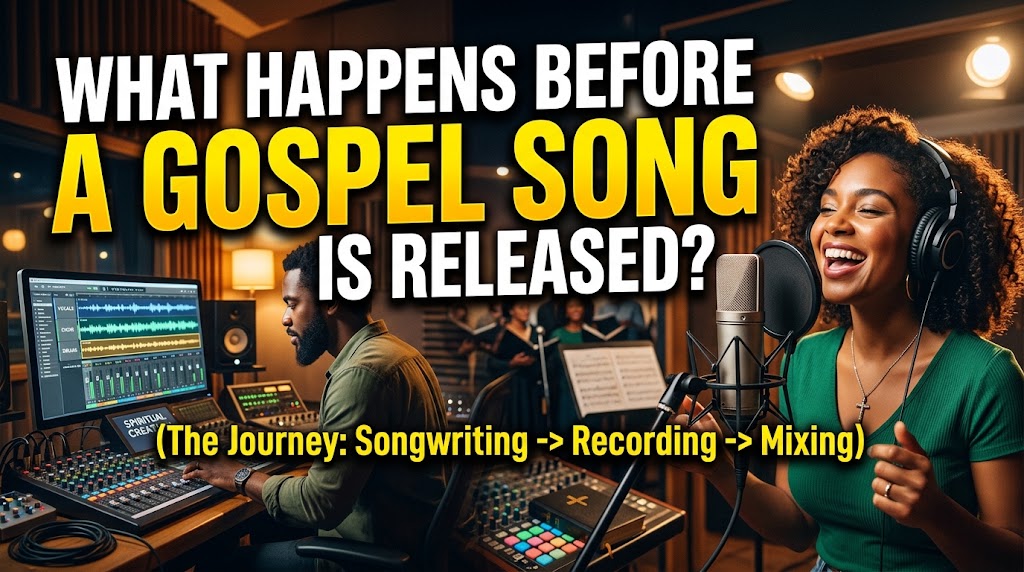
What Happens Before a Gospel Song Is Released?
What Happens Before a Gospel Song Is Released?
What Happens Before a Gospel Song Is Released? This is a question I started thinking about differently after paying closer attention to the gospel songs that eventually find their way into our playlists, churches, social media feeds and personal moments of worship. As listeners, we often hear the finished product and immediately form an opinion about the voice, lyrics, beat, production and overall message. What we rarely see is everything that happened before that song became available for us to stream, download or sing along to. What Happens Before a Gospel Song Is Released?
A gospel song can sound simple when you finally hear it, but getting from an idea in someone’s heart to a professionally released recording can involve many stages. There is usually a story behind the song, a creative process, songwriting, recording, production, editing, mixing, mastering, artwork, distribution, promotion and a lot of decisions that listeners never get to see. Sometimes there are months of preparation behind a song that lasts only four or five minutes.
When I started looking at gospel music beyond just the final recording, I realised that releasing a song is not simply a matter of entering a studio, singing into a microphone and uploading the file to the internet. There is an entire process that takes place before a gospel song is released, and understanding that process makes you appreciate both the artist and the people working behind the scenes.
In many cases, everything begins with an idea. That idea can come from almost anywhere. A gospel artist might be inspired by a personal experience, a Bible passage, a prayer, a difficult season, a conversation, a sermon, a testimony or something that happens in everyday life. Sometimes an artist wakes up with a melody in their head. At other times, a particular phrase keeps coming back to them until they eventually turn it into a song.
This is one of the interesting things about gospel songwriting. The inspiration does not always arrive in a perfectly organised form. An artist may have a chorus before having a verse. Someone might write several lines in their phone while travelling. Another person may record a rough vocal memo because they suddenly hear a melody they do not want to forget.
The next stage is usually developing that idea into an actual song. This is where songwriting becomes important. A good idea is not automatically a finished song. The songwriter has to determine what the song is actually trying to communicate. Is it a song about God’s faithfulness? Is it about gratitude? Is it about salvation, prayer, worship, hope, surrender or a personal testimony?
The lyrics have to communicate that message clearly while still working musically. The songwriter has to think about verses, chorus, bridges, melody, rhythm and repetition. In gospel music, this becomes even more important because the message matters enormously. A beautiful melody may attract attention, but the words often determine what people remember and carry with them.
I have noticed that some songs become memorable because of a single line that listeners can immediately connect with. That line may have taken much longer to create than the listener realises. A songwriter might write dozens of versions before finding the words that finally feel right.
Sometimes the artist writes alone. Sometimes there are multiple songwriters involved. A worship leader may work with a producer, another songwriter or members of a music team to develop the idea. There can be conversations about whether a particular lyric is clear enough, whether the melody fits the message and whether the song will work for personal listening as well as congregational worship.
Another important part of the process is deciding what the song should sound like. This is where musical direction starts becoming important. The same lyrics can be turned into completely different musical experiences depending on the arrangement.
A song can be slow and reflective, energetic and rhythmic, acoustic and intimate, choir driven, piano based or heavily produced with contemporary sounds. The artist and producer have to decide what direction best serves the song.
This is where the producer becomes particularly important. A music producer is not simply someone who presses buttons in a studio. Depending on the project, the producer can help shape the arrangement, tempo, instrumentation, vocal approach and overall character of the recording.
I think this is one of the least visible parts of music creation for ordinary listeners. We hear a finished gospel song and may assume that the artist simply entered a studio and performed it. In reality, there can be extensive conversations before recording even begins.
The producer may ask questions such as whether the introduction should be longer, whether the chorus should enter earlier, whether the second verse needs additional instrumentation or whether the bridge should create a stronger emotional moment. These decisions can completely change how the final song feels.
Then comes the recording process itself. Before the main vocal is recorded, the studio environment has to be prepared. Microphones have to be selected and positioned. Instruments may be recorded separately. Background vocal arrangements may be planned. The artist may rehearse the song repeatedly to become comfortable with the melody and lyrics.
Recording a gospel song can involve far more than one person. There may be instrumentalists, backing vocalists, engineers, producers and other contributors involved. If the song contains live drums, guitars, keyboards, bass, percussion or other instruments, each element may need to be recorded carefully.
The lead vocalist may also record the song several times. Sometimes the first take is excellent. Sometimes it is only the beginning. Artists may repeat particular sections until they are satisfied with the performance. Certain words may be re recorded because of pronunciation, timing or pitch. A small vocal mistake can require another take.
There is also something called vocal comping, where engineers and producers may select the strongest portions from multiple recorded takes and combine them into a polished performance. This does not necessarily mean the singer cannot perform the song. It is part of the modern recording process and helps create a consistent final performance.
After recording comes editing. This stage can involve cleaning up unwanted sounds, arranging recorded sections, adjusting timing and preparing the different elements for mixing. If the recording contains several instruments and vocal tracks, everything needs to be organised properly.
Then comes mixing, which is one of those stages that listeners often overlook because good mixing is supposed to feel natural. The engineer works with the different elements of the song and balances them so that the vocals, instruments and other sounds work together.
The lead vocal should not disappear beneath the instruments. The drums should support the song without overwhelming everything else. Background vocals should complement the lead rather than compete with it. The bass should have its place, while keyboards, guitars and other instruments need to occupy their own spaces.
Effects such as reverb and delay may also be used. These can help create depth and atmosphere. A worship song may require a different sonic approach from an energetic gospel track. The goal is not simply to make everything loud. It is to make the entire recording work together.
After mixing, the song usually goes through mastering. Mastering is essentially the final stage of audio preparation before distribution. It helps ensure that the finished track is consistent, polished and suitable for different listening environments and platforms.
This is particularly important today because people listen to music through phones, headphones, cars, Bluetooth speakers, computers and other devices. A properly mastered song needs to translate reasonably well across these different environments.
While all of this is happening, another important process may be taking place around the song itself. The artist and team have to consider the business and legal side of releasing music.
Who owns the song? Who wrote it? Who produced it? Are there other songwriters involved? Were any samples used? Are all contributors properly credited? Has permission been obtained where necessary? These questions matter because music is not only creative work. It is also intellectual property.
A gospel artist who wants to build a sustainable music career cannot afford to ignore these issues. Songwriting credits, publishing rights, master ownership and distribution arrangements can become extremely important as a song gains listeners.
The team may also decide when the song should be released. Timing can make a difference to a music campaign. An artist might choose to release a song around a particular season, event, album campaign or personal milestone.
Before the actual release date, the artist may also need cover artwork. This is another part of the process that listeners sometimes underestimate. The artwork is often the first visual representation of a song that potential listeners see.
The title, artist name, photograph, graphics and overall design need to communicate something about the music while remaining visually appealing. With millions of songs competing for attention online, presentation can influence whether someone stops scrolling long enough to investigate a song.
Then comes distribution. A finished song needs to get from the artist’s team to the platforms where listeners can access it. Digital music distributors can help deliver songs to streaming and download platforms.
This means the artist or team has to prepare the audio files, artwork, song title, artist information, songwriter credits and other metadata. A small mistake in metadata can create problems later. The correct artist name and credits need to be entered carefully.
At this point, the song may still not be publicly available. The artist can create a release date in advance and begin preparing promotional activities around it.
This is where marketing becomes important. A great gospel song does not automatically guarantee that everyone will discover it. There are countless songs released every day, so artists have to find ways to bring attention to their work.
An artist may release a teaser video, share a short section of the chorus, post behind the scenes footage, discuss the story behind the song or create social media content around the message. Some artists may involve their existing audience by announcing the release date several days or weeks ahead.
Music blogs, radio stations, DJs, influencers, playlist curators and other media platforms can also become part of the promotional strategy. The artist may send out a press release, promotional artwork or advance copies of the song to selected media outlets.
This is particularly relevant for emerging gospel artists. An established artist may already have thousands or millions of people waiting for new music. An independent artist may have to work much harder to get the first few thousand people to notice a new release.
Another thing that can happen before a gospel song is released is the creation of music videos or visual content. Depending on the artist’s budget and creative direction, the video may be filmed before or around the release date.
A music video can give listeners another way to experience the song. It can turn the message into a visual story and provide additional content for platforms such as YouTube and social media.
Sometimes the video is straightforward. Other times, it may involve locations, actors, dancers, costumes, lighting, cameras, editing and an entire production crew. Once again, the few minutes that viewers eventually watch can represent many hours of work behind the scenes.
There may also be rehearsals for a live performance. If the artist plans to perform the song at a church programme, concert, worship gathering or other event, the musicians may need to practise together. Vocal arrangements, harmonies, transitions and instrumental sections have to be prepared.
One thing I have come to appreciate about music is that the final product often hides the amount of preparation involved. When everything goes well, the audience simply hears a great song. They do not see the songwriter staring at unfinished lyrics, the producer making arrangement decisions, the engineer adjusting tracks, the designer creating artwork or the artist rehearsing the same section repeatedly.
That is why asking What Happens Before a Gospel Song Is Released? gives us a much deeper appreciation of the music we consume.
There is also an emotional dimension to the process. For many gospel artists, releasing a song is not simply launching another product. The song may contain a part of their personal story. It may have been written during grief, uncertainty, financial difficulty, disappointment, celebration or spiritual growth.
Imagine writing a song during one of the hardest seasons of your life and then having to share that song with thousands of strangers. That requires vulnerability. The artist may be turning a private experience into something public.
This is one reason some gospel songs connect so strongly with listeners. Someone may hear a line and think, “That is exactly what I have been experiencing.” The artist’s personal experience suddenly becomes part of someone else’s story.
Eventually, after the songwriting, arrangement, recording, editing, mixing, mastering, artwork, distribution and promotional preparation, the release date arrives.
The song goes live.
For the listener, it may be as simple as opening a music app, seeing a new release and pressing play. But behind that button can be weeks or months of creative work, financial investment, planning and patience.
Sometimes the song becomes popular immediately. Sometimes it takes months before people discover it. Some songs become viral through social media. Others grow slowly through word of mouth, church performances, playlists and personal recommendations.
The important thing is that the release is not necessarily the end of the journey. It can actually be the beginning of another phase. The artist now has to promote the song, engage listeners, perform it, monitor its performance and potentially build future projects around the audience it attracts.
For anyone interested in Christian music, understanding what happens before a gospel song is released changes the way we listen. Instead of hearing only the finished three or four minutes, we begin to imagine the work behind those minutes.
The next time you hear a gospel song that moves you, it is worth remembering that you are probably hearing the final result of many decisions. Somewhere behind that recording was an idea. Someone developed the idea into lyrics. Someone shaped the melody. A producer helped determine the sound. Musicians and vocalists contributed their skills. Engineers recorded, edited, mixed and mastered the material. Designers created the visual identity. Someone handled distribution. Someone planned the promotion. And eventually, all of those efforts came together in the song you pressed play on.
So, What Happens Before a Gospel Song Is Released? A lot more than most listeners realise. The journey can begin with something as small as a thought, a prayer, a melody or a few words written down on a phone. From there, that simple idea can pass through songwriting, arrangement, production, recording, editing, mixing, mastering, legal preparation, artwork, distribution and promotion before it finally reaches an audience.
That process reminds me that music is rarely just about the final sound. It is also about the people, ideas, skills, decisions and experiences behind that sound. In gospel music especially, there can be a personal testimony hiding behind a melody and a long creative journey hiding behind a few minutes of audio.
The next time you discover a new gospel song, perhaps do not rush past it. Listen to the lyrics. Pay attention to the arrangement. Notice the vocals, instruments and production. Think about the story that may have inspired it. Somewhere behind what you are hearing is an artist who had an idea and a team of people who helped turn that idea into something the world could hear.
That is the real answer to What Happens Before a Gospel Song Is Released? Before the song reaches your headphones, it has already travelled a long road. And sometimes, understanding that road makes the music itself even more meaningful.

Leave a Reply