
What Is the Difference Between a Music Producer, Recording Engineer, and Mixing Engineer?
What Is the Difference Between a Music Producer, Recording Engineer, and Mixing Engineer?
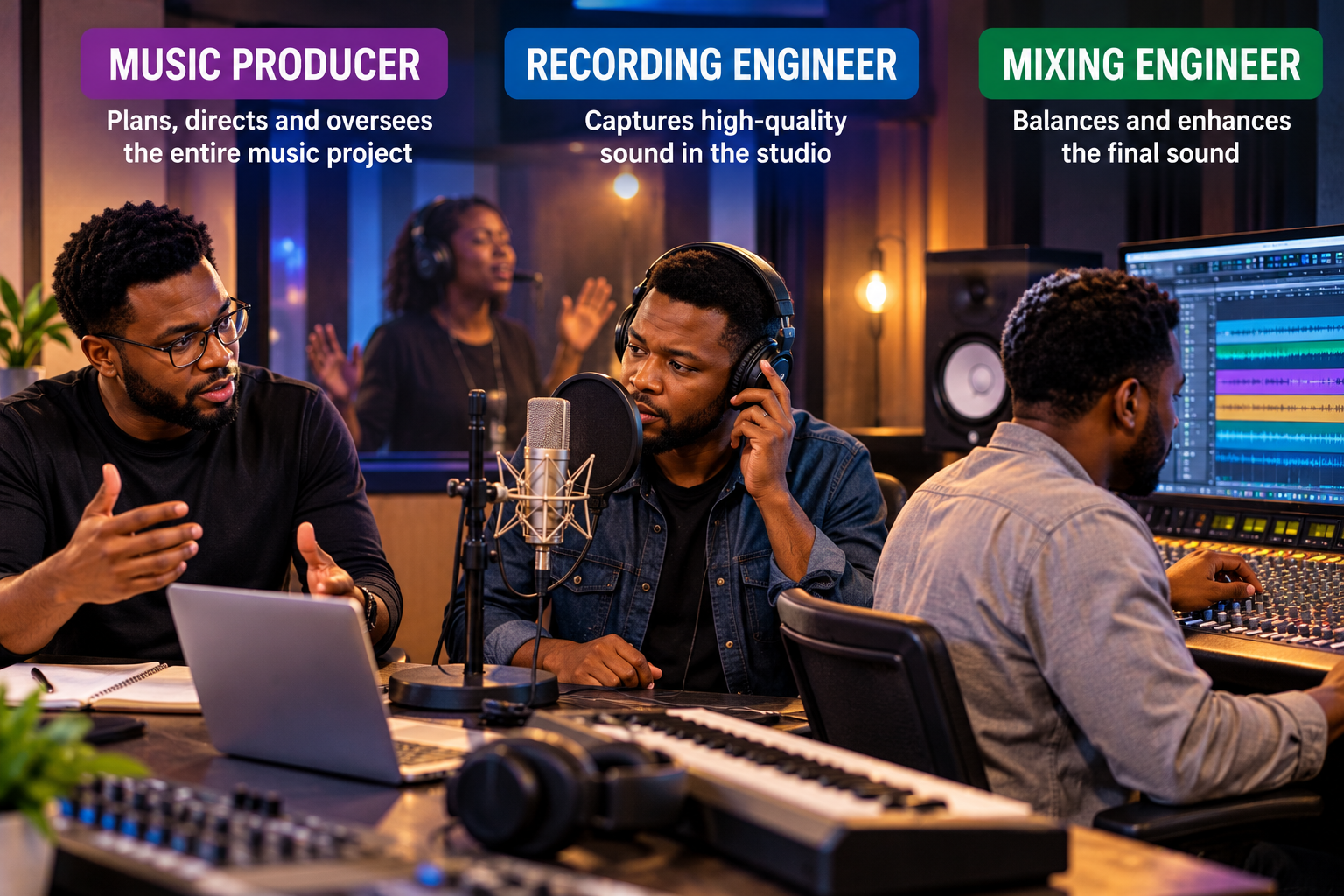
Understanding music producer vs recording engineer is important for independent gospel artists who want to produce quality recordings. Although these professionals may work together in the studio, each has different responsibilities. A music producer guides the creative direction, a recording engineer captures vocals and instruments, and a mixing engineer balances and refines the recorded tracks.
In this guide, we explain how these roles differ, what each professional does, and how to choose the right person for your gospel music project.
1. What Does a Music Producer Do?
A music producer helps guide the creative and musical direction of a recording project. Depending on the arrangement, the producer may be involved from the earliest songwriting discussions through the final stages of production.
The producer’s responsibilities may include:
- Helping the artist develop the song’s musical direction.
- Suggesting arrangements, instrumentation, harmonies, and song structure.
- Working with instrumentalists, vocalists, and other collaborators.
- Helping the artist deliver a suitable vocal performance.
- Making creative decisions about the overall sound.
- Coordinating the recording process and communicating the project’s goals.
For example, a gospel songwriter may bring a simple melody and lyrics into the studio. The producer might suggest a keyboard introduction, a stronger chorus arrangement, backing vocals, and a gradual build toward the final chorus.
The exact responsibilities depend on the agreement. Some producers also play instruments, program beats, engineer recordings, or mix songs. Others concentrate mainly on creative direction.
Important: Paying someone to produce a song does not automatically determine who owns the master recording or songwriting copyright. Those rights should be addressed separately in the relevant agreements.
2. What Does a Recording Engineer Do?
A recording engineer is responsible for capturing sound during the recording session. This includes setting up microphones, managing recording equipment, adjusting levels, and ensuring that performances are recorded clearly.
Typical responsibilities include:
- Setting up microphones and audio interfaces.
- Adjusting recording levels to avoid unwanted distortion.
- Monitoring sound quality during vocal and instrumental sessions.
- Recording performances into digital audio workstation software.
- Organising and labelling recorded tracks.
- Helping manage retakes and technical issues.
- Saving and backing up session files according to the studio’s procedures.
Imagine that you are recording a gospel vocal. The recording engineer positions the microphone, checks the input level, listens for unwanted noise, and records your performance.
A good recording provides a strong foundation for the later stages of production. Even excellent mixing cannot completely repair every problem caused by a poor recording.
The recording engineer does not necessarily make all the creative decisions about the song. That responsibility may belong to the producer, artist, or both.
3. What Does a Mixing Engineer Do?
A mixing engineer works with the recorded tracks to create a balanced and coherent sound. Mixing generally takes place after the main recording sessions, although engineers may make rough mixes during production.
The responsibilities of a mixing engineer may include the following:
- First, balancing the volume of vocals and instruments.
- Additionally, adjusting equalisation to improve tonal clarity.
- Furthermore, using compression to manage dynamics.
- Where necessary, applying reverb and delay to enhance the sound.
- Similarly, positioning sounds across the stereo field.
- At the same time, controlling unwanted noise and competing frequencies.
- Moreover, automating volume and effects throughout the song.
- Finally, preparing the mix for mastering or the next stage of delivery.
For example, in a gospel recording, the mixing engineer may balance the lead vocal with the choir, keyboard, bass, drums, and other instruments. By doing so, the engineer helps listeners hear the important musical elements clearly without allowing one part to overpower everything else.
However, mixing is not simply about making a song louder. Rather, it requires musical judgement, technical skill, and careful listening to achieve a balanced and pleasing sound.
Some artists hire a separate mixing engineer because they want a fresh perspective after recording. In other projects, the producer or recording engineer performs the mixing as well.
4. The Difference Between the Three Roles
Although their responsibilities can overlap, the central distinction is straightforward.
First of all, the music producer shapes the musical direction by helping determine how the song should develop and what the finished production should communicate.
Meanwhile, the recording engineer focuses on capturing the sound by managing the technical process of recording vocals and instruments.
Finally, the mixing engineer balances and refines the recorded tracks to ensure that the individual elements work together harmoniously as a complete song.
To understand how these roles work together, consider a practical example: you are recording a new gospel single.
First, the producer helps establish the arrangement and guides the creative decisions. Next, the recording engineer captures the lead vocal and instrumental performances. Finally, the mixing engineer balances the tracks and applies appropriate processing to create the mix.
One person may handle all three stages, but the responsibilities remain distinct.
5. Do Independent Gospel Artists Need Three Different Professionals?
Not necessarily. Your choice depends on the project, available budget, complexity of the arrangement, and skills of the people involved.
A small independent project may use one experienced producer who also records and mixes the song. A larger production may benefit from specialists for each stage.
Before hiring anyone, ask what their quoted fee includes.
For example, does the recording fee cover only studio time, or does it also include editing? Does the production fee include mixing? Is mastering included, or is it charged separately?
These questions help you compare offers fairly and avoid unexpected expenses.
You should also ask how many revisions are included, what files you will receive, and when the work will be delivered.
6. How Should You Choose the Right Professional?
Start by identifying what your project needs.
If you have lyrics and a basic melody but need help developing the musical arrangement, look for a producer with experience in the style you want.
When your arrangement is ready, but you need clean vocal and instrumental recordings, look for a recording engineer with suitable equipment and a strong recording portfolio.
If you already have well-recorded tracks but need them balanced and polished, a mixing engineer may be the most appropriate choice.
Review previous work where possible. Listen for vocal clarity, instrumental balance, musical style, and consistency across different projects.
Ask questions about the workflow, fees, deadlines, revisions, file delivery, and ownership terms. Put important agreements in writing.
Do not select a professional based only on expensive equipment or impressive promotional language. Their skills, communication, experience, and suitability for your project matter too.
7. Why Clear Agreements Matter
Creative collaboration works better when everyone understands their responsibilities.
Before work begins, document the services being provided and the payment terms. If the producer, engineer, or another contributor may have ownership or royalty interests, address those arrangements explicitly rather than making assumptions.
A service fee does not automatically settle every copyright question. Songwriting contributions, master-recording ownership, royalty arrangements, and permitted uses can be separate matters.
For collaborative songwriting, contributors should document their agreed composition shares. For recordings, the parties should clarify who owns or controls the master and what permissions apply.
Keep copies of invoices, agreements, project files, and correspondence. These records can help prevent misunderstandings later.
Conclusion
Music producers, recording engineers, and mixing engineers each contribute different skills to the creation of a finished song. While producers guide the creative direction, recording engineers capture the performances, and mixing engineers balance and refine the recorded material.
Therefore, for independent gospel artists, understanding these roles makes it easier to choose suitable professionals, plan recording costs, and communicate expectations effectively.
However, you do not always need three separate people to complete a project. Instead, one qualified professional may handle several of these responsibilities. Ultimately, what matters most is that the necessary work is completed competently and that everyone clearly understands the scope of the agreement.
With thoughtful planning, clear communication, and suitable collaborators, you can build a recording process that serves both the quality of your music and the message you want to share.
This article is for educational purposes. Specific service arrangements, copyright ownership, and royalty obligations depend on the agreements and applicable law.

Leave a Reply